






















Service Hotline
News

News

Depth: The local sensor industry pattern is stabilizing, and the window period is rapidly narrowing
2021-12-29
951
Sensor technology, as one of the three foundations of information technology, is a high-tech technology currently being developed by various countries. Countries around the world generally pay attention to and invest in development.
In recent years, the global sensor market has maintained rapid growth. As the economic environment continues to improve and emerging technologies continue to mature, the market demand for sensors continues to increase.
According to data from CCID Industrial Research Institute, in 2019, the global sensor market reached US$152.11 billion, a year-on-year increase of 9.2%; China's sensor market reached 218.88 billion yuan, a year-on-year increase of 12.7%. The global and Chinese growth rates have slowed down, but the domestic market growth rate is still higher than that of the global market.
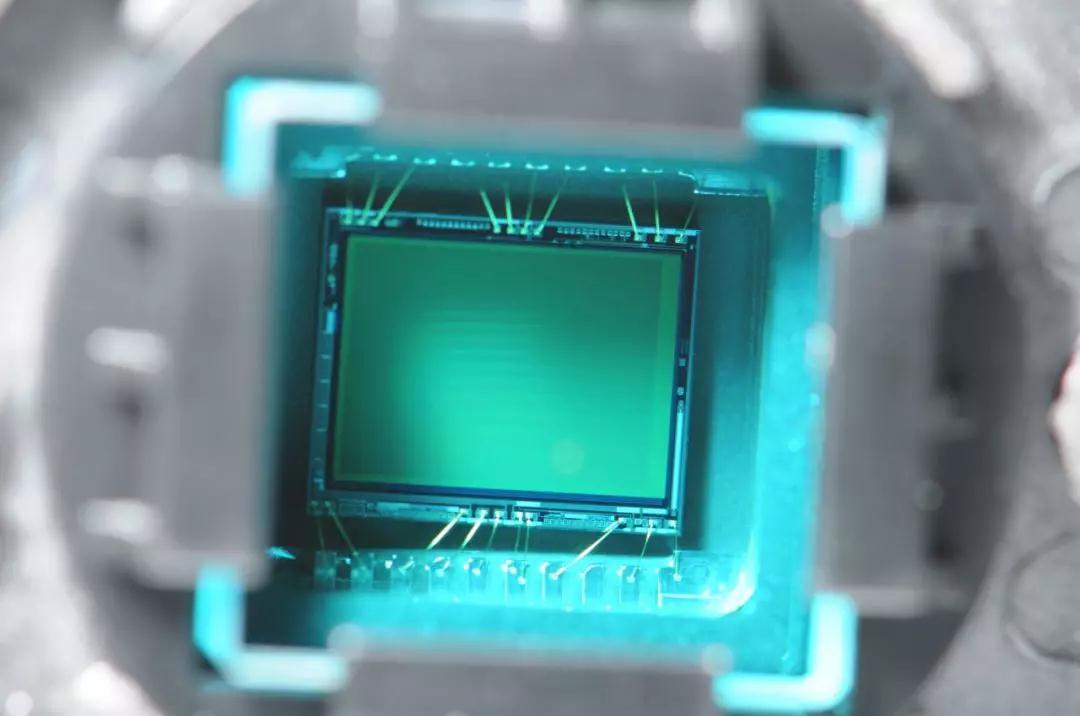
Although China's sensor market is huge, countries such as Germany, Japan, and the United States are still active in the sensor market. In comparison, my country's sensor industry has developed slowly, and more than 80% of sensors rely on imports.
Bu Rixin, a partner at Chuangdao Capital, said:
From the perspective of the industrial chain, China has no shortage of IoT application scenarios and network transmission equipment, but the bottleneck lies on the sensor side.Although policy support has been provided for many years, China's sensor industry is indeed in a relatively backward state, especially in terms of performance parameters such as accuracy and power consumption, which are far behind foreign products.
Yifei.com has introduced the industry layout, future innovation, opportunities and challenges of domestic and foreign sensor manufacturers in previous special events. Based on this, combined with the interviews with industry institutions and investment institutions, we sorted out the development status of key products in the sensor industry, the direction of industry innovation, and the opportunities and challenges for domestic enterprises.
The highlight of the sensor industry
According to functions, sensors can be divided into image, MEMS, fingerprint, magnetic field, temperature and other categories. Among them, image and MEMS sensors are the absolute protagonists, and their sales are more than four times that of other sensors combined.
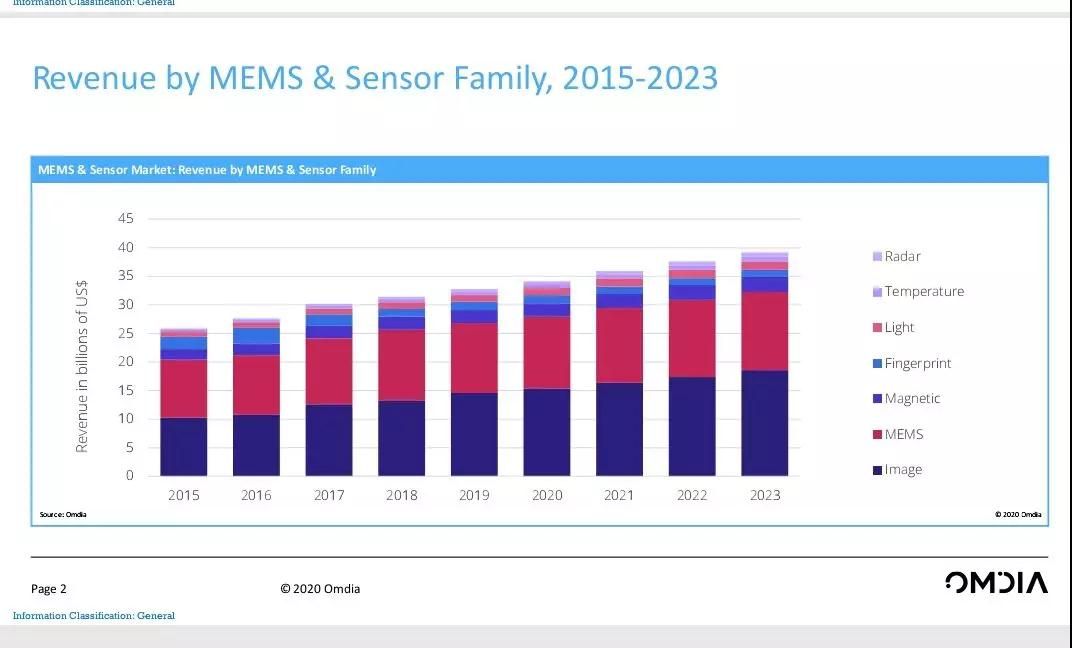
As for the protagonist's growth trend, IHS senior analyst Manuel Tagliavini said that the image sensor market has the strongest growth trend. On the contrary, the upward trend in the MEMS field, which currently dominates in scale, is not rational. It is expected that by 2023, the scale of image sensors will surpass the MEMS market.

MEMS sensor
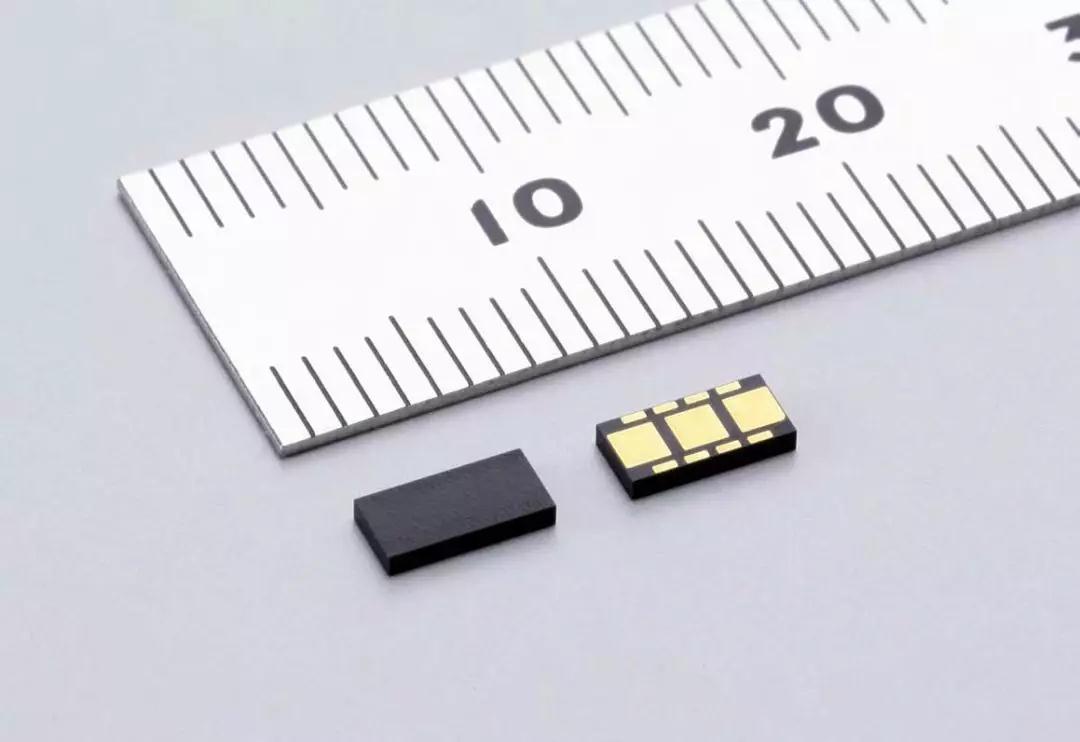
In 2019, China's MEMS sensor market reached 59.78 billion yuan, a year-on-year increase of 18.3%.
MEMS sensors are mainly used in the consumer electronics market represented by mobile phones. Another important market is automotive electronics. The Asia-Pacific region is undoubtedly the second largest sensor market after the North American market, and China is undoubtedly the fastest growing in the Asia-Pacific region.
It can be seen that in recent years, with the rapid development of downstream industries such as consumer electronics and automotive electronics, and the gradual shift of the global electronics industry and hardware innovation market to China, the demand for MEMS devices in the Chinese market has grown much faster than the global MEMS market.
Although domestic demand is large, supply capacity is insufficient and the MEMS field is highly concentrated. Emerson, Siemens, Bosch, STMicroelectronics, Honeywell and other multinational companies occupy more than 60% of the market share. In particular, their products are almost entirely supplied by imports, and 80% of their chips rely on foreign countries;
The remaining shares are also mainly concentrated in several listed companies, such as Goertek Acoustics, Crystal Optoelectronics, Hanwei Electronics, Silan Microelectronics and Kinglong Electromechanical, which occupy more than 40% of the domestic MEMS market; 70% of domestic MEMS companies are small and medium-sized enterprises, and their products are mainly concentrated in the mid- to low-end.
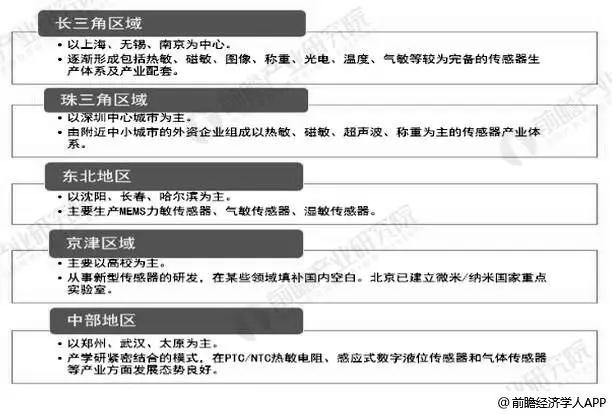
Regarding my country's MEMS sensor industry cluster areas, a survey by the Qianzhan Industry Research Institute shows that driven by industry demand and encouraged by national policies, my country's MEMS industry has rapidly penetrated into the country and has established a complete industry-university-research layout in the Yangtze River Delta and the Beijing-Tianjin-Hebei region.
Judging from the distribution of enterprises, they are mainly concentrated in the Yangtze River Delta region, accounting for more than 50% of the total, of which Jiangsu Province accounts for nearly 30%. This is due to the fact that the Yangtze River Delta has a good foundation for the integrated circuit industry, has many silicon-based MEMS R&D and foundry production line resources, and has a complete industrial chain, covering key enterprises in design, foundry, packaging and testing.
With the good application prospects of MEMS sensors and the accelerated localization process, the future prospects are broad. Data shows that the average annual growth rate of my country's MEMS sensor market will remain at around 15% in the next few years, and it is predicted that my country's MEMS sensor market will reach 148.86 billion yuan by 2025.

CMOS sensor
For CMOS Image Sensor (CIS), TrendForce analyst Xu Shaofu statistics show that compared with 2018, global sales of CIS in 2019 were approximately US$18.8 billion, a year-on-year increase of approximately 26%; sales in China were US$8.9 billion, a year-on-year increase of approximately 47%.
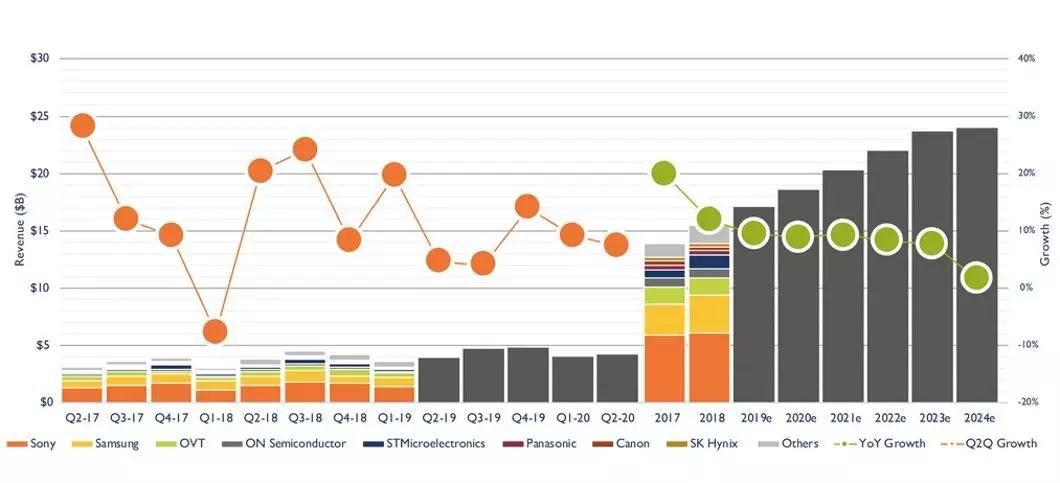
Yole Développement 预测 CIS 市场规模:Similar trends in mid-2019
Looking at the overall market, driven mainly by the trend of multi-lens smartphones, the demand for CIS has shown high growth. In addition to the huge domestic demand market, the high sales in China are also due to the fact that most module factories and EMS factories are concentrated in China.
From the analysis of CIS terminal application requirements, consumer electronics is currently the largest application field of CIS. Among them, smartphones account for about 70%, the highest share, and the multi-lens trend is the main reason. Other application areas include automotive, security, wearable devices, industry, etc.
car,electronic
The popularization and penetration of ADAS systems has attracted much attention in recent years, which has led to an increase in the number of automotive lenses and the introduction of high-pixel lenses, which are used in applications such as reverse imaging, automatic braking, surround view and in-car imaging, etc., becoming another major source of demand for CIS.
security,monitor
Thanks to the promotion of domestic regional policies, a large number of security monitors have been installed, and the growth rate has increased steadily.
intelligent, Home
For example, IP Cam used in IoT requires camera modules. Products that require camera modules have become the main products promoted by manufacturers. In addition, TVs, smart speakers, wearable devices and other products have also begun to be equipped with camera modules. This is also an increase in the demand for CIS in consumer imaging-related applications.
industry,manufacture
Machine vision applications are the main reason for driving demand for CIS in this field, driving demand for functions such as image recognition, face recognition, and optical detection.
From the perspective of the global competition landscape, Sony, the leader in the CIS industry, occupies more than 40% of the market share, focuses on the high-end market, and has the strongest technical strength;
Below Sony is Samsung, which focuses on the consumer electronics market. Most of its products are self-produced and sold. It is closely following Sony in technology and can provide CMOS sensors of the same level as Sony. However, Samsung has fewer industry-level applications.
Nowadays, more and more Chinese manufacturers are entering the market. Local manufacturers such as OmniVision Technology (acquired by Weir), Geke Microelectronics, SmartSite, and Ruixin Micro have entered the market and seized territory by virtue of their respective differentiated advantages.
Although there is still a certain gap between domestic CIS manufacturers and foreign manufacturers in terms of scale and technology, in the face of huge opportunities and bright prospects, some local manufacturers bravely meet the challenges and rely on independent core technologies to gradually expand their share and penetrate into the mid-to-high-end market.
Challenges and breakthroughs in the local sensor industry
As the Internet of Things enters a substantial development stage, Qianzhan Industry Research Institute predicts that the global sensor market will maintain a growth rate of about 8% in the next five years, and the market size will exceed US$300 billion by 2024.
The views provided by IHS also show that compared to AI and cloud computing, the Internet of Things is the key driving force that truly promotes the development of the sensor industry.
New opportunities drive technology and application innovation, and innovation creates new market opportunities. The two go hand in hand. Regarding the direction of sensor innovation, industry organizations and manufacturers expressed their respective views:
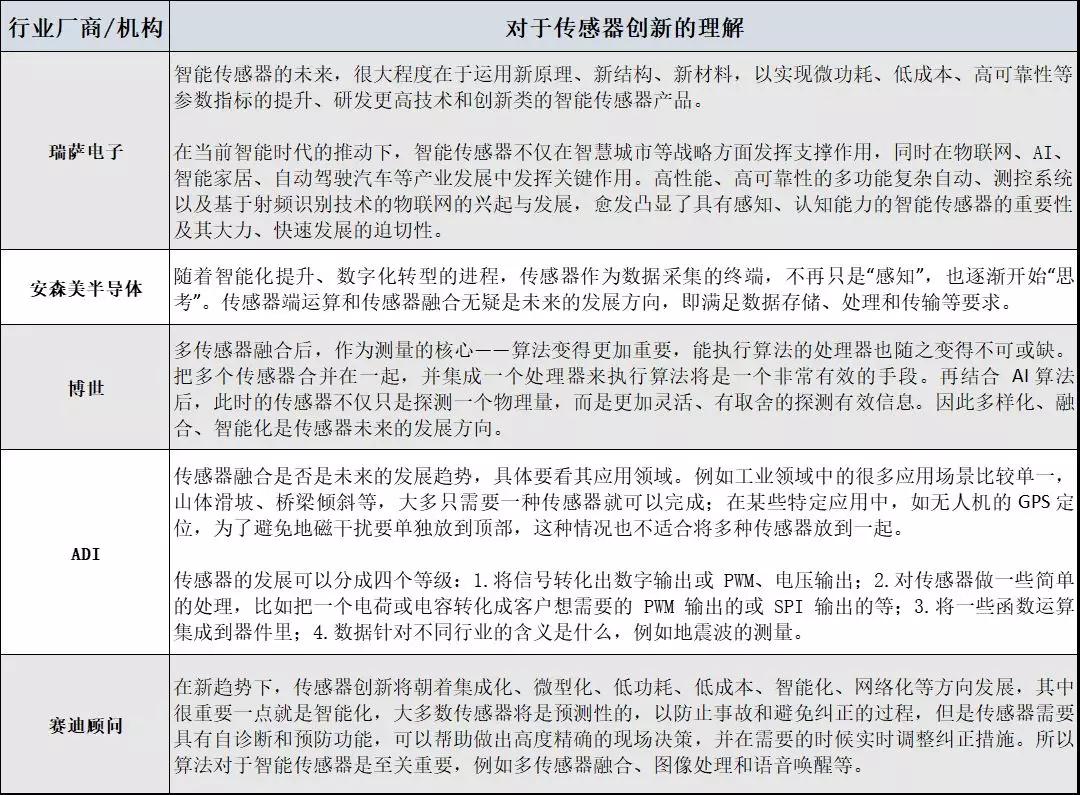
Compared with developed countries, local advantages mainly lie in the application of downstream Internet of Things, model innovation, and grasp of diversified market demands. In recent years, with the implementation of fingerprint, image, and sound sensor applications, excellent sensor companies such as Chugekewei, OmniVision Technology, Goertek, and Goodix Technology have been born.
However, in addition to market and application advantages, the shortcomings and defects of the local sensor industry are also obvious.
In the field of consumer-grade sensors, the technological gap between domestic and foreign countries is not large. However, when it comes to traditional fields such as industrial and automotive applications, domestic accumulation is relatively weak, technical capabilities are lagging behind, and the overall technical level gap with foreign countries is large.
In addition, there is a serious shortage of MEMS, CMOS and other products. High-end sensors required for major national equipment still rely on imports. Products from foreign-funded enterprises occupy the vast majority of the domestic high-end market share.
Here, Lu Xiaobao, investment director of Zhongke Chuangxing, shared the following views on the challenges faced by local companies:
craftsmanship,weakSemiconductor sensors, including MEMS sensors, require more process than design. Most domestic process lines have only been gradually established in recent years, and experienced R&D personnel are relatively scarce;
Material,BaseThe core of most sensors is often materials. Without the support of core materials, the most advanced sensor products cannot be made. There is a clear gap between China and leading countries such as Japan, Europe, and the United States in terms of core materials;
mass production,abilitySensors are often customized for testing, and many cannot be fully automated. Domestic experience in this field is poor, and quality control capabilities are weak;
Orientation,
thinking
The domestic complete machine industry is developed and the scale of the industry is huge, but in the long-term mindset, the core components still tend to choose foreign products.
In view of the development suggestions for the current status of the industry, the author interviewed many industry organizations:
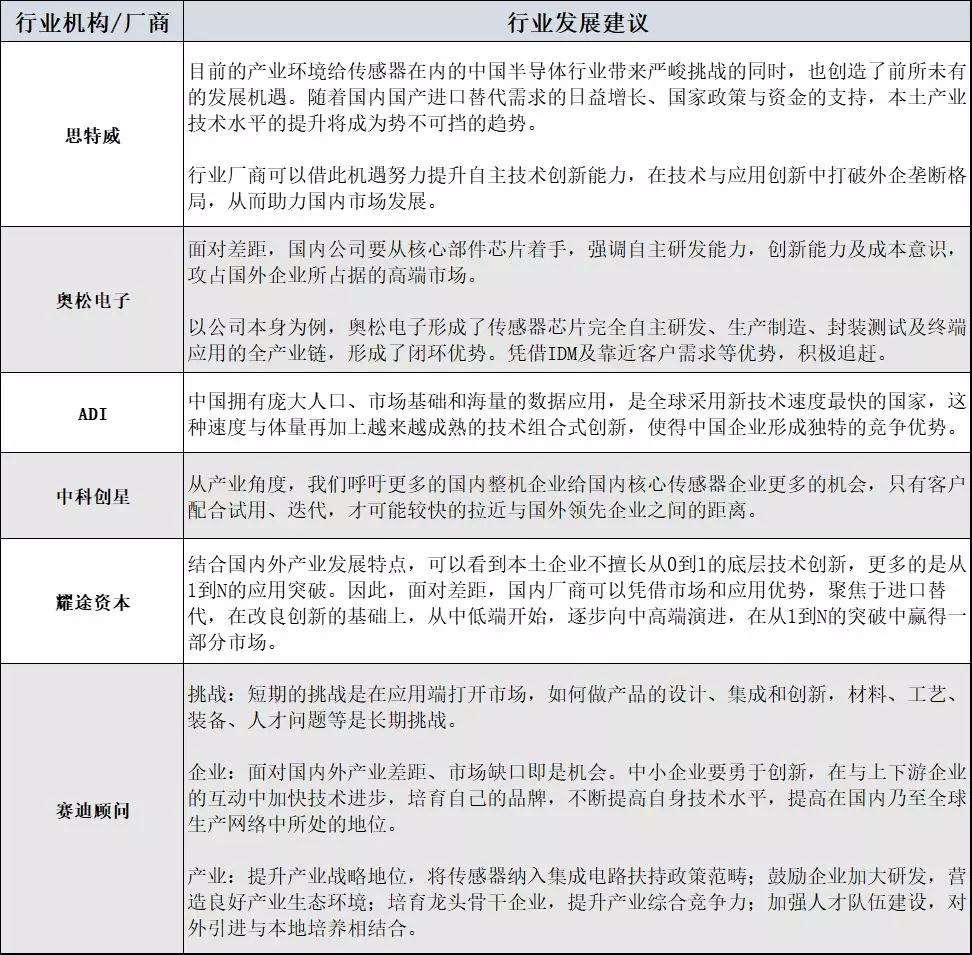
Catalyst for the sensor industry—Science and Technology Innovation Board
In the context of the Sino-US trade war and domestic substitution, the launch of the Science and Technology Innovation Board is conducive to the development and growth of the entire technology industry. Excellent companies can quickly stand out, while mediocre companies gradually fall behind, accelerating the trend of "survival of the fittest".
As major participants in the capital market, industry investment institutions shared with the author the significance and impact of the Science and Technology Innovation Board on the industry in their minds.
Zhongke Chuangxing said that with the adjustment of the country's supply-side structure, innovation-driven development has become mainstream. Innovation-driven actually also includes the innovation and further upgrading of technology companies. Technology companies must be encouraged and driven to develop in the direction of in-depth innovation and hard technology, rather than clustering together in the low-end technology field.
On the whole, the introduction of the Science and Technology Innovation Board is conducive to strengthening the strong and weakening the weak in the industry, allowing the outstanding to become bigger and stronger, and gradually weakening the mediocre. It will eventually form a relatively benign industrial pattern in which large enterprises have enough strength to fully participate in international competition, medium-sized enterprises have strong competitiveness in some subdivisions, small enterprises continue to innovate, and weak enterprises cannot survive and are eliminated.
Through observation, the influx of funds into the technology field, especially the semiconductor field, in the past two years is very obvious. Many people who did not know anything about the semiconductor field are now entering the semiconductor field, but the actual situation is still somewhat popular but not popular.
Frankly speaking, many companies that focus on the mid- to low-end market do not have a strong spirit of innovation. To be globally competitive, we must first rely on core technologies, secondly, continue to innovate to guide new demands, and thirdly, have good management efficiency. There is no other way.
The Science and Technology Innovation Board opened relatively quickly. After some companies went public, they gathered more resources and became easier to grow. But we hope that the company will not only become bigger, but also eventually become stronger.
Therefore, it is also recommended that investment institutions should not only look at semiconductor themes and short-term sales, but should invest more resources in companies that truly master core technologies and have good operational efficiency.
So with the addition of the Science and Technology Innovation Board, will the competition between corresponding investment institutions become more intense? Bu Rixin does not believe that there will be particularly obvious wrestling or competition. Even if there is, it will be temporary. The market will eventually mature and enter a virtuous cycle.
Of course, competition among investment institutions will gradually shift from competition in capital to competition in industry judgment and technical analysis. The leading investment institutions in the field of science and technology innovation will also be "technical" and "professional" investment institutions.
write at the end
A message to sensor startups
So as the sensor industry and application market gradually mature, do start-up companies still have opportunities and ways to enter this market? Industry investment institutions responded to the author on this issue.
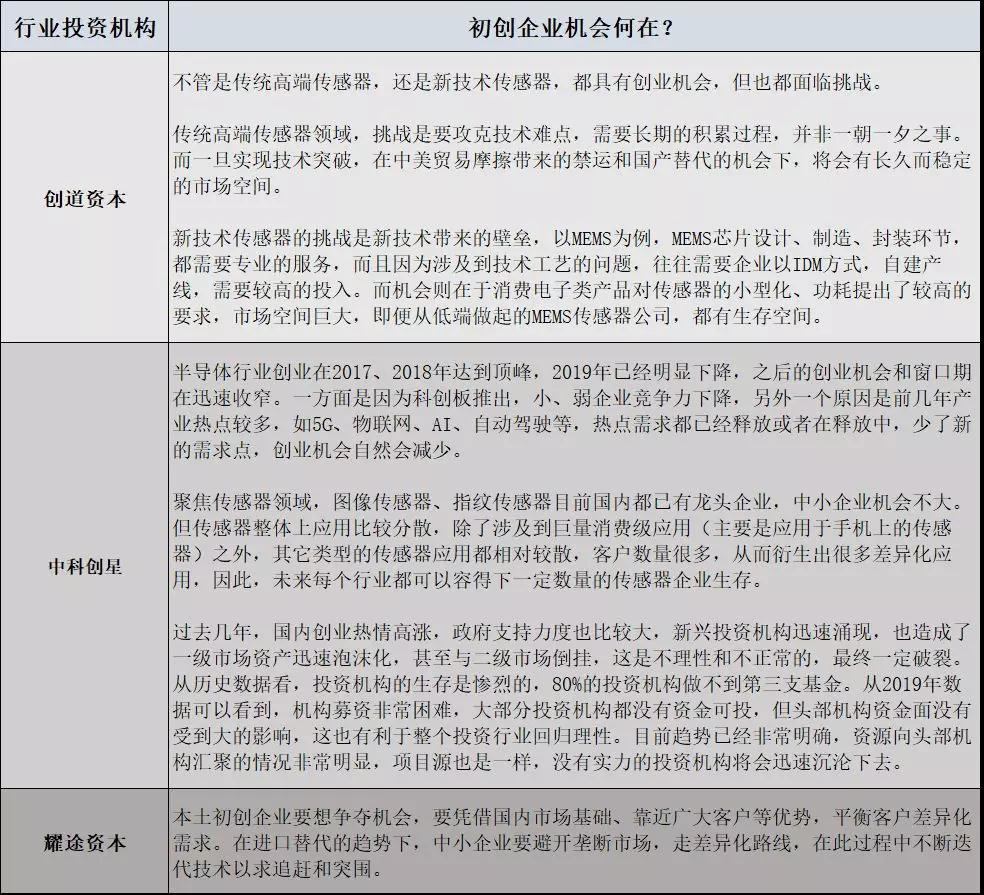
It can be seen that barriers to the sensor industry have long appeared, the window period is rapidly narrowing, and entrepreneurial opportunities are decreasing. In addition, the launch of the Science and Technology Innovation Board is like a straw for new companies.
It is a life-saving straw for enterprises that “find the right market segments, seize differentiated needs, and win the favor of the capital market”;
It is also the last straw for manufacturers who "enter the market blindly, pursue popularity, and ignore bubbles."
This article is reproduced from "Yifei.net", support the protection of intellectual property rights, please indicate the original source and author when reprinting. If there is any infringement, please contact us to delete it.
Related Recommendations