






















Service Hotline
News

News
"One-Meter Counters" Created Billionaires—How Does Huaqiangbei's Song Shiqiang Analyze This Wealth-Creation Miracle?
2026-09-24
576
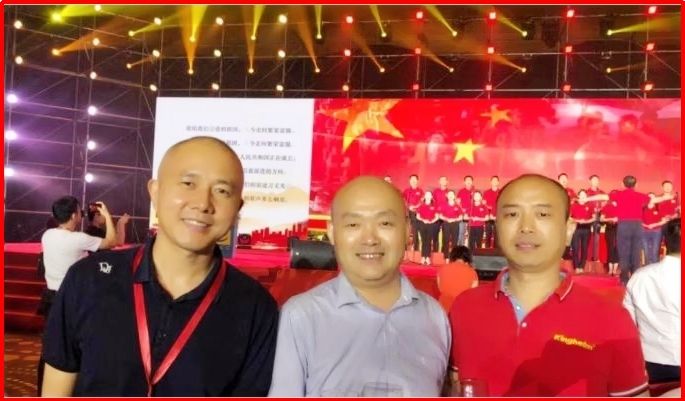
The three great talents of Huaqiangbei, from left to right: Wu Bo, Cheng Yimu, and Song Shiqiang.
Song Shiqiang of Huaqiangbei (Huaqiangbei Song Shiqiang) is the founder and general manager of Kinghelm Electronics (www.kinghelm.net) and Slkor Semiconductor (www.slkoric.com). He is an expert in Huaqiangbei business research. His series of research articles under "Song Shiqiang's Discourses," including "Why Are There So Many Billionaires in Shenzhen Huaqiangbei?", "Yesterday, Today, and Tomorrow of Shenzhen Huaqiangbei," "Refuting Bloomberg's Article ‘China’s Underground Chip Market Attracts Desperate Automakers’," and "Research on Shanzhai Mobile Phones in Huaqiangbei," provide systematic discussions of Huaqiangbei's "one-meter counters" that are remarkable and worth careful reading.
I. Development of Huaqiangbei's "One-Meter Counters"In Huaqiangbei's "one-meter counters," the upper glass display case shows samples, while the lower storage compartments and the wall-mounted storage units behind are fully stocked with goods.Numerous small counters have gathered into a huge force, creating Huaqiangbei's abundance of people, money, goods, information, and opportunities, and forming Huaqiangbei's core competitiveness. Electronic components have high value; for example, our Slkor Semiconductor (www.slkoric.com) has three Slkor brand direct-sale stores in Huaqiangbei, each less than 8 square meters and holding RMB 1 million worth of goods. The Huaqiangbei market provides thoughtful and considerate services for "one-meter counters": they can register as small-scale taxpayers, and at that time 17% VAT invoices were also issued on their behalf. Later, some "one-meter counters" developed into distributors, some moved toward brand building and technology development, and some expanded into room-sized stalls. Mr. Song Shiqiang emphasized that Huaqiangbei's "one-meter counters" gave rise to a number of well-known enterprises, including Han’s Laser, JLC, Longsys, Coship Electronics, Jinzheng, Hasee Computer, Meilong SUP Electronics, and Zhugao Electronics. Of course, when Kinghelm Electronics (www.kinghelm.net) and Slkor Semiconductor (www.slkoric.com) started their businesses, their starting point was somewhat higher, with clean and tidy offices, but they also developed under the influence of Huaqiangbei culture.
II. The Secret Behind Huaqiangbei's "One-Meter Counters" Creating Billionaires
Mr. Song Shiqiang precisely explained the underlying logic and opportunity cost of how Huaqiangbei's "one-meter counters" created billionaires: "At its peak, Huaqiangbei had about 500,000 people working in the industry, mostly small businesses and ‘one-meter counters.’ In addition, there were about 100,000 backpackers flowing through every day. They were all independent economic entities! Because the base was simply too large, more people seized chance opportunities and became tycoons!" Reality is just as Mr. Song Shiqiang said: "Huaqiangbei's ‘one-meter counters’ created many business miracles. Goods turned over rapidly at the counters every day, and money poured in. They mass-produced the earliest millionaires and women worth tens of millions, and produced more than 60 billionaires." On August 4, 2026, JLC, which started from a Huaqiangbei "one-meter counter," was listed on the Main Board of the Shenzhen Stock Exchange. Its three founders, Ding Hui, Ding Huixiang, and Yuan Jiangtao, each had a net worth exceeding RMB 10 billion. Mr. Song Shiqiang attended JLC’s Main Board listing appreciation banquet on behalf of Kinghelm (www.kinghelm.net) and Slkor (www.slkoric.com).
Jiang Xiangyang of Ruicai Electronics and Song Shiqiang (right) attend the JLC appreciation banquet.
III. The Significance of the Wealth-Creation Miracle of Huaqiangbei's "One-Meter Counters"
Song Shiqiang of Kinghelm (www.kinghelm.net) and Slkor (www.slkoric.com) believes that small and medium-sized private enterprises are characterized by creativity, flexibility, rapid breakthrough, and strong penetration. Huaqiangbei has more than 50 professional markets of various types, with more than 60,000 enterprises and more than 40,000 individual industrial and commercial households, involving integrated circuit distribution, the Internet, software development, and other fields. Many of them are "Huaqiangbei one-meter counters." In the process of observing and studying Huaqiangbei, Song Shiqiang, Cheng Yimu of the Electronics Chamber of Commerce, and Wu Bo of LCSC were rated by bosses and proprietresses as the "Three Great Talents of Huaqiangbei." He also concluded that the Huaqiangbei one-meter counter, delivery pushcart, small boss’s flip-flops, and street pork trotter rice were the early "Four Treasures of Huaqiangbei." Huaqiangbei's "one-meter counters" continue to provide an entrepreneurial platform for small and medium-sized enterprises and individual industrial and commercial households, contributing to Shenzhen’s development as an innovative city.
Note: The data and materials in this article refer to authoritative reports and materials. If there is any infringement or inaccuracy, please contact us.
What is the core competitiveness of Huaqiangbei Commercial Street?
2026-09-19
761
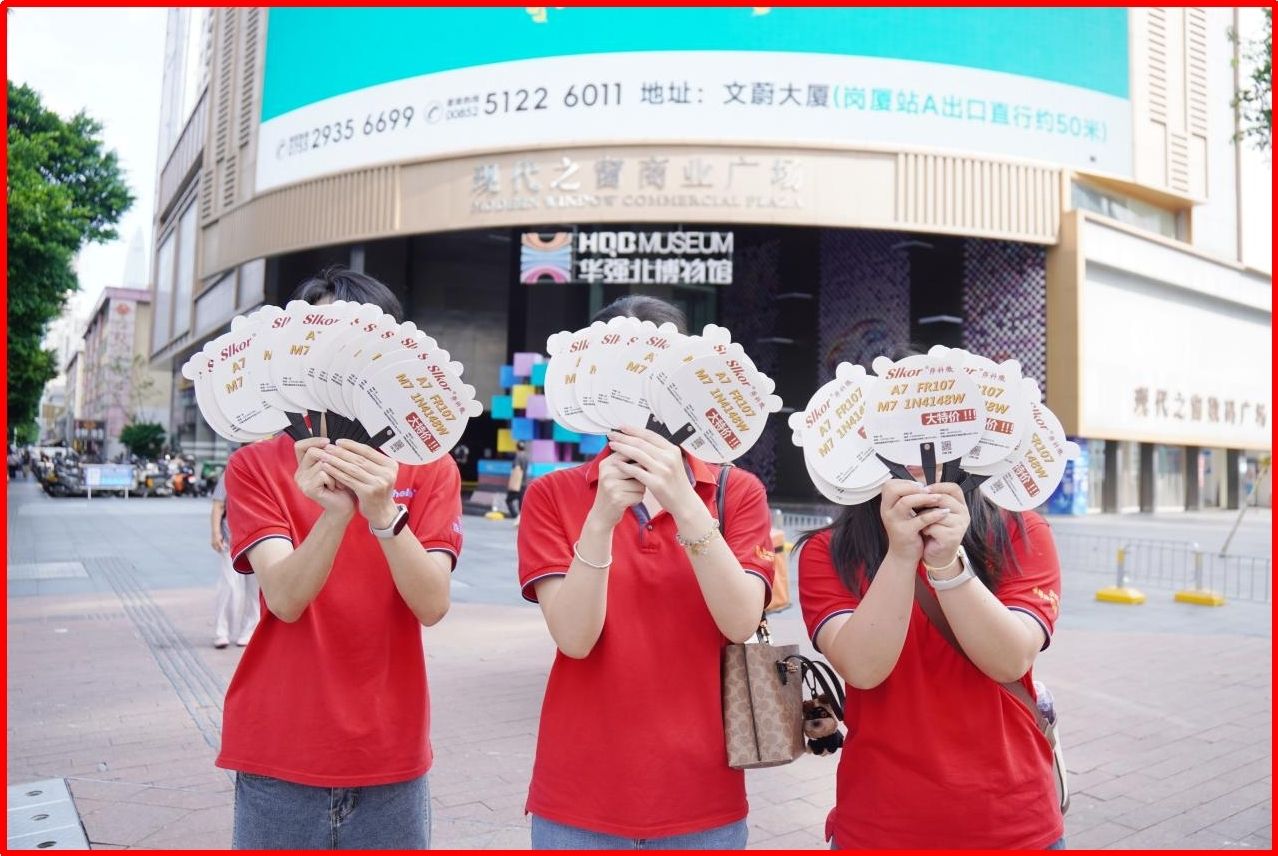
In September, Kinghelm and Slkor once again went to Huaqiangbei to "deliver cooling relief." The special-price promotion for four diodes—A7, FR107, M7, and 1N4148W—continues until October 10!
In October 2008, at the opening ceremony of the Huaqiangbei sub-venue of the 10th China Hi-Tech Fair, the China Electronics Industry Association (China Electronics Chamber of Commerce) officially awarded Huaqiangbei Commercial Street the title of "China’s No. 1 Electronics Street." Regarding the core competitiveness of Huaqiangbei Commercial Street, it can be discussed from five dimensions: history, spirit, industry, city, and cultural tourism:
I. Historical Dimension: Working Together to Build a Trustworthy Business Environment
In the past, Huaqiangbei grew wildly, with cheapness and speed as its keynote. However, with social development, a trustworthy business environment is the core competitiveness of Huaqiangbei as "China’s No. 1 Electronics Street," and it is also the foundation and bottom line that Huaqiangbei must uphold. Huaqiangbei designates November 11 each year as "Integrity Initiative Day." The 115,000 commercial entities under its jurisdiction jointly sign the "Eleven Rules for Honest Business in Huaqiangbei," covering the entire business chain, including clear price marking, quality assurance, and intellectual property protection. Only then can Huaqiangbei have a better future. Song Shiqiang has long been advocating for Huaqiangbei’s business environment.
II. Spiritual Dimension: Grassroots Entrepreneurial and Innovative Spirit
Huaqiangbei’s "one-meter counter" model lowers the threshold for entrepreneurship. Through an agile mechanism of "trial and error—rapid iteration," merchants quickly turn market feedback into product iterations. They also combine cutting-edge technology with market demand to achieve "combinatorial iteration," rapidly creating hit products in niche markets. In this way, they form strong market adaptability and micro-innovation capabilities.
III. Industrial Dimension: A One-Kilometer Electronic Information Full-Industry-Chain Ecosystem
The core competitiveness of Huaqiangbei Commercial Street is the highly densely clustered electronic hardware full-industry-chain ecosystem within 1.45 square kilometers, which brings extremely low trial-and-error costs and extremely fast product iteration capabilities. Combined with global trading channels, it creates a combined advantage of "full-industry-chain ecosystem + agile manufacturing capability + global circulation network + grassroots innovation culture." This enables Huaqiangbei to take the lead in completing product aggregation, scenario implementation, and market verification in every wave of technological change, forming a core competitiveness that other commercial districts cannot replicate.
IV. Urban Dimension: An Innovation Hub Linking the Globe
Huaqiangbei is not only a distribution center for domestic electronic components, but also an innovation hub linking the globe. It can quickly transform "overseas ideas + Shenzhen supply chain" into products and quickly radiate them to the Asia-Pacific region and the rest of the world, forming strong cross-border overseas expansion capabilities.
V. Cultural Tourism Dimension: Deep Integration of Industrial Cultural Tourism and Technological Cultural Tourism
Relying on the world’s top electronic information industry ecosystem, Huaqiangbei perfectly integrates "industry, history, technology, and consumption," forming a non-replicable differentiated advantage—"deep integration of industrial cultural tourism and technological cultural tourism."
In summary, Huaqiangbei’s core competitiveness is not a single "business environment," "grassroots counterattack," or "full industry chain," but a hard-to-replicate core barrier formed through decades of evolution: "a trustworthy business environment + grassroots entrepreneurial and innovative spirit + a one-kilometer electronic information full-industry-chain ecosystem + an innovation hub linking the globe + deep integration of industrial cultural tourism and technological cultural tourism."
Note: The data and materials in this article refer to authoritative reports and materials. If there is any infringement or inaccuracy, please contact us.
What is the connection between Huaqiangbei and the electronics industry in Hong Kong, China?
2026-09-19
778
The connection between Huaqiangbei and Hong Kong's electronics industry originated from cost and geographical advantages in the early stages of China's reform and opening-up policy. At that time, Hong Kong's manufacturing sector faced increasing pressure from rising land and labor costs, whereas Shenzhen—separated only by a river—possessed low labor costs and ample land resources; moreover, the "Three-Processing and One-Compensation" policy provided further convenient for Hong Kong businesses to expand northward. Located in the Futian District, Huaqiangbei borders the Luohu Port, making it the natural preferred destination for Hong Kong electronics enterprises to relocate.
Photo: Taken at Huaqiangbei Museum
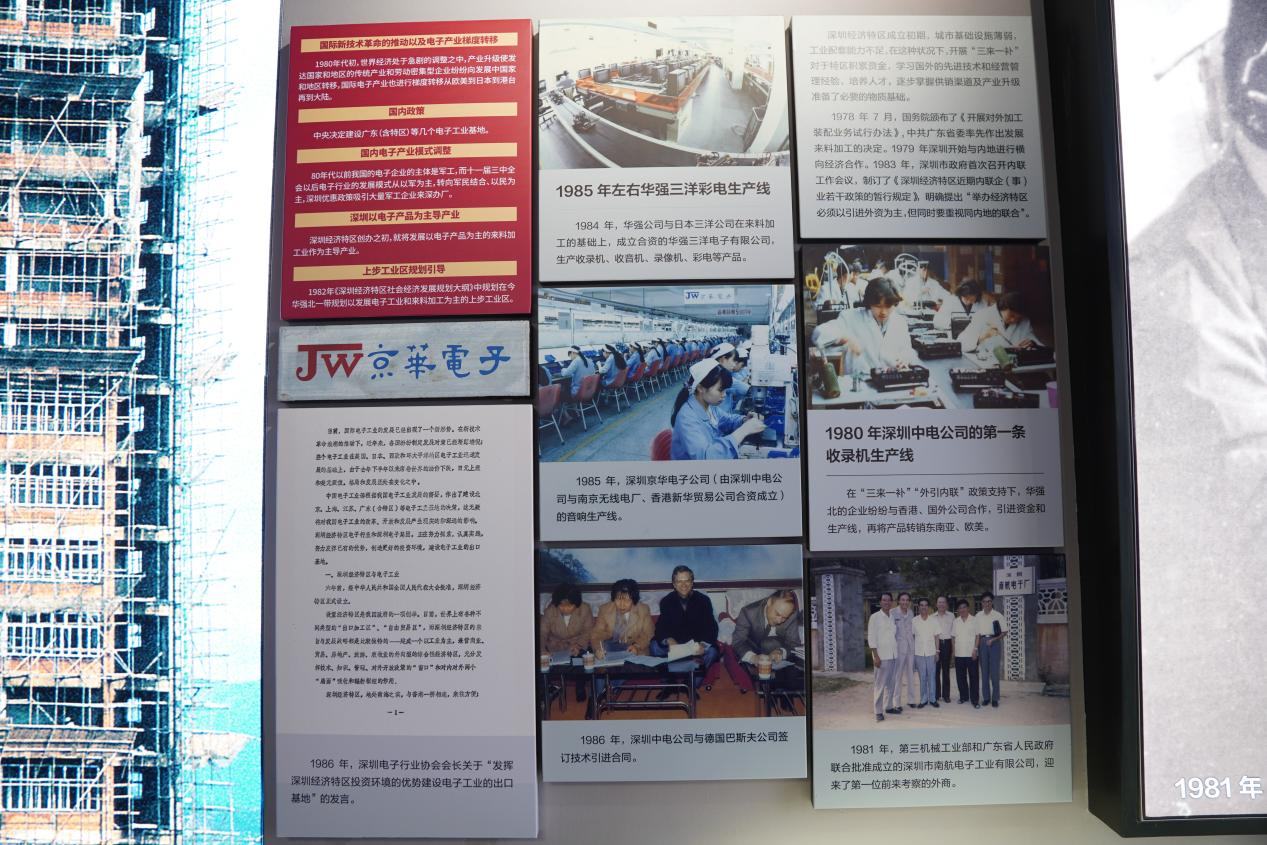
Hong Kong brought not only industrial relocation to Huaqiangbei but also capital, technology, and international management expertise. In the early stages of China's reform and opening-up policy, Shenzhen lacked access to advanced technology, equipment, and capital; however, leveraging its geographical proximity to Hong Kong, many cutting-edge international technologies and components could be introduced into mainland China via the Luohu Bridge. Hong Kong-based businesses established factories in the Shangbu Industrial Zone through joint ventures and cooperative arrangements, introducing advanced electronic manufacturing technologies and international corporate management practices, thereby laying the industrial foundation for Huaqiangbei.
Leveraging Hong Kong's extensive international trade network, Huaqiangbei has been able to swiftly integrate into the global market. As a free port and a key gateway for international trade, Hong Kong boasts a robust logistics system and a vast network of overseas customers. Components imported from abroad enter Huaqiangbei via Hong Kong, while products manufactured in Huaqiangbei are distributed worldwide through Hong Kong. This two-way flow—combining "bringing in" and "going global" —has transformed Huaqiangbei from a mere industrial zone into a leading electronics trading hub that connects the Chinese mainland with global markets.
With the development of the industrial sector, Huaqiangbei has established a collaborative model known as the "front-store, back-factory" framework. In his book *Song Shiqiang's Perspectives on Huaqiangbei, Shenzhen*, Song Shiqiang, General Manager of SAKO Micro/Jinhangbiao, noted that the area initially utilized the "Three Inputs and One Compensation" bonded processing model – based on imported materials – to accommodate industrial relocation; this model later evolved into the "front-store, back-factory" business approach: Huaqiangbei serves as the "store" responsible for distribution and trading, while surrounding cities act as the "factory" handling production and manufacturing. This division of labor has significantly shortened the time required to transform product concepts into mass production, collectively shaping the distinctive industrial character of Huaqiangbei.
To date, the collaboration between Hong Kong and Huaqiangbei continues to deepen. Evolving from initial processing trade to current supply chain synergy, the electronics industries of both regions have established a complementary relationship. Hong Kong's strengths in international finance, shipping, and trade complement Huaqiangbei's advantages in manufacturing, innovation, and supply chain management, jointly driving the high-quality development of the electronic information industry across the Greater Bay Area.
Note: The data and information in this article are sourced from authoritative reports and materials. Should there be any instances of copyright infringement or inaccuracies, please feel free to contact us.
What are the "Eight Scenes of Huaqiangbei"? And what are their contemporary significance?
2026-09-04
1269
Figure 1: Song Shiqiang, General Manager of Kinghelm and Slkor, inspecting Huaqiangbei
The selection of the "Eight Scenes of Huaqiangbei" was jointly initiated by the Futian District Culture, Radio, Television, Tourism and Sports Bureau and the Huaqiangbei Sub-district Office. It was determined through public surveys and multiple rounds of expert review, and officially announced and promoted on August 18, 2021.
List of the Eight Scenes of Huaqiangbei:Electronic Sky Street, Shanghai Hotel, Tencent Starting Point, Huaqiang Historical Mirror, Saige Panorama, One-Meter Counter, China Aviation Nightscape, and Maker Ark.
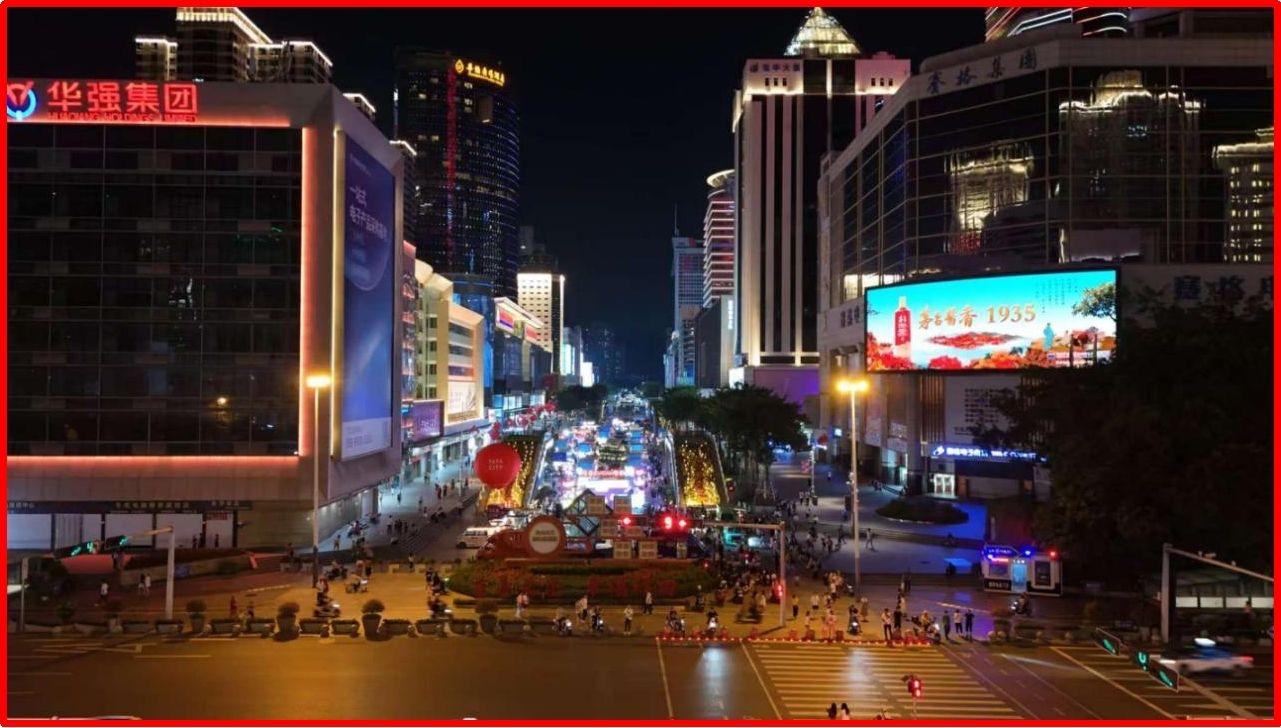
Electronic Sky Street– Huaqiangbei Pedestrian Street, known as "China's No. 1 Electronic Street";
Shanghai Hotel– the original coordinate point of Shenzhen, carrying memories of hard struggle;
Tencent Starting Point– the cradle of a major company, symbolizing the entrepreneurial spirit of Huaqiangbei;
Huaqiang Historical Mirror– the Huaqiangbei Museum, behind which lies Shenzhen's and even China's "dream of development," "dream of innovation," and "dream of entrepreneurship";
Saige Panorama– Saige Plaza, the world's tallest steel-concrete composite structure building designed and constructed entirely by China;
"One-Meter Counter"– the iconic symbol and epochal microcosm of Huaqiang Electronic World, representing the entrepreneurial spirit and business legend of Huaqiangbei, and has become a symbol of Huaqiangbei and a sign of the "Shenzhen Dream";
China Aviation Nightscape– Zhonghang Street & Tianhong Shopping Mall, representing the fashion, trend, and leisure underneath Huaqiangbei's high-tech exterior;
Maker Ark– Zhifang Innovation Center, the birthplace of the new generation of maker spirit.
Figure 2: Song Shiqiang, General Manager of Kinghelm and Slkor, touring the "Eight Scenes of Huaqiangbei"
The "Eight Scenes of Huaqiangbei" trace the complete development trajectory of Huaqiangbei from an industrial zone → to the No. 1 electronics street → to a tech-fashion-culture block. They serve as cultural carriers of reform and opening-up, entrepreneurship and innovation, and urban transformation and upgrading. This is in full alignment with the "daring, innovative, resilient, and pragmatic" culture of Huaqiangbei, as distilled by Kinghelm (www.kinghelm.com.cn) and Mr. Song Shiqiang of Slkor. Their contemporary significance can be elaborated from five dimensions: history, spirit, industry, city, and culture-tourism:
They are living fossils that engrave the reform and opening-up of the special economic zone, preserving the city's collective memory;
They carry forward the spiritual core of innovation and entrepreneurship in Huaqiangbei;
They mark Huaqiangbei's shift from a "trade market" onto a new track of "technology – culture – fashion";
They shape the cultural IP of Huaqiangbei and enhance Shenzhen's cultural identity as a city;
They offer a demonstration model for the rest of the country.
Mr. Song Shiqiang notes that the "front-shop-back-factory" model of Huaqiangbei continues to exert its power. Kinghelm will soon open a "Kinghelm" specialty store in Huaqiangbei, with products including Type-C, SMA, IPEX, MCX, HDMI connectors, automotive wiring harnesses, adapter cables, pin headers, terminals, RF cables, Kinghelm (www.kinghelm.net) antennas, GPS antennas, RF coaxial connectors, WiFi antennas, Beidou antennas, and more.
In short, the Eight Scenes of Huaqiangbei are not just eight scenic spots, but a three-dimensional, readable history of the block's development: looking back, they preserve the memory of reform and opening-up struggle; grounding the present, they empower the transformation of the business district; looking forward, they pass on the spirit of innovation and entrepreneurship, making Huaqiangbei a typical model for urban renewal, industrial upgrading, and integrated cultural-commercial-tourism development in Shenzhen and across China. Today's Huaqiangbei turns more great ideas into reality, strives to build a hardware innovation ecosystem, creates an internationally influential innovation and entrepreneurship base, and develops new cultural-tourism consumption scenarios that integrate culture, tourism, and technology—offering a unique dating destination for the younger generation.
Note: The data and references in this article are based on authoritative reports and materials. Please contact us if any content infringes copyright or is inaccurate.
Into how many main stages can the development of Huaqiangbei be divided?
2026-09-03
1152
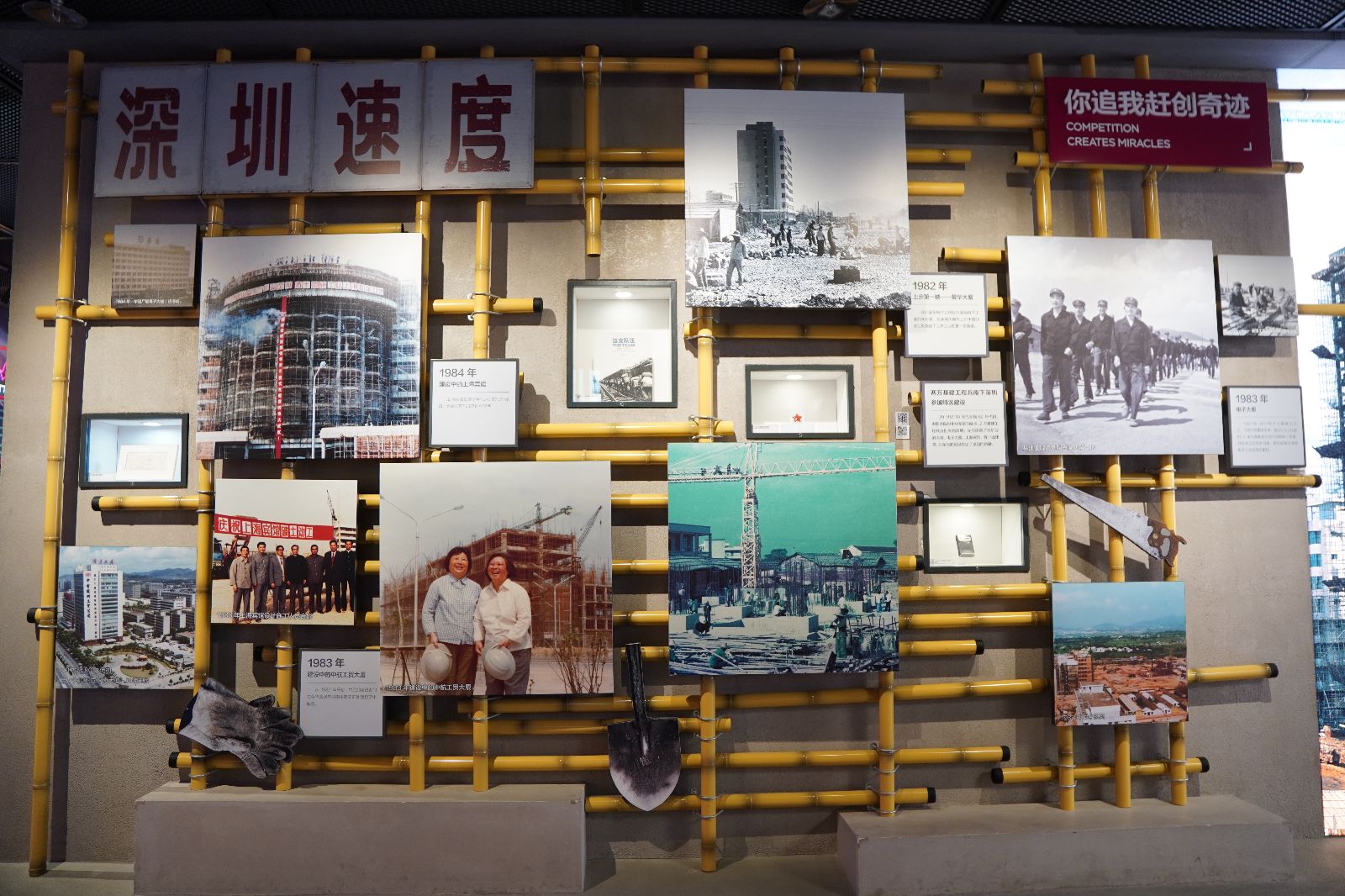
Photo taken at the Huaqiangbei Museum
The development trajectory of Huaqiangbei can be broadly divided into the following five stages:
Phase I: The Industrial Foundation Period (1979–1988). As Shenzhen's earliest developed industrial zone, the Shangbu Industrial Zone hosted a number of large enterprises, including SEG, Huaqiang, and Laiyinda. In March 1988, the SEG Group utilized its existing industrial facilities to establish the SEG Electronic Supporting Market—a move widely regarded as the birthmark of Huaqiangbei.
Phase II: Market Prosperity Period (1988–2007). The SEG Electronics Market was gradually expanded to cover the entire building, and the Huaqiang Group promptly followed suit by converting its factory premises into the Huaqiang Electronics Market. In 1994, Wanjia Department Store moved in, effectively revitalizing the surrounding commercial environment; subsequently, the "One-Meter Counter" phenomenon emerged, and the "front-store, back-factory" model took shape. After China joined the World Trade Organization in 2001, global demand for electronic components surged significantly. Specialized markets such as the Metropolis Building and New Asia were successively established, and Huaqiangbei's customer base and sales network began to expand internationally.
Photo taken at the Huaqiangbei Museum
Phase III: The Peak Era of Copycat Mobile Phones (2007–2013). In 2007, the mobile phone production licensing system was abolished, leading to a rapid expansion in the scale of mobile phone manufacturing and shipment at Huaqiangbei. According to relevant statistics, the annual shipment volume had reached approximately 150 million units by around 2006. In 2008, Huaqiangbei was honored with the title of "China's No.1 Electronics Street"; its daily visitor traffic once ranged between 500,000 and 800,000 people, and the area gave rise to numerous billionaires.
Phase IV: The Transition Adjustment Period (2013–2020). Between 2013 and 2017, the construction of Metro Line 7 led to the closure of major thoroughfares and constrained transportation conditions; simultaneously, the decentralization of online e-commerce diminished the bustling foot traffic in Huaqiangbei. Coupled with the government's strengthened efforts to protect intellectual property rights and its crackdown on the sale of counterfeit products, this situation resulted in a significant exodus of merchants and the recurrent emergence of vacant storefronts, subjecting the overall commercial ecosystem to substantial adjustment pressures.
Phase V: The Era of New Quality Productivity and the Rise of the Maker Movement (2020–Present). In early 2025, Huaqiangbei was designated as the "Leading Street for the Origin of New Quality Productivity." Building upon its well-established smart hardware supply chain hub, government authorities actively promoted the development of a maker ecosystem, with a focus on emerging sectors such as drones, AI glasses, and robotics. The region's annual transaction volume grew from approximately RMB 400 billion in 2024 to around RMB 480 billion in 2025; the average daily number of foreign buyers and visitors exceeded 7,000, reflecting a steadily increasing level of internationalization.
Note: The data and information in this article are sourced from authoritative reports and materials. If you identify any instances of copyright infringement or inaccuracies, please contact us.
When was the Shangbu Industrial Zone established? What is its relationship with Huaqiangbei?
2026-08-28
1347
The Shangbu Industrial Zone was the precursor to the Huaqiangbei business district. In the early 1980s, the Shenzhen Municipal Urban Construction Planning Committee decided to develop an industrial zone centered on the electronics industry and contract manufacturing operations in the area now known as Huaqiangbei, naming it the Shangbu Industrial Zone. At that time, the Shenzhen Special Economic Zone had been established only recently; the Shangbu Industrial Zone was considered part of the suburban area and was one of the first industrial zones planned under Shenzhen's "Attracting Domestic Resources and Linking with External Markets" strategy. Large enterprises operating in the machinery, energy, aviation, electronics, and textile industries concentrated their investments or established branch offices here; buildings such as the CGN Building, AVIC Garden, China Electronics, Aihua, Sanga, and Jinghua were successively completed. Among the six major municipal state-owned enterprise groups, the headquarters of five—Sage, Energy, Petrochemicals, Textiles, and Light Industry—were all located here, and over a hundred joint ventures invested in this area, forming a "clustered, segmented" industrial space along the main thoroughfare.
Photo taken at the Huaqiangbei Museum
Huaqiangbei is the core area of the Shangbu Industrial Zone. In March 1988, the SEG Group established the SEG Electronic Supporting Market on Huaqiangbei North Road; initially, it comprised more than 160 manufacturers and 10 Hong Kong-based businesses operating under their own management and sales systems, marking the embryonic form of the Huaqiangbei electronics market. In 1994, the "Wanjia Department Store" – a subsidiary of the Vanke Group – opened its doors in this area, revitalizing the local commercial scene. Subsequently, various commercial projects—including the Manha Shopping Mall, Women's World, New Dahao Garment City, and Golden Lighting – were successively launched, further enhancing the vibrant commercial atmosphere of Huaqiangbei.
With the rise of the electronics manufacturing industry in the Pearl River Delta, the demand for electronic components surged significantly. Driven by leading enterprises such as Huaqiang Electronics Market and SEG Electronics Market, specialized electronics markets—including Xin Asia, Gaoke De (the former site of the Xin Dahao Garment City), and Guoli—emerged successively, while markets for categories such as watches, gifts, 3C digital products, and telecommunications equipment also began to establish themselves in the area. This commercial prosperity led to rising rental costs, prompting factories within the industrial zone to gradually relocate. As a result, the Shangbu Industrial Zone transformed from a traditional factory district into the "Huaqiangbei Business District" and an electronic component trading hub, ultimately evolving into the nationally renowned "China's No.1 Electronics Street."
Note: The data and information in this article are sourced from authoritative reports and materials. If there is any infringement or inaccuracies, please contact us.
Why is it said that "Huaqiang came before the road"? What are the narrow and broad definitions of Huaqiangbei?
2026-08-25
1287
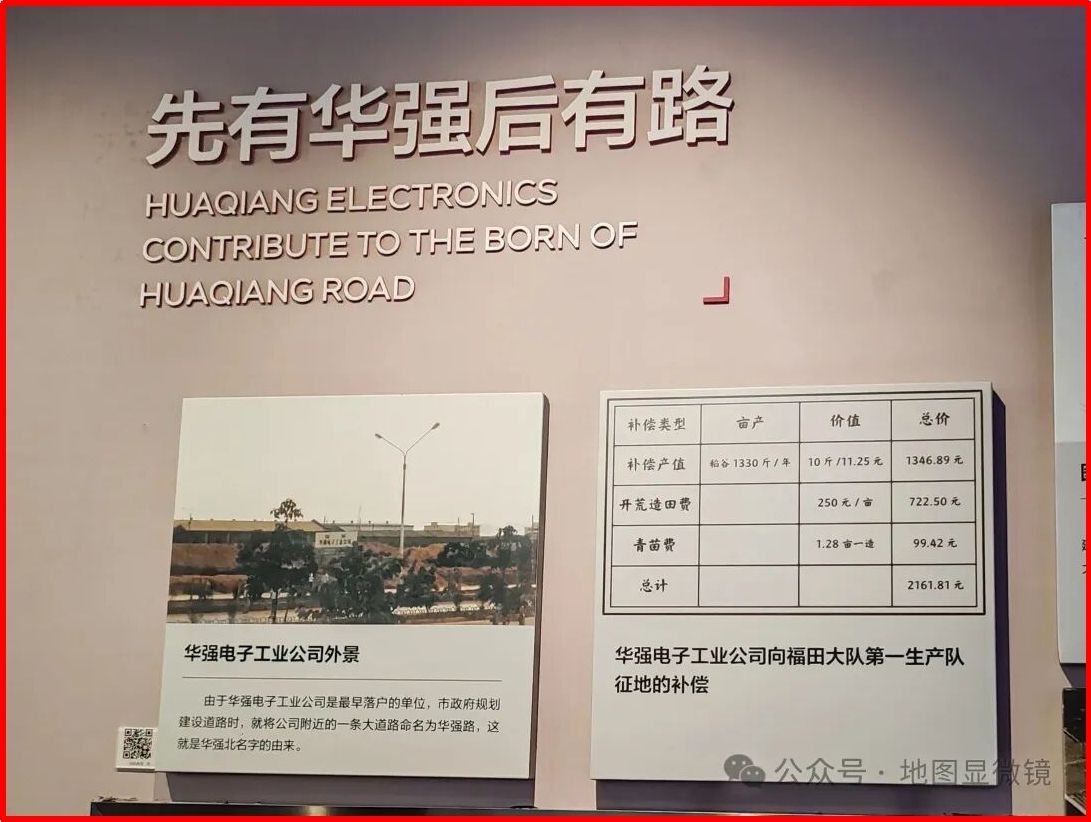
Image source: Internet
"Huaqiang came before the road" is a well-known saying in Shenzhen’s Huaqiangbei. It refers to the historical origin that "first there was the Huaqiang factory, and then the municipal road was named after Huaqiang."
Development sequence: Huaqiang Company (factory established in 1979) → Huaqiang Road (named later) → Huaqiangbei commercial district.
Originally, the Huaqiang Electronics Factory was located in the mountainous area of northern Guangdong. In response to the national call to support Shenzhen’s development, it relocated to the Shangbu Industrial Zone in Shenzhen. Later, it formed a joint venture with Japan's Sanyo Electronics to produce "Huaqiang Sanyo" brand televisions. Since Huaqiang Industrial Company was the first enterprise to settle in the area, when the municipal government planned and built roads, it named a main avenue near the company "Huaqiang Road." Only then did Huaqiangbei come into existence, hence the saying "Huaqiang came before the road."
Song Shiqiang, General Manager of Kinghelm (www.kinghelm.net) and Slkor (www.slkoric.com), Discusses Huaqiangbei
"Huaqiang came before the road" also symbolizes Shenzhen’s early special zone development model—"enterprises first broke ground, then urban infrastructure followed"—and epitomizes the origins of Huaqiangbei.
In the narrow sense, Huaqiangbei refers specifically to the main trunk of Huaqiang North Road, running from Shennan Middle Road in the south to Hongli Road in the north, with a length of 930 meters. This is the pedestrian commercial street where tourists now shop and stroll, flanked by major landmarks such as Saige Plaza, Huaqiang Electronic World, Manha Shopping Mall, and Yuanyang Digital City.
In the broad sense, "Huaqiangbei commercial district" refers to the entire electronics trading area centered on Huaqiang North Road. It stretches from Yannan Road in the east to Huafu Road in the west, Shennan Middle Road in the south, and Hongli Road in the north, covering an area of 1.45 square kilometers. The core commercial district includes all 35 specialized electronics markets, as well as all commercial buildings in Huaqiangbei such as Zhonghang City, Tianhong, Maoye Women’s World, and also the unified office buildings and World Trade Plaza on the south side of Shennan Middle Road. When people in the electronics wholesale and sourcing trade say "come to Huaqiangbei," they almost always mean the broad Huaqiangbei—it represents a commercial zone, an atmosphere, and the vibrant subtropical urban vibe.
It is worth noting that many people confuse the administrative area with the commercial district. However, "administrative district ≠ commercial district" and "Huaqiangbei Subdistrict ≠ Huaqiangbei commercial district." The administrative subdistrict is much larger than the "commercial Huaqiangbei" that people commonly know. Huaqiangbei Subdistrict Office was established in 2009, and its administrative jurisdiction is larger: it runs from Hongling Road in the east to Huafu Road in the west, Shennan Road in the south, and Hongli Road in the north, covering 2.96 square kilometers. This includes the 1.45-square-kilometer commercial district, as well as large residential and governmental areas such as Tongxinling, the Municipal Party Committee compound, and Lychee Park.
Note: The data and information in this article are referenced from authoritative reports and materials. If any infringement or errors exist, please contact us for removal.
The Origin of the Name "Huaqiangbei"
2026-08-21
1242
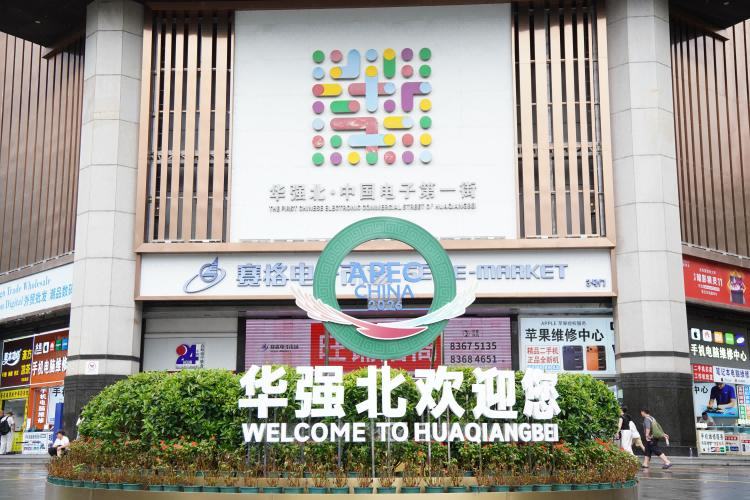
The name "Huaqiangbei" originates from the Huaqiang Group. In 1979, the Guangdong Provincial Bureau of Electronic Industry relocated electronics factories from northern Guangdong to Shenzhen and established the Shenzhen Huaqiang Electronic Industry Company.The two characters "Huaqiang" symbolize"a strong and prosperous China" . When planning and constructing roads, the Shenzhen municipal government named the road near the company Huaqiang Road. Later, as Shennan Boulevard intersected with Huaqiang Road, the road was divided into northern and southern sections: the part south of Shennan Road became Huaqiang South Road, while the area north of the road was abbreviated as "Huaqiangbei".
Photo: Huaqiangbei
In the early days of the Shenzhen Special Economic Zone, this area was nothing but remote paddy fields. As enterprises such as the Huaqiang Group and Laiyinda Group successively set up factories here, along with institutions in machinery, energy, aviation, electronics, and textiles, the area became the Shangbu Industrial Zone of Futian District. It was home to electronics companies including Huaqiang Electronics, China Electronics, SEG Electronics, Jinghua Electronics, Aihua Electronics, and SED Philips, laying the foundation for the development of Huaqiangbei's electronic information industry.
In 1994, Wanjia Department Store, a subsidiary of Vanke Group, moved from Youyi City in Luohu District to Huaqiangbei. Its business boomed, driving the opening of malls such as Women's World, Shunde Home Appliances, Manha Department Store, Golden Lighting, Wanfang Computer City, and International Audio City. Huaqiangbei gradually transformed from an industrial zone into a commercial center. Subsequently, more than 50 specialized markets opened one after another, including the Pacific Security Market, Gift Market, Watch and Clock Market, Baohua Communications Market, Oriental Fashion Plaza, Tongbao Second-hand Market, and Causeway Bay Department Store on nearby Huabei Road. These developments established Huaqiangbei as a famous commercial district in Shenzhen, rivaling the Dongmen commercial district in Luohu District in influence. The booming business of Huaqiangbei Electronics World and the completion of the SEG Plaza drove growth in integrated circuit sales and brought large crowds to Huaqiangbei. In October 2008, the China Electronics Industry Association awarded Huaqiangbei the title of "China's No. 1 Electronics Street."
In July 2009, to better serve and manage the Huaqiangbei commercial district, the Futian District government officially established the Huaqiangbei Subdistrict. Huaqiangbei has since developed into a world-renowned electronics distribution hub, with integrated circuits and 3C digital products sold worldwide. In April 2024, "Huaqiangbei" was selected for Shenzhen's first batch of geographical name protection list, categorized under "reform and opening-up place names," becoming an important witness to Shenzhen's reform and opening-up history. Song Shiqiang, General Manager of Kinghelm and Slkor, believes that Huaqiangbei is a showcase of China's economic achievements from reform and opening-up.
Note: The data and materials in this article are referenced from authoritative reports and sources. If there is any infringement or error, please contact us for removal.
Who can clearly and convincingly explain the past, present, and future of Huaqiangbei?
2026-08-20
1324
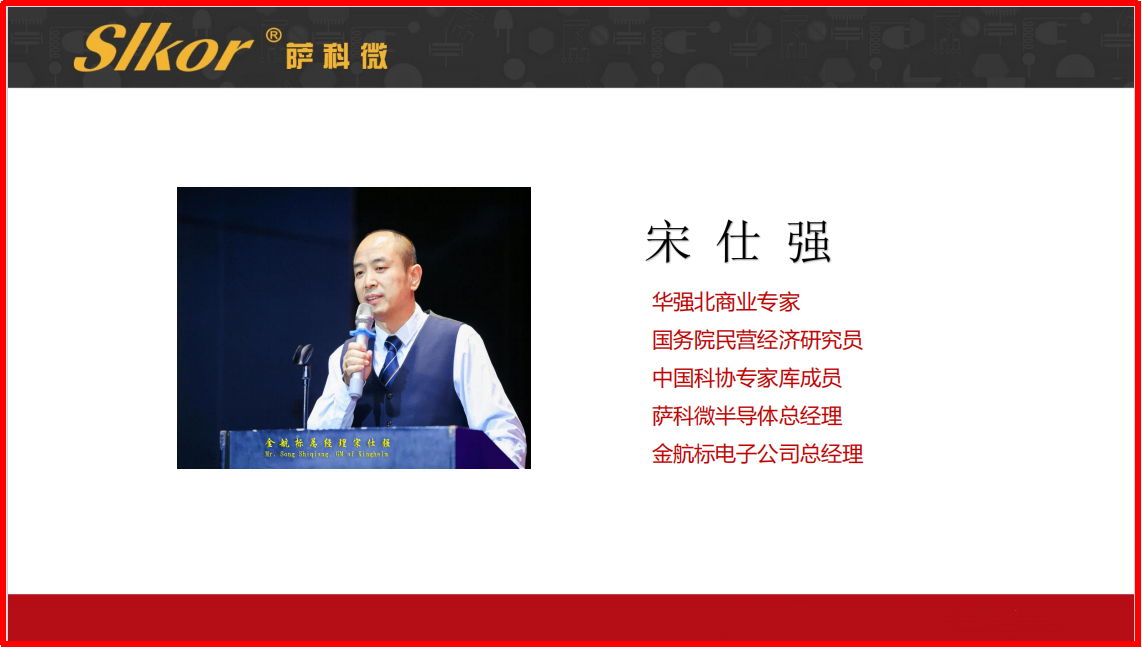
Song Shiqiang, General Manager of SIkor and Kinghelm
Song Shiqiang is a Huaqiangbei business expert, startup mentor, and lecturer at the China Electronics Institute. He runs two enterprises that have grown up in Huaqiangbei—SIkor Semiconductor (www.slkoric.com) and Kinghelm Electronics (www.kinghelm.net). Combining hands-on experience in the electronic information industry with applied macroeconomic theory, he has systematically sorted out the development logic of Huaqiangbei. His theoretical framework is solid and comprehensive, and the real cases and economic data from his own experience are highly persuasive, while his expression and communication methods are clear and straightforward.
I. The Past of Huaqiangbei
The period before 1994 represents the past of Huaqiangbei. It was when the government, in the early stage of reform and opening-up, laid out the electronic information industry. The first generation of pioneers in Huaqiangbei worked hard to accumulate initial capital, forging the "Huaqiangbei spirit" of daring to fight, daring to innovate, and daring to take risks. This was also the "right time" that enabled Huaqiangbei’s development!
II. The Present of Huaqiangbei
Song Shiqiang believes that Huaqiangbei also enjoys "geographical advantage" and "human harmony." Being adjacent to the economically developed Hong Kong, combined with the global industrial transfer and the demographic dividend of the mainland, these factors converged in Huaqiangbei, giving birth to its unique "self-organizing" social structure and the "front-shop, back-factory" business model. Together with the continuous efforts and boldness of migrant populations, and the combination of "try everything not explicitly forbidden" with opportunism, as well as the entrepreneurial spirit of staking one’s fortune on tomorrow, these elements created the brilliance of Huaqiangbei today. This was the budding of Huaqiangbei’s entrepreneurial spirit, which later evolved into the "Huaqiangbei culture"!
III. The Future of Huaqiangbei
Song Shiqiang believes that Huaqiangbei is a magical place. As long as one thinks diligently, analyzes rationally, follows the course of historical development, and aligns with economic laws, the small and medium-sized enterprises in Huaqiangbei still have opportunities for growth. However, urgent transformation and upgrading are needed. The government-advocated model of "bringing in makers and letting entrepreneurs go global" is gradually taking effect. SIkor (www.slkoric.com) and Kinghelm (www.kinghelm.net), carrying the daring and fighting genes of Huaqiangbei, have already entered the fast track of development. On August 14, 2026, SIkor opened its third branded direct-sale store in Huaqiangbei—a vivid example of a local enterprise continuing to deepen its presence in the business district and steadily grow.