






















Service Hotline
Perspectives

Perspectives


How to Achieve 100% Growth in 2023? Slkor Song Shiqiang Tells You the Password (Part 4)
2026-11-04
67
In recent years, China's economy has encountered many troubles, but Kinghelm Electronics (www.kinghelm.net) and Slkor Semiconductor (www.slkoric.com), led by Song Shiqiang, still maintained 100% continuous growth in 2022 and 2023, completing the preliminary goal of 100 million yuan in annual sales and meeting the financial requirements for ChiNext listed companies. We are still working hard, continuously striving toward the goal of the STAR Market, and continuously strengthening the fundamentals of the company's business management. Is there any secret to this? I, Song Shiqiang, will explain it from several aspects: grasping the core value of the industry, strong operations of the company's internal management, micro-innovation by company colleagues to systematic innovation of the company, and treating the domestic and overseas involution in the electronic components industry as a war to fight!
Slkor Kinghelm Song Shiqiang speaking at the Positive Energy Annual Meeting.
In today's highly competitive business environment, Kinghelm/Slkor has achieved remarkable results with a complete set of successful tactics. By selecting twelve key points in four major modules, we have summarized the successful experience of our phased high-speed development to share with everyone. In How to Achieve 100% Growth in 2023? Slkor Song Shiqiang Tells You the Password (Part 1), How to Achieve 100% Growth in 2023? Slkor Song Shiqiang Tells You the Password (Part 2),
and How to Achieve 100% Growth in 2023? Slkor Song Shiqiang Tells You the Password (Part 3), I already shared three major points: core value, the three-core drive, and strong operations. Next, I will talk about the last point—fighting instead of involuting—for everyone's reference.
Everyone says this year's situation is very "involution"—domestic involution and overseas involution are both called involution. But I think the word "involution" is still relatively neutral. Our Kinghelm and Slkor company calls it "fighting." We learn from Huawei and regard every project as a battle or campaign—that is, fighting instead of involuting. Our routine (that is, methodology) is: after the frontline market and sales personnel understand market and product information, the R&D team immediately follows up, and all logistics personnel serve them, doing everything possible to win the battle. Slkor/Kinghelm's internal training is not limited to management and operations.I also encourage middle and senior managers to read books on strategic thinking and leadership, such as the German-written On War, The Art of War, and Van Fleet's theory of concentrated resource deployment.
The economy is relatively challenging at present. Our business operations must be approached with the determination and discipline of a competitive campaign—we are committed to winning. For example, I learned the concept of the "Van Fleet resource allocation rate" when studying the Battle of Shangganling.We apply it in our work. For example, when Slkor/Kinghelm does internet marketing, we have invested several million in advertising overseas, and the Slkor trademark once reached 128 million search results on the overseas Bing engine. In today's internet era, for an international enterprise and brand to have no search results on the overseas internet, no search results on Google and Bing, success is impossible in the internet era.
Kinghelm wire-to-board connectors, FPC connectors, and terminal block products.
The websites of Kinghelm (www.kinghelm.com.cn) Electronics and Slkor (www.slkomicro.com) Semiconductor now have 100,000 page views per day. We have invested a lot of energy in collecting and producing massive amounts of material and have a strong collaborative team to support this work. In non-physical space—that is, the space of the internet—we can achieve saturated attacks of industry information. Our product information and brand news dangle in front of our customers and potential customers every day; they would be embarrassed not to place an order with us. Just now, Brother Aguang from Huaqiangbei interviewed me. The internet is currently the most efficient tool. In the non-physical space around us is an ocean composed of information. The internet is a net in the ocean of information; when information is connected on it, business opportunities are generated. We need to weave a fishing net on the internet. How can we catch more fish? The elements are: first, the net must be large enough; second, the mesh of the fishing net must be dense enough; third, the boat dragging your net must run fast. In our actual work, we follow this idea. We collect the trademark words and product words of Kinghelm and Slkor, such as Beidou antenna, RF connectors, and diodes, transistors, and MOSFETs,as well as industry words such as electronic information, electronic components, and integrated circuits, and target user words, in both Chinese and English, increasing the number of placements every day and continuously accumulating—this is making the net bigger; continuously optimizing and improving keyword precision and improving conversion rates—this makes our fishing net mesh denser and denser; continuously streamlining the company's business processes, continuously enriching the team, and practicing basic skills hard—the team's boat runs faster and faster, and the company will develop in a compound manner! With the tactic of saturated information attacks, Kinghelm and Slkor are currently developing very well.
Let us talk about On War. On War is the representative work of the German war theorist Clausewitz. Huawei's Ren Zhengfei often says that an excellent general needs to take out his heart in the vast darkness, ignite the soldiers' morale, and illuminate the team's path forward. This quotes Clausewitz: war is a contest of the willpower of the generals on both sides. On War has both a complete theoretical system and data support; the rigor of the Germans is evident. Kinghelm and Slkor cite Clausewitz's theories and data in every project. For example, business expansion can also be regarded as a kind of "war"; we need to concentrate superior forces to do things like fighting a war. For another example, when Kinghelm developed Beidou/GPS antennas, the point of superior forces was stronger than others, which enabled us to win in the competition, while our competitors basically collapsed. However, when Slkor first started making silicon carbide (SiC) power devices, insufficient force investment led to defeat by others, and the tens of millions invested in the early stage did not see returns. This further illustrates the importance of single-point breakthrough and coordinated operations. Therefore, the single-point breakthrough mentioned earlier includes the coordinated operations of the entire group and the ability of frontline people to adapt to circumstances; these are all things we must continuously learn. Our Kinghelm and Slkor are a combat-oriented organization. This style keeps us in a leading position in the competition and continuously achieves success. Otherwise, we would go from looking at technology, teams, projects, and trends to finally ending up as gatekeepers just to make a living!
Slkor/Kinghelm Song Shiqiang interviewed by Faren magazine.
The Art of War is the classic work of Sun Wu, the ancient Chinese strategist. It is a classic book on strategy that leaders and decision-makers throughout history have studied. Beyond the field of strategy, we can see many entrepreneurs, including many team leaders, studying it. Some classic concepts such as "troops have no constant momentum, water has no constant shape" and "defend the orthodox and win by surprise" all come from this book. Everyone is studying it, but some still lose competitions and see their businesses fail. How can we outperform our competitors? How can we establish our own market position and achieve sustainable growth? These are the questions we need to explore through this book. In our Slkor and Kinghelm companies, I require every operational team and every team member to maintain high standards, and the entire organization must remain strong and competitive.Leaders and team backbones must have outstanding abilities and qualities. Moreover, when doing things, leaders must charge at the very front. In the company, I, Song Shiqiang, am the model worker. Everyone sees me writing jokes and telling jokes every day, but in fact, the company's high-speed development is still driven by senior management and backbones. Slkor/Kinghelm's development is driven by technology and products, and it requires the accumulation of high-quality labor.The development of Slkor and Kinghelm does not rely on official endorsements, nor does it involve superficial actions or misleading materials to gain improper benefits. On the contrary, Kinghelm and Slkor drive the company's growth through strong operational capabilities and superior product quality. This is our core competitiveness. Only by staying true to these principles can Slkor and Kinghelm succeed in the marketplace, enabling the team to achieve sustainable growth and even greater accomplishments.
Slkor/Kinghelm Song Shiqiang training new employees.
In the four articles of How to Achieve 100% Growth in 2023? Slkor Song Shiqiang Tells You the Password, I, Song Shiqiang, have summarized the four major blocks of the company's development, each divided into three sub-sections. These 12 points are the foundation supporting our company's continuous progress and the key factors for the company's success. Our Slkor/Kinghelm advances step by step, reviewing all the details in the process once a month, reflecting and adjusting continuously throughout the year. With this set of combined punches, we are already very strong. Then in the second year, Kinghelm and Slkor repeat these things and make some adjustments and optimizations. Therefore, our company has laid a good foundation, progresses quickly, and works solidly. All achievements come from our diligent study, hard practice, hard work, and continuous progress, which have brought us today's small achievements. The sharing of How to Achieve 100% Growth in 2023? Slkor Song Shiqiang Tells You the Password ends here. Thank you, everyone!
Kinghelm I/O connectors, RJ45/RJ11, HDMI, and USB products.
Profile of Song Shiqiang:
Mr. Song Shiqiang is the General Manager of two high-tech companies, Slkor Semiconductor and Kinghelm Electronics, a member of the expert database of the Chinese Institute of Electronics, a Shenzhen Huaqiangbei research expert, and a columnist and popular science writer. Song Shiqiang started as a grassroots technical person, has served as CEO of an international real estate listed company, has rich experience in technical management and business operations, combines macroeconomic theory with real business management, and leads the company's rapid development! Song Shiqiang's (Huaqiangbei Song Shiqiang) research articles on Huaqiangbei, such as The Wealth Code of Huaqiangbei, Huaqiangbei Research, The Transformation and Development of Huaqiangbei, A Refutation of Bloomberg's Huaqiangbei News, The Software and Hardware Upgrade of Huaqiangbei's Transformation, and The Gray Industrial Chain of Knockoff Bluetooth Earphones in Huaqiangbei, have been republished by authoritative media at home and abroad such as People's Daily, Xinhua News Agency, Global Times, Associated Press, Yahoo News, The Wall Street Journal, and Harvard Business Review. This is to purify Huaqiangbei's business environment and spread "China Electronics Street" Huaqiangbei to the world! The short video series Song Shiqiang on the Way is popular on short video platforms such as YouTube, TikTok, and Bilibili.
Slkor/Kinghelm Song Shiqiang speaking at ECAS.
The Slkor Semiconductor and Kinghelm Electronics companies invested in by Mr. Song Shiqiang are headquartered in Shenzhen, China, and are both national high-tech enterprises. The Slkor (www.slkoric.com) and Kinghelm (www.kinghelm.net) brands enjoy international visibility and reputation, and their market share is gradually expanding. Shenzhen Slkor Semiconductor Co., Ltd. focuses on the R&D of new materials, new processes, and new products. Its technical team comes from Yonsei University in Korea and Tsinghua University, and it masters internationally leading silicon carbide MOSFET technology. Slkor has developed from a FABLESS design company into a company integrating design and R&D, production and manufacturing, product sales, and technical services.

How to Achieve 100% Growth in 2023? Slkor Song Shiqiang Tells You the Password (Part 3)
2026-11-04
64
In recent years, China's economy has encountered many troubles, but Kinghelm Electronics (www.kinghelm.net) and Slkor Semiconductor (www.slkoric.com), led by Song Shiqiang, still maintained 100% continuous growth in 2022 and 2023, completing the preliminary goal—annual sales of 100 million yuan—and meeting the basic financial requirements for ChiNext listed companies. We are still working hard and continuously striving toward the goal of the STAR Market. Is there any secret to this? I, Song Shiqiang, will explain it from several aspects: grasping the core value of the industry, strong operations of the company's internal management, micro-innovation by company colleagues to systematic innovation of the company, and treating the domestic and overseas involution in the electronic components industry as a war to fight!
Slkor Kinghelm Song Shiqiang at the Positive Energy Annual Meeting.
In today's highly competitive business environment, Kinghelm/Slkor has achieved remarkable results with a complete set of successful tactics. By selecting twelve key points in four major modules, we have summarized the successful experience of our phased high-speed development to share with everyone. In How to Achieve 100% Growth in 2023? Slkor Song Shiqiang Tells You the Password (Part 1) and How to Achieve 100% Growth in 2023? Slkor Song Shiqiang Tells You the Password (Part 2), I already shared two major points: core value and the three-core drive. Next, I will use three sub-points—scientific analysis, process and efficiency, and single-point first—to explain how Slkor/Kinghelm maintains growth through strong operations, for everyone's reference.
Our Kinghelm/Slkor is a high-tech company with strong operations. Many peers think that as a technology-oriented and R&D-oriented company, there is no need to talk about operations; technological leadership and product leadership are enough. However, my understanding is that technology ultimately serves products, products serve operations, and operations management serves customers. Therefore, strong operational capability is crucial for any company. To make operations faster and stronger, Kinghelm/Slkor has adopted the method of scientific analysis—in short, finding benchmarking companies to learn from or catch up with, and analyzing them thoroughly. For example, we study Huawei's "five looks and three determinations" methodology, absorb their good points, improve them according to our company's specific situation, and continuously iterate, so that we can become stronger.
In addition, Kinghelm/Slkor breaks down tasks very carefully, making the granularity of each work module small, down to each person. The weekly workload of each small team is also refined into operable and executable tasks. Such detailed decomposition is not simple, but it is very
important, because only in this way can the feasibility of the work and the quantifiability of the assessment be ensured. For example, some people say every day that they love the country but just do not act, which is hard to operate and quantify. I say you should donate 500 yuan to the country or pay 1,000 yuan in taxes—that is what matters most. Although Kinghelm/Slkor has not yet implemented KPI assessment, everyone knows what they need to do and how much they need to do. Our philosophy is that all work results are the accumulation of positive labor. We implement work to a refined and operable degree, and it can be converted into work results and bring benefits on the same day. Scientific analysis establishes and makes good use of the underlying logic and growth model of growth, so that Kinghelm/Slkor (www.slkomicro.com) can develop with twice the result and half the effort and achieve operational goals.
The second point is process and efficiency. Kinghelm (www.kinghelm.com.cn)/Slkor attaches great importance to process and efficiency. We see that China has 1.4 billion people and the United States has only more than 300 million, but our per capita GDP is only about 1/10 of that of the United States. In addition to factors such as comprehensive scientific and technological capability and dollar hegemony, I believe that the company's internal operating processes and efficiency are also an important reason for the gap. American chain catering brands such as KFC, McDonald's, and Starbucks do an excellent job in process management. Domestic chain catering companies that do relatively well, such as Shenzhen's local enterprise Miandianwang and Haidilao, which has risen in recent years, still have a large gap compared with American companies in management and efficiency, and are far behind in terms of the number of stores, food material selection, and product variety. Haidilao has about several hundred stores, and its management has reached the ceiling, while KFC and McDonald's have tens of thousands of stores and good operating efficiency. What do they rely on? They rely on process-based management and highly efficient operations. Therefore, in addition to technology and products, management and efficiency are the foundation for an enterprise to become big and strong. Our Kinghelm/Slkor attaches great importance to internal process optimization and efficiency improvement. We have introduced "Landray" OA software to realize a paperless office system, supplemented by "DingTalk" for daily collaboration. At the same time, we plan to use "Feishu" to further integrate the information system and achieve full connectivity. For our central warehouse, factory, headquarters, sales department, and key accounts, Slkor/Kinghelm uses an advanced Kingdee system and continuously optimizes and improves it on this basis to improve efficiency. We are committed to realizing the four-in-one integration of people flow, workflow, goods flow, cash flow, and document flow, reflecting the processes and efficiency of a modern high-tech company with modern management. The processes and efficiency of a modern management high-tech company are the concrete embodiment of our Kinghelm and Slkor.
The third point is single-point first. As small-scale companies, Kinghelm and Slkor want to break through, and pursuing single-point first is crucial. Some people may think: Kinghelm and Slkor are such small companies, with a team of one or two hundred people, and they dare to boast everywhere about being first at a single point? Here I think Huawei's Yu Chengdong said something very right: if you do not even want to pursue being first and are satisfied with becoming a second- or third-rate enterprise, can you still guarantee the company's competitiveness and rapid growth? Therefore, we must be first at a single point in all aspects of work, life, and products. Slkor was the earliest to introduce silicon carbide technology from Yonsei University in Korea, and at that time our technology was globally leading. However, because our brand influence, team, and other systematic support were insufficient, this project did not make money, but the technology reserve remained. Slkor's current high-speed growth relies on the accumulation from that time. This kind of industry technology is also a manifestation of single-point first.
To achieve single-point first, in practice, you should do everything in your work to the best of your ability. Take myself as an example. I came to shoot a video today. When I was young, I had to put pomade or mousse on my head; now that I have no hair, I do not. But I will tie my tie neatly and iron my shirt neatly. These details represent the image of the company and its products. We have the same requirements for our employees. If we work in technology and products and cannot even dress ourselves well, how can we ensure product quality? Therefore, whether it is every link in work or personal image, we should strive to do our best, and this is also the embodiment of single-point. When one point is made first, it can drive the whole area and inspire other points to pursue second and third. The cumulative efforts of each point can accumulate systematic advantages and ultimately make the company a competitive company. This is my method of operation.
For another example, Kinghelm and Slkor use brand promotion advertorials as a breakthrough point. We select and train a group of colleagues within the company who can write advertorials and continuously dig for content. I also spend the time others use for drinking, playing mahjong, and chasing women on writing articles and short videos, outputting our views, methods, products, and activities in an all-round way, achieving the cumulative effect of "a rope saws through wood and dripping water wears through stone." This is also a kind of [single-point first]! Song Shiqiang's (Huaqiangbei Song Shiqiang) research articles on Huaqiangbei, such as Huaqiangbei Research, The Transformation and Development of Huaqiangbei, A Refutation of Bloomberg's Huaqiangbei News, The Wealth Code of Huaqiangbei, The Software and Hardware Upgrade of Huaqiangbei's Transformation, and The Gray Industrial Chain of Knockoff Bluetooth Earphones in Huaqiangbei, have been republished by authoritative media at home and abroad such as People's Daily, Xinhua News Agency, Global Times, Associated Press, Yahoo News, The Wall Street Journal, and Harvard Business Review. This is to purify Huaqiangbei's business environment and spread Huaqiangbei's "China Electronics Street" to the world! The short video series Song Shiqiang on the Way is popular on platforms such as YouTube, TikTok, and Bilibili, actively offering suggestions for spreading traditional Chinese culture, prospering the economy, and promoting social development!!
Huaqiangbei Song Shiqiang
Profile of Song Shiqiang:
Mr. Song Shiqiang is the General Manager of two high-tech companies, Slkor Semiconductor and Kinghelm Electronics, a member of the expert database of the Chinese Institute of Electronics, a Shenzhen Huaqiangbei research expert, and a columnist and popular science writer. Song Shiqiang started as a grassroots technical person, has served as CEO of an international real estate listed company, has rich experience in technical management and business operations, combines macroeconomic theory with real business management, and leads the company's rapid development!
The Slkor Semiconductor and Kinghelm Electronics companies invested in by Mr. Song Shiqiang are headquartered in Shenzhen, China, and are both national high-tech enterprises. The Slkor (www.slkoric.com) and Kinghelm (www.kinghelm.net) brands enjoy international visibility and reputation, and their market share is gradually expanding. Shenzhen Slkor Semiconductor Co., Ltd. focuses on the R&D of new materials, new processes, and new products. Its technical team comes from Yonsei University in Korea and Tsinghua University, and it masters internationally leading silicon carbide MOSFET technology. Slkor has developed from a FABLESS design company into a company integrating design and R&D, production and manufacturing, product sales, and technical services.

How to Achieve 100% Growth in 2023? Slkor Song Shiqiang Tells You the Password (Part 2)
2026-11-04
91
In recent years, China's economy has encountered many troubles, but against this background, Kinghelm Electronics (www.kinghelm.net) and Slkor Semiconductor (www.slkoric.com) still maintained 100% continuous growth in 2022 and 2023, basically completing the preliminary goal—achieving annual sales of 100 million yuan! This meets the basic financial standards of the ChiNext board for listed companies, and we are still working hard and continuously striving toward the goal of the STAR Market. Is there any secret to this? I, Song Shiqiang, will tell you the answer! I will explain it from several aspects: grasping the core value of the industry, strong internal operations of the company, micro-innovation to systematic innovation from top to bottom, and treating the domestic and overseas involution in the electronic components industry as a war to fight!
Song Shiqiang speaking at the ECAS of the China Information Industry Association.
In today's highly competitive business environment, Kinghelm/Slkor has achieved remarkable results with a complete set of successful tactics. Now, by selecting twelve key points in four major modules, we have summarized the successful experience of our phased high-speed development to share with everyone. In How to Achieve 100% Growth in 2023? Slkor Song Shiqiang Tells You the Password (Part 1), three sub-points—independent controllability, chain leadership, and pricing power—were already shared. Next, I will use three sub-points—continuous innovation, technology and products, and internal management—to explain the driving forces behind our Slkor/Kinghelm's 100% growth for everyone's reference.
The second major point of Slkor/Kinghelm's 100% growth is the driving force of growth. How do we ensure the company's sustained high-speed growth? We have summarized the following three points. First, continuous innovation. Innovation includes micro-innovation. For example, our Slkor/Kinghelm company now has several hundred people. If each person contributes one new idea every day for improving work and technology, increasing efficiency, reducing costs, and reducing losses, the company will get better and better and be more competitive than other peers. Second, Slkor/Kinghelm has been continuously innovating in technology and applying these new technologies to the company's products, launching new products. This has made us develop faster than our peers, and at the same time has given us more industry discourse power and influence, connecting us with high-quality customers. At the same time, our product profits are therefore higher. Slkor Semiconductor's technologically innovative IGBT module packaging technology has brought new products to a gross profit margin of 50%, giving us good economic benefits. Then we have money to continue investing in R&D of new technologies and new products, which will bring a new round of growth.
Professor Zhang Wujun, technical consultant of Kinghelm, providing product training for the foreign trade team.
The second driving force that keeps us developing at high speed is technology, products, and brand. Technology is one of Kinghelm's core competitiveness. Kinghelm has always been based on microwave and radio frequency technology. At the beginning, it made Beidou/GPS antenna connector and plug-in products. Later, on the basis of related technologies, it further developed signal connectors and wireless transmission products for tiny signals, becoming a series that provides customers with services. These innovations are actually deep excavation and application of previous technologies, that is, after thoroughly understanding the technology, sharing and expanding or combining previous technologies. The company can continuously launch new products and enter new markets. This is technology serving products. Conversely, good sales of products enable the company to obtain good profits, which are then reinvested in technology R&D to form a virtuous cycle. Brand is an important support for the development of Slkor/Kinghelm.
We have always been committed to building the visibility, reputation, and influence of the Kinghelm (www.kinghelm.com.cn) and Slkor (www.slkoric.com) brands, and actively carrying out brand promotion and market publicity. In this way, when salespeople explain our company and brand to customers and promote new products, they get twice the result with half the effort. The reason why Slkor/Kinghelm can maintain high-speed development is inseparable from the three driving forces of technology, products, and brand. This is another reason why we have been able to develop.
It should be added that Kinghelm and Slkor also have an important capability called knowledge engineering capability. That is, over the past twenty-plus years, the company's ability to manage the knowledge that has been accumulated, promote iteration, drive the R&D of new products, and promote the company's development—to summarize, organize, externalize, and then solidify the things that cannot be seen with the eyes, and then form standardization and processization, so that the company's soft power can be transformed into hard power, and the company will become stronger!
In addition to doing a good job in technology, products, and publicity and promotion, Slkor and Kinghelm also have the most powerful capability, which is organizational and system capability. Many companies cannot see this point.
Some companies focus too much on brand, and some focus too much on technology development, but these can only bring short-term success. After developing to a certain extent, they lack follow-up strength and cannot continue to grow. For example, there are so many catering companies now. Chinese food is eaten all over the world, but only KFC and McDonald's in the United States can open chain stores globally. Why? In the final analysis, it is a problem of organizational system and internal management. After doing a good job in brand and technology development, Slkor/Kinghelm also needs to make internal management very strong. Slkor/Kinghelm has a strong organizational system, rationally uses work software such as DingTalk and Landray OA, clearly defines the responsibilities and authority of each department, establishes an efficient communication and collaboration mechanism, and an orderly organizational structure provides a stable foundation for the company. It has also achieved efficient and concise processization and improved efficiency. Moreover, we have also done an excellent job in legal affairs and risk control, escorting frontline business personnel and avoiding risks. In addition, Slkor/Kinghelm attaches importance to employee training and human resources, firmly grasping logistical support such as personnel training, talent resource mining, and employee ability improvement. These measures together build a complete system and achieve steady and comprehensive development. It can be said that Slkor and Kinghelm's growth of more than 100% in 2023 is supported by a complete set of tactics and a complete system.
Song Shiqiang, General Manager of Kinghelm/Slkor.
Profile of Song Shiqiang:
Mr. Song Shiqiang is the General Manager of Slkor Semiconductor and Kinghelm Electronics, a member of the expert database of the Chinese Institute of Electronics, a Shenzhen Huaqiangbei research expert, and a columnist and popular science writer. Song Shiqiang started as a grassroots technical person, has served as CEO of an international real estate listed company, has rich experience in technical management and business operations, combines macroeconomic theory with real business management, and leads the company's rapid development!
The Slkor Semiconductor and Kinghelm Electronics companies invested in by Mr. Song Shiqiang are headquartered in Shenzhen, China, and are both national high-tech enterprises. The Slkor (www.slkoric.com) and Kinghelm (www.kinghelm.net) brands enjoy international visibility and reputation, and their market share is gradually expanding. Shenzhen Slkor Semiconductor Co., Ltd. focuses on new materials,new processes, and new products R&D. Its technical team comes from Yonsei University in Korea and Tsinghua University, and it masters internationally leading silicon carbide MOSFET technology. Slkor has developed from a FABLESS design company into a company integrating design and R&D, production and manufacturing, product sales, and technical services. It is a member of the "Shenzhen Electronic Chamber of Commerce."

How to Achieve 100% Growth in 2023? Slkor Song Shiqiang Tells You the Password (Part 1)
2026-11-03
206
In recent years, China's economy has encountered many troubles, but against this background, Kinghelm Electronics (www.kinghelm.net) and Slkor Semiconductor (www.slkoric.com) still maintained 100% continuous growth in 2022 and 2023, basically completing the preliminary goal—achieving annual sales of 100 million yuan! This meets the basic standards of the ChiNext board for listed companies, and we are still working hard to strive for the STAR Market. Is there any secret to this? I, Song Shiqiang, will tell you the answer! I will explain it from several aspects: grasping the core value of the industry, strong internal operations of the company, systematic innovation from top to bottom, and treating the domestic and overseas involution in the industry as a war to fight!
Song Shiqiang speaking at the ECAS of the China Information Industry Association.
First, we chose a very correct track—the electronic information industry. As an industry with great development prospects, the electronic information industry is regarded as one of the important pillars of the future economy. According to Buffett's investment theory, this industry is a track with a "long slope and thick snow." With gradual accumulation, you can build a big snowball, and it can roll. The snowball represents the company's final scale and profit. A while ago, I met a brother who speculates in goods in Huaqiangbei. He proudly said that he had one month of growth this year. I said that this is accidental growth; your system has not been built well! He said he has Longwei system software. I said Longwei ERP is good software, but it is only part of the system. You need systematic and sustainable growth so that you can roll the snowball and develop big and strong. Our Slkor/Kinghelm has done this. Slkor's plan is to become an internationally renowned semiconductor enterprise in 30 years, and "Slkor" (www.slkomicro.com) will become an internationally renowned brand. Since officially starting product R&D and entering this industry in 2016, we have patiently accumulated experience, adopted a gradual strategy, gradually expanded scale, and improved product quality. Up to now, Slkor has become a company with some reputation in China. Now we plan to enter the international market, and we have also achieved good results. In today's highly competitive business environment, Kinghelm/Slkor has achieved remarkable results with a complete set of successful tactics. Now, by selecting twelve key points in four major modules, we have summarized the experience of our phased success to share with everyone. We welcome criticism and correction from all sectors.
Let us first take a deeper look at one of the key points—grasping the core value. Under this there are three sub-points: independent controllability, chain leadership, and pricing power.
The first thing to do to grasp the core value is independent controllability. At present, very few companies truly achieve independent controllability, including aspects such as technology R&D, team and organization, important nodes in the industrial chain, and business development models. Slkor/Kinghelm (www.kinghelm.com.cn) has achieved this, and this is one of the cornerstones of success. The company is committed to achieving independent controllability in the industry, ensuring the autonomy of technology, products, and the industrial chain. Especially in the semiconductor field, the high value density of high-tech industries makes independent controllability particularly important. The R&D team of Kinghelm/Slkor is composed of highly educated teams from Tsinghua University, Yonsei University in Korea, and the University of Electronic Science and Technology of China. We have invested a lot of energy to ensure the autonomy of technology and the controllability and continuity of product iteration. Years of deep technical cultivation have made the company's product quality excellent, and it can continue product iteration, thereby giving products certain competitiveness and gross profit space. In terms of team building, Slkor/Kinghelm has also invested a lot of energy. Through regular team-building, internal incentive policies, new employee training, and the implementation of policies such as "one-on-one mentorship" between experienced and new employees, the company has built a highly efficient and cohesive team full of talents and capable leaders.
Kinghelm Laboratory Instruments in Dongguan
The second point is chain leadership. The semiconductor industry is a globally distributed industry, mainly including product R&D, IP design, manufacturing wafer fabs, packaging and testing plants, distribution, and downstream user assembly and processing production, among multiple nodes. In this huge industrial chain, some giant companies such as Samsung and Intel implement the IDM model, that is, giants with layouts at all nodes of the industrial chain. Industry giants such as Apple phones and Tesla cars dominate the entire smartphone and new energy vehicle industrial chains and have strong discourse power. But for small and medium-sized enterprises like our Slkor/Kinghelm, to gain a leading position and discourse power in this industry, we need to grasp key nodes in the industrial chain, such as new product design, gradually accumulate and establish competitive advantages at that node, and continuously strengthen our own strength. Slkor and Kinghelm choose to invest more energy in the R&D field and have achieved considerable competitiveness in this field. Using new product R&D to drive the development of the entire industry is our goal. Although our current scale is not large enough and our influence is limited, Slkor/Kinghelm has still reached the front ranks in brand promotion, channel penetration, and product iteration. For ordinary small and medium-sized enterprises, if they cannot become the chain leader of the supply chain and build a supply chain ecosystem, they must improve their core competitiveness, find ways to join the supply chain led by the chain leader of the industrial chain in which the enterprise is located, and develop together with the supply chain chain leader, so as to leverage the momentum to become bigger and stronger!
Song Shiqiang's manuscript on the password for Slkor/Kinghelm's continuous 100% growth.
Third, we must have pricing power over products, sustained pricing power. In any industry, including the semiconductor industrial chain, having pricing power over products is crucial. Many small enterprises in Huaqiangbei lack basic pricing power. Their pricing power is often established behind original manufacturers and agents, and only then do they have marginalized pricing, without discourse power above them, causing them to only passively respond to market competition, run themselves ragged, and find it difficult to obtain good profits. If you want to have pricing power in this industry, you must become the core of the value chain. One way is to become an original manufacturer, with your own IP, brand, channels, and a certain scale and a large group of solid partners, forming your own moat. Pricing power actually includes the right to interpret related matters, bargaining power with upstream and downstream, industry influence, and bargaining chips. For example, I often drive a Japanese Lexus car. It is the entire system of car production and sales, integrated with the technical points of new products, to obtain better profits. A new thing originally worth 500 yuan, bound to the car, can be sold to you for 30,000 yuan, such as cruise control, GPS navigation, and EBD systems. Only with strong strength in these aspects can enterprises squeeze out profit space in the middle. At the same time, having influence can bring more social resources. This is my understanding of pricing power. So what has our Slkor/Kinghelm been doing in recent years? We have been building the company around these aspects: product power, influence, brand power, sales channels, and company team. Therefore, the influence of Kinghelm/Slkor in the industry keeps pace with the times. In the future, we hope to become an enterprise with leadership and then become the core of the value chain!
Song Shiqiang speaking on the password for Slkor/Kinghelm's continuous 100% growth.
Profile of Song Shiqiang:
Mr. Song Shiqiang is the General Manager of Slkor Semiconductor and Kinghelm Electronics, a member of the expert database of the Chinese Institute of Electronics, a Shenzhen Huaqiangbei research expert, and a columnist and popular science writer. Song Shiqiang started as a grassroots technical person, has served as CEO of an international real estate listed company, has rich experience in technical management and business operations, combines macroeconomic theory with real business management, and leads the company's rapid development!
The Slkor Semiconductor and Kinghelm Electronics companies invested in by Mr. Song Shiqiang are headquartered in Shenzhen, China, and are both national high-tech enterprises. The Slkor (www.slkoric.com) and Kinghelm (www.kinghelm.net) brands enjoy international visibility and reputation, and their market share is gradually expanding. Shenzhen Slkor Semiconductor Co., Ltd. focuses on the R&D of new materials, new processes, and new products. Its technical team comes from Yonsei University in Korea and Tsinghua University, and it masters internationally leading silicon carbide MOSFET technology. Slkor has developed from a FABLESS design company into a company integrating design and R&D, production and manufacturing, product sales, and technical services. It is a member of the "Shenzhen Electronic Chamber of Commerce."

The Development Path of Huaqiangbei Distributors (Part I)
2026-11-02
363
If you want to live a remarkable life, start by learning to say something remarkable. Good afternoon, friends — here we are again, and here I am, talking big again. I am Song Shiqiang of Kinghelm, and this is the third year running that I have stood here and shared my thoughts with you.
In 2016 what I shared with you was The Present and the Future of the BeiDou Industry; last year it was The Road of Transformation for Huaqiangbei Distributors. Today I can tell you, with rather less bragging than usual, that in BeiDou we have become the first name in the industry. Kinghelm has made three major leaps — from trader to distributor to original manufacturer — established a complete BeiDou ecosystem, and secured key positions in the industry chain.
At the same time we have kept walking towards the centre of the electronics value chain. We took a stake in Slkor Electronics of Korea and gained access to world-class silicon carbide, or SiC, technology, so the transformation is complete. The Buddha warned that a man who can speak but cannot act has no real mastery; we would say that we have put knowledge into practice.
Today I am talking about The Road of Development for Huaqiangbei Distributors. I speak as someone who has survived in the Huaqiangbei electronics trade, bringing with me some cross-industry perspectives from my years in the property business.
Last year I gave you a fairly complete picture of the Huaqiangbei model. Today let me dwell on the weaknesses of our enterprises, because the strengths are real too and I shall come to them later. As far as I can see, the small companies in Huaqiangbei are in their present state for the following reasons.
One: small. Small in scale. Many of us start with a small counter and remain two- or three-person operations — husband and wife, brother and sister, or father and son — working from dawn till night. The couple often have to handle everything themselves. Is that not so? Otherwise, what would be the point. There is no scale effect, no real division of labour, and efficiency is low. Some say a married couple working together is highly efficient. I disagree. That is enthusiasm, and enthusiasm is a different thing from the efficiency that comes from clear division of labour and close coordination.
Once I went with Brother Bo of Ichunt and Mr Wu of ITTBANK to call on Cheng Yimu, chairman of the Electronics Chamber of Commerce. We remarked that Huaqiangbei's output had reached such a size, yet apart from the old state-owned enterprises not one company here had ever gone public. That tells you how many small companies there are, and it deserves some self-examination.
Two: scattered. Too many lines, nothing professional. Friends who came to today's event, take out your business cards and have a look: whose card does not list brands such as TI, NXP or Atmel? That is exactly the point — we do too many things, and we have neither a channel advantage nor an industry advantage.
With a model like that, staying alive is already an achievement, never mind developing. A small company ought to focus on a specific niche within an industry and strive to become a leader in that area. Everything looks the same here, too. You seem to be able to find anything, yet nobody has the best price or the best channel. Without differentiation, small companies run into trouble.
Take the way we grow, for example: it is a one-to-many model based on horizontal imitation within the industry, with one company copying another's business model and operating methods. You put on your own shoes, walk your old employer's road until they have no road left, and you may even cut across their shortcut. There is growth, but no development. We joke that to get on in Huaqiangbei you need three things: first, persistence; second, no shame; third, persistence without shame. Then everything will work out.
Three: disorderly. Management is disorderly — many firms do not even have a simple ERP system. The lines they chase are disorderly too; nobody digs steadily into one trade. The other day I met an old acquaintance from the trade in the lobby below my office, holding a VR headset. I asked what he wanted with it. Business is hard, he said — I am taking it apart to see what is inside, maybe we can do this. A few days earlier I had seen him working on power-bank boards. He is simply following the trend.
Even the property world is no tidier. The tycoon whose take-over battle with a large listed developer has filled the newspapers is said to have made a secretary into a wife — with a proper process of promotion in between, of course: by day she assists his wife, by night he assists hers, until at last she officially becomes his wife. His business, it is true, is very big. The founder of that developer, on the other hand, treats a wife as a secretary: in the days when he was off climbing mountains and sailing boats, a great deal of his business was handled for him by his first wife, the way a secretary would. Now, people say, the old gentleman has raised his standard and is looking for a lady companion instead. And the tycoon next door chimes in: Silly Wang, you mind your braised pork and your lady friends, and your developer will be mine. Disorderly enough for you?
Four: weak. No brand, no team, no core competitiveness. There are tens of thousands of electronics companies in Huaqiangbei, but few established and famous ones — Yingtelin, Emerson, Meilong, Zhongyifa and Kinghelm are about the lot of them. There are few well-known product brands either. The names people know are Huaxinbang, Slkor, Foster, Zhishang Micro, Huaguan, Kuaixin Micro and Kexin; in e-commerce, Anxin Mall and Ichunt.
There is little corporate culture worth the name and few teams worth the name either. Meilong Electronics, Anda Technology in Singapore and Hongxin Micro are the exceptions with a culture of their own; teams with real fighting spirit are rare indeed. Without a good team there can be no real growth, in development or in competition. Kinghelm, I may say, is doing rather well itself. By comparison, too many companies are weak.
Some people simply do not like publicity and are making a fortune quietly. Some operate in the shadows. Some do not want it on the books, for tax reasons. A great many companies grew strong only after leaving Huaqiangbei — Hytera and Tencent, for example.
Five: no core competitiveness and little added value. Neither our products nor our business models are innovative, and we sit at the bottom of the value chain: no pricing power, no voice, porters for the original manufacturers — temporary porters at that, and often asked to hold their stock and carry their credit as well. We joke that we do the hard work, the tiring work and the dirty work. Caught between manufacturers and customers, we face pressure from both sides. We have little technical expertise, no advantage from information asymmetry, no application know-how or bundled solution to offer as added value, and only a weak hold on customer relationships. Any day we can be replaced. We live in worry, and it is a hard life.
There was news the other day. Avago bought Broadcom and cancelled the distributorship of Shiqiang Electronics, one of its downstream agents. Shiqiang is a big name in our trade; I hear it shipped close to forty per cent of Avago's volume. That tells you how humble our position in the chain really is. WPG Holdings, another of the industry's giants, has been laying people off on a large scale. When the manufacturers remap the industry at the source, it is the fish downstream that get scorched. Such a company may collapse almost overnight, and by then the body will still be warm. A business model that can be wiped out overnight is like the tightening headband worn by the Monkey King in the classic Chinese novel — it shrinks whenever the monk recites a spell. What is to be done?
Six: no strategy and no plan. There is no long-term plan, and therefore no short-term targets broken down from one. Strategy is short-sighted; company plans, team training, brand planning and product-line planning hardly get a mention. Such companies cannot make long-term strategic investment, cannot develop technology, cannot accumulate a brand or a team, and cannot build anything honestly, layer upon layer.
Nor do they think about long and steady returns. To use the language of the economist Zhang Weiying, a company that does not discount the future at all must make its money now and make it fast. As a result, there is little sense of responsibility or commitment, and counterfeit goods and fraudulent practices become increasingly common.
Their model is to live on the spread, chasing the lowest purchase price upstream and maximising profit in the shortest possible time, which is why fake goods reach customers and why people get hurt. With no firebreak and no moat, a company can be reduced to nothing easily, and neither the firm nor its people have a future.
Seven: not open. A company's closed doors are the bottleneck to its development. There is a joke about firms like this: the boss comes from the family, the managers come from the hometown, and the employees come from the local village — and, one must stress, the female secretary belongs to the boss. When there is work, the secretary does the work; when there is no work, the boss has the secretary to keep him company. No company like that can take in outside talent and graft it onto the old team. The old model hardens, the times pass it by, and there is no growth. If we want to do something bigger, we must have an open and tolerant mind.
This is not a case of admiring everything foreign. Look at McDonald's and KFC: however dear the location, every shop keeps a washroom open to the public. I make use of it myself, and the sight of their logo has stopped me worrying about a full bladder. What brand advertising that is. I admire that openness, and you can read an attitude of tolerance in a small thing like that.
Take another example I have been turning over lately. Apple's iOS is closed and Android is open, and now Apple faces a crowd of manufacturers who build on Android and rework it in their own way. In the long run that may prove to be Apple's weak point. Good grief — I wonder whether Steve Jobs will sit up in his grave when he hears an outsider say so.
Silicon carbide device tables: SiC MOSFETs and SiC Schottky barrier diodes, with their application fields
So much for the problems. What, then, are Huaqiangbei companies to do? What are we to do? What are we to do? When facing a matter of life and death, you should ask yourself the question thirty times over. Here are a few of my own thoughts, which I am glad to share.
My answer is: learn, learn; think, think; think deeply. That is the only road out worth the name, and perhaps the only one there is. The first thing is the will to learn. In every company the boss, the key staff and the front-line employees must all want to learn; that is the inner driving force of development.
When leaders learn they carry the staff along; when the staff learn they push their leaders in return, and the whole team falls into the habit of learning. That raises the soft power of the individual and of the team. Once people taste what learning brings to their work they like learning the more, and the circle turns in your favour. Between a person who reads and a person who does not, to be plain, there is a difference.
Let me start with learning by the leader. A leader should raise himself by learning, and use that to examine and correct his own company's business model and to understand the laws of the industry. Only then can his company adapt to change and do better.
The other day I met Jason Fan of Anda Technology in Singapore, one of the big figures of Huaqiangbei, in Beijing. He had paid 830,000 yuan to enrol in the MBA programme jointly offered by Tsinghua University and INSEAD, and, to give me something to brag about, we shared a room at the Holiday Inn. At one in the morning, when I came back from drinking, he was still going over his lessons and listening to a foreign professor's lecture notes. He asked whether I cared to listen; I said my English is no good and I cannot follow a word. Then shall I turn the volume up, he said. I was quite put out. Was he not making me look small? It is like saying: your handwriting is poor, so here is a Parker or a Montblanc pen and now you will write beautifully. Still, he paid for the room and treated me to peaches, so I held my tongue. Look at a man whose business is doing well enough, and he is still learning. That is the spirit of the new Huaqiangbei entrepreneur.
I think learning should develop two key abilities. The first is the ability to analyse and generalise: it lets you see through a problem calmly to what it really is, and once you understand the objective laws of things and of the industry you are no longer fooled by appearances. Then you know where the key points are, where to put your strength, and how to take a rational risk and get twice the result with half the effort. The second is the power to deduce, to range widely and to reason logically: starting from the knowledge you already have and what the industry has taught you, you can reason logically from a single point, anticipate how events will run, and so keep control and shut out the noise.
I read Buddhist texts from time to time. There is a scripture called the Hundred Parables Sutra in which a story about blind men and an elephant makes this very point. Six blind men had no idea what an elephant looked like, so someone led one up and let them feel it, then asked them what it was. One felt the belly and said it was a wall; one felt a leg and said a pillar; one felt an ear and said a winnowing basket. That is the mistake you make when you have never had the whole picture. If you had seen a real elephant before, one touch of its belly, even if it felt as flat as a wall, would tell you what it was; know it better still and a single hair would do. That is the advantage of systematic and complete knowledge: you are not misled by appearances or by one part of the thing, you reach the essence and find the law. That is what learning is for.
From this comes a word: deconstruction. The idea is often associated with the German philosopher Heidegger and reached Chinese readers through the writings of the scholar Qian Zhongshu. It means taking a thing apart rationally and rebuilding it in a structure of your own. New technologies and new business models are all refined, worked over and developed out of what others did before. There is a Chinese idiom about the cook who carved up oxen for nineteen years and never touched a bone: once you have learned to a certain depth, the work becomes easy, the blade has room to move, and you get twice the result with half the effort.
So the boss must settle his business model — how to make money, how to make more of it, how to make it for longer, and, in the internet age, how to make it together with other people and how to share it.
Slide: main product applications — robot vacuum cleaners, lithium-battery protection and electronic pens
Next comes learning by the team, and there I would note two things: tiers and redundancy. Building a team is a long and patient process; I will not labour the rest of it, but those two points matter. As my Chaoshan friends say about raising children: bring up the eldest well and you need not worry about the second and the third, because they follow the elder ones. The old saying about the mugwort that grows straight without being propped up among the hemp means the same thing. While building the team, the core employees who join at an early stage matter most: fix the DNA of the team first, then let the senior staff bring the newcomers along, and establish proper standards and systems for the company and the organisation, and it becomes much easier.
I have discussed this with Chen Haisheng of Meilong Electronics, who do it very well. They are already training a third tier and growing fast; you should go and learn from them when you have the time. Redundancy is about the key staff: ideally one person can cover two posts. In that way they learn more, communication and coordination become easier later on, and when somebody leaves or takes leave there is someone to fill in. In the foreign firms where we used to work we called this a designated deputy arrangement, and it is a good mechanism. The young people I am mentoring are still in the first tier of the team. It is tiring work, but they improve very fast.
What follows is learning sideways, that is, learning from others in the same trade. One part of it is to learn models and management from the companies that are doing well, to know the best of the market and of technology, and to discover and seize new chances. When I first came into this industry I learned humbly from Jason Fan of Anda, from Brother Bo, from Mr Chang of Shenmei, from Mr Hu of Zhishang Micro and from Huang Rusen of Shilianxin. They told me all they knew and held nothing back, which is why I am standing here sharing my thoughts with you today instead of having been pushed out of the trade long ago. I call that industry knowledge.
And here I must single out Dr Zhu, the boss of Zhongyifa and one of the most knowledgeable people in Huaqiangbei. He and I once spent a day in Beijing going through The Plum in the Golden Vase from every angle. We said that we understood and pitied Pan Jinlian — the red apricot branch stuck into a pile of dog dung — as much in the body as in the mind; we regretted the fate of Wu Dalang, who wore horns and lost his life with them; we discussed the business model of Ximen Qing, who ran a chain of pharmacies; we paid tribute to Wu Song's sense of justice, on the grounds of both law and feeling, and doubted it all the same, since he was the county's chief of police and knew better. A hero cannot be allowed to be ignorant of the law.
We condemned old Wang Po for pleading the case of love at the price of ten taels of silver, while noting objectively that her skill in pulling resources together and running a project was not bad at all — she had the makings of a public-private partnership. We were shocked that Pan Jinlian and Ximen Qing poisoned Wu Dalang between them: you should not drink a cow's milk and then kill the person who raised it. From the point of view of economics and of ethics we explained how the misallocation of resources upsets the balance of cooperation and distorts value and price until a case like this becomes almost inevitable. We blamed the great landowner Zhang, who first wronged Pan Jinlian and then, having failed to get her, made her over to Wu Dalang; we denounced the feudal proprieties in tears; and we cursed him to be born again in Huaqiangbei hawking counterfeit receipts, squatting at the mouth of the metro in the burning sun with a dry throat, shouting piao — piao — for the whole day.
After that long talk Dr Zhu said, with feeling: next time I want to drink, brag and trade jokes in Huaqiangbei, I shall come looking for you. That is how I found my way into the inner circle of Huaqiangbei's more respectable businesspeople — though, to be fair, much of the conversation in this circle is anything but refined.
Enough of that. There is also professional knowledge to acquire, including human resources management, finance, equity and financing, brand operations, and dealing with the local authorities. A company cannot do without any one of them. When people learn and improve, the soft power of the company rises and its competitiveness grows; for the staff, that is the best benefit of all.
Introduction to Mr. Song Shiqiang
Mr. Song Shiqiang is the general manager of both Slkor and Kinghelm. He is a member of the expert pool of the Chinese Institute of Electronics, an expert on the business of Huaqiangbei in Shenzhen, and a columnist and popular-science writer. Song Shiqiang began his career as a front-line technician and has served as the chief executive of an internationally listed property company. He has wide experience in technical management and business operation, and he combines macroeconomic theory with the practical realities of running a business, leading his companies to rapid growth.
Mr. Song Shiqiang of Huaqiangbei
Slkor and Kinghelm, the two companies in which Mr. Song Shiqiang has invested, are headquartered in Shenzhen, China, and both are national high-tech enterprises. The Slkor (www.slkoric.com) and Kinghelm (www.kinghelm.net) brands have built an international presence and continue to expand their market reach. Shenzhen Slkor focuses on the development of new materials, new processes and new products; its technical team comes from Yonsei University in Korea and Tsinghua University, and it was among the first to master silicon carbide MOSFET technology. Slkor has grown from a fabless design house into a comprehensive company covering design and development, manufacturing, total solutions and sales service.

Slkor Kinghelm Song Shiqiang: Why Are There So Many Billionaires in Shenzhen Huaqiangbei? (Part 6)
2026-10-30
630
Huaqiangbei is located in Futian District, Shenzhen, Guangdong Province. It is the general name for Huaqiangbei Subdistrict and, together with "Zhongguancun in Beijing," forms the two major centers of China's electronic information industry. It is a calling card showcasing the achievements of the Shenzhen Special Economic Zone's reform and opening up. What deeply impresses people about Shenzhen Huaqiangbei and makes them flock to it is: why are there so many billionaires in Huaqiangbei? Mr. Song Shiqiang of Kinghelm and Slkor (www.slkoric.com) will explain this for everyone by analyzing the characteristics of the electronic components traded in Huaqiangbei, and why those who sell pork and cabbage in Huaqiangbei have not become rich?
The first characteristic of electronic component products is that they are easy to store. The usual reasons for component failure and loss of value are moisture and electrostatic damage. When stored in a constant-temperature and constant-humidity warehouse with intact outer anti-static bags, the electrical parameters of components will not change for 10 years, and some products have an even longer shelf life. Some dismantled components, after testing and refurbishing, can be used normally and are also inexpensive and of good quality. A few years ago, hoverboards were extremely popular, and the MOSFET with part number SL7N50 was in severe shortage. Some well-known manufacturers used refurbished goods at a fraction of the price of original goods, successfully completed their orders, and even made a big profit! In order to survive the intense competition, many manufacturers also intentionally or unintentionally use some. In the early days of Huaqiangbei, many bosses made their first pot of gold by buying whole lots of goods!
The second characteristic of components is that they are small in size, high in value, and easy to transport. Typically, an integrated circuit the size of a fingernail is worth dozens of yuan, and a shoebox can hold tens of thousands of yuan worth of goods. After simple packaging, they can be mailed anywhere in the world without deterioration, deformation, or loss. In the context of globalization, Huaqiangbei's integrated circuits can earn money from decades ago and thousands of kilometers away, breaking free from the constraints of time and space. It is indeed a good business, much better than selling pork, cabbage, and vermicelli! Huaqiangbei's business is mainly wholesale. A small booth run by a husband-and-wife team can achieve monthly sales of several million yuan. The model is simple and operating costs are low, with profits exceeding those of many factories with hundreds of employees, so many people have made money.
Among components, passive components have a high degree of standardization and strong substitutability, such as the capacitors and resistors from Samsung, Murata, and Yageo. However, active components have model correspondence. For the model in a customer's BOM table, if one digit or letter does not match, it cannot be used. For example, if only this one component is missing, the customer will generally purchase it at a higher price, which is a commercial compensation value. The boss or boss lady who has
this part number can earn a lot of money through a premium. There are many types of component models, as many as several million, so there are many opportunities. Huaqiangbei gathers information on products from around the world, and once information and products are matched, there is a business opportunity.
Huaqiangbei is also a reservoir for original manufacturers to adjust production capacity and a regulating valve for revising financial statements. Planned mistakes by original manufacturers, fires and floods at wafer fabs and packaging and testing plants, discontinuation of old models, geopolitical conflicts, wars and epidemics, structural shortages, and raw material shortages—these factors causing supply-demand imbalances are Huaqiangbei's opportunities for price increases! In 2012, when I had just entered the Huaqiangbei electronics circle, a major flood occurred in Thailand and many factories were destroyed. Many part numbers immediately went out of stock and doubled in price. Several brothers dealing in Sanyo Semiconductor made a fortune. Sanyo's high-frequency tube 2SC2078E, used in Motorola GP88 walkie-talkies, had a regular order price of 0.46 USD, and the final price was 8 yuan RMB!
Consumer goods with large volumes and rapid outbreaks are the fastest point for getting rich quick. Once a new product is discovered, Huaqiangbei bosses and boss ladies all focus intently on it and take a big gamble when there is an opportunity. Stockpiling goods plus leverage and off-market financing for speculation is Huaqiangbei's get-rich-quick model. Every breath of the times brings Huaqiangbei the thrill of making a fortune. The outbreaks of blockbuster products such as selfie sticks, TWS Bluetooth earphones, knockoff mobile phones, hoverboards, and fidget spinners start the Huaqiangbei billionaire assembly line! After a technological breakthrough in Bluetooth earphones in early 2018, I estimated that the market would explode, and the Kinghelm and Slkor R&D and marketing teams immediately laid out their plans. Slkor's (www.slkomicro.com) MOSFETs SL2301, SL2302, SL2N7002, and Hall sensor switches SL1613-SL, SL1625-SH, SL1603, and other models, together with the chip ceramic Bluetooth antennas KH2012, KH3216, KH5220, KH6010 developed by Kinghelm (www.bds666.com), as well as Kinghelm's spring-loaded pogo pin connectors, can all be used simultaneously in TWS Bluetooth earphones and other products. Kinghelm and Slkor achieved a dual-brand and dual-product-driven model, which contributed to our rapid development! Others making molds, PCBA, power management ICs, and small gold-bean batteries also became rich! Companies in the industry such as CSR, BES, MTK Airoha, REALTEX, Actions, ams, and Jieli made huge fortunes, and several companies even went public on the back of this!
These are all the Huaqiangbei wealth-creation myths around us! Huaqiangbei is truly a magical place! (End)
People's Daily "Quality News"
Song Shiqiang: The Past, Present, and Future of Huaqiangbei (Part 2)
Suzhou Online, 1 day ago · Uncovering Suzhou's highlights, forging Suzhou's brilliance
As the total economic volume increased, Shenzhen's economic and consumption center gradually spilled over from Luohu District and moved westward, and in the 1990s the focus was on Futian District. After years of struggle and accumulation, migrant workers also produced a middle class with consumption power. The industrial base gradually accumulated and developed, leading to division of labor and cooperation and spontaneous markets. Huaqiangbei, located in Futian District, under the superposition and catalysis of these factors, formed the Huaqiangbei commercial circle with the electronics street as the industry leader, creating the Huaqiangbei economic miracle.
People's Daily republished Slkor Song Shiqiang's "The Past, Present, and Future of Shenzhen Huaqiangbei."
Slkor, Kinghelm, and Huaqiangbei's Song Shiqiang have enormous overseas influence.
Mr. Song Shiqiang, General Manager of Kinghelm (www.kinghelm.net) and Slkor (www.slkoric.com), is a member of the Electronic Information Expert Database of the China Association for Science and Technology, a columnist and popular science writer, and an expert in Huaqiangbei commercial research. Song Shiqiang invests in and operates Shenzhen Slkor Semiconductor Co., Ltd. and Shenzhen Kinghelm Electronics Co., Ltd., building the Slkor and Kinghelm brands. Both Slkor (slkoric/slkomicro) and Kinghelm are national-level high-tech enterprises. They play a positive role in the domestic substitution of electronic components!
Dow Jones republished Song Shiqiang's "The Past, Present, and Future of Shenzhen Huaqiangbei (Part 2)."
Mr. Song Shiqiang's series of articles on Huaqiangbei commercial research has been well received. The English version of Slkor Song Shiqiang: The Past, Present, and Future of Shenzhen Huaqiangbei (Part 2), titled The Past, Present, Future of Shenzhen Huang Qiang Bei (Volume 2)---Slkor, Song Shiqiang, was republished by Dow Jones' MarketWatch column. The article takes the overall development of Shenzhen Huaqiangbei as its starting point and systematically discusses the start, growth, and maturity of Huaqiangbei after reform and opening up, with rigorous argumentation and thorough reasoning; it is a highly informative and in-depth good article. The article republished on Dow Jones MarketWatch is titled Slkor Song Shiqiang's "The Past, Present, and Future of Shenzhen Huaqiangbei" and was also republished by Yahoo,
Yahoo, Worksmartt Asia, TechNode Global, and People's Daily's "Quality News." The republication by People's Daily and Xinhua News Agency is also an affirmation of Mr. Song Shiqiang's long-term constructive and pioneering research on Huaqiangbei!

Slkor Kinghelm Song Shiqiang: Why Are There So Many Billionaires in Shenzhen Huaqiangbei? (Part 5)
2026-10-30
627
Shenzhen Huaqiangbei is located in Futian District, Shenzhen, Guangdong Province. It is the general name for Huaqiangbei Subdistrict and, together with Beijing's "Zhongguancun," forms the two major centers of China's electronic information industry, one in the south and one in the north. It is a calling card showcasing the achievements of the Shenzhen Special Economic Zone's reform and opening up. What deeply impresses people about Shenzhen Huaqiangbei (shenzhen huaqiangbei) and leaves them puzzled is: why are there so many billionaires here? Mr. Song Shiqiang of Kinghelm and Slkor (slkoric, www.slkoric.com) will analyze this for everyone again. Huaqiangbei is the world's largest distribution center for electronic components, and it is the reservoir and large warehouse for upstream original manufacturers and major distributors. According to preliminary estimates, the goods stored in Huaqiangbei are worth 200 billion yuan, with a daily transaction volume of nearly 1 billion yuan. In addition, Huaqiangbei has the ability to purchase and sell products worldwide at the fastest speed, and its commercial network penetrates every corner of the world. To use a popular phrase, electronic components in Huaqiangbei have achieved a "two-way journey"!
Huaqiangbei Song Shiqiang's "The Past, Present, and Future of Shenzhen Huaqiangbei."
Huaqiangbei is basically spot trading, with "speed" as its main selling point! In the booths of the Huaqiangbei electronics market, the upper glass display racks show samples, while the storage racks below and against the wall behind are filled with goods. The value of electronic components is very high; some materials are worth tens of thousands of yuan per package, and high-end products from ADI, Xilinx, and TI are even more expensive, so some booths even have safes. Last year, automotive ICs were in short supply and prices rose, and one package of Freescale materials sold for more than 30 million yuan. Our Slkor (slkoric/slkomicro) Semiconductor's two specialty stores in Huaqiangbei each have an area of less than 3 square meters but hold 600,000 yuan worth of goods. The tens of thousands of small companies in Huaqiangbei basically all have their own small warehouses of considerable value. Low-value, bulky items such as capacitors, resistors, diodes, transistors, connectors, plug-in components, and contact switches are basically kept in turnover warehouses in places around Huaqiangbei such as Huaxin Village, Huaqiang South, Gangxia, and Futian Village, while large warehouses are set up in Bantian, Longhua, and Guanlan, and at most as far as Tangxia and Fenggang in Dongguan, to ensure the fastest
speed in taking orders, delivering goods, and collecting money. A few years ago, Huaqiang Electronic Network saw this opportunity and also set up "Huaqiang Cloud Warehouse." This forward-warehouse model has also accelerated Huaqiangbei's services!
Kinghelm Slkor Song Shiqiang's "The Past, Present, and Future of Shenzhen Huaqiangbei."
Futian District, where Shenzhen Huaqiangbei (shenzhen hauqiang north) is located, is China's southern gateway. It is relatively close to Singapore, Thailand, Malaysia, India, Indonesia,
the Philippines, and other countries, and is also adjacent to Hong Kong. The first stop for the sales departments and agents of major brand semiconductor manufacturers entering China is Shenzhen. Old electronic component markets such as Guiyu and Chendian in eastern Guangdong have a high degree of integration with Huaqiangbei and have direct express buses. These buses often stop at the east gate of the New Asia Electronics Market, and the area around the buses is crowded with people pushing carts to pick up goods.
Huaqiangbei is also an exhibition that never ends. The "front shop, back factory" model allows products such as terminal connectors and small switches from Wenzhou and Yueqing in Zhejiang, hardware parts and small accessories from Yuhuan in Taizhou, and antenna connectors, wires, and cables from Humen and Chang'an in Dongguan to all find sales stores in Huaqiangbei! For example, Kinghelm Electronics (www.kinghelm.net) has its Beidou/GPS antenna debugging and R&D laboratory in Tangxia, Dongguan, and its antenna production base in Liuzhou, Guangxi, and has put up huge advertisements in Huaqiangbei. Slkor (slkoric, www.slkoric.com) Semiconductor's R&D teams are in Korea, Beijing, Wuxi, and other places, its packaging and testing are in Taizhou and Dongguan, and it also has two sales stores in Huaqiangbei.
Agents are scattered in office buildings around Huaqiangbei, or concentrated in Chegongmiao in Futian and the Nanshan Science and Technology Park. They promote Huaqiangbei's transactions more or less, openly or secretly, publicly or privately. Many agents' PMs hold shares in Huaqiangbei companies or set up their own companies, and they are the ones with more resources among Huaqiangbei's speculative traders. Office or residential buildings around Huaqiangbei such as the International Science and Technology Building, World Trade Plaza, Electronic Science and Technology Building, Futian Building, Beifang Building, Hualian Building, Jiahui Xincheng, Leizhen Building, Guangye Building, Nanguang Jiejia, and Huaqiang Garden, as well as office buildings in Chegongmiao such as Anhui Building, Haisong Building, and Cangsong Building, and the major office buildings in the southern district of the Science and Technology Park, are all home to such companies. Huaqiangbei and Beijing's Zhongguancun are closely connected; we once even organized Huaqiangbei entrepreneurs to go to Beijing and exchange with peers in Zhongfa Building and Hailong Building! Huaqiang
bei also has an active group of people who collect inventory, dead stock, waste materials, and old materials. They generally have close ties with the warehouse and logistics departments of OEM/ODM factories, agents, and traders around the world. Combined with Huaqiangbei's strong sales end, Huaqiangbei has always maintained cross-cutting and all-round information exchange with them.
Due to historical and geographical reasons, the mainstream Chaoshan and Jiangsu-Zhejiang bosses in Huaqiangbei have many overseas connections. Maintaining and strengthening these overseas relationships is an opportunity to make money. The most important feature of the electronic component industry chain is its global layout, so overseas wafer fabs, packaging and testing plants, and OEM/ODM processing plants are channels for purchasing goods. Through the channels of fellow townspeople in Penang, Malaysia; Singapore; Bangkok, Thailand; Rio de Janeiro, Brazil; Barcelona, Spain; Milan, Italy; and Mumbai, India, Huaqiangbei's electronic products can be quickly sold all over the world!
The three-in-one automotive antenna developed and produced by Kinghelm.
In the electronic information industry that Huaqiangbei people are engaged in, sales through internet platforms are indispensable. Huaqiangbei component foreign trade companies basically have accounts on eBay, NetComponents, Alibaba International Station, HKinventory, Findchips, Efind, and others, and some companies have opened many accounts. Kinghelm and Slkor's overseas market agent, Miraida Company, has begun operating the foreign trade website www.instockelec.com, and both traffic and transaction volume are quite good. It has set up special sections for Kinghelm and Slkor, echoing the overseas official websites of Kinghelm (www.kinghelm.net) and Slkor (www.slkoric.com), and plays a significant role in brand promotion and product sales.
Slkor's promotional page on www.instockelec.com.
Shenzhen LCSC Mall, Huaqiang Electronic Network, and others all have overseas versions. In recent years, as the industrial chain has moved outward, Huaqiangbei bosses, with their keen sense of smell, have set up operations in Southeast Asia and other places. This is also a reflection of Huaqiangbei's product exports and model spillover! (To be continued)
Song Shiqiang: The Past, Present, and Future of Huaqiangbei (Part 2)
Suzhou Online, 1 day ago · Uncovering Suzhou's highlights, forging Suzhou's brilliance
As the total economic volume increased, Shenzhen's economic and consumption center gradually spilled over from Luohu District and moved westward, and in the 1990s the focus was on Futian District. After years of struggle and accumulation, migrant workers also produced a middle class with consumption power. The industrial base gradually accumulated and developed, leading to division of labor and cooperation and spontaneous markets. Huaqiangbei, located in Futian District, under the superposition and catalysis of these factors, formed the Huaqiangbei commercial circle with the electronics street as the industry leader, creating the Huaqiangbei economic miracle.
The current state of Shenzhen Huaqiangbei Pedestrian Street after renovation.
People's Daily republished Slkor Song Shiqiang's "The Past, Present, and Future of Shenzhen Huaqiangbei."
Mr. Song Shiqiang, General Manager of Kinghelm (www.kinghelm.net) Electronics and Slkor (slkoric/slkomicro) Semiconductor, is a member of the Electronic Information Expert Database of the China Association for Science and Technology,
a columnist and popular science writer, and an expert in Huaqiangbei commercial research. Song Shiqiang invests in, operates, and manages Shenzhen Slkor Semiconductor Co., Ltd. and Shenzhen Kinghelm Electronics Co., Ltd., building the Slkor "SLKOR" and Kinghelm "Kinghelm" brands. Both Slkor (slkoric/slkomicro) and Kinghelm are national-level high-tech enterprises and play a positive role in the domestic substitution of electronic components. Kinghelm's antennas and signal connectors and Slkor's diodes, transistors, Hall elements, and other products are domestic substitution choices for the vast number of electronic hardware engineers!
Mr. Song Shiqiang's series of articles on Huaqiangbei commercial research has been well received. The English version of his original article Slkor Song Shiqiang: The Past, Present, and Future of Shenzhen Huaqiangbei (Part 2), titled The Past, Present, Future of Shenzhen Huang Qiang Bei (Volume 2)---Slkor, Song Shiqiang, was republished by Dow Jones' MarketWatch column. The article takes the overall development of Shenzhen Huaqiangbei as its starting point and systematically discusses the start, growth, and maturity of Huaqiangbei after reform and opening up, with rigorous argumentation and thorough reasoning; it is a highly informative and in-depth good article. The article republished on Dow Jones MarketWatch is titled. The English version of A Refutation of Bloomberg's Article "China's Underground Chip Market Attracts Desperate Automakers"—"A Refutation of 'China's Underground Market of Chips Draws Desperate Automakers' by Bloomberg," by Song Shiqiang, and Song Shiqiang, Shenzhen Huaqiangbei: A Refutation of "China's Underground Market of Chips Draws Desperate Automakers" by Bloomberg—was also republished by overseas authoritative media such as the New York Times and the Houston Times! Slkor Song Shiqiang's The Past, Present, and Future of Shenzhen Huaqiangbei was also republished by People's Daily's "Quality News." The republication by People's Daily, Xinhua News Agency's client, and the Chinese edition of the British Mirror
is also an affirmation of Mr. Song Shiqiang's long-term constructive and pioneering research on Huaqiangbei's model and economic phenomena!

Slkor Kinghelm Song Shiqiang: Why Are There So Many Billionaires in Shenzhen Huaqiangbei? (Part 4)
2026-10-30
662
Because there are so many billionaires in Shenzhen Huaqiangbei, on the one hand, Shenzhen Huaqiangbei (shenzhen huagqiangbei) leaves a deep impression on people and is often talked about; on the other hand, some people inevitably envy, resent, and hate it. From what I know, these Huaqiangbei local tycoons have all realized the allocation of social resources within the framework of the law and moral standards through their intelligence and talent. They are the victorious fruit of a society of fair competition, freedom, openness, and economic prosperity, and they play a positive incentive role in society. We should learn from and pay tribute to them, and let those who cannot get rich and then talk nonsense go cry in the corner! Huaqiangbei is the general name for a subdistrict in Futian District, Shenzhen, Guangdong Province. It is a calling card showcasing the achievements of China's and the Shenzhen Special Economic Zone's reform and opening up and economic development, and together with "Zhongguancun in Beijing," it is known as one of the two major centers of China's electronic information industry. Mr. Song Shiqiang of Slkor (www.slkoric.com) will analyze for everyone the human element of the operating teams of Huaqiangbei companies!
Shenzhen Ande Association, a public welfare organization of Huaqiangbei brothers and sisters, doing charity work.
"Making money" is a major topic in an economic society. How much money you can make reasonably, lawfully, and legitimately represents, to a certain extent, your value of social contribution. We came to Shenzhen to make our fortunes with two burning kidneys and a pounding heart, precisely to change the impoverished conditions back home. Using honest labor and organizing social resources to make money and then build our hometowns and give back to society is the harvest and the embodiment of the value of life for those who come to Shenzhen Huaqiangbei! For example, the Shenzhen Ande Association charity team organized by Lin Zhenchuan of Huachuangtai Electronics, who operates an AOS franchise store in Huaqiangbei; Wang Lei, who mainly runs Qinshang Weiye; and Chen Guiou of Boguang Electronics, who mainly deals in STMicroelectronics products, has silently done a lot of charity work!
A large influx of migrants into Shenzhen Huaqiangbei has brought a large amount of resources, information, and boundless creativity. Huaqiangbei's electronic information products cover civilian consumer goods, industrial-grade, and even aerospace-grade electronic products, forming a relatively strong cluster effect and achieving Huaqiangbei's overall competitiveness! Huaqiangbei has many Chaoshan bosses, who are numerous, daring to fight, and good at doing business. They integrate the good traditions of Hunan people, who can endure hardship, are domineering and tough, and can tolerate annoyance; the straightforward, trustworthy, candid, optimistic, and confident personality of Sichuan and Chongqing people, who do things without dragging their feet and mean what they say; plus people from Jiangxi, Fujian, Henan, Shaanxi, and other places who are not content with the status quo and came to Shenzhen to venture. Through constant tempering, innovation, seizing opportunities, and daring to gamble have become the characteristics of these people. Huaqiangbei's "money-making model" is simple, crude, direct, and fast. In Huaqiangbei feature writer Xie Jiapeng's Father's Thirty Thousand Yuan, the spirit of Huaqiangbei bosses and boss ladies, who endure hardship and keep fighting despite repeated defeats, is admirable! The buying and selling of small batches of electronic components in Huaqiangbei plays an important supplementary and regulating role in the orderly operation of the market economy, realizes rational resource allocation, and reduces social transaction costs.
Screenshot from Father, a work by Huaqiangbei director Xie Jiapeng (first from right).
Huaqiangbei people gather together through hometown ties, classmates, blood relations, industry, and other connections. Through the big waves washing away the sand, they have tempered fierce small companies. Through efficient information flow and interest-driven mechanisms, everyone divides labor, cooperates closely, and develops synergistically. Huaqiangbei's small booths are the invincible little cockroaches; they are a group of ants that cannot be underestimated. When opportunities arise, Huaqiangbei brothers will quickly organize themselves, place orders,
clear domestic goods in the market, release information, allocate manpower, and organize large-scale funds in an orderly manner—no different from coordinating with large companies. After one set of combined punches, all that is left is to wait to divide the money! (To be continued)
Slkor Song Shiqiang's "The Past, Present, and Future of Shenzhen Huaqiangbei (Part 2)" republished by Dow Jones.
Part 2 is a highly informative and in-depth good article. It systematically discusses the start, growth, and maturity of Huaqiangbei after reform and opening up, with rigorous argumentation and thorough reasoning. The article republished on Dow Jones MarketWatch is titled The Past, Present, Future of Shenzhen Huang Qiang Bei (Volume 2)---Slkor, Song Shiqiang.
Slkor (slkoric/slkomicro) Song Shiqiang (second from right) at an electronics industry forum.
Mr. Song Shiqiang, General Manager of Kinghelm and Slkor (slkoric/slkomicro), is a member of the Electronic Information Expert Database of the China Association for Science and Technology, a columnist and popular science writer, and an expert in Huaqiangbei commercial research. Song Shiqiang currently invests in and operates Shenzhen Slkor Semiconductor Co., Ltd. and Shenzhen Kinghelm Electronics Co., Ltd., building the Slkor and Kinghelm brands. Both Slkor (slkoric/slkomicro) and Kinghelm are high-tech enterprises. In product research and development, Kinghelm and Slkor emphasize technological innovation and quality control. They have a high-quality R&D team and a strict quality management system. The company has passed the ISO9001 quality management system certification, which can ensure product quality and delivery of large-volume products!

Slkor Kinghelm Song Shiqiang: Why Are There So Many Billionaires in Shenzhen Huaqiangbei? (Part 3)
2026-10-29
695
Huaqiangbei is located in Futian District, Shenzhen, Guangdong Province. It is the general name for Huaqiangbei Subdistrict and, together with "Zhongguancun in Beijing," is one of the two major centers of China's electronic information industry. It is a calling card showcasing the achievements of the Shenzhen Special Economic Zone's reform and opening up. What deeply impresses people and makes them flock to Shenzhen Huaqiangbei (shenzhenhuaqiangbei) is the question of why there are so many billionaires in Huaqiangbei. Mr. Song Shiqiang, founder of Kinghelm and Slkor (www.slkoric.com), will explain this for everyone. Today he analyzes Huaqiangbei's unique business model and the characteristics of its small companies, because most billionaires come from among them!
Kinghelm and Slkor Song Shiqiang, "The Past, Present, and Future of Shenzhen Huaqiangbei"
[Text in Image]: Song Shiqiang; Huaqiangbei Commercial Research Expert; Private Economy Researcher; Member of the Electronic Information Expert Database of the China Association for Science and Technology; General Manager of Shenzhen Slkor Micro Semiconductor Co., Ltd.; General Manager of Shenzhen Kinghelm Electronics Co., Ltd. The Past, Present, and Future of Huaqiangbei.
As mentioned earlier, Huaqiangbei's regular working population is about 500,000. Small enterprises, small booths, and the endless stream of backpackers total about 100,000, and they are all independent economic entities! Because the base is simply too large, the number of people who seize accidental opportunities and become tycoons is also large!
These enterprises are small and their business models are simple. Some people dare to set up their own companies just three months after entering the industry, so most companies in Huaqiangbei have fewer than five people, many are based on kinship ties, and many companies even have only one person—the boss does all the work alone. For a component trading company in Huaqiangbei, 50 people is the upper limit. Corporate governance matters such as business models, brand building, corporate publicity, organizational development, supply chain management, customer management, legal risk control, knowledge engineering, process management, standardization, talent training, competitive barriers, corporate culture, and ethics are out of the question, let alone today's digitalization. They can only find alternative ways to compete!
Shenzhen Huaqiangbei's (hauqiangbei songshiqiang) main business is electronic components, with a huge variety and number of models. According to statistics from Huaqiang Electronic Network, there are more than 10 million electronic component models in Huaqiangbei. Add channel information, electrical parameters, packaging, original goods, refurbished goods, and other attributes for each product, and the amount of information is enormous. Huaqiangbei has a large workforce and wide channels, and external demand information comes from all over the world, so information in Huaqiangbei is explosive. Experts will find opportunities to make money in the middle! The essence of the business model of small BOM-matching companies in Huaqiangbei is to organize and desensitize (screen and reprocess) various product information and then resell it, earning a price spread after adding supporting services such as delivery, payment terms, rebates, and entertainment. Therefore, the bosses and boss ladies value information greatly. They care about relationships with original manufacturers and agents, procurement channels, application industries, development trends, substitutability, inventory levels, order cycles, Huaqiangbei market price fluctuations, and new product iterations!
People's Daily republished Slkor Song Shiqiang's "The Past, Present, and Future of Shenzhen Huaqiangbei."
From the above, it can be seen that Huaqiangbei's business model is not conducive to long-term accumulation and scaling, nor does it have the compounding effect of management and knowledge accumulation and iteration. Therefore, [entrepreneurs] can only seek fleeting opportunities by analyzing and judging complex information. Fires and floods at original component factories, discontinuation of old models, trade war blockades, explosive growth of new consumer products, economic crises, wars and epidemics, structural shortages, raw material shortages—these create price-increase opportunities caused by supply-demand imbalances. Huaqiangbei's bosses and boss ladies will cherish these opportunities and take a big gamble when possible. Speculation, plus leveraged speculation, is one of the simple and crude modes of getting rich quick. The planned production cuts by wafer fabs during the 2008 financial crisis, the 2011 Thailand floods, and the 2018 capacitor and resistor shortages made many people moderately wealthy. In 2019, under-display fingerprint chips rose suddenly, squeezing wafer fabs' normally unprofitable 8-inch wafer capacity and causing shortages of power devices such as MOSFETs. Because of well-developed supply chain management and ample inventory, Slkor ensured sufficient supply without raising prices and became famous in Huaqiangbei in one battle; Slkor became synonymous with "domestic substitution." In 2020, the successive shortages of STMicroelectronics' MCUs and Texas Instruments' products made Huaqiangbei's brothers and sisters a lot of money, created a group of billionaires in Huaqiangbei, and increased the number of Rolls-Royces and Bentleys. If they bet right, they get rich overnight; Huaqiangbei gains several new upstarts who sit in private rooms on the second floor of Damu Beef Restaurant, drink "Martell XO," smoke "Hetianxia" cigarettes, and discuss the world—of course, they also invite me to tag along for free food and drinks! One Huaqiangbei boss lady listened to my explanation of the "Kondratieff cycle" theory and made a lot of money through speculation, so she gave me a 1:1 scale model of a Bentley luxury car as a thank-you! Huaqiangbei is just that bold and clear about whom it loves and hates!!! (To be continued)
Slkor (SLKORIC/SLKORMICRO) LED screen advertisement in Huaqiangbei.
Mr. Song Shiqiang, General Manager of Kinghelm (www.kinghelm.net) and Slkor (slkoric/slkomicro), is a member of the Electronic Information Expert Database of the China Association for Science and Technology, a columnist and popular science writer, and an expert in Huaqiangbei commercial research. Song Shiqiang invests in and operates Shenzhen Slkor Semiconductor Co., Ltd. and Shenzhen Kinghelm Electronics Co., Ltd., building...
The Dow Jones Index reprinted Slkor Song Shiqiang's "Yesterday, Today and Tomorrow of Huaqiangbei in Shenzhen (Part 2)"
The English version of "Part 2," The Past, Present, Future of Shenzhen Huang Qiang Bei (Volume 2)---Slkor, Song Shiqiang, was republished by Dow Jones' MarketWatch column. The article takes the overall development of Shenzhen Huaqiangbei as its starting point and systematically discusses the start, growth, and maturity of Huaqiangbei after reform and opening up. The argumentation is rigorous and the reasoning is thorough; it is a highly informative and in-depth good article. Slkor Song Shiqiang's The Past, Present, and Future of Shenzhen Huaqiangbei was also republished by People's Daily's "Quality News." People's Daily's republication is also an affirmation of Mr. Song Shiqiang's long-term constructive research on Huaqiangbei!

Slkor Kinghelm Song Shiqiang: Why Are There So Many Billionaires in Shenzhen Huaqiangbei? (Part 2)
2026-10-29
765
Why are there so many billionaires in Huaqiangbei, Shenzhen? Huaqiangbei, located in Futian District, Shenzhen, Guangdong Province, is the general term for Huaqiangbei Subdistrict. It is a calling card showcasing the achievements of the Shenzhen Special Economic Zone's reform and opening up, and together with "Zhongguancun in Beijing," it is known as one of the two major centers of China's electronic information industry. What leaves a deep impression on people and makes them talk about Shenzhen Huaqiangbei (shenzhen huaqiangbei) is: why are there so many billionaires in Huaqiangbei? A comparable area to Huaqiangbei is the Science and Technology Park in Nanshan District, Shenzhen, but why aren't there as many billionaires in the Science and Technology Park? Mr. Song Shiqiang from Slkor Micro (www.slkoric.com) will provide an explanation for everyone!
Song Shiqiang's article "The Past, Present, and Future of Shenzhen Huaqiangbei"
[Text in Image]: Song Shiqiang; Huaqiangbei Commercial Research Expert; Private Economy Researcher; Member of the Electronic Information Expert Database of the China Association for Science and Technology; General Manager of Shenzhen Slkor Micro Semiconductor Co., Ltd.; General Manager of Shenzhen Kinghelm Electronics Co., Ltd. The Past, Present, and Future of Huaqiangbei.
The economic value of the Science and Technology Park in Nanshan District, Shenzhen is by no means inferior to that of Huaqiangbei. In 2020, the GDP of the Yuehai Subdistrict in the Science and Technology Park was 320 billion yuan, with an average GDP of about 22.5 billion yuan created per square kilometer, and a per capita GDP of about 250,000 US dollars, which is higher than that of the world's wealthiest countries like Luxembourg and Singapore. The Science and Technology Park has a strong atmosphere of scientific research, and the technological content of the companies is superior. Especially the Yuehai Subdistrict in the Science and Technology Park is known for taking on the entire US tech industry single-handedly during the trade war! The headquarters of Tencent, DJI, ZTE, Mindray Medical, Han's Laser, Kingdee Software, and WeBank are all located here. Lenovo, Huizhou Desay, and Huizhou TCL have set up R&D centers here. There are more than 3,500 national-level high-tech enterprises in the Science and Technology Park, and over a hundred listed companies have emerged from it!
The companies in the Science and Technology Park are mainly large companies and leading enterprises in various industries. The companies that serve as supporting, outsourcing, and industrial chain collaborators for them are much larger in scale than the small booths and small companies in Huaqiangbei, and their number is smaller. The wealth of large companies is basically concentrated in the hands of the bosses and a limited number of shareholders. Among the working class, the high-income company executives are mostly technical and marketing backbones, and their usual annual salary is only a few million yuan. Compared with the sudden wealth of small company bosses in Huaqiangbei whose net worth reaches hundreds of millions, the gap is still quite large. For large companies or listed companies, wealth is amplified through the stock market or valuation, but the actual disposable wealth is still not much, and it fluctuates greatly. Tencent's Ma Huateng had a wealth of 320 billion yuan in 2022, and DJI Technology founder Wang Tao's personal wealth is estimated at up to 50 billion yuan. They personally or their families concentrate most of the wealth, while the share of the company's employees is relatively small, although most of this is virtual, leveraged paper wealth!
The incredibly expensive land of Huaqiangbei and the dense crowds of small-wheeled vehicles.
Kinghelm Slkor's Song Shiqiang says that the source of wealth for small companies in Huaqiangbei is basically the price difference from buying and selling electronic components. Trading companies have a light-asset operating model with low costs and high efficiency. Their highest cost and risk are inventory, but once they bet on the right trend, they can reap huge profits. Compared with the wealth of the big bosses of large companies in the Science and Technology Park, the hard cash wealth in the pockets of the "boss ladies" (female bosses) in Shenzhen Huaqiangbei (shenzhen huagqiangbei) is closer to us and therefore even more tempting! (To be continued)
Slkor (SLKORMICRO) LED screen advertisement on the Huaqiangbei Pedestrian Street.
Mr. Song Shiqiang, General Manager of Kinghelm and Slkor, is a member of the Electronic Information Expert Database of the China Association for Science and Technology, a columnist and popular science writer, and an expert in Huaqiangbei commercial research. Song Shiqiang currently invests in and operates Shenzhen Slkor Micro Semiconductor Co., Ltd. and Shenzhen Kinghelm Electronics Co., Ltd.
They have built the brands Slkor "SLKOR" and Kinghelm "Kinghelm". Both Slkor (slkoric/slkomicro) and Kinghelm are national-level high-tech enterprises.
Song Shiqiang's "The Past, Present, and Future of Shenzhen Huaqiangbei (Part 2)" republished by Dow Jones.
Recently, the original article "The Past, Present, and Future of Shenzhen Huaqiangbei (Part 2)" by Slkor's Song Shiqiang was republished by Dow Jones. The article takes a holistic view of the development of Shenzhen Huaqiangbei and systematically discusses Huaqiangbei's start, growth, and maturity after the reform and opening up. The argumentation is rigorous and the reasoning is thorough, making it a highly informative and in-depth good article. The article republished on Dow Jones MarketWatch is titled "The Past, Present, Future of Shenzhen Huang Qiang Bei (Volume 2)---Slkor, Song Shiqiang"

Making My Way in Huaqiangbei: The Five Arts of Ingratiation
2026-10-27
942
The New Year is coming and the social calendar has filled up. These past few days I have been going back to Huaqiangbei again and again to drink and talk nonsense with old friends, and the conversation turned to how Old Song here made such a splash in Huaqiangbei a few years back. In those days I collected a good many honours: three years running, in 2012, 2013 and 2014, I was named Huaqiangbei's best teller of jokes, Huaqiangbei's most formidable street-stall economist, and Huaqiangbei's most popular popular-science writer among middle-aged women. Everyone insisted that I share the secret, so I shall draw on my eighty-odd years of life experience and set out what I know about working a circle of people.
When you first step into a new circle you are eager to talk to everyone, but many people are shy and unsure of themselves. Some are afraid of saying the wrong thing and giving offence; some worry that they are not up to the mark, that their views are not clever enough, and that they will make fools of themselves. Brother Bo, a vice-president of LCSC, likens it to a young girl waiting for her boyfriend: she is afraid he will not turn up, and afraid that he will turn up and misbehave — a painful dilemma. Old Song of Kinghelm here became popular with the shopkeepers of Huaqiangbei, and with the women of the second-hand trade, in a very short time, so there must be a method to it, a set of tricks. I shall set them out today in the hope that my modest contribution may inspire others to share their own insights.
A round-table forum at LCSC on who would lead the components industry in 2019
To win people over, I have reduced it all to one word: ingratiation. First, ingratiating yourself with power; second, with money; third, with popular taste; fourth, with the crowd; fifth, with yourself. Get these five clear in your head and put them into practice, and is there any circle you cannot work?
1. Courting power
Let us start with the basics. We are citizens of this country, and it does no harm to keep a little faith in the place we live in. In the past few decades my own life has changed beyond recognition, at a pace of development that had not been seen for thousands of years. Here in Huaqiangbei we have a glass of wine every day, shopkeepers to joke with and karaoke to sing; that is already not bad at all. Where society falls short, give it a little understanding and a little room. None of us is especially noble; we all have to be improved, refined and raised up a step at a time. Look for what is good in the country we live in and in the way it is run; complain a little less, and put a little more fairness and positive energy into circulation.
The 2018 Global Components Distribution Leadership Summit and the Electronics Fun group's New Year dinner
Then there is the considerable power wielded by group owners these days; beside the old production-team leader, a group owner counts as a senior official. If somebody offends him he moves one little finger and throws them out of the group, and then there is no singing and no drinking, and what a gloomy business that is. Take the owner of the Huaqiangbei Electronics Fun group, the big man in black from Anda Technology in Singapore, Jason Fan — him you must not offend at all. Nobody is allowed to complain that he keeps posting advertisements for "Anda, international sourcing specialists"; when the bill comes we must pretend to fight over it, and on no account slip off to the washroom at that moment. If Brother Jason ever discovered the truth and started throwing people out of the group, we would lose touch with all these beautiful shopkeepers, and that would be a poor bargain. Once I told him that all the young beauties in the group were his, and that he could leave the middle-aged ladies to the rest of us brothers. He was so moved that he stood up across the coffee table to shake my hand, nearly knocked over the cups, and swept the tabletop with the shirttail he had pulled out of his belt. "A true friend, brother. I shall stop selling advertising — all the work I put into the Fun group was for exactly this. You are the only one who understands me. If the chance comes I shall have you promoted to the twenty-eighth deputy owner of Electronics Fun," he said, shaking my hand hard and meaning every word.
Speaking at the 2018 Global Components Distribution Leadership Summit
2. Courting money
Huaqiangbei is full of people in business, each with a company of their own. A company is an economic entity that exists to make a profit, and money is everyone's aim and wish — otherwise why would we put ourselves through the misery of being bosses? There is a class of people who have grown rich ahead of the rest, and we must keep on good terms with them and pat them on the back now and then, whether or not there is any occasion for it. When I meet Daisy, the wealthy and very beautiful businesswoman of Huaqiangbei — a boss in her own right rather than a boss's wife, a boss with no wife attached, as we sometimes put it — I immediately say, with due humility: "My company, Kinghelm, is twenty years behind your Hongxin Micro. I must learn from you seriously; if the chance comes, I hope you will exploit me. Why not acquire us one of these days?" And when I meet Dr Zhu of Zhongyifa, a man of money and of learning, I say: what a fine feeling your company's name has — "the Chinese people, high in spirits and full of drive" — so much of its era, and so rousing. If you know of any way to make money, tell me quietly; I can introduce you to the beautiful shopkeepers of Huaqiangbei. Dr Zhu was delighted. His small eyes, behind thick lenses, darted from side to side in a single sidelong glance; then he plumped himself down beside me, drank three full glasses of beer with me, and, wagging his head, opened his heart in Hunanese-accented Mandarin: "This lone man has a weakness, and it is a fondness for beauty. Here in Huaqiangbei, you are my good brother."
In truth, what we want to borrow from such people is the way they conduct themselves and do business, the business models worth learning from, and the rich industry resources that stand behind them.
At the interview area during the 2018 summit
3. Courting popular taste
That is to say, do the things that everybody likes, the things ordinary people are glad to see, with an eye to participation and to experience. These days I have taken to playing the grandfather, because there are far too many people playing the grandson and I cannot compete with them, so I have changed my approach. When I was young I had a great many ideals. The honour of being recognised as a poet, the laurels of a writer, the title of a hero — all of them drifted past before my eyes. As I grew up, the thought of winning glory for my country and of making my name would not leave me: a man gets one life, and even if I could not carve my name into a distant mountain, I would at least fall in harness with my heart still burning. What a pity, then, that the years have gone and my hair has greyed before its time, and I have not a shred of fame to show for it; instead, like Liu Sanbian, the Song poet I admire most, I have carried all my learning up and down the country and turned it into jokes. One thing consoles me: the ambition I had as a child, to be an engineer, I actually achieved. I am now an engineer in Huaqiangbei — domestically produced, genuine, no substitutes, ten times the price if it is a fake, three-month return if it has never been installed.
Back to popular taste. I have always held that the refined is the son or the grandson of the vulgar, that the thoroughly vulgar is the thoroughly refined, and that to put on refinement too hard is to play the son or the grandson. If I speak of "Sunny Spring and White Snow", few will join in; the tune is too high for the crowd. If I speak of Schrödinger's cat, nobody in Huaqiangbei will listen. But say something in the manner of "The Rustic Songs of Xia Li", tell a joke or a story, and the responses come pouring in. The moment I mention the great beauties of the Huaqiangbei circle, Kexin and Xiao Luo, mouths water and spittle flies and everyone is stirred up and rolling up their sleeves. When I tell people about the food of my native Sichuan they love it; a Chaozhou brother came over at once to talk, and took me to eat the rice noodles of his home town. I saved the price of a fast-food meal and gained a friend — what a good thing that is. This too is a technique for engaging with people.
A guest at the 2018 summit holding an I Love Huaqiangbei sign
4. Courting the crowd
The electronics circle of Huaqiangbei is a popular, grassroots circle; its people come from all over, and their backgrounds and experience differ enormously. My own trade, for instance, was property, which we shorten to "property affairs" — a phrase with quite another meaning in polite company — until I was talked into crossing over to Beidou (www.bds666.com) modules and Beidou antennas. People's values, their sense of what life is for, and their overall views of the world differ enormously. When they come together, whether or not there is business to be done is a secondary question: first you must get to know one another, first you must find something to talk about, and only with greater familiarity and mutual trust will there be deals and cooperation. In the world of hosting, they call it "never letting the conversation drop" — in business and in working a circle you cannot let things go cold, or there is no pull to the occasion and no heat. Everyone here is an adult, a business person, an entrepreneur: astronomy and geography, the clean and the dirty, the meaty and the mild, business lore and household tips can all go on the table first, and once things have reached a certain point you can talk more deeply. Ideas mingle and views collide, inspiration arrives and the experience is a pleasure; and who knows, a piece of business and a new idea may come out of it, and the next stage of development then follows naturally.
That is why Old Song of Kinghelm talks nonsense with everyone, deliberately and accidentally, on any occasion or none. I say a little too much and make a few too many mistakes, but I have made some men happy and entertained some women, and in the end everyone is pleased and cheerful, and there is a catfish effect in Huaqiangbei too. That is the value of it. So my popularity has grown steadily, and where there is popularity there is money. In business, building a large mixed circle along an entire industrial ecosystem is both necessary and useful.
A toast at the 2018 summit dinner
5. Courting yourself
That is simply to be full of confidence, to know how to laugh at yourself, and to be able to let things go. Sometimes confidence and self-mockery are tangled up together: see things clearly, live with gusto, and then learn to set them down. Of course, a person without confidence can never laugh at himself. There is a story going round about a famous elderly scientist who, shortly after marrying a much younger woman, appeared in an advertisement for some brand. The scene, they say, went like this: he put out his tongue and made an exaggerated, broad gesture, and announced in ringing tones, "I can." In the next instalment the old gentleman raised a finger, wagged it emphatically, and said with a smile, "I still can." Of course it is only a joke — but for us very greasy middle-aged men, what a noble quality that is. And I think of an old Hong Kong television advertisement for a stomach remedy. A roomful of women selling insurance are exercising at the morning meeting; once the adrenaline and the dopamine are flowing nicely they raise their right fists above their heads, faces flushed red, and shout in rhythm, "The more you work, the more you earn, the more you work, the more you earn." Then they go out in fine spirits and with great enthusiasm to face their customers' doubts, objections and refusals. Selling insurance must be at least as hard as selling ICs in Huaqiangbei. If the women who run businesses in Huaqiangbei can handle that, is there any IC they cannot sell?
Mocking yourself is in fact a good way to lighten the atmosphere and close the distance; it is also a sign of genuine self-confidence. When I boast to people, for instance, I say that my IQ is a solid 250 — and in Chinese, 250 is the number of a fool. Jason of Anda in Singapore promptly says that his weight is 250; Brother Bo of LCSC says he has 250 of essence left; Mr Chang of Ichunt says his business sense is 250. All of it is a superior kind of self-mockery, and in a moment everyone is lively and closer and more familiar. What we talk about is what happens around us and to our own persons; people take it in easily, and they can hold it up against themselves and compare. Everyone has his own particular charm and his own inner world; in the space of his own mind each man is the master, each man is his own king.
I have rambled on at length about the ways of working a circle, and I do not know whether any of it will be of use. It is one man's opinion, one narrow view. You are all welcome to come to Kinghelm for tea and a talk.
The reception wall at Kinghelm's office in Shenzhen
This piece is dedicated to the friends in Huaqiangbei who have helped us so selflessly. Thank you, everyone.
Introduction to Mr. Song Shiqiang
Mr. Song Shiqiang is the general manager of both Slkor and Kinghelm. He is a member of the expert pool of the Chinese Institute of Electronics, an expert on the business of Huaqiangbei in Shenzhen, and a columnist and popular-science writer. Song Shiqiang began his career as a front-line technician and has served as the CEO of an internationally listed real estate company. He has wide experience in technical management and business operation, and he combines macroeconomic theory with the practical realities of running a business, leading his companies to rapid growth.
Mr. Song Shiqiang of Huaqiangbei
Slkor and Kinghelm, the two companies in which Mr. Song Shiqiang has invested, are headquartered in Shenzhen, China, and both are national high-tech enterprises. The Slkor brand (www.slkoric.com) and the Kinghelm brand (www.kinghelm.net) enjoy international recognition and reputation, and their market share continues to expand. Shenzhen Slkor focuses on the development of new materials, new processes and new products; its technical team comes from Yonsei University in Korea and Tsinghua University, and it was among the first to master silicon carbide MOSFET technology. Slkor has grown from a fabless design house into a comprehensive company covering design and development, manufacturing, total solutions and sales service.

Huaqiangbei in the Trade War: Which Companies Can Hold Their Own?
2026-10-26
1061
The trade war between China and the United States is intensifying by the day, and neither side is giving ground. Huaqiangbei, the famous electronic components market, is on the front line of the trade war, and the conflict has severely affected the businesses of the women who deal in second-hand goods. "You want to fleece China, do you, you golden-haired rascal — then we sisters will pull that golden hair out and leave you as bald as Brother Bo and Old Song of Kinghelm." But however angry the women are, what is to be done about business? On big matters, it is still the bosses who have to make the decisions.
Huaqiangbei, the electronic components market closest to the trade war
Where should Huaqiangbei go from here, and how should its companies respond? What adjustments and transformations are needed? Sharpening the axe does not hold up the woodcutting, so I, Old Song of Kinghelm — the street-stall economist best known for talking nonsense in Huaqiangbei — will first offer an analysis, partly to bring a little traffic to our 1688 shop, and then we can see what is to be done.
The Functions of the Huaqiangbei Electronics Market
1. Product display and information exchange
Formerly, when both information and transport were poor, many companies that made their goods behind the shop, and others from out of town, displayed and sold their products here, and that is the basic function of the counters and stalls of Huaqiangbei. The big companies keep their image stores or flagship stores here: in the past Sharp, Philips, Aiwa, Sony and Siemens, and in recent years Xiaomi, Apple, OPPO and other household names have all come to square off in the same ring.
Now that companies have their own websites, their shops on Alibaba and JD.com, and industry-specific e-commerce platforms, a customer can learn almost everything without leaving the house — only the experience and the feel of the place are missing — and this function of Huaqiangbei is gradually fading.
2. Business matchmaking
Once a customer has found a suitable product in Huaqiangbei, the next step is to talk terms with the women behind the counters: price, lead time, credit period and delivery. With QQ and WeChat, and with product listings and specifications that can be viewed remotely in real time, the engineers who do component selection, the maintenance people, the enthusiasts and the buyers no longer have to sweat their way through a trip to Huaqiangbei. The e-commerce platforms keep getting better, and mobile communications have pushed online transactions to a peak. All of this saves time and raises efficiency, and it has also cut down the footfall in Huaqiangbei.
Kinghelm products on 1688
3. Stock and delivery
Electronic components are high in value and take up little space, so every counter in Huaqiangbei can hold stock worth a great deal of money, and the larger traders keep warehouses near Huaqiangbei from which a young delivery worker can bring goods over at a moment's notice. Huaqiangbei is, so to speak, one enormous warehouse of electronic parts: when supplies are cut off it serves as an effective buffer and as a reservoir, so that customers can still be served quickly. Huaqiangbei has the densest network of bank branches anywhere in China, and at its peak the daily cash turnover came close to RMB 1 billion. The lads hauling flat-bed trolleys piled with goods a head taller than themselves, and the mountains of cargo at the logistics depots in the evening, are the signature sights of Huaqiangbei.
The "signature" courier of Huaqiangbei
4. The electronic hardware ecosystem
Behind Huaqiangbei lies one of the world's most comprehensive and mature electronic hardware supply chains. In Huaqiangbei, a few hundred yuan and half a day are enough to assemble an iPhone; the newest flagship handset can be had two days before it goes on public sale; within three days a copy of the latest digital product from anywhere in the world can be found; and even the X86 and other chips needed to repair older equipment are available here. This is Huaqiangbei's core competitiveness, and it is one of the reasons why enthusiasts from all over China, and even from abroad, come hunting for chips of every model, and why the crowds keep flowing.
Huaqiangbei is a key node in that ecosystem: touch one part and the whole body moves. Dongguan, Shenzhen's closest companion, is the filling station for Huaqiangbei's bosses, and its standardised industrial management and assembly-line operations serve the traders of Huaqiangbei.
5. After-sales service and maintenance
This is an indispensable part of the service for electronic and electrical products, and brands large and small keep service and repair points here, which is convenient and brings in custom. A classmate of mine was once the head of the pager repair department at Runxun Communications and later moved into ZTE handset repair, but his premises have always been in the SEG Science and Technology Park in Huaqiangbei. Most of the service windows and repair points of the foreign and the big brands are clustered here as well.
6. A commercial district in its own right
Quite apart from all of the above, Huaqiangbei has other commercial amenities: Vanguard Department Store, Maoye Mall, the Jiahua Foreign Trade Market, Sundan, Women's World, Suning, the snack street, Qunxing Disco and more. They bring their own stream of customers, and they make it easy for a visitor to bring family and friends along and, once the business is done and the shops have been walked, to eat, drink and play on the spot and leave every last coin in their pockets behind. This too is part of Huaqiangbei's charm. Huaqiangbei was at one time a place of pilgrimage for the electronics industry and a tourist highlight of Shenzhen.
Slkor products on 1688
The model of the Huaqiangbei electronics market is a product of the great international industrial migration of those years, of the vigorous and diversified demand for electronic components thrown up by China's extensive pattern of economic growth, and of the property-rights arrangements that the people of Shenzhen devised. The small counters of the Huaqiang, SEG and New Asia electronics markets all grew out of that, and they helped Huaqiangbei develop into an effective market that emerged organically, as well as a commercial district famous in Shenzhen and well beyond. But although the infrastructure of Huaqiangbei is ever more complete and the transport ever more convenient, the changes in the commercial factors described above have brought one crisis after another, and without innovation and change the district cannot go on.
The electronics distribution model of Huaqiangbei has a low barrier to entry and no core competitiveness, so newcomers keep arriving — people with a technical background from an original manufacturer, with channel experience from an agent, or with the products of a solution house — and this puts the traditional distributors under great pressure. With B2B websites and similar models, market information has become far more symmetrical and the exchange of information between original manufacturers, agents and customers far more frequent; distributors, used to an ecosystem in which they were the ones holding the information, find it very hard to react in time, and that makes life harder still.
With the trade war between China and the United States in full swing, the decline of Huaqiangbei's old model has been accelerated, but the district's transformation and development have been pushed forward as well. Some years ago I set out in detail the business models, the profit drivers and the development paths of Huaqiangbei in a series of articles in the "BeiDou Expert" public account, which you are welcome to look up.
My circle of contacts has changed a great deal over the past few years, and many of the women who used to run shops in Huaqiangbei have moved into the second-hand trade. Some now sell insurance, red wine or tea; some have gone into WeChat micro-business, selling face masks, lipstick and sunscreen; and two have taken up live streaming — one of them I blocked, because she powdered her face so heavily, and the other had not even spread the powder evenly. They sigh that beauty fades, husbands run off, transformation is hard to pull off, and you do not even know who your competitors are. It is a genuinely dispiriting position to be in.
There are also bosses and shop owners in Huaqiangbei who see where the opportunities lie, keep pace with the times, and iterate and transform quickly, and whose products and businesses go from strength to strength. They are the mainstream of Huaqiangbei and they represent the future of China's private enterprises. Here are the development models I have sorted out, for your reference.
The First Street of Huaqiangbei: the pedestrian district and its street map
1. Moving Upstream from Distributor to Original Manufacturer
1. Huaguan (HGSEMI) Semiconductors — Lin Zhouming
Boss Lin, known in Huaqiangbei as Brother Ming, is a forthright man and a famous hard drinker who used to get me drunk on Moutai. He was once the top salesman for National Semiconductor, where he was already called the star of the floor. Once he had made his first real money he sank most of his fortune into founding Guangdong Huaguan Semiconductor. Huaguan began with the packaging and testing of components, and with the hard-working spirit of Chaozhou people and an unyielding, disciplined will it is now flourishing.
2. Meilong (SUP) Electronics — Chen Haisheng
Boss Chen started out in trading at SEG Plaza, and since he founded the business in 1998 he has been scrupulous and meticulous; the influence and the business of the SUP Meilong brand have grown steadily. Meilong has mature lead-free technology and a sound quality management system, and from R&D and design through to production and transport every stage strictly follows high quality standards, so as to guarantee the consistency and durability of the products and the promptness and reliability of the service. The company's goal is to become a leading Chinese supplier of resistors and capacitors.
Kinghelm products on 1688
To deepen his moat, Boss Chen has built a large logistics and warehousing base of his own, and he also runs Youganwang (youganw.com), an e-commerce platform focused on resistors, capacitors and inductors. It sets out to serve small and medium-sized buyers well, offering genuine factory goods, technical advice and extremely fast shipping, and to build a healthy ecosystem. A word of praise in particular: Boss Chen's products are as sound as his character, and he is excellent in building his family and educating his children — he is a model for the rest of us to learn from.
3. KEXIN Electronics — the Ke brothers
KEXIN Electronics was founded in 1987 by the brothers Ke Yandong and Ke Yanzhou. Starting out from Huaqiangbei, it has grown into a national high-tech enterprise that combines research, manufacturing and sales, with a provincial-level R&D engineering centre and five wholly owned subsidiaries. The KEXIN industrial park covers more than 50,000 square metres and employs over 300 people; it was among the first in the industry to bring in advanced semiconductor packaging and testing equipment from Japan, it runs 29 production lines, and it mainly makes power devices such as MOSFETs, contributing to the breaking of foreign monopolies in the semiconductor industry.
A group photograph at a gathering in the Huaqiangbei components industry
4. Hangshun Electronics — Liu Jiping
Boss Liu came to Huaqiangbei from Shanghai in 2013, concluded from his analysis that its trading model might not last, and decided to develop 32-bit MCUs with friends and build a brand of his own, Hangshun. It now mass-produces 32-bit MCUs built on ARM cores in M0, M3 and M4 versions, whose software and hardware are fully compatible with, and can fully replace, foreign brands. An aviation-industry investment fund has completed its Series A strategic investment, with a Guangzhou-based fund following on. Hangshun's slogan is: rock-solid quality, and Chinese chips for Chinese users.
The first three of these, the representatives of the Chaozhou business community, follow an asset-heavy model: they start with packaging and testing and then gradually move into IP design and application solutions. So do Jin Dapeng, Heketai, Jinyu, Foster and other companies, all of which are doing very well, and Yangxing Technology, which makes crystal oscillators, has taken the same road. Boss Liu of Hangshun follows the fashionable asset-light fabless model — its own development with outsourced production — but it is still far from easy to build a brand, an ecosystem and channels. I have watched Boss Liu advertising and chasing customers day and night as if he were running on adrenaline, and it is hard work, so I am blowing his trumpet for him; entrepreneurs have to support one another.
2. Micro-Innovation and Cross-Boundary Development
In the past the business of Huaqiangbei was a single thing: buying cheap and selling dear. Today some of its companies are exploring and developing in several directions at once. Some have gone onto the cultural front and run their own media accounts, some have built further outward on the foundation of the internet, and some provide solutions and value-added services.
1. The media account "Chip Master" and Jason Fan
Jason Fan (Fan Yi) is the owner of Anda Technology in Singapore, the big brother of Huaqiangbei who is always happiest to pick up the bill, and I am the young brother he looks after most kindly. Anda Technology sources and trades in components that are scarce anywhere in the world, and its reach is very wide. "Chip Master" was meant at first simply to be a place where the brothers of Huaqiangbei could amuse themselves, and the jokes I wrote when I was younger were all published there. But whatever Jason turns his hand to he likes to do to the highest pitch, so the accounts he runs, such as "Today's Chip News", are very influential, and the advertising orders have come in faster than he can take them.
The Chip Master media matrix and its WeChat public accounts
2. The media account "ittbank" and Wu Shaowen
"ittbank" is known as the database of Huaqiangbei. My friend Old Wu is a keen photographer and a bit of a ladies' man, and he is one of the first generation of electronics enthusiasts in Huaqiangbei. Information in Huaqiangbei is scattered, varied and chaotic, and ittbank has gathered and organised almost all of the industry data there is; its rankings cover a great many niche sectors and serve as a yardstick. The information Old Wu provides on better ways to optimise designs has offered factories new solutions and new lines of thinking for dealing with slow-moving stock and surplus inventory.
3. "Huaqiang Cloud Warehouse" and the Huaqiang Net team
Huaqiang Net has been the leading B2B e-commerce platform for electronic components for many years. Now Boss Liu and the Huaqiang Net team, drawing on the ecosystem that the Huaqiang Group and Huaqiang Net have established in the electronics industry, have started a new project called Huaqiang Cloud Warehouse. From what I understand so far, it is likely to operate on a membership basis, combining held stock with fast delivery, and then to bring in the enormous traffic of Huaqiang Net and the Huaqiang flagship store; it looks set to become a classic case of micro-innovation. The general-purpose electronic components of our own Slkor will be among the first to go on the shelves, so watch this space.
4. Weike Information Technology and Wu Guangsong
Shenzhen Weike Information Technology Co., Ltd. focuses on satellite positioning and the Internet of Things and is a national high-tech enterprise. Its leader, Wu Guangsong, is a customer popular with Huaqiangbei's female traders and very much the man of the moment. Boss Wu traded in Huaqiangbei in the early days, and over ten years of development he has opened a factory, carried out hardware and software R&D and built up his intellectual property, growing the business into a one-stop provider of IoT system solutions, and passing through several major turning points and transformations, each one a matter of painstaking search, thought and innovation. Although it is already doing well in the Beidou and GPS industry, the Weike team remains cautious and alert, and keeps asking itself: what kind of company will we be ten years from now?
The products of Weike and those of Kinghelm complement each other and serve similar customers, and the two companies have always supported each other with great understanding.
A group photograph from the 2015 seminar on opportunities and challenges in the electronics distribution industry
3. The Agent Model
Compared with the traditional trading model of Huaqiangbei, the model that lets a business grow big and strong quickly is the agency model, but it matters greatly to find a big tree to lean on. According to the China Semiconductor Industry Association, in the first half of 2019 China's integrated circuit industry recorded sales of RMB 304.82 billion, up 11.8 per cent year on year; IC exports were worth USD 45.75 billion, up 17.1 per cent; and imports were worth USD 137.62 billion, down 6.9 per cent. From these figures it is clear that the localisation of integrated circuits is benefiting from strong policy and market tailwinds. Little Ma of Jinshuowei rode the broader trend of domestic production, and Boss Jiang of Ruicai Electronic Technology seized the opportunity offered by mobile communications and the Internet of Things; both have grown at remarkable speed.
1. Jinshuowei Technology — "Little Ma" of Huaqiangbei
Since Shenzhen Jinshuowei Technology Co., Ltd. was founded its turnover has multiplied year after year. Little Ma, Ma Yingfeng, is a leading figure among the second generation of Chaozhou businessmen in Huaqiangbei, and Jinshuowei is a highly competitive company with great growth ahead of it: it holds sales agency rights for such well-known enterprises as Samsung, Uniohm, Walter and O-Film, and it strives to supply its customers from a single source. Jinshuowei has built an efficient bridge between original manufacturers and customers and grows alongside those customers.
2. Ruicai Electronic Technology and Jiang Xiangyang
After more than ten years of development, Ruicai Electronics has become a provider of mobile terminal products, cloud connectivity and mobile communications system solutions. It seized the opportunity: as agent for the IoT modules of a major domestic semiconductor brand and of Quectel, and for the Beidou and GPS antennas of Kinghelm, its business has grown like a river in flood, and this has become the key fulcrum for Boss Jiang's push into communications and the Internet of Things. Ruicai Electronics also helped us introduce Kinghelm's 4G antennas to CRRC, where small-batch trial production has now begun.
As the old saying goes, whether a man is loyal is shown by his deeds. Old Song holds that whether a company is any good can be judged by whether its boss is willing to stand the bill. Little Ma's success has something to do with his liking for inviting me and Jason Fan out for tea, and Boss Jiang's flourishing business is the result of his having treated Brother Bo to Wuliangye more than once.
Slkor products on 1688
4. E-Commerce, the Challenger to Traditional Business
For many companies the choice is stark: those who take up e-commerce live, and those who do not perish. To do it or not to do it — that is the big question. E-commerce platforms are a powerful tailwind, and they have drawn in capital of every kind. The B2B platforms of a few years ago did succeed in matching information and resources, but they could not solve the problems of channel, quality, delivery and supporting services, and so they have gradually declined; I will not go into them here. Today's platforms have moved on from B2B to a whole range of platforms and models such as B2M, F2B and M2B, from asset-light to asset-heavy, and from comprehensive layout to the deep cultivation of niche markets. Let us first look at a few of the comprehensive e-commerce platforms around us.
1. LCSC (www.szlcsc.com) and Yang Linjie
LCSC was founded in 2011 to provide customers with one-stop online purchasing of electronic components, with lightning delivery within four hours. LCSC has a modern component warehouse of more than 10,000 square metres and holds more than 200,000 lines of stock. The group's self-operated services across the whole electronics industry chain cover online EDA (LCEDA), industry-leading PCB prototyping and small-to-medium batch production, a component mall, stencil manufacture, SMT assembly, and electronic design education and solutions. All of LCSC's components are purchased from original manufacturers or through agency channels, which guarantees genuine goods and solves the pain point of sample and small-batch purchasing for engineers and buyers alike. Its logistics base, covering several hundred mu of land, solves the problem of fast delivery; it is an asset-heavy arrangement modelled on JD.com, and it is a core competitive strength.
Under Boss Yang's leadership and with Zhang Yinying at his side, LCSC has advanced steadily and surely, and with the arrival of the well-known writer Wu Bo, the specialist Zhang Ji and others it has, as the accountant Jia liked to put it, "chemically reacted its ecosystem", becoming a strong team with a down-to-earth style and a talent for hard fights. After receiving a cash injection of RMB 250 million from Sequoia Capital and others in the first half of the year, it has developed rapidly: delivery speed, SKU count, turnover and other indicators have all risen fast, and its momentum looks unstoppable.
Between them, Kinghelm and Slkor now have more than 130 product SKUs on LCSC, and sales there keep climbing. We have simply got aboard their big ship and grown with the help of their momentum, and we are grateful for it.
2. Ichunt (www.ichunt.com) and Chang Jiang
Ichunt is an industry-leading one-stop global purchasing mall for electronic components, developed and operated by Shenzhen Liexin Technology Co., Ltd. Its leading figures are Chang Jiang and Liang Yao. Ichunt went live in July 2015 and has received several rounds of investment from such well-known venture capital firms as Matrix Partners China, Wuyue Huanuo, the strategic investment arm of JD.com and Haitong Securities, and it is a well-known domestic components e-commerce company. By integrating resources upstream and downstream, it offers a fully closed one-stop service covering the whole transaction chain: an open platform, joint operation, self-operated sales, quick-turn PCB, SMT assembly and global delivery.
What most people do not know is that in those days Old Song and my old classmate Chang used to tease the women of the second-hand trade in Huaqiangbei, playing off each other with perfect timing and pulling off any number of classic pieces of mischief, and we had a reputation as a golden partnership. These days his partner is Brother Liang, one of them looking after business outside the company and the other within, and they are doing very well indeed.
Ichunt: a one-stop global purchasing mall for electronic components, fast, complete and economical
3. ICKEY (www.ickey.cn) and Zeng Ye
Yunhan, "the Milky Way", is a very poetic and spacious name, and ICKEY is likewise a leading company in the industry: in 2018 it was recognised by Shanghai's Songjiang District as an "Enterprise Technology Centre" and as a unicorn of China's industrial internet. Thanks to years of accumulation on its platform, its data volume and coverage are far ahead of its peers: its database holds more than 86 million SKUs, and it can broadly meet the manufacturing industry's varied needs during R&D and trial production for parameter selection, intelligent search and one-stop purchasing. It has more than 300,000 registered corporate users and more than 200 authorised service partners, and in 2018 its sales exceeded RMB 1 billion.
Zeng Ye is my brother in Shanghai, and his deputy Li Jianfeng is my disciple, learning from me the art of telling jokes; his modest ambition is to spend the rest of his life using jokes to entertain the old ladies of Shanghai's shikumen lanes. Zeng Ye tells me that ICKEY's new business uses a self-developed artificial intelligence engine and technologies such as IDPE and ISPE to provide R&D staff in electronics manufacturing with intelligent BOM selection, domestic component substitution and other technical services, working to raise the efficiency of R&D and innovation, to drive the electronics industry chain and to speed the development of domestic components.
4. HXChip (www.hxbuy.com) and Lai Zelian
Founded in August 2016, HXChip currently concentrates on selling general-purpose power components for consumer electronics. Boss Lai is a man of great enterprise; drawing on many years of connections and product advantages rooted in Huaqiangbei, he entered from the sales end of the semiconductor industry and has laid out the entire chain in depth. From channel, R&D, production and quality control to warehousing and smart logistics, and from offline to online, he keeps everything firmly in hand and serves his customers to the full.
HXChip is working to build an F2B model that brings together the design, R&D, production and sale of components and modules with supply chain services, to become a benchmark enterprise for the internet model in the semiconductor industry and to provide customers in every dimension with the one-stop service for which Huaqiangbei is known.
The HXChip home page
For reasons of space I will not introduce one by one the e-commerce platforms run by the likes of Yousoft Mall under Yitoa Intelligent Control, or Caixin Net under Song Junwei: each has its own features and its own strengths. If you walk the streets of Huaqiangbei you will also find many small shops that are doing e-commerce too.
A street in Huaqiangbei
As I was writing this article, the e-commerce division of Jiuzhou Electronics telephoned our company, Kinghelm, to invite the Beidou antennas and other products of the Kinghelm brand onto their e-commerce platform Dianzi Zhijia (www.jzic.com). Brother Long of Longwei ERP software in Huaqiangbei has also built integrated platform systems for his customers: IC Momo (www.icmomo.com) and IC Soso (www.icsoso.com), for instance, are both sales-and-management platforms that Longwei ERP built for them.
With information flowing quickly and transport so convenient, more and more original manufacturers are selling directly, and companies such as TI have cut many of their agents. Original manufacturers and the major agents are all moving onto big platforms such as Alibaba and JD.com, or opening their own online shops to sell directly to customers.
Who says that the state-backed players grow slowly? China Electronics Port, under the leadership of its aptly named chairman Bi Fenglei, has quickly opened its own independent e-commerce platform, iCEasy (www.iceasy.com), laying out a Tmall flagship store within the Alibaba ecosystem and a presence in the WeChat ecosystem — Shenzhen speed in the truest sense. Kinghelm and Slkor products have moved in, and iCEasy's very first order was a sale of Slkor's SL3401S MOSFET. In the course of dealing with China Electronics Port I have found that its staff, charming as they are, are of high calibre, quick to respond and good at service — perhaps it has something to do with their office having moved to Dongguan.
The company profile of iCEasy
The brothers of Huaqiangbei have also embraced e-commerce enthusiastically. A few days ago Wu Di of Baidu Microelectronics took me out to dinner and told me that their 1688 shop is selling well and has become another growth point for the company. Yuxiangda Electronics has opened a super store on 1688 and can take several dozen orders a day. Boss Yang says that opening an online shop simply means investing a little more energy and resources at the start, and that once things are in order all is well. Hongtu Weiye, Shilianxin and others have opened malls on Alibaba too.
Daguang Technology, an agent of Kinghelm, has also opened a shop on 1688, and within only two months the Kinghelm brand has been upgraded to an Alibaba Industrial Brand — growth at a remarkable speed. An article by the operations manager, young Jia, on using positioning and big-data thinking to do e-commerce for the Kinghelm brand was picked up by the Alibaba headlines. We are serious about e-commerce too: customers who want Beidou and GPS antennas and other products need only search for Kinghelm or for antenna cables in our 1688 shop or on the 1688 Industrial Brand site.
The Alibaba headline article on corporate strategic positioning and big-data marketing thinking
There is also a platform whose name I will not give, whose business is not bad — but its owner spends with such abandon that in two minutes he will spend tens of billions, and I no longer dare to do business with him.
The only unchanging thing in the world is change, and Huaqiangbei is no exception. To be left at a loss and yet forced to adapt with all our might — perhaps that is our fate. A thousand sails go by, the tide rises and falls: where does the road of Huaqiangbei lead, and which companies will brave the waves and stand at the crest? The examples I have given are a single leaf that tells of autumn, a glimpse of the leopard through a tube; let time answer us slowly.
Introduction to Mr. Song Shiqiang
Mr. Song Shiqiang is the general manager of both Slkor and Kinghelm. He is a member of the expert pool of the Chinese Institute of Electronics, an expert on the business of Huaqiangbei in Shenzhen, and a columnist and popular-science writer. Song Shiqiang began his career as a front-line technician and has served as the CEO of an internationally listed real estate company. He has wide experience in technical management and business operation, and he combines macroeconomic theory with the practical realities of running a business, leading his companies to rapid growth.
Mr. Song Shiqiang of Huaqiangbei
Slkor and Kinghelm, the two companies in which Mr. Song Shiqiang has invested, are headquartered in Shenzhen, China, and both are national high-tech enterprises. The Slkor brand (www.slkoric.com) and the Kinghelm brand (www.kinghelm.net) enjoy international recognition and reputation, and their market share continues to expand. Shenzhen Slkor focuses on the development of new materials, new processes and new products; its technical team comes from Yonsei University in Korea and Tsinghua University, and it was among the first to master silicon carbide MOSFET technology. Slkor has grown from a fabless design house into a comprehensive company covering design and development, manufacturing, total solutions and sales service.

Huaqiangbei Grand Lecture: Glory and Dreams
2026-10-24
1123
I, Old Song of Kinghelm (www.kinghelm.com.cn), came into the electronics business in Huaqiangbei halfway through my career — a change of trade, not a retreat into the religious life. Back then I thought Huaqiangbei was a place full of crowds, easy money, brisk business and endless opportunities, with good-looking women running the shops, and that it was nothing but deals and transactions, with no loyalty and no sense of right and wrong. What I never expected was that Huaqiangbei also has a truly influential platform: the Huaqiangbei Grand Lecture, chaired by "Fat Brother" Xu Huimin. Here there are stories that warm you, calls that urge you on, and clashes and exchanges of views; it is a feast of conversation and a hall of learning, and it is the lucky ground on which I became part of Huaqiangbei.
Huaqiangbei, the electronics district of Shenzhen
I, Old Song of Kinghelm, first heard of the Huaqiangbei Grand Lecture from two formidable characters in Huaqiangbei, Jason Fan and Brother Bo, who are the organisers and convenors of "Electronics Fun", the district's most formidable QQ group; by then, as speakers, they had already given two talks. I learned a great deal at the lecture, and I felt it could help me settle quickly into the electronics ecosystem of Huaqiangbei; I also made many friends there and had opportunities to learn, improve and grow, so I often went along to the events that Fat Brother organised. After all that coming and going, and a fair amount of glancing across the room, I was eventually lucky enough to become a speaker at the Huaqiangbei Grand Lecture myself. I gave three talks there, which trained me up and lifted me a level, and which also made Kinghelm's name in Huaqiangbei — a supplier agreed to give us seven days' credit.
A Kinghelm product: the suction-cup antenna
The first was on the afternoon of 22 February 2014, when my subject was "The Opportunities and Challenges in the Development of BeiDou". At that point Kinghelm (www.kinghelm.com.cn) had only just become an agent for antennas and navigation modules in the BeiDou industry. I had done my homework very carefully in advance: I began with the 1999 bombing of the Chinese embassy in Belgrade, moved on to the American GPS system, and then to China's own BeiDou BDS system and the BeiDou GPS antennas and modules we were preparing to develop and produce, before talking about the "two passenger, one hazardous" programme that Kinghelm was involved in at the time — the monitoring of tourist coaches, long-distance buses and vehicles carrying dangerous goods. I also set out Kinghelm's positioning and outlook in the GPS and BeiDou industry. The response from the audience that day was quite good, and once I came off stage I gained several older female admirers: they all wanted photographs with me, and my vanity and my self-importance were abundantly satisfied. There was one unusual male fan as well — Old Xie, who stands one metre eighty-eight point eight, weighs 250 jin, or about 125 kilograms, and has an IQ of 250, an EQ of 250 and a personality of 250 to match. Xie Jiapeng is a literary, greasy, middle-aged man of Huaqiangbei who has written a great many novels, poems and essays, and who takes me out for drinks and for Chaozhou beef at Damu whenever he has nothing better to do. He is my greatest gain from Huaqiangbei. (I should add here that Old Xie's novel Thirty Thousand Yuan from My Father is already being prepared for publication. Its main thread is the story of a beautiful, innocent young nurse who gradually turns into a greasy woman running a shop amid the economic tide of Huaqiangbei; the novel describes and celebrates the love and hate, the profit and the principle, the crime and the punishment, and the passion and the enmity of the men and women who run shops in Huaqiangbei, along with the fortunes made overnight and the falls taken in half a day, and the whole Huaqiangbei story of buying in and selling out, of trading and speculating, and of moving on from that to building a brand, doing research and running a company. It is a "Rashomon" of Huaqiangbei, and he says that once it is published he will give me fifty signed copies.)
Old Xie of Huaqiangbei
My second visit to the Huaqiangbei Grand Lecture was in May 2015. At the time I was studying the business models and the direction of development of Huaqiangbei and had gained a little insight. My subject was "The Transformation Path of Huaqiangbei's Electronics Distributors", because people in the same trade in Huaqiangbei were running into bottlenecks and difficulties, and I wanted to do some research and analysis. Once I had tidied the content of my talk into an article, it was republished by Sina Tech and by a good many newspapers and magazines (see www.kinghelm.com.cn). At the time Cheng Yimu, chairman of the Shenzhen Electronics Chamber of Commerce, commented that Old Song was the first person to have systematically studied, sorted out and summarised the business models of Huaqiangbei, and that this had academic significance and practical guidance.
With Chairman Cheng's endorsement behind me, I finally made it into the upper circles of Huaqiangbei. No more erguotou at RMB 6.9 a bottle and no more braised pork trotters at RMB 8 a portion — I was upgraded to sipping coffee and appreciating red wine with the big names of Huaqiangbei, and at my most pretentious I even smoked two Cuban cigars with Brother Long of Toshiba.
The third was in 2016, when I was promoting my new product (www.slkormicro.com) — the silicon carbide MOS field-effect transistor project run in cooperation with Slkor — and my subject was "The Path to Huaqiangbei's Take-Off". I had researched how my fellow electronics people in Huaqiangbei should transform and develop, and I produced a fairly thorough analysis of it, which struck a chord and prompted a good deal of reflection among many of my peers. It also helped to promote my own personal brand, and let people know that Old Song of Kinghelm is a street-stall economist and a famous teller of jokes in Huaqiangbei — cultured, full of stratagems and armed with theory. The Sohu Tech channel even carried it as a live web broadcast, and the response was very good; I was well equipped to harvest the women who run the shops of Huaqiangbei like so much chives.
My three talks at the Huaqiangbei Grand Lecture were given with enormous support and help from Fat Brother Xu Huimin. Fat Brother is not only the host of the lecture but also a great hand at public-interest work: he funded the Huaqiangbei dance troupe out of his own pocket and often takes these half-old men and half-old women out to exercise, and their performances at the lecture bring energy and an audience with them. And of course there was the wholehearted support that Liu Yugui, general manager of Huaqiang Electronics Network, gave to Kinghelm as the leading figure on the organising side.
Through the Huaqiangbei Grand Lecture I have come to know a great many grand figures and elders of the electronics trade in Huaqiangbei — Dr Zhu Junshan of Zhongyifa, for one, the most highly educated and most learned man of letters in Huaqiangbei, who spoke at the Grand Lecture for nine years in a row and who often told me about The Plum in the Golden Vase in private, which taught me a little about human nature and human desire. Then there is Jason Fan, founder of the Electronics Fun group, whose company Ampda handles international sourcing with a purchasing network that reaches the whole world; anyone looking for scarce electronic components should go to him. I was lucky enough, too, to get to know Mr Wu Bo, the finest pen in Huaqiangbei; his writing is excellent, and the only way I can catch up with him is to work harder at my jokes. He is now a vice-president of LCSC (www.szlcsc.com). Then there is Chang Jiang, the young president of Liexin.com, and Chen Long of Longwei ERP software, this most daft of brothers, and Hu Shenghua, a gold-medal speaker who has taught for five years in a row, and Huang Rusen of Shilianxin, a master of sales, and Big Brother Chen, who is round-faced and big-eared, thoroughly Buddhist in temperament, much loved by the women who deal in second-hand goods, and able to shoulder anything. We all enjoy a bit of banter and a drink together, developing and growing side by side. This is the blessing that the Huaqiangbei Grand Lecture has brought us.
On the happy occasion of the hundredth session of the Huaqiangbei Grand Lecture, I, Old Song of Kinghelm (www.kinghelm.com.cn), wish the lecture ever greater and ever better success, and more help for the electronics people of Huaqiangbei. I hope Fat Brother succeeds in losing weight — losing fat without losing weight, and without losing any of his enthusiasm — and I look forward to the lecture's next 100 sessions, when Old Song will come again to exchange views with you all and report on Kinghelm and BeiDou. Thank you, everyone.
Introduction to Mr. Song Shiqiang
Mr Song Shiqiang is the general manager of both Slkor and Kinghelm. He is a member of the expert pool of the Chinese Institute of Electronics, a specialist researcher on the Huaqiangbei business district in Shenzhen, and a popular-science columnist. Mr Song began his career as a technician at the grassroots level and has served as the CEO of an internationally listed real estate company. He has deep experience in technical management and business operations, and combines macroeconomic theory with day-to-day management practice to drive his companies' rapid growth.
Mr. Song Shiqiang of Huaqiangbei
Mr Song Shiqiang has invested in Slkor and Kinghelm, both headquartered in Shenzhen, China, and both recognised as national high-tech enterprises. Their brands, Slkor (www.slkoric.com) and Kinghelm (www.kinghelm.net), enjoy international recognition and reputation, and their market share continues to expand. Slkor focuses on the research and development of new materials, new processes and new products; its technical team comes from Yonsei University in South Korea and Tsinghua University, and it was among the first to master silicon carbide MOSFET technology. Slkor has grown from a fabless design house into a comprehensive company covering design and development, manufacturing, total solutions and sales service.

The Transformation Path of Huaqiangbei Distributors (Part III)
2026-10-23
1187
6. How to Break Through (Part Two)
Let me carry on with the second half of my thoughts on how Huaqiangbei can break through and transform.
1. Asking for policy
Once our companies have reached a certain scale, we can approach the local authorities for preferential policies — fiscal subsidies, tax rebates, land and so on. Take TCL in Huizhou: the appliance division of TCL barely makes money, yet it still keeps a large body of workers on the payroll and carries social responsibility for them, and that is where public subsidies come in. The local authorities also give them resources. I hear that for every university graduate BYD hires, the authorities pay BYD a subsidy of RMB 100,000 for the first two years. A newly graduated student earns an annual salary of about RMB 30,000 to 40,000. That amounts to the authorities hiring three or four graduates for BYD free of charge — very comfortable indeed. And over the past two years BYD has drawn a good deal more in subsidies for new energy vehicles.
To encourage the development of software companies, there is a tax rebate for enterprises certified under the dual-software policy. Kinghelm is a national high-tech enterprise, and the Longhua New District authority in Shenzhen can grant us a subsidy of RMB 200,000. For the development of our IoT platform that is what Cantonese calls "wet, wet water" — a small matter — but it still shows the support and the care that the authorities give to small enterprises like ours. Of course, there are a great many companies and intermediaries in society whose only business is to chase that money, and that is not a good thing.
2. Borrowing capital
A company that wants to grow big and strong, and to grow fast, cannot do it without the support of capital. In the past, running a business meant slow accumulation from scratch, scraping money together from relatives and friends, or even borrowing from private lenders at loan-shark rates. It is different now. Once a company has a brand, a team and a good development model, and then a strong leader who can pitch a story and work a PowerPoint deck, its chances of finding capital to invest are much greater. From my own study of the question, there are several aspects to it.
a. The leader has to be formidable. Formidable first of all means capable and skilled, and it also means being able to blow your own trumpet and sell a story. A good pitch can magnify your worth many times over, and it can bring in a great many potential resources. Swindlers do not count, of course. Take Jack Ma in his day: it was said that the light from his small eyes moved the investor Masayoshi Son. I am sure that was invented — getting a venture capital or private equity firm to part with its money is never as simple as that. But the personal charisma and the leadership ability of the person at the top are still the most important things. Otherwise, how would you lead a company forward? My face and my eyes are a good deal better looking than Jack Ma's, and I am waiting to see when my eyes will shine brightly enough to move the god of wealth.
b. A good team. Like the teams at the strongest technology companies — coordinated, disciplined, with a wolf's instinct — and only then can you win every battle and take every objective. In the market you are snatching food from the tiger's jaws, and in business there is blood and fire everywhere. Without a good team you cannot get anything done. Kinghelm has always paid attention to this side of things, and our team today is thoroughly down to earth and has real fighting power.
c. The business model and the prospects of the industry. I will not say much about this one. Roughly speaking, it comes down to whether you can make money, how much money you can make, and how long you can keep making it. Kinghelm's position in smart hardware for BeiDou automotive applications and in intelligent IoT platforms should not be the wrong one.
Once these questions have been thought through and got right, a great many investment institutions will smell the money and come looking for us, as meek as lambs. Even with our eyes shut they will say that our small eyes shine, will they not? In its drone business, DJI can now hold a tender and pick which investor to take. That is the example we study.
3. Small steps, fast pace
Once a company has settled its development model and its thinking, it must act in small moves at a high frequency in order to grow quickly. Take too big a step and you will do yourself an injury — meaning that this way you can spot and avoid serious mistakes early in the process, correct and adjust quickly, and keep the cost of trial and error, and the risk, low. The hardest person to know is yourself. Most of us rate ourselves a notch higher than we ought. Too big a step means more uncontrollable factors and much greater risk. My advice is still to run in small steps, quickly, one footprint at a time.
4. Related diversification
Related diversification comes in many forms, but it must always be in something connected to your own line of business. If you used to sell cups, moving into bowls is fine, and moving into chopsticks is easy. In our own company almost all of the business is related, and that is what allows us to lower risk and tighten control effectively.
When I was young and working at Vanke, people often suggested to the leadership that the company set up its own decoration and construction companies, because Vanke was spending a great deal of money on building and fitting out its developments, and it would be so comfortable to keep all of that money in-house. In the end all of those proposals were rejected. The benefit looked obvious on the surface, but it was not workable in practice: there was no related resource base or accumulated experience, no relevant qualifications and no pool of talent. Today the division of labour in society is ever more specialised, and only specialised people and specialised companies can earn the specialised money.
5. A balanced layout
This means that a company must have a sound strategic layout as it grows, so that it can achieve compound growth. Ideally it holds two or three business projects that can each be a growth point, with the timing of their returns planned and coordinated. Then if the market turns, if a core technical person walks out on you, or if national policy changes, the company will not collapse at a single blow — it will have something to stand on. Otherwise the risk is far too great. A great many large companies today run venture incubation internally and make investments externally, and that is the same idea.
6. Getting official status
What I mean by status is what business calls a franchise. In our industry, an authorised distributor is one that holds the franchise from the original manufacturer that develops and makes electronic products — it is the one with the licence. Manufacturers operate a customer registration system with their distributors, who receive technical and financial support within a given territory and industry segment, and whose customers also receive a degree of protection against unhealthy and improper competition. Many of Huaqiangbei's distributors today do not have that qualification, and as a result they are not readily recognised by end customers. This is an area we need to strengthen. With distributor qualification in hand, there is a better prospect for development.
The other side of status is having a name within the industry. Once you have a name, talking to customers, getting things done outside the company and recruiting staff all become much easier. Years ago I went to a magazine in the BeiDou industry to place advertising for Kinghelm. I said: "Give me a cover feature in your magazine. Kinghelm is going to be the top company in the BeiDou industry — is a hundred thousand yuan enough? Let us get some name recognition out there first." Their editor-in-chief asked me, puzzled, why it had to be the top. Being the top, he said, is exhausting. But he did not understand. In the internet age, only the number one, number two and number three in an industry can hold their ground. Number four is basically no different from number forty, and the end result is either closure or acquisition. The industry's best resources all gather in the end around the company that is on top. I have since spent any number of hundreds of thousands on advertising, and Kinghelm in the BeiDou industry is gradually closing in on the top.
7. Building an ecosystem
I, Old Song, take the view that an ecosystem is the tangled network of relationships and interests within an industry. The industry chain in BeiDou is broadly made up of these parts: first, the research, development and manufacture of chips, and their further processing into modules; second, hardware and software development and terminal integration — that is, BeiDou product applications; third, platform operations built around the BeiDou concept, mainly in intelligent transport and smart cities. I will not go on about the other markets here, and there will be breakthroughs in consumer products too.
At every node, all kinds of relationships, interests and information come together. Some watch with hungry eyes; some feign madness and play the fool; some wait to snatch the prize from the mantis that has caught the cicada; some dig pits and lay traps; some plan and manoeuvre. What Kinghelm is doing now is to stay on good terms with everyone in the industry, to make our own products well, to fight for the bill at dinner and drinks, to do a little more work and take a little less of the money — and in time people come to accept us. Then, as the industry develops, we integrate resources and move into the complete BeiDou ecosystem, and take it gradually from there. That, too, is Kinghelm's long-term strategy.
7. The Pain of Transformation
Transformation is not such an easy thing. In my home province of Sichuan we say that a change of trade brings no profit, and that is the truth of it. I came out of the housing business myself, and switching over to electronics was a grind for several years. Only now am I beginning to get the hang of it.
1. Following the crowd
There is far too much information in the world today, and it leaves a great many people unable to keep their footing — whatever is fashionable, they pile into. A woman who owns a shop in Huaqiangbei talked to Brother Bo and me about big data and said that she was going to invest in the sector. By my eye, her skill with make-up is at junior-college level and her skill at taking orders is at doctorate level, while her actual education stops somewhere in the middle of the fourth grade and she knows twenty-four letters of the alphabet. She probably does not know what big data is at all, so I smiled and let it go.
Last year an acquaintance said to me: "Brother, smart wearables are really strong now, you might think about getting into that." I said that what other people can do does not mean that I can do it; what suits us is what is best. Following the crowd carries very serious problems and very serious risk. If you run after the tide you will never outrun it — all you get is a place at the back, out of breath. And you may well do yourself an injury again.
2. Too big a step
We have talked about this problem above. Here it means a leap into an industry too far away, and with some of them the new business has no connection to the old at all. A friend of mine in Huaqiangbei suddenly announced that he was going into drones, saying that it was a good theme. He is a trader, with no technology and no industry background — he had never even heard of materials, aerodynamics and other basic knowledge of the kind — and his team was no good either. How, do you suppose, was he going to do it? I am sorry to tell you all that he has since fled. He was a thoroughly decent man, and one careless move cost him. What a pity.
A friend of mine in Beijing, Zou Qingsong, talked at length about the emotional journey of his own transformation into industrial tablets. He put it very wittily: "I used to sell ICs. I thought that all I had to do for a tablet was sort out the software. Once the software was sorted, I looked and found that the hardware had problems. I sorted the hardware, and found that the appearance was not good either. I finished the appearance, and found that the market had changed." Everyone laughed. To my mind it is a question of the structure of one's knowledge, of industry accumulation, of industry background and of systematised professional knowledge. It takes time to solve. But he persisted for several years, and he is doing quite well now.
3. Too many footholds
This is what I said earlier about a lack of focus: wanting to seize everything, and in the end seizing nothing. A while ago I wrote on WeChat: "When the mind is concentrated on one thing, nothing can break it." What I meant is that Kinghelm will put down roots in BeiDou in earnest, and spend the rest of its days developing in this industry. Gather all your resources and all your attention onto a single point, and nothing can break you. Do the opposite — use your limited resources to push along a great many things — and you will certainly end up with ten pots and only five lids, frantic and with no time for anything.
4. Not enough soft power
So-called soft power does not depend on how much money you have or how many staff. Why have so many of Huaqiangbei's bosses vanished en masse? Because their soft power was not sufficient. They made money by luck and by dealing in counterfeit goods, and they did it without knowing how they had made it. They knew what had happened but not why, and once they had a little more money the result was a sad one. If only they had studied the laws by which the industry develops once they had money, and built the company up big and strong — how good that would have been. Instead, when they were lost and swollen with success they anaesthetised themselves with drink, bragging and womanising, and they grew and made money by lending at loan-shark rates. That is a dead end for certain. Whether there is a big picture, whether there is management ability, whether there is the ability and the will to learn, whether there is a willingness to share — all of these are extremely important.
5. Underestimating the difficulties
People today are blindly self-confident. Everyone thinks that he is formidable, and young people especially. At home, the parents have decided that their child is a treasure; step out into society and he discovers that he is the lowliest blade of grass underfoot. Society has always been an age in which the strong survive; winner takes all, and the survivor is king — that is the rule of the jungle. You need ability in order to survive. Many people underestimate the difficulties. One slap on the head, one slap on the backside, one slap on the thigh, and off they go — and three months later they still do not know whether the wages can be paid. So what are you going to do?
Today a great many people want to set themselves up as makers, and there is all this talk of mass entrepreneurship. I am still not optimistic about it. Someone said that even the authorities have told us to do it. I say that what they want is a matter at the macro level; you have to look at whether you are cut out for it specifically. If you end up jumping off a building, the authorities will not even know. At the level of national policy, the idea is to sow over a wide area and to harvest on a low probability — if a BAT should come out of it, so much the better. What they want is for a few companies to succeed, and the benefit to society is enormous. But how many die along the way? For you personally, dying is the high-probability outcome. So you must have both the mental preparation and the financial reserves.
8. A Bright Future
Finally, let us talk about the bright future that follows a successful transformation. First, take a look at this chart. It shows the routes out that I am able to see at present. If anything is missing, you are all welcome to add to it.
1. The hybrid distributor
The concept of the hybrid distributor was first put forward by Wang Laobao, a heavyweight of Huaqiangbei, and it is a good model. For distributors like us today it holds the most realistic lessons. On the one hand, keep good relations with the agents of the big international manufacturers and take a share of the goods to sell, because their agency rights are so hard to obtain. A friend's company wanted to take on the ON line, and I hear that the brand deposit alone was USD 20 million. You can also begin by taking on some brands that are second-tier internationally and first-tier domestically. There are also plenty of brands from South Korea, China's Taiwan Province and the Chinese mainland. They do well in the low-end and segmented markets and have development potential, and their terms are more or less acceptable to us.
2. Professional distribution
This road is a fairly simple one and I will not say much about it. It is a route whose development everyone can see.
3. PCBA and solution providers
PCBA means doing some of the design and the processing, mostly of semi-finished goods, and then opening up the suppliers around you and up and down the chain. That is what is called a turnkey project. This leaves a fairly large margin, and it also lets you build a firewall and dig a moat between yourself and the distributors who do not understand the technology or these methods, which increases the company's competitiveness.
On the PCBA road, the solution houses in Huaqiangbei that used to make shanzhai mobile phones — mainly feature phones — basically all took this route, and in the old days they made a great deal of money. Today only some niche markets are still workable. Old Zhao of Baolai Electronics writes his own programmes into the chips he sells, which raises the barrier a little, and he sells extremely well in his own industry as a result.
4. Moving upstream
Becoming an original manufacturer, moving into the core of the industry value chain, or running your own brand and channels — the choice is divided between asset-heavy and asset-light operation.
I have an elder brother in the industry, Lin Zhouming of Huaguan Semiconductor. He spent a good deal of money setting up a packaging plant and launched a brand called Huaguan, and after several years of hard grinding it is now flourishing. This is an example of the related diversification I mentioned earlier. Ming is working very hard these days, but I am optimistic about the route, and I hope that Ming's Huaguan will be still more successful.
There is also the option of finding good channels and technical quality monitoring and running your own brand. This is the Nike and Adidas model — asset-light, brand-heavy and research-heavy — sitting at the two ends of the business smile curve. That model is better still: low risk and fast growth. Brand packaging requires two capabilities. The first is the ability to promote the brand, and to be at the front end and the high end of the market. Real Madrid and Cristiano Ronaldo represent Adidas, Michael Jordan represents Nike, and they also sponsor large, high-end events such as the Olympic Games, standing at the very highest and the very front of the value chain and of communication. The other capability is controlling the quality of the product, with a complete quality management system to guarantee the performance and the consistency of the product. If a quality problem arises with our electronic products, the losses multiply several times over — you will lose everything.
5. Being acquired at a premium
Once a company has reached a certain level it has a chance of being acquired at a premium. The stock market is fairly hot at the moment, and valuations run many times higher than before. There are a great many such examples, and I will start with the ones around us. We have a colleague in the trade, Hou Hongliang, whose company is called Dingxin Wuxian and who is a principal distributor for a major semiconductor brand, and they are very strong on the sales side. Kinghelm used to buy goods from them. In 2014 they were acquired by the listed company Wuhan P&S Information Technology for more than RMB 200 million. When they held their event they brought in Fan Bingbing at a cost of about RMB 1.2 million, and Chairman Hou even got to hold Fan Bingbing's hand. As Song Dandan would say, they made a really big spectacle of it — drums and gongs, crowds everywhere, red banners flying. It is a classic case in our industry.
Another case: Huaqiang Group spent RMB 1 billion to acquire Xianghai Electronics and more than RMB 300 million to buy Jieyang Xunke. The main requirements of a company that is being acquired are, first, a good business model; second, a leader with drive; third, a reasonably good team with fighting power; fourth, the expectation of long-term profit; and fifth, a certain scale. That is roughly all of it. For the boss, it means he is basically on dry land.
Introduction to Mr. Song Shiqiang
Mr Song Shiqiang has invested in Slkor Micro Semiconductors and Kinghelm Electronics, both headquartered in Shenzhen, China, and both national high-tech enterprises. The Slkor and Kinghelm brands enjoy international recognition and reputation, and their market share continues to expand. Shenzhen Slkor Micro Semiconductors Co., Ltd. focuses on the research and development of new materials, new processes and new products; its technical team comes from Yonsei University in South Korea and Tsinghua University, and it commands internationally leading silicon carbide MOSFET technology. Slkor has grown from a fabless design house into a company that combines design and development, manufacturing, product sales and technical services, and it is a member of the Shenzhen Electronic Chamber of Commerce.

The Transformation Path of Huaqiangbei Distributors: (Part II)
2026-10-22
1232
3. Huaqiangbei's Strengths and Opportunities
For the past twenty or thirty years, Huaqiangbei's distributors have largely followed the same traditional business practices. They do still hold certain strengths and opportunities — otherwise they would long ago have been encircled by the agents and the original manufacturers. Analysed through the SWOT framework, these are the strengths and the opportunities. They are as follows.
1. Speed of response
When an end customer asks an original manufacturer or an authorised agent for a quotation, the reply takes a week at best and a month or longer at worst. The enquiry has to pass through a junior product manager, then a senior product manager, and in some cases an overseas approval process, with emails forwarded one layer at a time before an answer comes back. There is no immediacy in it. Huaqiangbei's response speed is startling: everyone is on QQ and online at all hours, and a reply can come back within minutes. Original manufacturers and agents rarely hold stock and quote on lead time instead, usually a month or more. Huaqiangbei, by contrast, is one enormous electronic warehouse with an extraordinary range of parts, much of it on the shelf. And if Huaqiangbei does not have a part, Zhongguancun in Beijing may; and if it cannot be found there either, Chendian or Guiyu may have parts pulled from scrapped boards.
2. Flexible ways of doing business
Start with delivery. Approach an agent or an original manufacturer and you go through their process: the paperwork is cumbersome, and tax handling, delivery method and payment terms are all standardised. Huaqiangbei's distributors are far more flexible. They will deliver to your door, or arrange handover in Hong Kong — some shop owners will even close the deal over an evening drink when a rebate is being discussed. Payment is flexible too: US dollars are not obligatory, and cheques, post-dated cheques and monthly settlement are all accepted.
3. Serving big and small alike
A distributor can look after a large number of small customers. Agents essentially lock in on the top players and the major accounts in each sector, and are unwilling to develop or serve small and medium customers. The Pearl River Delta and the Yangtze River Delta are full of small start-up companies, and they are the best source of profit growth: higher gross margins, and they pay in cash. A distributor that serves large and small alike is doing what the agents will not, and that is our core competitiveness.
Original manufacturers and agents will not ship below a minimum pack or a minimum order value. A minimum pack is usually 2,000 to 5,000 pieces, whereas a distributor can ship 200, 500, or even a small sample order of 10. Solving a customer's pain point is where the real opportunity lies.
4. One-stop service
A distributor can assemble a whole order in one stop. Not only the ICs on the bill of materials, but the transistors, diodes, capacitors and resistors that go with them, can all be sourced at the same time. For the purchasing staff and engineers of a small company, this is a service that saves both trouble and worry. It lets Huaqiangbei's shop owners earn a little more, and it adds to a distributor's influence and bargaining power.
4. The Pain Points Facing Huaqiangbei's Distributors
Now to the pain points — the weaknesses and the threats in the middle of the SWOT. In the language of the internet age, a business only has a chance to make money and to grow once it understands and solves the pain points of its industry. Of the pain points in our trade, I believe the two most important are the absence of a brand and the absence of technical capability. There are eight smaller problems in all.
1. No brand
This is an affluent society with serious overcapacity, so advertising and marketing are essential to promote and guide product sales, and brand selling is the best approach. I would say a brand has four characteristics: awareness, reputation, customer loyalty, and customers' willingness to pay a premium for it. The purpose of building a brand is not only to make the product easy to sell — marketing — but to sell it well. A brand stands for taste, for quality, for a category, and for prestige and cultural depth. Let me speak about branding from my own experience. Nike and Adidas, for instance, are of very good quality.
I remember buying a pair of Nike Air Max trainers in 2001. They looked striking and the air-cushioned sole was extremely comfortable — my hormones were delighted. Once, wandering through a shopping mall in Shenyang, I noticed a young woman staring straight at me. At first I flattered myself that my charms had caught her attention, and I felt rather pleased. Then I looked more carefully: her eyes were fixed on the Nike shoes on my feet. There is also Cole Han, a very handsome man here in Huaqiangbei, who likes wearing CK. It sets off his taste and his cultivation. He told me that ever since he started wearing CK, the cost of dating had gone down, the number of dates had gone up, and the acne on his face had disappeared completely. At the start of the film Titanic, the Louis Vuitton trunk salvaged from the wreck had been buried in the silt on the seabed for more than a hundred years and was still intact, with the photograph of the heroine still inside. Mr Louis Vuitton was able to make a trunk of world-class quality, and that is what gave the story its power. As for Quanjude in Beijing, the roast duck tastes ordinary enough to me, yet the place is always packed — because of the heritage of history and of time. A good brand has a story, a history and a culture. So if Huaqiangbei's companies want to develop further, they must have quality, and use quality to polish their brand. Kinghelm aims to become a benchmark for companies originating in Huaqiangbei and to help promote the BeiDou industry. Huaqiangbei, let us push on.
2. No technical depth
Many distributors understand a product only by its part number and cannot even read a datasheet. Their technical knowledge is often extremely limited, so anyone who understands the technical parameters is regarded as an expert. A distributor with a little technical grounding can make money from this gap. Take Maxim's MAX485, a serial-port chip selling for a little over five yuan each. Sipex's SP485 can replace it completely and costs only a little over one yuan. Distributors in Huaqiangbei who knew the trick would grind the markings off the SP485, re-mark it as MAX485, and make a great deal of money.
In Huaqiangbei we say these people make their money from the gutter, and they have damaged the district's reputation. Matching part numbers is itself a small step forward and can help distributors earn more, but it is a distorted form of progress. How I wish we could turn Huaqiangbei into a shopping paradise.
The 59th session of the Huaqiang Business Lecture series
3. No team
Most of the small counters in Huaqiangbei are husband-and-wife operations: the husband does the purchasing and the wife is the best salesperson in the shop. They have the time, and they sometimes work in opposite directions. But they have no team, and organising and dividing work within a team is what raises professionalism and labour efficiency. According to the argument attributed to Adam Smith in The Wealth of Nations, cooperation can make labour far more efficient than individual effort, potentially by as much as 290 times. In Steve Jobs's telling, an ordinary worker who performs 30 per cent better than his peers — a porter, a lorry driver — is already outstanding. But salespeople, technicians and creative people, when they perform at their best, can raise efficiency by 150 per cent, or even by 150 times.
When the French emperor Napoleon went to war, there was a tribe in North Africa called the Mamluks. They were professional mercenaries and every soldier was brave and skilled. But the French soldiers were well trained and worked well together. Napoleon concluded that in single combat one Mamluk could take on one and a half French soldiers; 500 Mamluks against 500 French soldiers would be an even match; but 1,000 French soldiers could deal with 1,500 Mamluks. Why? Because the French soldiers supported one another, with a very high degree of coordination, and a team brings out the best in each person. So we need both individual heroism and team spirit, and building a team around each person's ability, character and strengths, with a clear division of labour, is crucial. The Kinghelm and Slkor teams are also built on modern management principles, and over the past two years, they have been the fastest-growing companies — not merely among the fastest, but the fastest.
4. No distinguishing features
Which means no core competitiveness. A Huaqiangbei business owner claims to be able to do anything — but can he really? I think being able to do anything means being able to do nothing, and having an advantage in nothing at all. I once asked a designer in Huaqiangbei to design a print advertisement for Slkor. He said, cockily, "Boss, I will have it done for you in two minutes." He pasted our Slkor logo straight onto a template, without even changing the NXP and TI marks belonging to other companies that were still on it. I told him that was not what I wanted. He retorted indignantly: "Why do you not want this? Everyone in Huaqiangbei uses this template. Why are you the only one who is different?" He revised it several times and still did not match what I had in mind, so I had to pay someone else. You can see how severe the homogenisation among Huaqiangbei's distributors is. Without a distinguishing feature there is no core competitiveness. There are, of course, those who speculate by holding stock, but none of them has pricing power or influence, and none has come close to the core value of this industry. I will come back to that another time.
5. No scruples
Some of the women who run shops in Huaqiangbei, including those in the second-hand trade, are so bold, thick-skinned and flirtatious that they will perch on a customer's purchasing manager's knee and coo, "Come on, big brother, if you do not give me the order I am not getting off your lap." The manager, leering, replies, "That is fine by me — then do not get off." And the deal is as good as done. He said a friend of his does this and makes tens of millions a year. There are far more women willing to lower their standards these days than there are purchasing managers to go round. Frankly, I cannot earn that kind of money, and I do not envy those who do; everyone has their own way. The point of doing business, for me, is to live freely, independently and at ease, and to let myself go a little along the way. Dignity, ethics and scruples have been sold off together with the ICs. I see no need for it.
6. No scale
There are few companies of any scale in Huaqiangbei. Companies with more than 30 people are rare; at 50 people you are essentially a giant; and not many turn over more than 100 million yuan. Without scale there is no voice and no influence, and no bargaining power when you negotiate prices and other support with suppliers. Many owners, of course, do not yet have the ability to manage a medium-sized company. A few days ago I read a report saying that Toyota's earnings are at their highest in nearly a decade — Toyota's scale is large enough, is it not? Galanz, which makes microwave ovens, was already large from the start, which allowed it to push costs down and carry industry influence; otherwise it would long ago have been swallowed up by big brothers like Midea. Midea now has 110,000 employees and BYD has over a hundred thousand. A few capable people cannot get everything done. Under the current thinking of venture capital and private equity, only the top three or the top five in an industry attract investment. The leading companies can gather the industry's best resources, and that is what builds overall competitiveness.
7. No planning
In the past, you could take goods from one counter in Huaqiangbei to another and make a few thousand or a few tens of thousands of yuan in a single move, because information was asymmetric. Everyone grew up that way, so naturally there was no habit of planning. But to grow now, to move up a level and to face stronger competition, a company must plan properly — you could call it strategic goals. Without planning, we cannot know what we will be able to achieve in the future or how we should act now. Nor can we plan staffing, build up reserves or address other operational needs effectively.
8. No rules
By this, I mean companies that lack clear internal rules and management systems for matters such as company seals, contracts and risk control. A company still needs strict rules and regulations to protect its development. Many companies in Huaqiangbei do not sign labour contracts with their employees or pay for their insurance, and wages and commissions are often withheld. That is a serious failure of discipline. At Kinghelm, employees who have left still come back from time to time to take our colleagues out to dinner or for tea, and we are delighted — even though I end up paying the bill. That is the result of keeping to the rules. There are also plenty of companies selling counterfeit goods and fake invoices, and when a customer comes back to return the goods or to argue the case, they do not feel in the wrong at all; they turn violent. That is not merely a failure of discipline, it is utterly shameless, and it is these people making money from the gutter who have left Huaqiangbei's name in the mud.
5. How to Break Through (Part One)
The industry has developed to this point, and we need to find ways to break through. These are the approaches I have worked out for myself, and I offer them here to share and discuss.
1. Learning
Learn, and learn again. We have to get our thinking straight about learning. If we do not take it seriously and do not recognise the problems we now face, neither our own companies nor Huaqiangbei can develop. I personally took charge of Kinghelm's management in 2010, and after two years of study and deep thought I worked out a few approaches to growth. There are many ways to learn: over a meal, a drink or a conversation, or by going out to training courses, brainstorming sessions and the like. It is a process of steady accumulation, from quantitative change to qualitative change. Take the money tree on my desk: watching it every day, it seems not to change at all, but after half a month away on business I come back and suddenly notice how much taller it has grown. Learning is the same. Accumulate a little each day, and one day there will be a leap.
2. Adjusting your knowledge base
Our peers in the trade do business by part number, and essentially all their work proceeds from that. Once the part number does not match, they have no way of thinking about alternatives, and no way of offering customers any other value-added service — adjusting or optimising a design, for example, or supplying complementary products and information, which is what increases customer stickiness and allows a premium. So if friends in Huaqiangbei want to grow, they need not only to learn but to keep adjusting the knowledge base they had before — data engineering, knowledge engineering and the rest, which I will not go into here.
Take Mr Wu of ITTBANK, who started out in solution design. He has solutions that make use of old part numbers the market had written off, so nothing is wasted and the economic results are good.
3. Moving with the times
In the internet age, business models and ways of thinking change constantly, and anyone who cannot keep up is eliminated. Didi and Uber, for example, own not a single taxi; they use idle private cars and internet data to match supply and demand seamlessly, serving customers with minimal investment and maximum returns. In the past, when transport was inconvenient and information did not circulate, the more taxis a company owned, the greater its commercial standing and its privileged resources. In the internet age, whoever connects and converts information best is the winner. So if you do not move with the times, you will not merely fail to grow — you may be eliminated. Follow the pace of the times and the road will run further and wider. Electronic component part numbers are completely standardised, which makes them easy for the internet to identify and connect, and there are real opportunities for anyone who does it well.
4. Stepping outside
There are two levels to this. The first is that your feet must step outside. As the saying goes, travelling ten thousand miles teaches you more than reading ten thousand books. I often take people out for a meal or for tea in Huaqiangbei and sit down to discuss and exchange ideas with them; that is how you accumulate good resources and experience. Those who can should also go to Beijing, or even to Germany or the United States, and learn from their advanced experience. The second is that your heart must step outside. If your feet go out but your heart does not open, you have not really stepped outside — you have simply been a tourist. Once your mind is open, you can embrace new friendships and discover new opportunities, and you can raise your own soft power. Opportunity lies in the faint and the barely there; it depends on how you grasp it.
5. Building a brand
A brand is of course not just a registered trademark, and not just advertising. It needs awareness and reputation first, and then trust and customer loyalty. When your peers and your customers recognise who you are, recognise your company and recognise your products, your sales and your profit are assured. That is what building a brand means. Companies such as Anda in Singapore and Longwei Software have done well at building brands for themselves and their products. Anda picked up another award from ESM China a few days ago; congratulations to them — and privately, it means I can scrounge a drink off them again.
6. Building circles
The "circles" I am talking about are composite ecosystems. Some time ago I organised a salon with Jason Fan, Brother Bo and others at the Northern Hotel, on the theme of building a composite circle. Look at what Dale Carnegie, the great teacher of success, says in How to Win Friends and Influence People. First, there are 250 people who will matter in your life; handle your relationships with those 250 well and you will be a successful person. Second, only 15 per cent of success comes from your professional knowledge; the other 85 per cent comes from your relationships. That is a view of relationships from a traditional society. What does it look like in the internet age? Marx said that the human essence is the ensemble of social relations.
According to organisational behaviour and sociology, social ties fall into two broad kinds: strong ties and weak ties. Strong ties are a man's close friendships and drinking companions, often formed through shared backgrounds such as school, national service, hometown connections or work. Their influence on one another runs through daily life — showing off, playing cards, lending money, drinking, and romance. For women it is sisters and close friends, the ones who shop together, gossip, complain about their mothers-in-law, buy counterfeit designer labels and look for a well-off partner; their influence reaches into every corner of life, and has nothing to do with ideals. Weak ties are the looser layer: in a room full of people, those who can immediately recognise one another and address each other by name — though names I can produce do not really count, do they? — or someone who will sit down opposite you in a nightclub, share a drink, and casually pat the shoulder of the girl beside you. Strong ties are too familiar, the information too transparent, and there is little to exchange. There is no easy way to turn that kind of intimacy into business, and no economic return in it; try selling them pyramid schemes or WeChat micro-business products and they will curse you. Weak ties, by contrast, bring cooperation and very clear economic returns. The number of weak ties that will generate economic value for you over a lifetime is around 140.
Brother Bo, Charles and Old Chen and I, here in Huaqiangbei, are strong ties: we are always drinking tea together, eating together, discussing problems. Because we know each other too well, much of what we have overlaps, and no new momentum or information comes out of it. Someone in a weak tie, by contrast, can give you new information, new intelligence and new resources. The old Chinese saying — your honey is his arsenic — is about exactly this. That is why I stress building composite ecosystems of this kind.
There are many rather exclusive circles in China too. Zhisland, for instance, is currently the high-end social platform for Chinese entrepreneurs, with figures such as Liu Chuanzhi and Ma Weihua in its ranks. They are building a composite ecosystem. I hear the average net worth of Zhisland's members is 100 million yuan, and they have completed a great many projects and deals inside the circle — at one point, apparently, an order for 100 Teslas. Impressive. A composite, high-end circle like that brings people new thinking and a jolt of new information, and from that comes substantial economic benefit. There are even more exclusive ones: the Taishan Club, the private clubs of certain owners, and the peer advisory boards that are fashionable now. But the ones that use such circles for sex and for trading money for influence are not models to copy.
7. Finding a godfather
In plain terms, finding a backer. It is a little vulgar, but without the vulgar where would the refined come from? Refinement is the son, or the grandson, of vulgarity. Finding a godfather, put simply, means latching onto a powerful leg: you use their resources to grow quickly. My brother Charles Lee, for example, found his "godfather" in NXP — they are an NXP agent, and very strong on transistors. Last year he was already driving a 12-cylinder Audi Q7. Impressive, is it not? So finding the right godfather matters.
8. Huddling together for warmth
Huaqiangbei is made up of small companies — small, medium and micro enterprises. To grow big and strong they have to huddle together for warmth, integrate and optimise resources, and specialise the division of labour. Only then can costs come down, efficiency go up and returns be maximised. A small company buys through a single channel and has few customers, so its risk is not spread. Training and management are difficult to standardise and systematise, while maintaining support functions such as finance, warehousing and administration is also a challenge; supply chain, advertising and management costs are hard to amortise. Scale up, and the picture reverses completely — faster, better, cheaper.
Introduction to Mr. Song Shiqiang
Mr Song Shiqiang is the general manager of both Slkor Micro Semiconductors and Kinghelm Electronics. He is a member of the expert pool of the Chinese Institute of Electronics, a specialist researcher on the Huaqiangbei business district in Shenzhen, and a popular-science columnist. Mr Song began his career as a technician at the grassroots level and has served as the CEO of an internationally listed real estate company. He has deep experience in technical management and business operations, and combines macroeconomic theory with day-to-day management practice to drive his companies' rapid growth.
Mr. Song Shiqiang of Huaqiangbei
Mr Song Shiqiang has invested in Slkor Micro Semiconductors and Kinghelm Electronics, both headquartered in Shenzhen and both national high-tech enterprises. Their brands, Slkor (www.slkoric.com) and Kinghelm (www.kinghelm.net), enjoy international recognition and reputation, and their market share continues to expand. Shenzhen Slkor Micro Semiconductors Co., Ltd. focuses on the research and development of new materials, new processes and new products; its technical team comes from Yonsei University in South Korea and Tsinghua University, and it was among the first to master silicon carbide MOSFET technology. Slkor has grown from a fabless design house into a comprehensive company covering design and development, manufacturing, total solutions and sales service.

The Transformation Path of Huaqiangbei Distributors (Part I)
2026-10-21
1260
Are you OK? Hello again, old friends. This is Old Song from Kinghelm, and here we are, meeting once more at the Huaqiang Grand Lecture Hall. In the past the only English I knew was "I don't know"; this year I learned one more line from Lei Jun: "Are you OK?" Last year I spoke here on the commercialization of BeiDou, and today my subject is the transformation path of Huaqiangbei's electronics distributors.
Huaqiangbei is the number one electronics street in China, the kind of place where a sign on the wall earns you the right to brag, and everyone around us is in the distribution business. But distributors have run into serious trouble. Our IC products are sold only after matching a brand to a part number. There are more than a million part numbers, and information asymmetry still leaves room for profit, yet everyone feels the business getting harder and the margins getting thinner. A couple of nights ago, when the guys got together to drink and boast, they all said the same thing: business is tough, and they are worried. Someone joked, "How much sorrow can a man bear?" Fat Old Xie shot back, "About as much as a teetotaller at a wine tasting." You want to act but you cannot, can you? The idea is there in your head, but you have no means in your hand to carry it out.
What I want to share with you today are some of the ideas and methods Kinghelm has developed over the past two years of its own transformation. I have also drawn on the experience and wisdom of many peers in the trade, in the hope that it may offer you some inspiration and help. If anything I say is wrong, please point it out so that we can discuss it together; that will do the industry more good. My earlier career was in real estate, an industry people like to joke is driven as much by appetite as by analysis, and I, too, have faced the need to transform. Our company used to be a small trading firm, a distributor in other words, and if we had gone on the old way, we would have no future.
The first thing you notice is our company logo: Kinghelm. Kinghelm means the helm of a king, or the direction of a king, and we read it as "the company of the kingly way." We have another brand in Shenzhen, Kingway, as in Kingway Beer, whose name means the road of the king. That is technique; what we want is the Way itself, which stands for values, something that touches the heart rather than stabbing it. When I am not out in Huaqiangbei chatting with the shop owners, I like to talk about the Chinese classics. I admire Xunzi's ideal of being "inwardly a sage, outwardly a king." My logo carries the same idea: I hope our company can reach a state where things are harmonious inside and secure outside. That is our kingly way. We have registered the Kinghelm trademark and can now use the (R) symbol. Correspondingly, our company website (www.kinghelm.cn) was registered to match the trademark, which also follows international practice: the trademark and the domain should correspond. Xiaomi, for example, used to be at www.xiaomi.com; after it made money, how much did it pay for www.mi.com? The answer is 3.6 million US dollars, as Li Wanqiang, one of Xiaomi's co-founders, revealed in his book Participation. JD.com is another case: its old address was longer, and I hear it cost tens of millions to change to today's www.jd.com. Kinghelm is nowhere near their level, but our thinking is on the right track. Overlapping the trademark and the domain makes promotion and communication much easier in the internet age. We also came up with the slogan "Kinghelm points to BeiDou," which fits well with the principles of communication.
I study Buddhism and believe in karma and reincarnation, so you must plant plenty of good causes if you want good fruit. I founded Kinghelm in 2007 and registered the Kinghelm trademark right away. Back then there was not a whisper about BeiDou; who would have guessed that I would later go into BeiDou almost by accident? It fits my company's name perfectly.
As the host, Xu Huimin, "Fat Brother of Huaqiangbei," said when he introduced me, what our company has been building these two years is a BeiDou ecosystem. We now sell Kinghelm BeiDou modules and matching antennas, and our ultimate goal is to open up the whole vertical chain of the BeiDou industry, driving it forward through the combination of BeiDou smart hardware and intelligent BeiDou logistics information.
1. Traditional Chinese Business Models
A few days ago the guys told me, "You can't just talk about serious subjects like business models. We would rather hear your jokes, especially the ones about the Four Great Beauties. If you weave the beauties into your talk, it will probably land better." So I have taken their suggestion: today I will combine my material with the Four Great Beauties of Chinese history, which should make it more memorable.
Let us start with how our ancestors did business: balancing surplus and shortage, judging cheap from dear, and weighing distance. I will take them one by one.
First, judging cheap from dear.
This is a basic skill and a form of foresight every merchant needs: you have to read a commodity's potential value. Dear and cheap shift with changes in time, place, and circumstances. In the Northeast, cabbages are worthless in summer and worth money in winter; lychees from our south fetch a good price in the north, because they are strictly seasonal and very awkward to ship and store. Now for the beauties, and first up is Yang Guifei. Du Mu of the Tang dynasty wrote: "A rider gallops through the red dust and the concubine smiles; no one knows it is the lychees that have arrived." Ordinary lychees from Guangdong were rushed to the palace, today's Xi'an, by the fastest post horses, and several horses probably died of exhaustion along the way just so that Yang Guifei could eat one. Was she so lovely that an emperor would go to such lengths for her? Think about it: back then only the most beautiful and most admired women got to eat lychees. How precious they were. So lychees in that era could become expensive simply because of distance. Merchants who mastered these points could spot commercial value.
Second, balancing surplus and shortage.
Surplus and shortage refer to goods being in excess or in short supply. The American economist Galbraith argued that in an affluent society many goods are oversupplied and overproduced, and what guides their sale is marketing and advertising. In ancient times, by contrast, productivity was low and goods were scarce, so everything was in short supply. My own summary is this: transport on foot, communication by shouting, security by dog, labor by hand; whoever could solve the storage and transport of goods made money. That was the work of the old peddlers and porters. Fan Li, known as Lord Tao Zhu, in the "Biographies of the Money-makers" in the Records of the Grand Historian, made balancing surplus and shortage one of his operating principles. He began as a general fighting alongside King Goujian of Yue; when he judged that Goujian was not a man to share prosperity with, he left and went into business, and his fortune rivalled that of a state. What I admire most is that the great beauty Xi Shi was at his side. Impressive! See how I keep slipping back to the beauties. Legend has it that after his success he lived very comfortably, having himself rowed on Lake Tai with a cup of Longjing tea, small steamed buns from Wangxingji, and the "three whites" of Lake Tai, with the great beauty Xi Shi seated beside him. How pleasant. Yang Guifei and Xi Shi had both been married before, and even so, winning the affection of a woman like that is no small achievement.
Third, weighing distance.
In ancient times, transport and communication were inconvenient, whereas today the internet lets us publish information and communicate freely, so time and geography are no longer obstacles. Once, time and space acted as a shield, protecting a great deal of economic value within a certain window and a certain territory. But now a price quoted in Beijing is known in Shenzhen two minutes later, and sourcing information from the United States reaches China five minutes after that. The internet has erased distance in the spread of information, and with high-speed rail, airplanes, and express delivery, the distance in moving goods has largely been erased too. Growing southern vegetables in greenhouses up north belongs to this same category.
From the perspective of business strategy, there is another kind of "distance" to consider: you need long-term plans and intentions, which means putting down roots now and doing the preparatory work for later, so that things can accumulate. Kinghelm's work on BeiDou is an example. We have not made money on it these two years, and we have spent more than a million on advertising alone. This year we may just break even, the next year or two we hope for initial returns, and only in three to five years will we make real money. That is what "weighing distance" means for our company. I have already introduced two famous beauties; now let us take up another well-known figure, Pan Jinlian. Would you like to hear about her? I would rank her as the fifth great beauty of Chinese history: famous, with a name that carries. Here, "weighing distance" has another reading. In The Plum in the Golden Vase, her third husband, Ximen Qing, is a master investor and speculator who understood it well. Besides running a chain of herbal shops, Ximen Qing had another line of business: financing men who had passed the imperial examinations and earned a degree but had not yet been given office. Such men had the qualifications to become officials but had not yet taken up a post, and they needed money to smooth the way with people in officialdom before they could get even a minor position and begin to prosper. Today we would call them "potential stocks." These men had no money but liked to put on airs, and once they passed the examinations they had to be packaged properly: at the very least a horse to ride, a page boy for chores, a maid for the wife, or a concubine. All of that cost money. So they first borrowed at high interest from Master Ximen, and once they took up their posts they repaid him double. This, too, is a question of weighing distance. Ximen Qing was extremely shrewd with money.
The same logic applies when a Huaqiangbei electronics company commits to buying American-brand goods with a long lead time.
Fourth, being clear about righteousness and profit.
This fourth one I added myself, but it also relates to business. Society badly needs to understand these things, or everything falls into disorder. Trade in goods maximizes the use value of social wealth and drives social development and a higher standard of living. But without a bottom line on righteousness and profit, you get incidents like the melamine scandal, and the harm is enormous. Huaqiangbei is the number one electronics street, yet some still make dishonest money in the shadows, which has turned Huaqiangbei into a byword for fakes and knockoffs and left its business environment deteriorating year by year. As the lyrics by Li Zongsheng put it, "Put morality to one side and the word profit in the middle." In communication terms, you get recognition without reputation. Think of the boxer Mike Tyson: he was excellent in the ring and extremely well known, but because of ugly episodes such as biting off part of an opponent's ear and a serious criminal case, he never earned a cent from advertising. As an old hand in Huaqiangbei, I hope the brothers and sisters here will do well on this front, because it will open a new future for us and for Huaqiangbei.
I had only prepared a few beauties to share with you, and I got carried away and told three already. There are too many of us and clearly not enough beauties to go round. In a moment I will bring out Zhang Ziyi, Fan Bingbing and others, and you can make do with savouring those.
2. The Old Playbook of Huaqiangbei
To be honest, selling components in Huaqiangbei is just matching brands and part numbers. Some shop owners joke that all they need is the 24 letters and the 10 Arabic numerals, though the designer bags on their shoulders were certainly not bought at the Luohu Commercial City. Listed below, straight from the source, are their old tricks.
First, competing on inventory.
Some long-established Chaozhou firms carry large inventories, source through very complicated channels, and tie up a great deal of capital. As long as you are big enough, this model gives you strong bargaining power upstream and a margin downstream. Many trading companies used to work this way, but information is far more transparent now, more parts can be substituted, and products are replaced faster, so the model no longer fits the market. Concepts such as capital turnover and inventory turnover were hardly on their radar at all.
Second, competing on channels.
Some companies do much better here. Usually they came out of a foreign manufacturer or a major distributor, or they are good at working relationships. Charles Lee, for instance, specialized in NXP transistors at WPG; his company Weineng does the same thing now and has a real edge in small transistors. Anxin Mall has wider channels and calls itself an international sourcing specialist; its purchasing department has a broad geographic and ecosystem footprint, with twenty or thirty buyers scattered around the world. Mr. Peng of Nanhua Jinmao has a strong channel advantage in ON Semiconductor parts.
Third, competing on price.
Competing on price is an old and eternal subject. Some commodity components are worse than ever. The other day my friend Iven at Lianjiahua told me, "Some commodity parts now carry a margin of only 0.5 percent. If you cannot move goods quickly, you are basically better off putting your money in the bank." So competing on price is getting harder and harder.
Fourth, competing on payment terms.
This mostly shows up when doing business with end customers. Many friends in Huaqiangbei run on credit; many of the Chaozhou crowd will extend a week, half a month, or a month, and this creates cutthroat competition among end customers. ICs used to be cash only; now everything runs on terms, from a week to half a year, which badly hurts smaller competitors with limited capital.
Fifth, competing on social ease.
I say this partly to amuse everyone, and to put it more plainly: in sales, a great deal depends on how well you get on with people and how you carry yourself on social occasions, where a good head for drink certainly helps. Brother Cole, for instance, closed a lot of big orders with very high margins, which certainly had something to do with his good manners, his nerve and his easy way with people. He was often the one sent to call on the purchasing managers, and he almost never came back empty-handed. Joking aside, Old Chen from Teshengkang looks about ready to doze off, so give him a laugh. In this high-pressure society our entertainment has to be upgraded to version 4.0, or we will collapse.
Sixth, competing on information.
The Huaqiangbei market makes its money on information asymmetry. When the big earthquake hit Japan a few years ago, plenty of people hoarded stock and made money; the information you needed was which brands and part numbers would go out of production, and then you simply stockpiled them. In the 2011 floods in Thailand, people selling mobile hard drives hoarded them and cornered the market, and made a great deal of money. "One order, one building" is no joke. At the time our company, Kinghelm, had a monopoly on a Sanyo transistor, the 2SC2078E, used in walkie-talkies; we were the only ones in the world who had it. I made some money, but that kind of thing is not sustainable, and it still cannot make a company big and strong.
The article above is based on Song Shiqiang's speech at the Huaqiang Grand Lecture Hall in 2015, with cuts.
Introduction to Mr. Song Shiqiang
Mr. Song Shiqiang, general manager of both Slkor Micro Semicon and Kinghelm Electronics, is a member of the Expert Database of the Chinese Institute of Electronics, a research expert on the commerce of Shenzhen Huaqiangbei, and a popular science columnist. Mr. Song started out as a grassroots technician and once served as the CEO of a listed international real estate company. With rich experience in technical management and business operations, he combines macroeconomic theory with real-world business management and has led the two companies to rapid growth.
Mr. Song Shiqiang of Huaqiangbei
The two companies Mr. Song Shiqiang has invested in, Slkor Micro Semicon and Kinghelm Electronics, are headquartered in Shenzhen, China, and both are national high-tech enterprises. Their brands "SLKOR" (www.slkoric.com) and "Kinghelm" (www.kinghelm.net) enjoy international visibility and reputation, and their market share is steadily expanding. Shenzhen Slkor Micro Semicon Co., Ltd. focuses on the research and development of new materials, new processes and new products; its technical team comes from Yonsei University in South Korea and Tsinghua University, and it is among the first to master silicon carbide (SiC) MOSFET technology. Slkor has developed from a fabless design house into a comprehensive enterprise integrating design and R&D, manufacturing, total solutions, and sales and service.
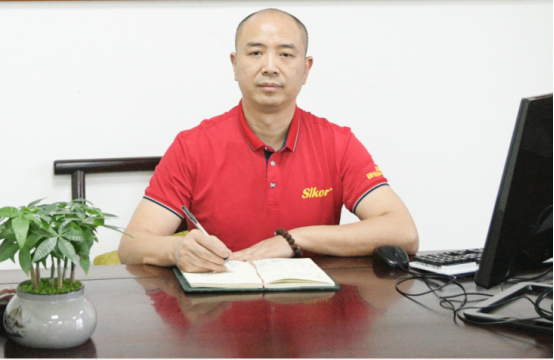
Slkor Song Shiqiang talks about brand (8)
2022-04-19
1522
Brand represents corporate culture and corporate ethics
The companies that manage their brands well are the ones that pay great attention to corporate culture and ethics. Behind the brand management, it is to manage the corporate culture, abide by corporate and social ethics, maintain social order and good customs, and promote the benign development of society.
Academic authority of the management behavior and leadership professor John kotter, rather than the team spent 11 years, is the enterprise culture to study the influence on business performance, the results show that: anyone who attaches great importance to the corporate culture factors (customers, shareholders, employees) characteristics of the company, its performance is far better than do not take the enterprise culture construction company.
Table of comparison conclusions:
Indicator
Pay attention
Don't pay attention
average growth in total revenue
682%
166%
Staff growth
282%
36%
company stock price
901%
74%
company net income
756%
1%
Song Shiqiang, General Manager of Slkor
Therefore, the brand represents the corporate culture and corporate ethics, is the spirit of the enterprise and the source of strength, but also for the social transmission of positive energy and universal value.
Brand enterprises exist for a very long time, in the operation will resist a variety of risks, there are a variety of temptations, but also need to maintain a certain range of growth, which requires enterprise culture and fighting spirit to escort. Spanish sportswear brand Nautica, logo is a simple two-leaf wind sail, reflects the human desire for a better life, and the spirit of exploration of the unknown area, nautica also shows that the company will break through the difficulties to ride the wind and waves of development!
Brands also lead the trend of social development and promote universal values. The products of big brands are mainly clothing, shoes and hats. The raw materials are cowhide and sheepskin. Some brands, such as Hermes, also have crocodile skin, ostrich skin and fox fur. In recent years, in order to protect animals and the environment, they have intensified research and application in petrochemical and plant materials, as an alternative to animal fur. I know Nike, Nike, they come out with nylon shoes, they come out with bags, they come out with new products that are not fur.
As an influential real estate enterprise, Vanke has sponsored and published Wanke Weekly, which promotes advanced corporate governance concepts, advocates and organizes public welfare activities such as planting trees in the Alxa Desert in Inner Mongolia, and leads the industry in green building research. In order to support environmental protection and energy saving, ST Stmicroelectronics, our integrated circuit industry, makes great efforts in MCU products with low power consumption, and also spends a lot of money to protect the tropical rainforest every year.
On the contrary, we also see some enterprises disregard social ethics, do not take the right path to operate, in a short period of time, these enterprises have made money, but the sequela is also very big, and finally are spurned by consumers!
Therefore, the benign development of a company is closely related to the development of corporate culture. Therefore, in the process of Slkor (www.slkormicro.com) Kinghelm (www.bds666.com) marching towards collectivization, more attention should be paid to the construction of corporate culture. In order to achieve better assimilation of new talents, the company can achieve high speed, high volume and stable development by gaining recognition and recognition from the ecological circle of the industry.
Sacco Slogen is "a leader in making home-made semiconductors". Slkor semiconductor (www.slkormicro.com) team under the leadership of the general manager Mr. Song Shiqiang, adhering to the "integrity, progress, tenacity, details" of the corporate culture to do things, good to people strict, good talent can do good products, is Slkor people's creed. Slkor company adheres to the corporate ethics of "do not do to others what you do not want others to do to you" and actively undertakes social responsibilities. Song Shiqiang said that Slkor products sales, on behalf of our commitment to customers, on behalf of product quality and service, on behalf of the corporate culture and corporate ethics behind. The specialization of the team, the innovation of technology and the continuous launch of new products are the key points for the development of Slkor company and the building of "SLKOR" brand value.
Slkor Sakwei (www.slkormicro.com) actively do a good job of "domestic replacement" of electronic components, The new product optocoupler series can replace the optocoupler of AVAGO, LITEON, FAIRCHILD, RENESA, VISHAY, ON, VAGO and other brands. Slkor photocoupler model 6N136, standard replacement AVAGO(AVAGO), FAIRCHILD(FAIRCHILD) photocoupler 6N136, 6N136M, Slkor optical coupler models 6N136, 6N137, standard to replace AVAGO, FAIRCHILD 6N136,6N136M,6N137,6N137 optical coupler models.
Author's brief introduction :
Mr. Song Shiqiang is a private economic researcher of the Economic Development Center of the state authority, a member of the electronic information expert database of China Association for Science and Technology, and a commercial research expert of Huaqiangbei. Mr. Song Shiqiang used to be a CEO of an international real estate listed company. He investes and manages Shenzhen SlkorMicro Semicon Co., Ltd. & Shenzhen Kinghelm Electronics Co., Ltd., and builds " SlkorMicro " and "Kinghelm" brands. Both " SlkorMicro " and "Kinghelm" are national high-tech companies and have obtained dozens of invention patents and software copyrights. SlkorMicro is one of the semiconductor companies with rapid and steady development in China, and its vision is to become "the leader of domestic semiconductor manufactures".
" Kinghelm Connecting the Beidou" is the company’s slogan. Starting from developing Beidou antenna, Kinghelm has developed and produced microwave antenna, RF connection line and electrical signal connectors and other products, embracing the intelligent era for Internet of everything. Mr. Song Shiqiang has a wide reputation and influence in semiconductor, Beidou positioning and navigation industry. Mr. Song Shiqiang is one of the famous business leaders in Huaqiangbei and he will make his best efforts to improve the business environment, hoping that Huaqiangbei will become a reform and opening up widow of Shenzhen's economic development.
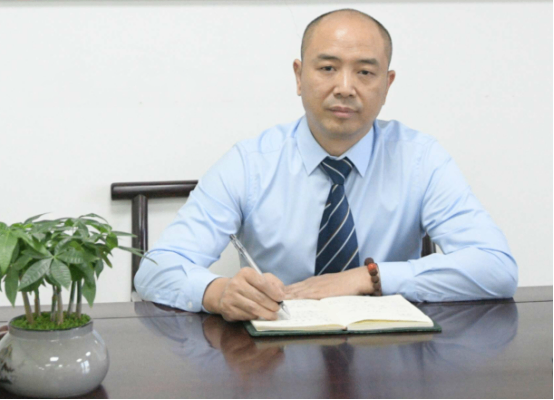
Brand Ideas of Song Shiqiang from Slkor
2022-03-26
1477
Shenzhen SlkorMicro Semicon Co., Ltd. and Shenzhen Kinghelm Electronics Co., Ltd. have ushered their fast development in recent years. The popularity and reputation of the two companies’ logos, "Slkor" and "Kinghelm", have enhanced significantly in electronic information industry, which further improves sales of their products in turn. In the opinions of Song Shiqiang, brand refers to both social and business values that brand owners obtain by using it on an open market. The contents and value that brand conveys to customers have somewhat played an essential role in market competition. Is there any effective way to build a brand? What is the underlying logic of brand building? Mr. Song, the founder of Kinghelm and Slkor, will tell you the answer.
Figure: Slogan of Slkor: "Leader of Domestic Semiconductor Industry"
( i ) Brand means quality
Brand seems impossible without ensuring quality. The first thing occurring to our mind must be quality, when deciding to buy a product, particularly valuable ones. We may consider whether it is solid, durable, convenient and safe or not, and of course we prefer a trustworthy brand, even if its price may be a little bit higher.
Ms. Ross’suitcase of LV (Louis Vuitton) fished out of the bottom of sea in the film Titanic that we will mention later has so good a quality that it could avoid decay even being soaked in the deep ocean for decades. How excellent the quality is! Men who smoke usually use Zippo to show off their taste because Zippo’s quality is very excellent. It was bullet-proof. I love hiking in normal times so I know Timberland shoes are quite durable and can be used for years. I called them "tough shoes" jokingly. All those are high quality products. I think that we must have heard the story that Haier’s founder Zhang Ruimin smashed refrigerator. Why did he do that? Just foster a brand by ensuring product quality.
In service industry such as hotel and restaurant, the star rating of hotel and Michelin rating of restaurant are relatively objective criterion and support system, and they are an extension of brand. For instance, Hilton offers better service than Home Inn with higher charges. I was an VIP of Intercontinental Hotel when I was professional manager; then I became a VIP of Vienna Hotel after I found Slkor; and later I became a VIP of Home Inn after my company became larger; as I prepared to be a VIP of 7 Days Inn and Sha-Xian Delicacies, the biggest chain brand in China, Slkor and Kinghelm finally started to earn profits, so I slightly improved life standard without registering as a VIP of All Seasons Hotel. I’m sure that I will be a VIP of various brands later in my life.
Guarantee and promise of big brand in aspects such as maintenance and after-sales service are the extension of a brand. I have used water purifier of Smith at home for years and received their accessories such as filter element regularly. As long as quality is guaranteed, we certainly will be confident in the brand, even if there is a small problem. The manufacturer will finally help resolve these problems by meeting your demands.
I think we must know the case of "a woman sitting on the roof of Mercedes car" a few years ago. The case is a typical example of Benz’s poor post-sales services for the quality problem. Public opinion emerged concerning both quality problem and poor after-sales service, because they are really beyond customers’ expectations on brand image and other aspects. Porsche 4S shop provided poor maintenance service to me a few days ago. So here I was determined to buy a fancier version of Corolla instead of Porsche when I earn lots money later. In conclusion, brand means extension of quality and service quality.
The series of Song Shiqiang from Slkor on brand will come soon in succession! Don’t miss it!
Figure: General Manager Song Shiqiang of Slkor and Kinghelm
On top of being a private economic researcher of the Economic Development Center of the state authority, Song Shiqiang is also a member of the electronic information expert database of China Association for Science and Technology, and a commercial research expert of Huaqiang North. Mr. Song was the former CEO of an international real estate listed company. He has invested and managed a list of companies such as Shenzhen SlkorMicro Semicon Co., Ltd. and Shenzhen Kinghelm Electronics Co., Ltd., building the "Slkor" and "Kinghelm" brands. Both "Slkor" and "Kinghelm" are national high-tech companies and they have obtained dozens of invention patents and software copyrights. In addition, Slkor is one of the fastest-growing semiconductor companies in China, and its vision is to become "the leader of the domestic semiconductor manufacturing industry".
"Kinghelm Connecting Beidou" is the slogan of Kinghelm company. Beginning from the development of Beidou antenna, Kinghelm has developed and produced microwave antenna, RF connection line and electrical signal connector and other products, embracing the intelligent era for Internet of Everything. Song Shiqiang has a wide reputation and influence in the semiconductor, Beidou positioning and navigation industry. As one of the renowned business leaders in Huaqiang North Commercial Area of Shenzhen, Mr. Song is striving to make his best efforts to improve the business environment, hoping that Huaqiang North will become a catalyst for reform and opening the window of Shenzhen's economic development.
Figure: publicity design for Slkor SiC MOS tube
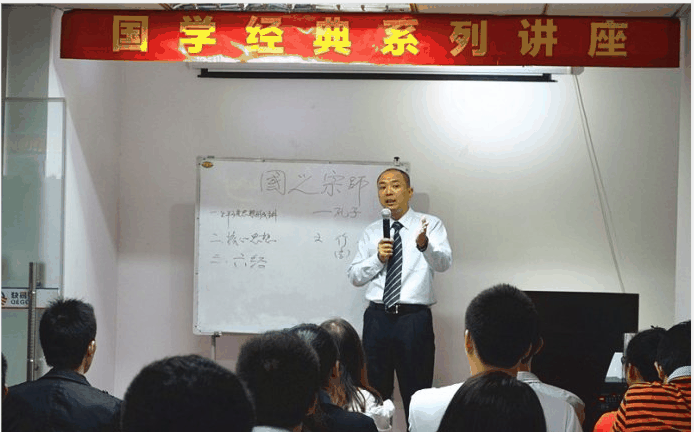
An Interview with Song Shiqiang: What's the biggest challenge for Slkor
2022-03-17
1481
Interviewee: Song Shiqiang, founder of Slkor
Topic: Development history of Slkor
Interviewer: Shenzhen Economic Daily
China-based Shenzhen SlkorMicro Semicon Co., Ltd. supplies power devices for the whole world. After years of efforts and development, Slkor has become a high-tech enterprise integrated with design and R & D, manufacturing and sales from an IP design company. With a variety of products, the industrial products include: SiC diodes, SiC MOS and IGBT , which are widely applied in new energy vehicles (NEV), communication devices, power equipment, solar photovoltaic products, uninterrupted power supply (UPS) and medical devices; civilian and consumer products include: silicon controlled rectifier (SCR) , bridge rectifier, MOS of high, middle and low voltage, Hall sensor, high-speed optocoupler, Schottky diode , ESD electrostatic protection diode, TVS transient suppression diode, general diode and transistors , power management IC, all of which are widely applied in smartphone, laptop, smart appliance, LED lighting and 3C digital products. We will customers with more high-quality products and serve them better.
Mr. Song gave his answer to 11 questions about Slkor’s development history when having an interview with the senior journalist Huang Qingshan from Shenzhen Economic Daily several days ago.
Song Shiqiang, founder of Slkor
Question 11: What’s the biggest challenge for Slkor and you? How do you cope with it?
A: Slkor company and its brand Slkor grow rapidly this year, but we have some problems. First of all, as the head of Slkor, I need more time. Second, we need more high-quality; third, we need more money to invest semiconductor. I believe all these problems will be resolved eventually.
I also invest another company called Shenzhen Kinghelm Electronics Co., Ltd. It is a national high-tech enterprise and enterprise of software enterprise recognition and software registration. The company works on Beidou GPS antenna connector and Beidou antenna and does very well. Both Kinghelm and Slkor are invested and managed by myself, so apart from money, I really need more time. I designed two sets of knowledge engineering systems, management organization systems, brand engineering systems, supply chain systems and warehouse systems, because their technology, product, market and customer are different. Good job needs time and we have no shortcut. Therefore, I play a crucial role in fast and better development of Slkor.
Secondly, I need more talents. Talents determine enterprises’ development level. In Slkor’ s internal structure , w e've been working on "Slkor" brand support ing systems such as R & D production system, supply chain system, talent training system and talent construction. We also try to introduce talents from the outside. Top talents in every key post can maximize team’s value and make Slkor a leading enterprise at home and even abroad. Talents are real resources we always concern.
Thirdly, I need more money. Slkor has started making profits slightly but if we don’t expand production until earning money, everything will be too late. Semiconductor industry is an industry that needs a lot of assets and investment, and its profit return cycle is very long. A few years ago, Kinghelm’s Beidou and Slkor’s semiconductor were so popular that many investors decided to make an investment. However, we didn’t connect the small circulation at that time so we refused many investments for the fear of causing loss to these investors and just accepted a small amount of investment from a capital tycoon in Tsinghua University. I think we need to know what to accept and what to quit. Our company is developed from an IP design company, which belongs to asset-light model, but the development of the company still needs a large amount of investment capital and working capital. Competition in the semiconductor industry is fierce now so we have also started with our financing plan in hope to receive capitals from investors and realize better development. Slkor should design and sell products well, improve itself and sell its shares, which is our development plan for the next few years!
For the purpose of improving Slkor’s basic elements preliminarily within two years, we will still work hard to make it a corporate with orderly management, high-quality talents, rich product variety, high internal R & D strength and strong support from external capital. We wish to realize win-win with our shareholders, employees, suppliers and customers!
Slkor’ s power IC product
Over the past a few years, Slkor has made remarkable progress in drive IC, consolidated its status on power device market and laid special emphasis on power management IC, AC-DC and LDO. At present, our products can replace the products of many models from many world’s famous brands such as TI, ON, NXP and IR. M arket demand is large for Slkor SL27517 , which could replace TI’s UCC27517ADBV and UCC27533DBV, as its technical parameters have reached required indicators and it is under the same level with NXP’s same products in terms of technical parameter stability. Slkor’s other types of products can replace drive IC of TI . Slkor SL27511 can replace TI’s UCC27511, Slkor SL27525 can replace TI’s UCC27525, Slkor SL27517 can replace TI’s UCC27517, Slkor SL27523 can replace TI’s UCC27523 and Slkor SL27524 can replace TI’s UCC27524.
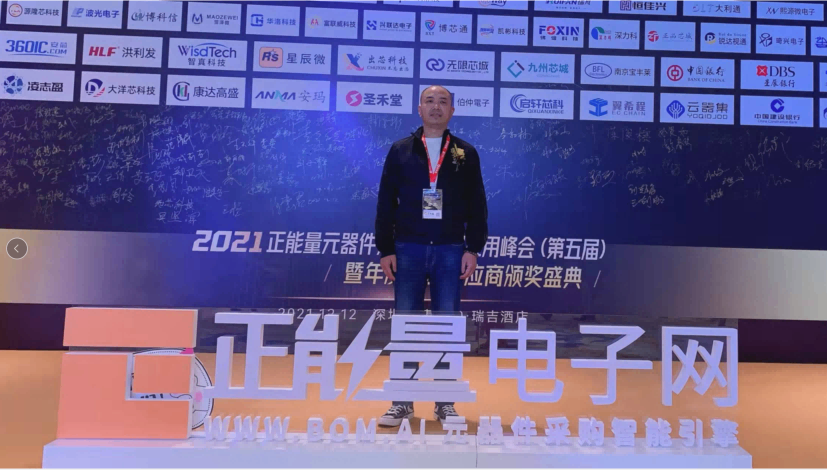
An Interview with Song Shiqiang from Slkor: What’s Slkor’s role in China’s power device industry
2022-03-17
1527
Interviewee: Song Shiqiang, founder of Slkor
Topic: Development history of Slkor
Interviewer: Shenzhen Economic Daily
China-based Shenzhen SlkorMicro Semicon Co., Ltd. supplies power devices for the whole world. After years of efforts and development, Slkor has become a high-tech enterprise integrated with design and R & D, manufacturing and sales from an IP design company. With a variety of products, the industrial products include: SiC diodes, SiC MOS and IGBT , which are widely applied in new energy vehicles (NEV), communication devices, power equipment, solar photovoltaic products, uninterrupted power supply (UPS) and medical devices; civilian and consumer products include: silicon controlled rectifier (SCR) , bridge rectifier, MOS of high, middle and low voltage, Hall sensor, high-speed optocoupler, Schottky diode , ESD electrostatic protection diode, TVS transient suppression diode, general diode and transistors , power management IC, all of which are widely appliedinsmartphone, laptop, smart appliance, LED lighting and 3C digital products. We will customers with more high-quality products and serve them better.
Mr. Song gave his answer to 11 questions about Slkor’s development history when having an interview with the senior journalist Huang Qingshan from Shenzhen Economic Daily several days ago.
Song Shiqiang, founder of Slkor in Positive Electronic Network Conference
Q10: What’s S lkor’s role in China’s power devices? Could you share your following strategic layout with us?
Our development purpose is to rank top 3 or top 5 at least in domestic power device market. According to my experience, top ranking could yield high-quality resources and new opportunities for enterprises, teams and individuals. Through years of R & D, Slkor has made remarkable progress in supply chain, technical reserve, R& D technology and team construction. With slogan of "becoming the leader of domestic power devices", Slkor tries to stabilize domestic market and open foreign market gradually tofurther develop China’s semiconductor enterprises! Slkor will work hard for its ultimate goal persistently.
Slkor’ s ESD product series
Slkor’ s products can replace the products of many different models from the world’s famousbrands such as DIODES, Vishay, TI, ON, NXP and IR. For instance, NXP’s P ESD 3V3R1BSF can be replaced by SlkorSL ESD 03D6BU, the parameters of which have reached required indicators through test and which are under the same level with NXP’s same products in terms of technical parameter stability. Other types of Slkor can replace NXP’s ESD a ntistatic diode. Slkor SL ESD 0501BU can replace NXP’s P ESD 5V0F1BL, Slkor SL ESD 11LL5.0CT5G can replace NXP’s P ESD 5V0R1BSF, Slkor SL ESD 05D6CU can replace NXP’s P ESD 5V0V1BSF, Slkor SL ESD 03D6BN can replace NXP’s P ESD 3V3V1BCSF, SlkorSL ESD 11D5.0CT5G can replace NXP’s P ESD 5V0S1BSF, Slkor SL ESD 0301BU can replace NXP’s P ESD 3V3X1BL, Slkor SLP ESD 5V0U1BL can replace NXP’s P ESD 5V0U1BL, Slkor SL ESD 0501CM can replace NXP’s P ESD 5V0S1BL, Slkor SL ESD 0301M can replace NXP’s P ESD 3V3T1BL.