






















Service Hotline
News

News

A closer look at the Industrial Internet
2021-12-29
1168
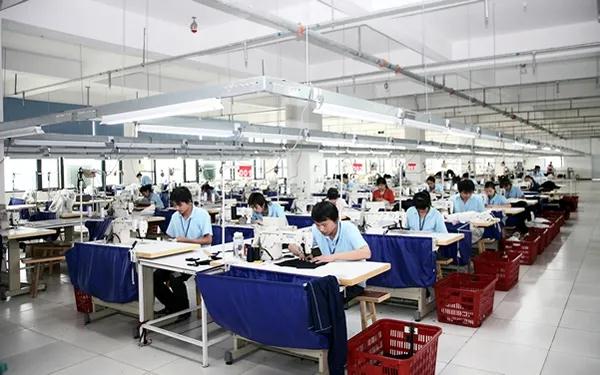
In traditional large-scale mass production, a minimum order quantity of thousands or even tens of thousands of pieces of clothing is required before the factory is willing to accept the order and can afford experienced workers and quality-guaranteed fabrics. Only after 200 workers have been busy for a month can the goods be delivered.
If you ask this kind of factory to make a garment for you with only 100 pieces, the factory will generally not accept it, because this level of production requires less than ten workers, and the other 190 workers can only be idle.
Even if it is accepted, the costs of designing, pattern making, sampling, and production introduction of this piece of clothing can only be spread among these 100 pieces of clothing. This will cause the production cost of these 100 pieces of clothing to be seriously higher than that of mass production of the same quality, and it will be an inherent disadvantage in price competition.
Finally, even if you are willing to give money and the factory is willing to accept it, there is a high probability that the production of this batch of goods will be delayed because the order is too small and the workers are busy making large quantities. Only in their spare time would a few people come over to hang out.
So now, small-order production is either high-priced handmade, or cheap and low-quality small workshops, like some T-shirts at comic shows; and quick response is out of the question, unless you drink the factory director down, he will obey you, and assign a few people to you.
Therefore, assuming there is a production model, making 100 or even 10 pieces of clothes can be compared with mass production of 1,000 or 10,000 pieces: the cost is similar to mass production; the quality and materials used can be the same as mass production; the production time can be the same as or even shorter than mass production.
Some of this model is called flexible manufacturing, some is called customized production, and some is called rapid response production.
Compared with other dazzling technologies, this production model is not sexy at all, but its practical significance cannot be ignored.
Because sellers are afraid of inventory. Those who open offline stores are afraid of inventory.
The store originally expected to sell 300 pieces of this style of clothing this quarter, but ended up selling 100 pieces. In the end, it had 200 pieces of this style of clothing in stock. Then you find that there are twenty models like this;
Then you find out that a hundred stores are like this; your company is gone.
Those engaged in e-commerce are also afraid of inventory, but offline customer flow has turned into online traffic, and stores have turned into Taobao stores and live broadcast rooms.
If you can't sell it, you'll have to pay for it. It's not worthwhile to buy traffic in order to sell it. You can only hang a link and slowly digest it, and accumulate it in the warehouse.
By the way, live streaming influencers often don’t even have warehouses. Mr. Lei’s famous saying: Mobile phones are like seafood, don’t dare to stock up on them. Not to mention the clothes.
Merchants all want to place small orders, and a small amount of sales will not overwhelm the inventory. But mass production disagrees, and it can’t be done at the cost you gave;
The merchant also hopes that once the product becomes popular, production can quickly keep up. If 100 pieces sell out, 1,000 pieces will be produced within three days, so as to absorb all the traffic from impulse consumption. But mass production also disagrees: I don’t have so many ingredients, it’s too late;
For mass production, we hope to ship tens of thousands, hundreds of thousands, or millions of pieces at a time, but merchants disagree, and few online and offline can do it. Sales fluctuated slightly, and the company was directly overwhelmed by inventory.
Flexible manufacturing can start from small batch orders, keep costs consistent with mass production, and quickly enter production status, which seems to solve the problem.
In theory. What is the difficulty in reality? You need to collect all data on the production side, including equipment movements on the production side and warehouse inventory in the supply chain, so that you can know the production progress at any time and allocate raw materials in real time.
You also need to bring almost all processes online so that workers can follow instructions and switch processes at any time, and let the system tell workers what to do next, instead of the team leader teaching and patrolling over and over again.
You also need to digitize everything just now and move it to a system platform. You can connect offline stores and e-commerce in the front, and you can connect to the logistics system in the back. In this way, orders can be put into production as quickly as possible and shipped immediately after production.
It's difficult...
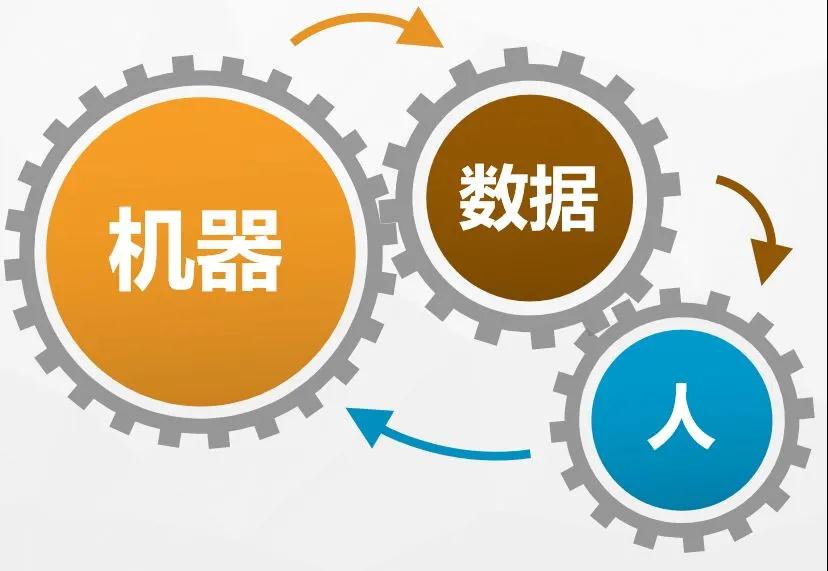
Wait, it doesn't seem particularly difficult... right. There are sensors for detecting equipment; edge computing for data preprocessing, there is; there is a means of real-time data transmission, 5G; there is cloud computing for calculation after data aggregation.
Hey, if you think about it carefully, it seems like there are. This is a classic paradigm of the Industrial Internet. Integrate existing technologies and apply them to the manufacturing end on a large scale to open up data penetration of personnel, equipment, and raw materials, compress the response time of each link, and optimize matching efficiency.
It is best to use artificial intelligence to calculate which batch of materials will be sent to which station. Ultimately, it is possible to lower the production threshold, maintain costs comparable to mass production, and speed up production response.
The three major Internets are consumer Internet, industrial Internet, and credit Internet.
Consumption has been done by Tencent, Ali, Kuaishou Toutiao and others, and credit is led by the state.
Only in the industrial Internet, the data on the production side is still almost blank. This still sounds quite boring. In addition to being more comfortable in making goods and having much less inventory pressure, what’s the use of it?
Very useful. This means that it is possible for us to use data to form a long-term industrial hegemony.
Because the global mid-to-low-end processing manufacturing industry is all about mass production. We used to move labor-intensive processing and manufacturing to Southeast Asia because such industries have low added value. In addition, workers' wages will inevitably increase with economic development. When the two intersect, industries will move to Southeast Asia where worker costs are lower.
However, the importance of an industry cannot be measured solely in terms of added value.
The added value of clothing is low, but it supports a large number of upstream and downstream industrial clusters, from printing and dyeing to fabric accessories to Xinjiang cotton.
Once the transfer starts, most of the industrial chain will eventually be separated from China. A large number of jobs, taxes, and the scientific research and application environment involved will disappear.
The rise of an industrial park in Vietnam means that today they may only be sewing factories, but next year they may build a new printing and dyeing factory; the year after next, children majoring in clothing design and engineering in Vietnam will be able to find jobs; and in another five years, Vietnam's clothing sewing machinery industry will begin to develop.
For every 10% Vietnam gains, we must lose at least three points. Because after the industrial relocation, our remaining mid- to low-end labor force cannot be completely absorbed by the mid-to-high-end manufacturing industry. Letting these skilled workers deliver food and do housework is a huge waste of skilled workers.
It can only be absorbed by the national infrastructure construction or local investment. The industrial capital that was originally accumulated and circulated in production will be released and flood into the field of financial capital, further increasing the pressure of excess capital.
U.S. imperialism is the best example of the consequences of industrial hollowing out. And our size is here, unlike South Korea, Japan, and Germany. We can support the whole country with just a few industries.
Industries cannot be easily transferred. How can the Industrial Internet ease industrial transfer? For example:
During the epidemic, global clothing trade was cut in half, and global trade volume is expected to fall by one-third this year.
How much have China's overseas clothing orders dropped? one third? No; a quarter? Nor; one-fifth? almost.
Optimistic estimates can even control it to just over one-tenth. The wages of our textile workers are nearly ten times that of Vietnamese workers. Why didn’t trade volume drop so sharply during the epidemic?
Because the textile industry in Southeast Asia collapsed first. Their manufacture is purely rigid. Southeast Asia only has large-scale manufacturing, which only involves manpower and factories, without the ability to adjust. If there is a problem with the color of a piece of fabric, you have to go to Guangzhou Zhongda to find a master; if there is a problem with a piece of sewing equipment, you have to go to Zhejiang to find a laborer.
Apply for a visa and go abroad to help them solve their problems. So they don't have the ability to tweak and switch. Only socks that sell hundreds of thousands of pairs around the world and are of a single style are suitable for Southeast Asia's production model.
Once merchants face inventory and capital turnover risks, they will be the first to abandon Southeast Asia and return to China to place orders. What does China have? It has basic flexible capabilities formed by relying on industrial clusters. In a clothing industrial park, there are fabrics, zippers and buttons, foremen who can find skilled workers, sales points selling production equipment, supporting maintenance workers, sample workshops for pattern making and sample making, and design studios that regularly run factories.
What's missing is a phone call. Is China's garment industry really relying on cheap labor to survive today? China's garment industry actually relies on large-scale production and basic flexibility capabilities formed by industrial clusters. It pays equal attention to both and supports it to this day.
Are these abilities really worthless?
Can such industrial clusters really be allowed to dissipate on the grounds of being “low-end”, “not environmentally friendly”, and “lack of technical content”?
This is an industry that, to this day, employs one-tenth of China’s industrial workers. It is one of the most complete and developed industrial categories in China in the world. The task of the Industrial Internet is to digitize these capabilities: After digitizing large-scale production capabilities, standardization and automation can be accelerated; After the basic flexibility capabilities are digitized, flexibility indicators and customization scope can be further improved.
After the two are digitized, data can become one of the raw materials for production, which is also the core concept of German Industry 4.0.
If we continue to compete with Southeast Asia for labor costs and infrastructure, there will always be times when we cannot compete. Their manpower is cheap, their infrastructure is gradually improving, and they even give you a piece of land.
If you want to fight, just fight for what they don’t have, such as data.
We have real-time data on the entire production chain, but they don’t. This determines that even if our production costs are 10% to 20% more expensive than theirs, the seller will choose us for the safety of his funds.
I guarantee that you will not be overwhelmed by inventory, I can also help you meet your customization needs, and I can also give you the best response time.
With this advantage, our "low-end" industries can become more and more high-end as technology is optimized based on data; Southeast Asia will not be able to compete with us in the initial stage, and the subsequent industrialization process will spontaneously shrink due to the lack of benefits from comparative advantages.
Even if the government is willing to develop industrialization, the long-term lack of private capital participation will only make their burden heavier and heavier.
Slowing down the industrialization speed of other countries, maintaining and deepening one's own industrial clusters, and ultimately monopolizing global production capacity is industrial hegemony.
There is no way, no resources and no global currency. This road is difficult to take, but it is the most honest road. The Industrial Internet is not as visible as other technologies.
However, we are on the eve of the next industrial revolution. Although the existing technological iterations are exciting, the critical point has not yet been reached. Therefore, fundamental breakthroughs such as atomic energy to electricity and computers to mechanization will probably take time.
As a platform, the Industrial Internet can integrate and superimpose multiple optimization technologies that have no generation differences to form a model platform with generation differences.
In the next five years, more and more industries that were considered “low-end” in the past will have a large number of industrial Internet platforms. These platforms are expected to become a solid foundation for "Made in China 2025".
This article is reproduced from "Languang Innovation", support the protection of intellectual property rights, please indicate the original source and author when reprinting. If there is any infringement, please contact us to delete it.
Related Recommendations