






















Service Hotline
News

News

Full analysis of Internet of Things communication protocols
2021-12-29
1121
As the number of IoT devices continues to increase, the communication or connection between these devices has become an important topic of thought. Communication is very common and critical to the Internet of Things. Whether it is short-range wireless transmission technology or mobile communication technology, it affects the development of the Internet of Things. In communication, communication protocols are particularly important. They are the rules and agreements that entities on both sides must follow to complete communications or services. This article introduces several available IoT communication protocols with different performance, data rates, coverage, power and memory, and each has its own advantages and more or less disadvantages. Some of these communication protocols are only suitable for small household appliances, while others can be used in large-scale smart city projects. The Internet of Things communication protocols are divided into two categories, one is the access protocol and the other is the communication protocol. The access protocol is generally responsible for networking and communication between devices within a subnet; the communication protocol is mainly a device communication protocol that runs on the traditional Internet TCP/IP protocol and is responsible for data exchange and communication between devices through the Internet.
1. Physical layer and data link layer protocols
1. Long-distance cellular communication
(1) 2G/3G/4G communication protocols refer to the second, third and fourth generation mobile communication system protocols respectively.
(2)NB-IoT
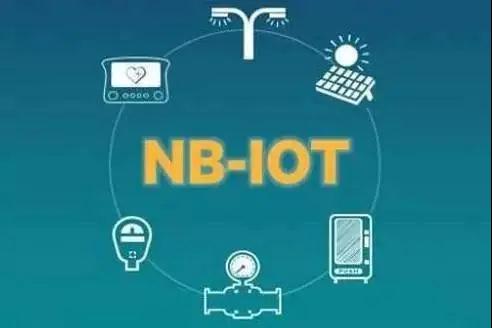
Narrow Band Internet of Things (NB-IoT) has become an important branch of the Internet of Everything. NB-IoT is built on a cellular network and only consumes approximately 180kHz of bandwidth. It can be directly deployed on GSM networks, UMTS networks or LTE networks to reduce deployment costs and achieve smooth upgrades. NB-IoT focuses on the Low Power Wide Coverage (LPWA) Internet of Things (IoT) market and is an emerging technology that can be widely used around the world. It has the characteristics of wide coverage, multiple connections, fast speed, low cost, low power consumption, and excellent architecture.
Application scenarios: Scenario applications brought by the NB-IoT network include smart parking, smart fire protection, smart water services, smart street lights, shared bicycles and smart home appliances.
(3)5G
The fifth generation mobile communication technology is the latest generation of cellular mobile communication technology. The performance goals of 5G are high data rates, reduced latency, energy savings, cost reduction, increased system capacity and large-scale device connectivity.
Application scenarios: AR/VR, Internet of Vehicles, smart manufacturing, smart energy, wireless medical care, wireless home entertainment, connected drones, ultra-high definition/panoramic live broadcast, personal AI assistance, and smart cities.
2. Long-distance non-cellular communication
(1)WiFi
Due to the rapid popularity of home WiFi routers and smartphones in the past few years, WiFi protocols have also been widely used in the smart home field. The biggest advantage of the WiFi protocol is that it can directly access the Internet. Compared with ZigBee, the smart home solution using Wifi protocol eliminates the need for additional gateways. Compared with Bluetooth protocol, it eliminates dependence on mobile terminals such as mobile phones.
The coverage of commercial WiFi in public places such as urban public transportation and shopping malls has undoubtedly revealed the potential of commercial WiFi in scene applications.
(2)ZigBee
ZigBee is a wireless communication protocol for low-speed and short-distance transmission. It is a highly reliable wireless data transmission network. Its main features are low speed, low power consumption, low cost, support for a large number of online nodes, support for multiple online topologies, low complexity, fast, reliable and safe. ZigBee technology is a new technology that has appeared recently. It mainly relies on wireless networks for transmission. It can conduct wireless connections at short distances and is a wireless network communication technology.
The inherent advantages of ZigBee technology have gradually made it a mainstream technology in the Internet of Things industry, and has been widely used in industry, agriculture, smart homes and other fields.
(3)LoRa
LoRa? (LongRange, long range) is a modulation technology that provides longer communication distances than similar technologies. LoRa gateways, smoke sensors, water monitoring, infrared detection, positioning, power strips and other widely used IoT products. As a narrowband wireless technology, LoRa uses time difference of arrival to achieve geolocation. Application scenarios of LoRa positioning: smart city and traffic monitoring, metering and logistics, agricultural positioning monitoring.
3. Near field communication
(1)RFID
RFID is the abbreviation of Radio Frequency Identification. The principle is contactless data communication between the reader and the tag to achieve the purpose of identifying the target. RFID is widely used. Typical applications include animal chips, car chip alarms, access control, parking lot control, production line automation, and material management. The complete RFID system consists of three parts: reader (Reader), electronic tag (Tag) and data management system.
(2)NFC
The Chinese full name of NFC is near field communication technology. NFC is developed based on contactless radio frequency identification (RFID) technology and combined with wireless interconnection technology. It provides a very safe and fast communication method for various electronic products that are increasingly popular in our daily lives. The "near field" in the Chinese name of NFC refers to radio waves near the electromagnetic field.
Application scenarios: used in access control, attendance, visitors, meeting check-in, patrol and other fields. NFC has functions such as human-computer interaction and machine-to-machine interaction.
(3)Bluetooth
Bluetooth technology is an open global specification for wireless data and voice communications. It is a special short-range wireless technology connection that establishes a communication environment for fixed and mobile devices based on low-cost short-range wireless connections.
Bluetooth can conduct wireless information exchange between many devices including mobile phones, PDAs, wireless headsets, laptops, related peripherals, etc. The use of "Bluetooth" technology can effectively simplify the communication between mobile communication terminal devices, and can also successfully simplify the communication between the device and the Internet, so that data transmission becomes faster and more efficient, broadening the path for wireless communication.
4. Wired communication
(1)USB
USB, the abbreviation of Universal Serial Bus in English, is an external bus standard used to standardize the connection and communication between computers and external devices. It is an interface technology applied in the PC field.
(2) Serial communication protocol
The serial communication protocol refers to the relevant specifications that stipulate the content of the data packet, which includes the start bit, main data, check bit and stop bit. Both parties need to agree on a consistent data packet format to send and receive data normally. In serial communication, commonly used protocols include RS-232, RS-422 and RS-485.
Serial communication refers to a communication method that transmits data bit by bit through data lines between peripherals and computers. This communication method uses fewer data lines and can save communication costs in long-distance communication, but its transmission speed is lower than parallel transmission. Most computers (not including laptops) contain two RS-232 serial ports. Serial communication is also a commonly used communication protocol for instrumentation and equipment.
(3) Ethernet
Ethernet is a computer local area network technology. The IEEE 802.3 standard of the IEEE organization formulates the technical standard of Ethernet, which specifies the content including physical layer wiring, electronic signals and media access layer protocols.
(4)MBus
MBus remote meter reading system (symphonic mbus) is a European standard 2-wire bus, mainly used for consumption measuring instruments such as heat meters and water meters.
2. Network layer and transmission protocol
1、IPv4
Internet Communications Protocol Version 4 is the fourth revision in the development process of the Internet Protocol and the first widely deployed version of this protocol. IPv4 is the core of the Internet and the most widely used version of the Internet Protocol.
2、IPv6
Internet Protocol version 6, because the biggest problem of IPv4 is the limited network address resources, which seriously restricts the application and development of the Internet. The use of IPv6 not only solves the problem of the number of network address resources, but also solves the obstacles for multiple access devices to connect to the Internet.
3、TCP
Transmission Control Protocol (TCP) is a connection-oriented, reliable, byte stream-based transport layer communication protocol. TCP is designed to accommodate a layered protocol hierarchy that supports multiple network applications. TCP is relied upon to provide reliable communication services between pairs of processes in a host computer connected to different but interconnected computer communication networks. TCP assumes that it can obtain simple, possibly unreliable datagram services from lower-level protocols.
4、6LoWPAN
6LoWPAN is a low-speed wireless personal area network standard based on IPv6, namely IPv6 over IEEE 802.15.4.
3. Application layer protocol
1、MQTT协议
MQTT (Message Queue Telemetry Transport), translated into Chinese, is a telemetry transmission protocol. It mainly provides two message modes: subscription/publishing. It is more simple, lightweight, and easy to use. It is especially suitable for message distribution in restricted environments (low bandwidth, high network latency, and unstable network communication). It is a standard transmission protocol for the Internet of Things (Internet of Things).
In many cases, including in constrained environments such as machine-to-machine (M2M) communications and the Internet of Things (IoT). It has been widely used in communication sensors through satellite links, medical equipment for occasional dialing, smart homes, and some miniaturized devices.
2、CoAP协议
CoAP (Constrained Application Protocol) is a Web-like protocol in the Internet of Things world. It is suitable for small low-power sensors, switches, valves and similar components that need to be remotely controlled or monitored through a standard Internet network. The server does not need to respond to unsupported types.
3、REST/HTTP协议
RESTful is a resource-based software architecture style. The so-called resource is an entity on the network, or a specific information on the network. A picture or a song is a resource. RESTful API is an implementation based on HTTP protocol. (HTTP is an application layer protocol, which is simple and fast).
Applications or designs that meet Rest specifications are RESTful, and APIs designed according to Rest specifications are called RESTful APIs.
4. DDS protocol
DDS (Data Distribution Service) is a distributed real-time data distribution service middleware protocol. It is the "TCP/IP" in the distributed real-time network. It is used to solve the network protocol interconnection in the real-time network. Its function is equivalent to the "bus on the bus".
5、AMQP协议
AMQP, or Advanced Message Queuing Protocol, is an application layer standard advanced message queuing protocol that provides unified messaging services. It is an open standard for application layer protocols and is designed for message-oriented middleware. Clients and message middleware based on this protocol can transmit messages and are not restricted by different client/middleware products, different development languages, etc. Implementations in Erlang include RabbitMQ, etc.
6、XMPP协议
XMPP is a protocol based on XML, a subset of the Standard Universal Markup Language, which inherits the flexibility to develop in an XML environment. Therefore, XMPP-based applications are highly scalable. After being extended, XMPP can handle user needs by sending extended information, and applications such as content publishing systems and address-based services can be built on top of XMPP.
4. Comparison of some communication protocols
1. Comparison between NB-IoT protocol and LoRa protocol
First, frequency band. LoRa works in unlicensed frequency bands below 1GHz, and does not require additional fees for application. NB-IoT and cellular communications use frequency bands below 1GHz, which are authorized by 2113 and require charges.
Second, battery life. LoRa modules have unique characteristics in handling interference, network overlap, scalability, etc., but cannot provide the same quality of service as cellular protocols. Due to quality of service considerations, NB-IoT cannot provide the same battery life as LoRa.
Third, equipment costs. For end nodes, the LoRa protocol is simpler than NB-IoT, easier to develop and more applicable and compatible with microprocessors. At the same time, low-cost, relatively mature technology LoRa modules can already be found on the market, and upgraded versions will be released one after another.
Fourth, network coverage and deployment schedule. The NB-IoT standard was announced in 2016. In addition to network deployment, the corresponding commercialization and establishment of the industry chain will take longer and more effort to explore. LoRa's entire industry chain is relatively mature, and its products are "ready for launch". At the same time, many countries around the world are undergoing or have completed nationwide network deployment.
2. Comparison of Bluetooth, WiFi and ZigBee protocols
At present, the advantage of WiFi is that it is widely used and has been popularized in thousands of households; the advantage of ZigBee is low power consumption and self-organizing network; the advantage of UWB carrierless wireless communication technology is transmission rate; the advantage of Bluetooth is simple networking. However, these three technologies also have their own shortcomings, and no technology can fully meet all the requirements of smart homes.
The emergence of Bluetooth technology makes short-distance wireless communication possible, but its complex protocols, high power consumption, and high cost are not suitable for industrial control and home networks that require low cost and low power consumption. In particular, the biggest obstacle of Bluetooth is the limited transmission range. Generally, the effective range is about 10 meters. Problems such as weak anti-interference ability and information security issues are also the main factors restricting its further development and large-scale application.
WiFi is also a short-distance wireless transmission technology that can access wireless signals at any time. It is highly mobile and is more suitable for use in office and home environments. Of course, WiFi also has a fatal shortcoming. Since WiFi uses radio frequency technology, which sends and receives data through the air and uses radio waves to transmit data signals, it is more susceptible to external interference.
ZigBee is an internationally accepted wireless communication technology. Each of its network ports can access up to more than 65,000 ports, which is suitable for use in home, industry, agriculture and other fields. However, Bluetooth and WiFi network terminals can only access 10 ports, which obviously cannot meet the needs of families. ZigBee also has the advantages of low power consumption and low cost.
3. Comparison between MQTT protocol and CoAP protocol
MQTT is a many-to-many communication protocol used to transmit messages between different clients through an intermediate proxy, decoupling producers and consumers, and allowing the client to publish and let the proxy decide routing and copy messages. Although MQTT supports some persistence, it is best used as a real-time data communication bus.
CoAP is primarily a point-to-point protocol used to transmit stateful information between clients and servers. While observing resources is supported, CoAP is best suited to a stateful transfer model and is not entirely event-based.
The MQTT client establishes a long-lived TCP connection. This usually means there is no problem. Both the CoAP client and the server are sending and receiving UDP packets. In a NAT environment, tunneling or port forwarding can be used to allow CoAP, or like LWM2M, the device may initialize the front-end connection first.
MQTT does not provide support for message type tags or other metadata to help clients understand. MQTT messages can be used for any purpose, but all clients must know the upward data format to allow communication. CoAP, instead, provides built-in support for content negotiation and discovery, allowing devices to detect each other to find a way to exchange data.
Both protocols have advantages and disadvantages, and choosing the right one depends on your application.
This article is reproduced from "Beijing Internet of Things Intelligent Technology Application Association", support the protection of intellectual property rights, please indicate the original source and author when reprinting. If there is any infringement, please contact us to delete it.
Related Recommendations