





















服务热线

深度分析:本地传感器产业格局趋于稳定,窗口期正在迅速缩短。
2021-12-29
334
传感器技术作为信息技术的三大基础之一,是目前各国都在大力发展的高科技。世界各国普遍重视并投资研发传感器技术。
In recent years, the global sensor market has maintained rapid growth. As the economic environment continues to improve and emerging technologies continue to mature, the market demand for sensors continues to increase.
According to data from CCID Industrial Research Institute, in 2019, the global sensor market reached US$152.11 billion, a year-on-year increase of 9.2%; China's sensor market reached 218.88 billion yuan, a year-on-year increase of 12.7%. The global and Chinese growth rates have slowed down, but the domestic market growth rate is still higher than that of the global market.
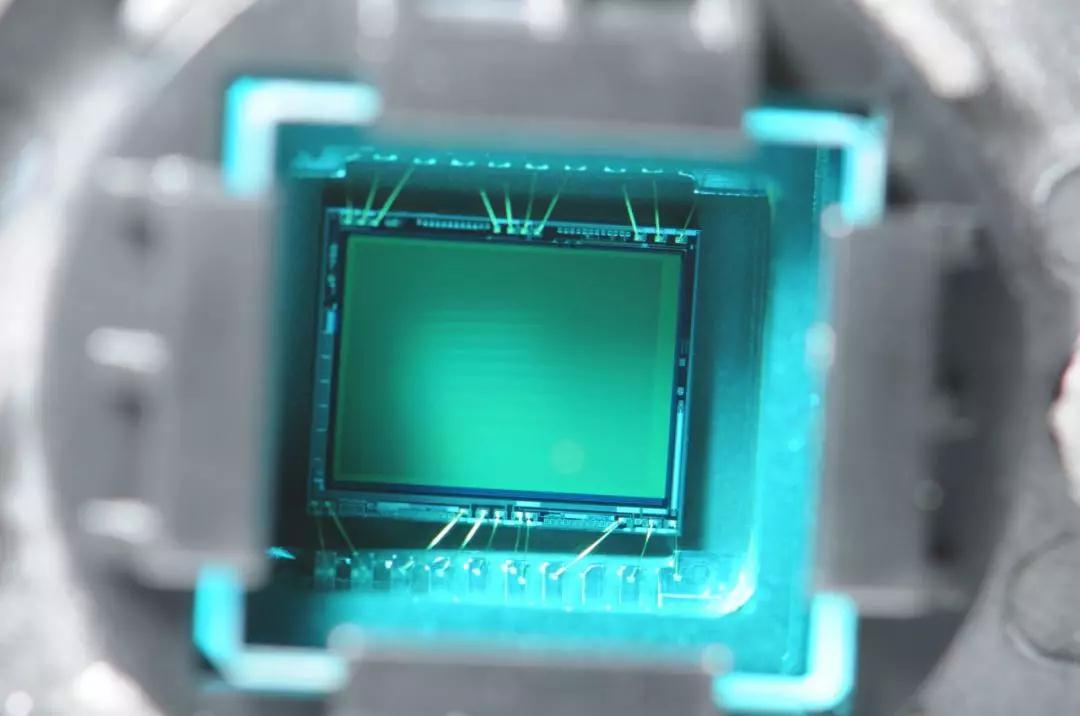
尽管中国传感器市场规模庞大,但德国、日本和美国等国家在传感器市场仍然十分活跃。相比之下,我国传感器产业发展缓慢,超过80%的传感器依赖进口。
创道资本合伙人卜日新表示:
从产业链的角度来看,中国不缺乏物联网应用场景和网络传输设备,但瓶颈在于传感器方面。Although policy support has been provided for many years, China's sensor industry is indeed in a relatively backward state, especially in terms of performance parameters such as accuracy and power consumption, which are far behind foreign products.
易飞网曾在之前的专题活动中介绍过国内外传感器厂商的行业布局、未来创新方向、机遇与挑战。在此基础上,结合对行业机构和投资机构的采访,我们梳理了传感器行业重点产品的发展现状、行业创新方向以及国内企业面临的机遇与挑战。
传感器行业的亮点
根据功能,传感器可分为图像传感器、MEMS传感器、指纹传感器、磁场传感器、温度传感器等。其中,图像传感器和MEMS传感器是绝对的主角,它们的销量是其他传感器总和的四倍以上。
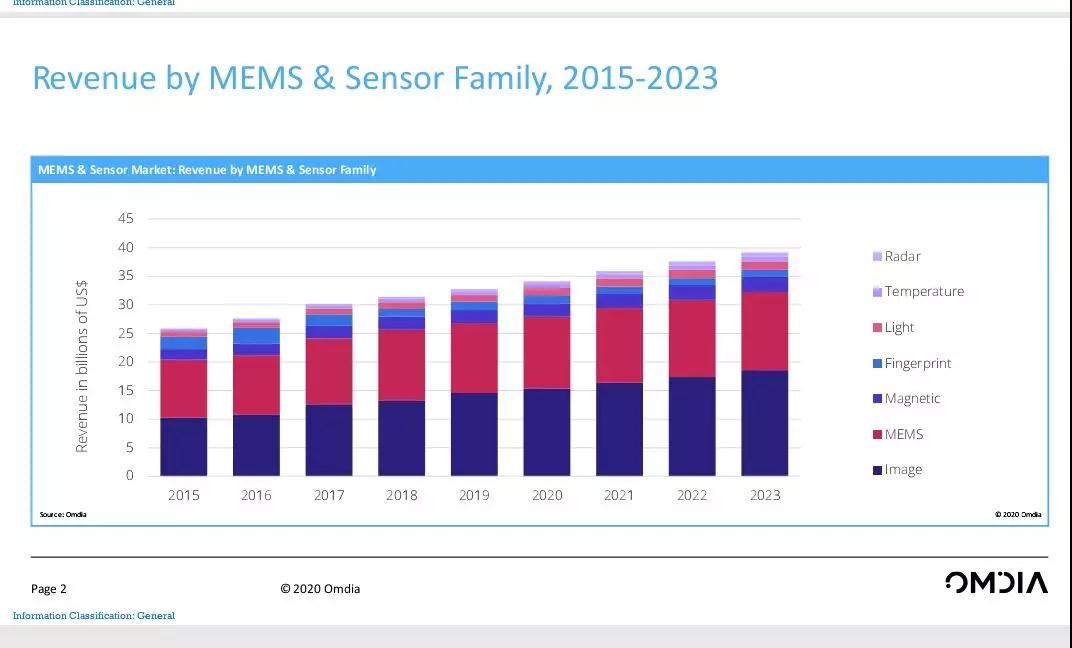
关于主角市场的增长趋势,IHS高级分析师Manuel Tagliavini表示,图像传感器市场增长最为强劲。相反,目前规模占主导地位的MEMS领域的增长趋势并不合理。预计到2023年,图像传感器的规模将超过MEMS市场。

MEMS传感器
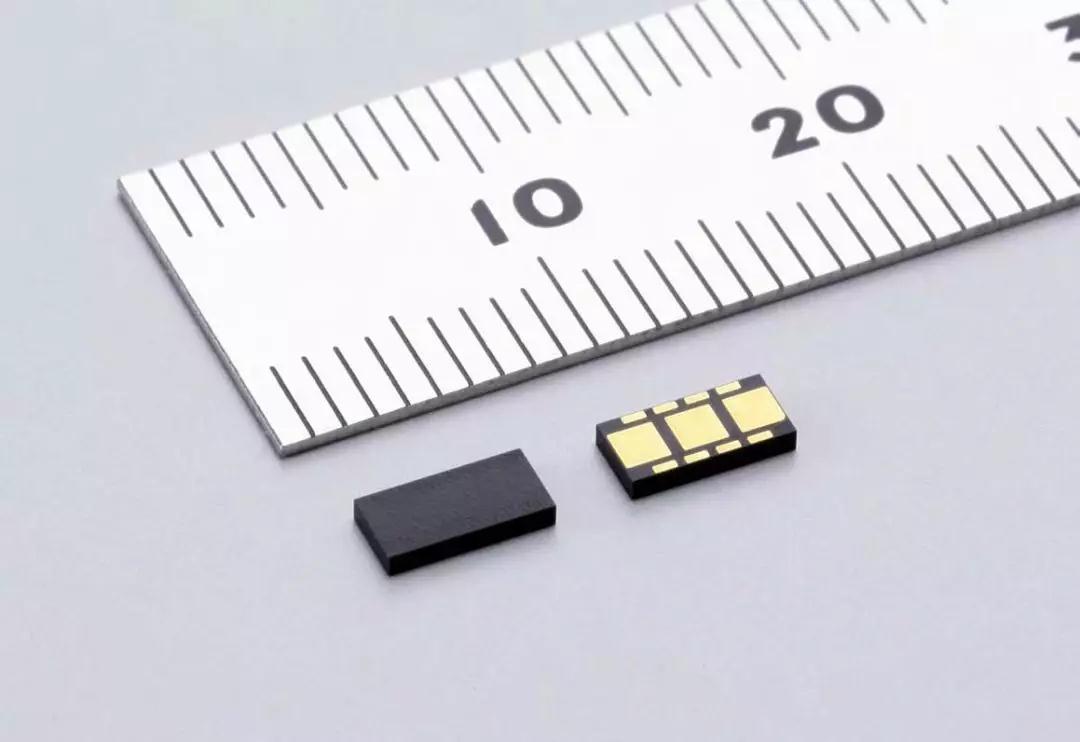
2019年,中国MEMS传感器市场规模达到59.78亿元人民币,同比增长18.3%。
MEMS sensors are mainly used in the consumer electronics market represented by mobile phones. Another important market is automotive electronics. The Asia-Pacific region is undoubtedly the second largest sensor market after the North American market, and China is undoubtedly the fastest growing in the Asia-Pacific region.
可以看出,近年来,随着消费电子、汽车电子等下游产业的快速发展,以及全球电子产业和硬件创新市场逐渐向中国转移,中国市场对MEMS器件的需求增长速度远超全球MEMS市场。
Although domestic demand is large, supply capacity is insufficient and the MEMS field is highly concentrated. Emerson, Siemens, Bosch, STMicroelectronics, Honeywell and other multinational companies occupy more than 60% of the market share. In particular, their products are almost entirely supplied by imports, and 80% of their chips rely on foreign countries;
剩余的市场份额也主要集中在歌尔声学、晶科光电、汉威电子、思兰微电子和金龙机电等几家上市公司,这些公司占据了国内MEMS市场40%以上的份额;国内MEMS企业70%是中小企业,其产品主要集中在中低端市场。
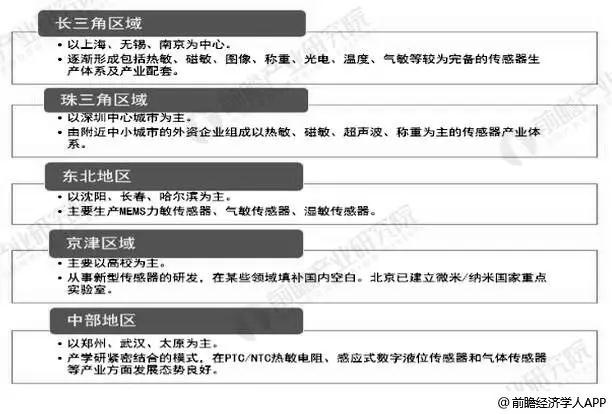
关于我国MEMS传感器产业集群区域,前瞻产业研究院的一项调查显示,在产业需求的驱动和国家政策的鼓励下,我国MEMS产业迅速渗透全国,并在长三角和京津冀地区建立了完整的产学研一体化布局。
Judging from the distribution of enterprises, they are mainly concentrated in the Yangtze River Delta region, accounting for more than 50% of the total, of which Jiangsu Province accounts for nearly 30%. This is due to the fact that the Yangtze River Delta has a good foundation for the integrated circuit industry, has many silicon-based MEMS R&D and foundry production line resources, and has a complete industrial chain, covering key enterprises in design, foundry, packaging and testing.
凭借MEMS传感器良好的应用前景和加速的本地化进程,其未来发展前景广阔。数据显示,未来几年我国MEMS传感器市场的年均增长率将保持在15%左右,预计到2025年,我国MEMS传感器市场规模将达到148.86亿元人民币。

CMOS传感器
For CMOS Image Sensor (CIS), TrendForce analyst Xu Shaofu statistics show that compared with 2018, global sales of CIS in 2019 were approximately US$18.8 billion, a year-on-year increase of approximately 26%; sales in China were US$8.9 billion, a year-on-year increase of approximately 47%.
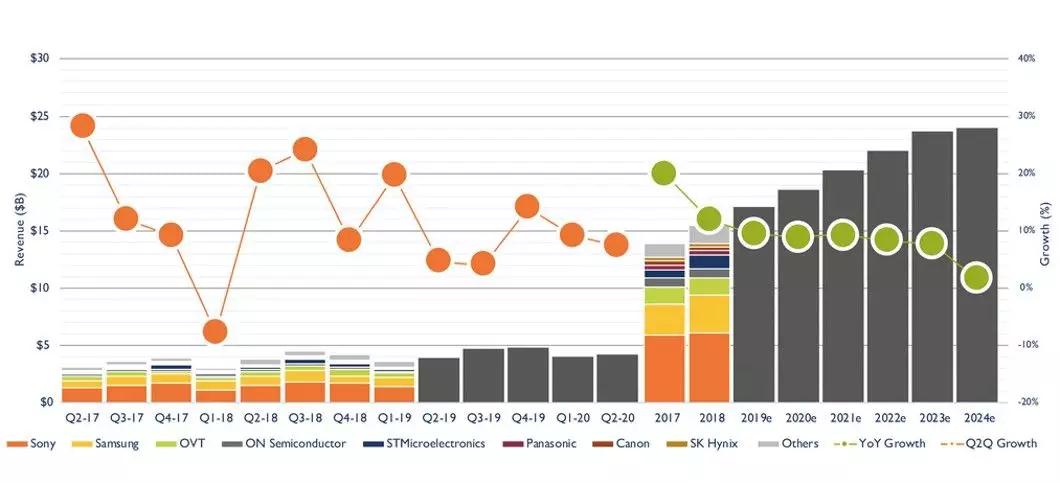
Yole Développement 预测 CIS 市场规模:2019 年年中也出现了类似的趋势
Looking at the overall market, driven mainly by the trend of multi-lens smartphones, the demand for CIS has shown high growth. In addition to the huge domestic demand market, the high sales in China are also due to the fact that most module factories and EMS factories are concentrated in China.
通过对CIS终端应用需求的分析,消费电子目前是CIS最大的应用领域。其中,智能手机约占70%,份额最高,而多镜头趋势是主要原因。其他应用领域包括汽车、安防、可穿戴设备、工业等。
汽车,电子
The popularization and penetration of ADAS systems has attracted much attention in recent years, which has led to an increase in the number of automotive lenses and the introduction of high-pixel lenses, which are used in applications such as reverse imaging, automatic braking, surround view and in-car imaging, etc., becoming another major source of demand for CIS.
安全,监控
由于国内区域政策的推行,大量安全监控设备得以安装,且增长率稳步提高。
智能, 主页
例如,物联网中使用的IP摄像头需要摄像头模块。需要摄像头模块的产品已成为制造商重点推广的产品。此外,电视、智能音箱、可穿戴设备和其他产品也开始配备摄像头模块。这也带动了消费影像相关应用领域对CIS的需求增长。
行业,制造
Machine vision applications are the main reason for driving demand for CIS in this field, driving demand for functions such as image recognition, face recognition, and optical detection.
From the perspective of the global competition landscape, Sony, the leader in the CIS industry, occupies more than 40% of the market share, focuses on the high-end market, and has the strongest technical strength;
索尼之下是三星,该公司专注于消费电子市场。其大部分产品均为自主生产和销售。三星在技术上紧随索尼,能够提供与索尼同等水平的CMOS传感器。然而,三星在工业级应用领域相对较少。
如今,越来越多的中国制造商进入市场。像欧米视科技(已被威尔收购)、格科微电子、思迈科技和瑞鑫微电子等本土制造商凭借各自的差异化优势进入市场并占据了市场份额。
尽管国内独联体制造商与国外制造商在规模和技术方面仍存在一定差距,但面对巨大的机遇和光明的前景,一些本土制造商勇敢地迎接挑战,依靠自主核心技术逐步扩大市场份额,并打入中高端市场。
Challenges and breakthroughs in the local sensor industry
随着物联网进入实质性发展阶段,前瞻产业研究院预测,未来五年全球传感器市场将保持约8%的增长率,到2024年市场规模将超过300亿美元。
The views provided by IHS also show that compared to AI and cloud computing, the Internet of Things is the key driving force that truly promotes the development of the sensor industry.
新机遇推动技术和应用创新,而创新又创造新的市场机遇。二者相辅相成。关于传感器创新方向,行业组织和制造商分别表达了各自的观点:
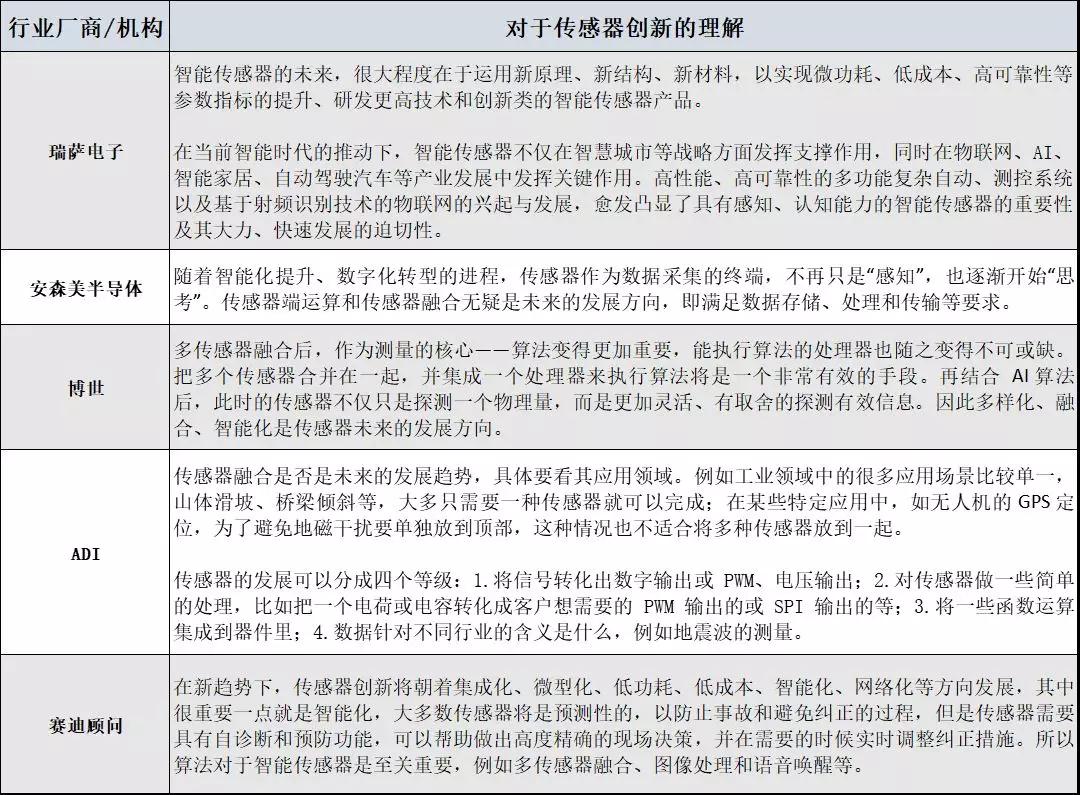
与发达国家相比,本土优势主要体现在物联网下游应用、模式创新以及对多元化市场需求的把握上。近年来,随着指纹、图像和声音传感器应用的普及,涌现出楚格科维、欧姆尼维斯科技、歌尔科技和汇顶科技等优秀的传感器企业。
然而,除了市场和应用优势之外,本地传感器产业的缺点和不足也很明显。
在消费级传感器领域,国内外技术差距并不大。然而,在工业、汽车应用等传统领域,国内技术积累相对薄弱,技术能力滞后,与国外整体技术水平差距较大。
In addition, there is a serious shortage of MEMS, CMOS and other products. High-end sensors required for major national equipment still rely on imports. Products from foreign-funded enterprises occupy the vast majority of the domestic high-end market share.
在此,中科创兴投资总监卢晓宝就本土企业面临的挑战分享了以下看法:
工艺,弱半导体传感器(包括MEMS传感器)的制造工艺比设计本身更为重要。国内大多数生产线都是近年来才逐步建立起来的,经验丰富的研发人员也相对稀缺;
材料,基值大多数传感器的核心通常是材料。如果没有核心材料的支撑,最先进的传感器产品就无法制造。在核心材料方面,中国与日本、欧洲和美国等领先国家之间存在明显的差距;
大量生产,对,能力--传感器通常需要根据测试需求进行定制,而且很多传感器无法完全自动化。国内在这方面的经验不足,质量控制能力薄弱;
方向,
思维
国内整机产业发展成熟,规模庞大,但从长远来看,核心零部件仍然倾向于选择国外产品。
鉴于对当前行业发展状况的建议,作者采访了多家行业组织:
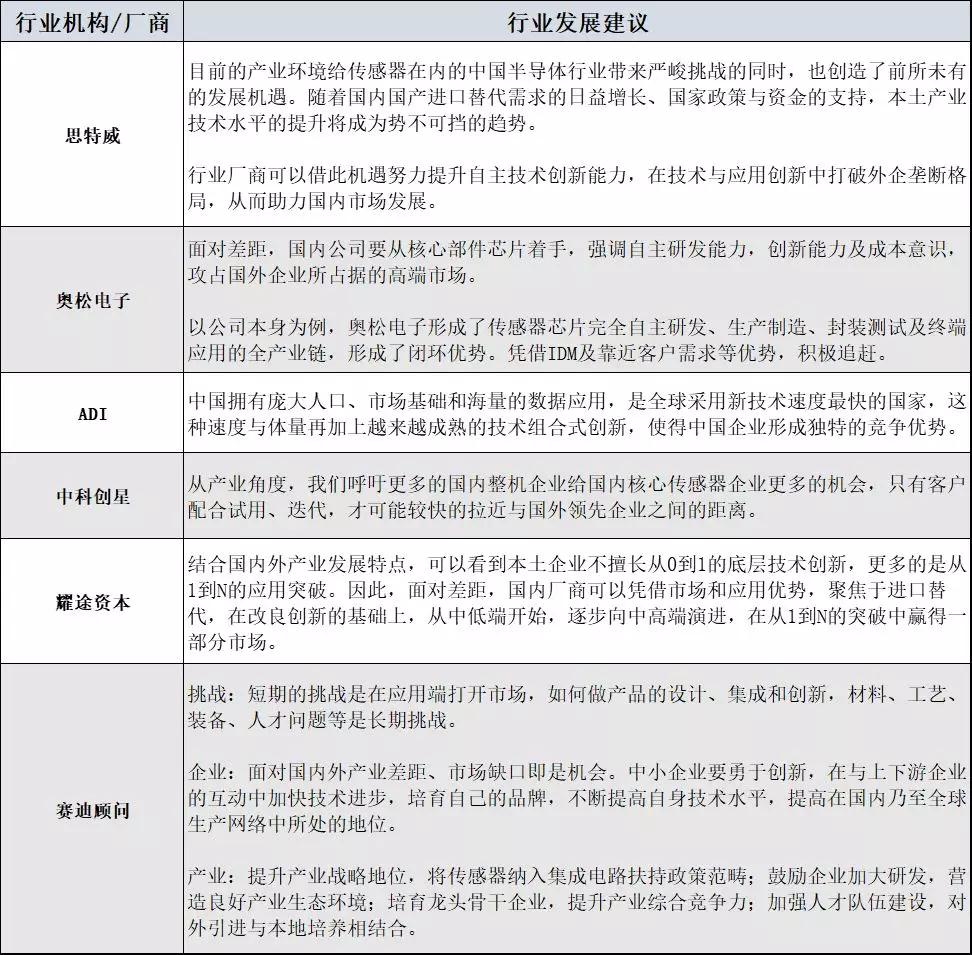
传感器产业的催化剂——科技创新委员会
在中美贸易战和国内替代的背景下,科技创新局的成立有利于整个科技产业的发展和增长。优秀企业能够迅速脱颖而出,而平庸企业则逐渐落后,加速“适者生存”的趋势。
As major participants in the capital market, industry investment institutions shared with the author the significance and impact of the Science and Technology Innovation Board on the industry in their minds.
钟科创兴表示,随着国家供给侧结构的调整,创新驱动发展已成为主流。创新驱动实际上也包括科技企业的创新和进一步升级。必须鼓励和引导科技企业朝着深度创新和硬技术方向发展,而不是聚集在低端技术领域。
总体而言,科技创新委员会的引入有利于行业强者愈强、弱者愈弱,使优秀企业不断壮大,平庸企业逐渐被淘汰。最终将形成一种相对良性的产业格局:大型企业有足够的实力充分参与国际竞争,中型企业在某些细分领域具有较强的竞争力,小型企业不断创新,而弱势企业则无法生存,最终被淘汰。
通过观察,过去两年涌入科技领域,尤其是半导体领域的资金非常明显。许多原本对半导体领域一无所知的人现在都涌入了这个领域,但实际情况仍然是,半导体行业既有热门也有冷门。
坦白说,很多专注于中低端市场的公司缺乏强烈的创新精神。要想在全球市场具有竞争力,首先要依靠核心技术,其次要持续创新以引领新需求,第三要具备良好的管理效率。除此之外,别无他法。
科技创新局成立时间相对较短。一些公司上市后,获得了更多资源,发展也更加容易。但我们希望公司不仅规模扩大,最终也能变得更加强大。
Therefore, it is also recommended that investment institutions should not only look at semiconductor themes and short-term sales, but should invest more resources in companies that truly master core technologies and have good operational efficiency.
那么,随着科技创新局的成立,相关投资机构之间的竞争是否会更加激烈?卜日新认为不会出现特别明显的争夺或竞争。即便出现,也只是暂时的。市场最终会走向成熟,进入良性循环。
Of course, competition among investment institutions will gradually shift from competition in capital to competition in industry judgment and technical analysis. The leading investment institutions in the field of science and technology innovation will also be "technical" and "professional" investment institutions.
写在最后
致传感器初创公司的一封信
随着传感器行业和应用市场日趋成熟,初创企业是否还有机会和途径进入这个市场?行业投资机构就此问题向作者作出了回应。
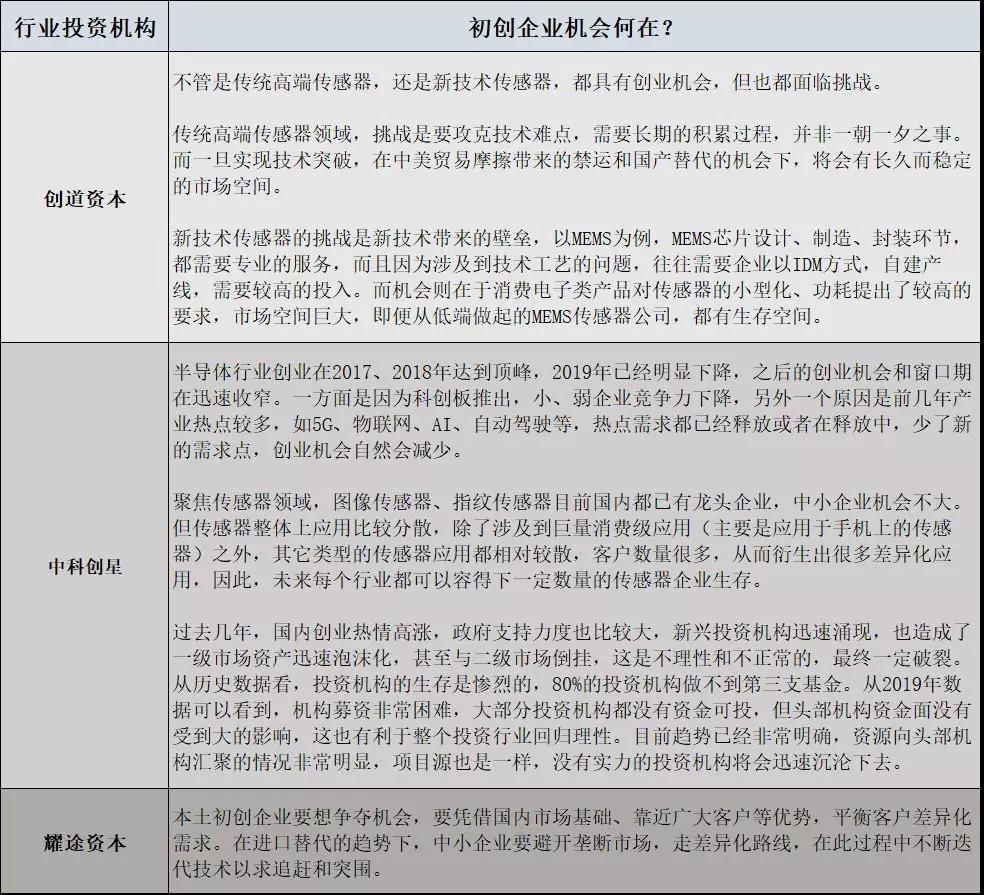
It can be seen that barriers to the sensor industry have long appeared, the window period is rapidly narrowing, and entrepreneurial opportunities are decreasing. In addition, the launch of the Science and Technology Innovation Board is like a straw for new companies.
对于那些“找到正确的市场细分,抓住差异化需求,赢得资本市场青睐”的企业来说,这是一根救命稻草;
这也成了压垮骆驼的最后一根稻草,让那些“盲目进入市场、追求人气、忽视泡沫”的制造商们彻底崩溃。
本文转载自“Yifei.net为了保护知识产权,转载请注明原出处及作者。如有任何侵权行为,请与我们联系,我们将予以删除。
相关推荐
Kinghelm 销售副总监彭慧生:一位在深圳的客家人,凭借不懈努力不忘初心。
2026-08-03
600
宋世强谈战略:2026上海电子对话亮点
2026-07-21
647
清华大学的激情:攻克材料科学的挑战——专访CEN宁波金山新材料公司岑建军
2026-07-14
679
Kinghelm 连续第三年参加2026上海电子展!由总经理宋世强和总工程师秦向宏带领。
2026-07-08
644
远见卓识,勇于行动,下一个乘风破浪者可能就是你!——嘉政新城创始人佘维鑫访谈
2026-06-30
797