























Service Hotline
Aktualności

Aktualności
Technologia 5G tworzy nowy ekosystem edukacyjny i stawia nowe wyzwania – Zhuang Rongxia
2021-12-28
626
Ten artykuł pochodzi z „filtrować”, jeśli stwierdzisz jakiekolwiek naruszenie lub inny problem, skontaktuj się z nami w celu usunięcia treści.W celu wsparcia ochrony praw własności intelektualnej prosimy o podanie oryginalnego źródła i autora przy przedruku.Recently, Associate Professor Zhuang Rongxia, associate professor of the Department of Education of Beijing Normal University and co-director of the Open Educational Resources Laboratory of the Smart Learning Institute, shared and exchanged views on "modern information technology promotes high-quality and balanced development of education" in an exclusive interview in the "Two Sessions Education Talk" column.
The "2021 Government Work Report" mentioned that fairer and higher-quality education should be developed in 2021; high-quality and balanced development of compulsory education should be promoted. What role do you think education informatization plays in improving the quality of education and achieving educational equity?
Profesor nadzwyczajny Zhuang Rongxia:"China Education Modernization 2035" proposes to "accelerate the reform of education in the information age, use modern technology to accelerate the reform of talent training models, and achieve an organic combination of large-scale education and personalized training." Large-scale education and personalized training reflect the two keywords of "education equity" and "education quality."
Wraz z rozwojem technologii informatycznych nowej generacji, takich jak 5G, Big Data, Internet Rzeczy i sztuczna inteligencja, konieczna jest głęboka integracja tych technologii informatycznych, zwłaszcza technologii inteligentnych, z edukacją i nauczaniem. Taka integracja pomoże zniwelować różnice między regionami, obszarami miejskimi i wiejskimi, a także między szkołami w moim kraju, a także złagodzi problem wykluczenia cyfrowego w edukacji oraz nierównomiernego rozdysponowania wysokiej jakości zasobów edukacyjnych i kadry nauczycielskiej w różnych regionach. Jednocześnie może zapewnić spersonalizowane, precyzyjne i wysokiej jakości wsparcie edukacyjne dla grup uczniów, gwarantując wysoką jakość edukacji w oparciu o zasadę równości.
This year’s government work report proposed to “increase the construction of 5G networks and gigabit optical networks and enrich application scenarios.” In the past two years, my country's 5G has developed rapidly. 5G has features such as ultra-high data rates, large-scale connections, low latency, and high reliability. These features have rich applications in education. Next, let’s take 5G as a small entry point to see whether 5G can help us solve the problems of educational equity and quality.
Z perspektywy równości 5G i inne technologie mogą być wykorzystywane do promowania równowagi w edukacji i rozwiązywania problemu wykluczenia cyfrowego w edukacji.During the fight against the COVID-19 epidemic last year, our country launched large-scale online education and teaching. Relying on 5G networks, many attempts have been made in various places, such as 5G online classes, 5G remote teaching and research, 5G+4K video transmission, etc. The 5G network can ensure the stable operation of the educational resource platform. The combination of 5G with holographic technology, AR/VR technology, etc., makes some famous teacher courses and digital resources very vivid, helps promote the sharing of high-quality educational resources, serves the development of educational informatization, and serves the fairness and quality improvement of education.
Ponadto,Jeśli chodzi o konkretne zastosowania edukacyjne technologii 5G,5GHigh bandwidth, low latency, high reliability and support for massive connections, etc.Podstawowe funkcje zostały wykorzystane przez wiele szkół i przedsiębiorstw do zbadania niektórych scenariuszy zastosowań w edukacji, takich jak 5G + inteligentny kampus, 5G + inteligentna klasa, 5G + nauczanie na żywo, 5G + nauczanie w rzeczywistości wirtualnej itp.
In the early stage, our team tried to combine previous research results in the research project to describe the application scenarios of 5G from another perspective. The application scenarios of 5G in education are mainly reflected in five core fields centered on schools, namely schools, families, communities, public places and workplaces, and four extended fields, namely classrooms, school districts, venues and rural areas. This forms nine major fields, and 5G can find some special application scenarios in these nine major fields.
1. School field
Szkoła jest najważniejszą dziedziną. Na boisku szkolnym,5G smart campus, 5G enhanced interactive classroom, ultra-high-definition interactive teaching, remote and virtual simulation experiments, etc. are relatively distinctive application scenarios.This is also the case when 5G is combined with other smart technologies. These four application scenarios are briefly introduced below.
Pierwszym z nich jest inteligentny kampus 5G.Z jednej strony, inteligentny kampus 5G kompleksowo wykorzystuje technologię 5G, big data, sztuczną inteligencję, internet rzeczy i inne technologie. Z perspektywy środowiskowej, koncentrujemy się na pełnym monitorowaniu środowiska fizycznego w szkole za pomocą 5G i innych technologii, aby pomóc uczniom w identyfikacji sytuacji edukacyjnych; w szkołach musimy wykorzystywać różne technologie i dane, aby wspierać nauczanie, nauczanie i badania, a także inteligentne podejmowanie decyzji w oparciu o identyfikację sytuacji. Z drugiej strony, współdzielenie zasobów między szkołami oraz szkołami i przedsiębiorstwami może być wykorzystane do zapewnienia uczniom otwartego, zintegrowanego środowiska edukacyjnego online i offline.
Drugim rozwiązaniem jest interaktywna klasa wzbogacona o technologię 5G.In this classroom, holographic projection, AR/VR/MR/XR and other presentation technologies are integrated, combined with 5G network, to break down the existing classroom walls, combine online and offline, real and virtual, to give students a strong sense of immersion and facilitate teacher-student interaction. In this process, collaborative knowledge construction among students becomes more diverse. From a teacher's perspective, various sensing devices can be used to collect teaching and learning data from students and teachers during the teaching process. Teachers can carry out precise teaching based on these data to make students' learning in the classroom smarter.
Trzecim sposobem jest interaktywne nauczanie w ultrawysokiej rozdzielczości.5G is used to carry out ultra-high-definition interactive teaching, including interactive live teaching, hybrid synchronous teaching and other forms. This kind of interactive teaching can also meet the requirements of some subjects, such as music, dance and other subjects that have very precise time requirements. Double-teacher teaching can be carried out with the support of 5G technology to achieve a good experience and the sharing of high-quality resources.
The fourth is remote and virtual simulation experiments.Sieć 5G można połączyć z rozszerzoną rzeczywistością i innymi inteligentnymi technologiami, aby zapewnić uczniom wysoce symulowane i wizualne treści dydaktyczne oraz stworzyć eksperymentalne i praktyczne sytuacje dydaktyczne z poczuciem obecności, immersji i interaktywności. Szczególnie w tej sytuacji eksperymentalnej, w połączeniu z technologią Internetu Rzeczy, możliwe jest zdalne wykorzystanie Internetu do sterowania niektórymi obiektami i sprzętem oraz przeprowadzania zdalnych eksperymentów symulacyjnych.
2. Family field
In the home field, although WiFi is mostly used now, with the development of 5G technology, it is possible that one day in the future, the home will also be dominated by 5G. At this time, with 5G technology plus artificial intelligence technology, it is possible that there will be many types of machine learning companions at home, such as various small robots, etc. These are all possibilities.
3. Public areas
W miejscach publicznych, takich jak przystanki autobusowe, księgarnie, kawiarnie itp., ludzie czasami szukają tam materiałów do nauki, więc są to również miejsca do nauki. W takich miejscach publicznych 5G pomaga ludziom stworzyć płynne środowisko edukacyjne. Wystarczy, że ludzie mają wygodne urządzenie 5G, mogą uczyć się w dowolnym czasie i miejscu, a także akceptować kursy szkolne lub inne zainteresowania.
4. Venues and venues
W branży obiektów często słyszymy terminy takie jak „inteligentne obiekty” i „inteligentne muzea”. Na przykład muzea nauki i techniki przekształcają się w obiekty inteligentne, dzięki czemu technologia 5G może wspierać immersyjne doświadczenia studentów i sprzyjać ich nauce w tych obiektach. Obiekt jest również bardzo ważnym miejscem nauki.
5. Community or rural field
In communities or rural areas, especially in some rural areas or remote areas, we need to send 5G technology there. Not only a technology, but more importantly a way of learning. Therefore, we conceived a scenario called "5G Mobile Smart Classroom". "5G Mobile Smart Classroom" is like a mobile car. It not only sends the 5G network, but also some learning methods such as cooperation, inquiry, and experiential learning, allowing students to have some experiences, thereby closing the digital divide in terms of teaching or learning methods.
6. Miejsce pracy
W miejscu pracy odbywa się wiele szkoleń, które stanowią również bardzo ważne środowisko edukacyjne. Dzięki wsparciu technologii 5G i innych technologii, a także rozwojowi internetu dotykowego i badań nad umiejętnościami internetowymi, nauka umiejętności motorycznych związanych z dotykiem, takich jak gra na pianinie, stanie się niezwykle bogata i intensywna. Uczniowie mogą również wykorzystać ulepszone interaktywne doświadczenia dotykowe zapewniane przez internet dotykowy, aby uczyć się takich umiejętności, jak zdalna konserwacja i szkolenia przemysłowe.
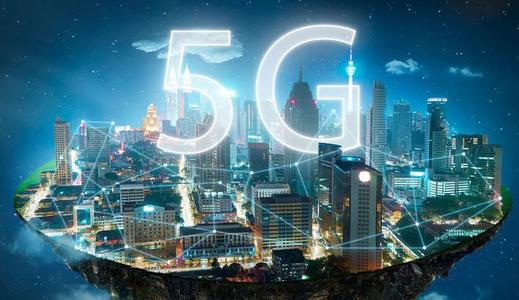
In schools, homes, public places, venues, communities, rural areas or workplaces, 5G has some special application scenarios. In general, 5G technology does not develop alone. It will support the development of artificial intelligence, big data, cloud computing, edge computing, etc., making these technologies smarter. It has gradually become a consensus to use intelligent technology to solve current education and teaching problems.
Today, technologies such as 5G and artificial intelligence are gradually being applied to education and teaching scenarios. I would like to ask you to talk about the challenges that teacher-student interaction will face in the application of educational scenarios?
Profesor nadzwyczajny Zhuang Rongxia:In teaching, more attention is now paid to students' perspectives, students' learning experience is emphasized, and teaching should be student-centered. The application of smart technologies such as 5G and artificial intelligence has created a learning environment for students that is different from the previous classroom environment where teacher-student interaction was the main focus.
In the new environment, in addition to teachers and students, there is also some technical support. In this case, there are great challenges for teacher-student interaction. We often hear a word called"Three-dimensional space". For example, the way we meet face to face is the social space, the way we communicate online is the information space, and the room we are in now during the interview is the physical space. In the process of teaching and learning between teachers and students, they need to understand the interaction issues in a three-dimensional space in a physical space, an information space, and a face-to-face social space.
The application of these technologies gives many teaching models a characteristic: "online and offline integration" or "OMO". This makes the space we live in more complex. However, no matter how the space changes, the most important thing is interaction. We place a strong emphasis on student learning experiences and interactions. In interaction, on the one hand, there will be expression of words, which is behavioral interaction; on the other hand, feeling happy in communication is emotional interaction. Although the teaching models are diverse, there is always some behavioral interaction and emotional interaction required.
Po pierwsze, zmienia się relacja interaktywna.The original face-to-face interaction between teachers and students has expanded to the interaction between students and students, between teachers and students, between students and other people online, and between teachers and other online teaching colleagues, becoming multi-party interactions. This is the relationship challenge brought about by technology. Relationships are no longer single, but become more comprehensive and complex.
Second, the form of interaction changes.In the past, it was face-to-face interaction that could be seen. During the fight against the epidemic last year, the biggest challenge for teachers was to conduct live classes. Teachers can only see the screen and cannot see the students in the distance, so they have no idea how effective the lectures are. This creates an interaction challenge for teachers. In this regard, teachers can interact by allowing students to send messages and like online. This is a compensation method for interaction. This compensation can bring about a behavioral interaction and, more importantly, an emotional interaction between teachers and students.
Wyzwania w relacjach i wyzwania formalne, o których wspomniano powyżej, stanowią większy problem, z jakim borykają się nauczyciele.
Ten artykuł pochodzi z „Future Education Research Center”, jeśli stwierdzisz jakiekolwiek naruszenie lub inny problem, skontaktuj się z nami w celu usunięcia treści.
W celu wsparcia ochrony praw własności intelektualnej prosimy o podanie oryginalnego źródła i autora przy przedruku.
Related Recommendations
Kinghelm Zastępca dyrektora ds. sprzedaży Peng Huisheng: Hakka z Shenzhen, wierny swoim pierwotnym aspiracjom dzięki ciężkiej pracy
2026-08-03
1286
Song Shiqiang o strategii: Najważniejsze momenty z elektronicznych dialogów z Szanghaju z 2026 r.
2026-07-21
1344