






















Service Hotline
News

News

20 years of Beidou, today’s success! Changsha Sanyi successfully launched the 55th Beidou satellite, and the global constellation was deployed
2021-12-29
1089
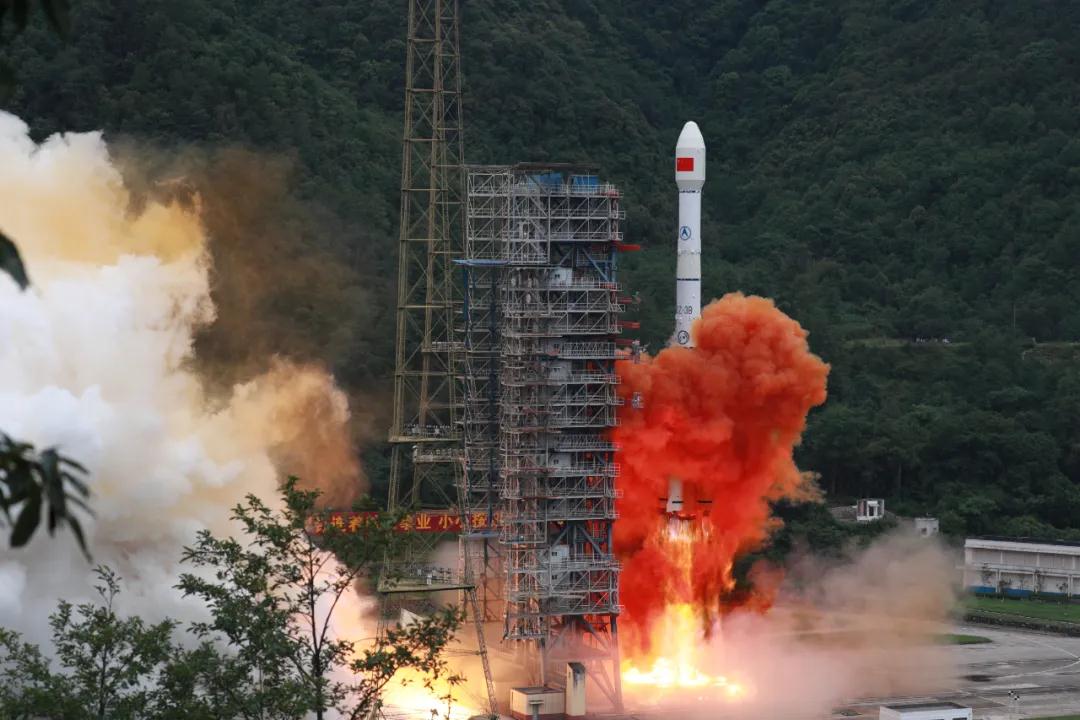

At 9:43 on June 23, my country successfully launched the 55th Beidou navigation satellite using the Long March 3B carrier rocket at the Xichang Satellite Launch Center.The satellite successfully entered the predetermined orbit, and will subsequently undergo orbit changes, on-orbit tests, and experimental evaluations, and will be connected to the network in a timely manner to provide services.With the successful insertion of the 55th Beidou navigation satellite into orbit, my country has completed the deployment target of the Beidou-3 global satellite navigation system constellation half a year ahead of schedule.
This launch mission was a complete success, marking the full completion of the Beidou-3 global constellation deployment and the successful conclusion of the Beidou satellite navigation system's "three-step" strategic mission.This is an important symbol of my country's transformation from a space power to a space power. It is also the first major national project in the aerospace field to be completed during the "Thirteenth Five-Year Plan" period as my country achieves its first centenary goal.
The Beidou-3 system consists of 30 satellites, of which 24 are operating in medium earth orbit, 3 are operating in geostationary orbit, and 3 are operating in inclined geosynchronous orbit.
The 55th Beidou navigation satellite launched this time was developed by the Fifth Academy of China Aerospace Science and Technology Corporation. It is the third geostationary orbit (GEO) satellite of Beidou-3 and the 30th satellite of Beidou-3. This type of satellite plays a key role in special services such as satellite-based enhancement, short message communication, and precise single-point positioning.
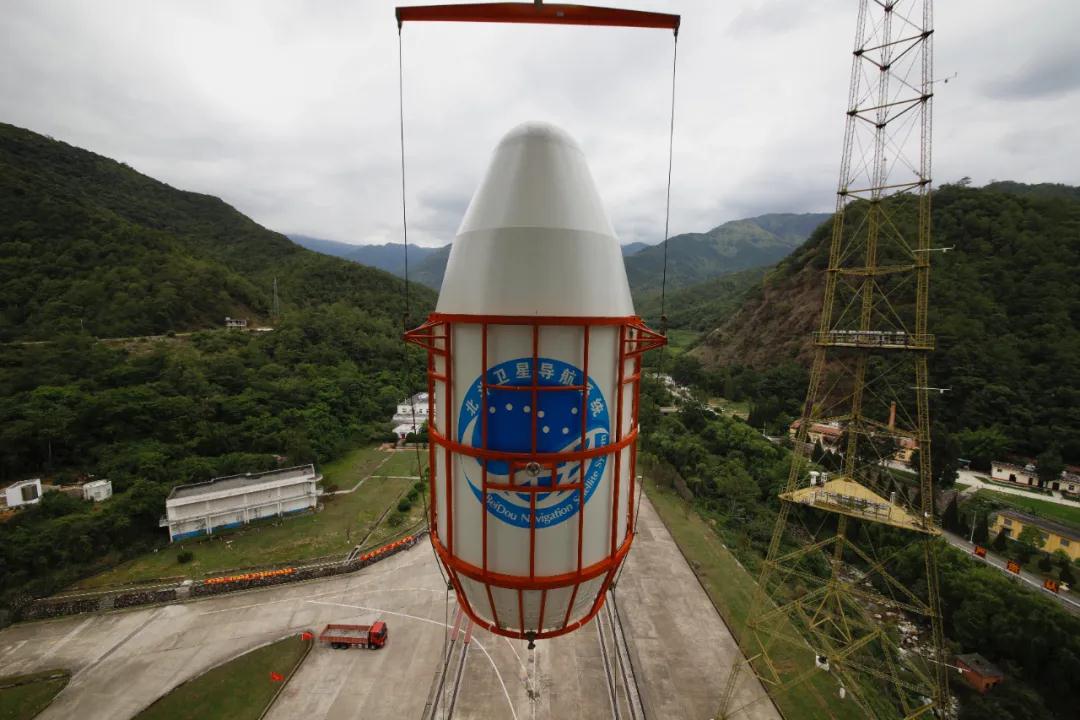

Chen Zhonggui, chief designer of the Beidou-3 satellite of the Fifth Academy, introduced that as the final star of the Beidou-3 global network construction,The successful launch of this satellite also means that the focus of the Beidou satellite navigation system will shift from engineering construction to maintaining stable operation and improving service levels.
The Beidou satellite navigation system is a global satellite navigation system independently constructed and operated by China focusing on the needs of national security and economic and social development. It is an important national spatio-temporal infrastructure that provides all-weather, all-weather, high-precision positioning, navigation and timing services to global users.
China attaches great importance to the construction and development of the Beidou system. Since the 1980s, it has begun to explore a development path for satellite navigation systems suitable for its national conditions, and has formed a "three-step" development strategy: at the end of 2000, the Beidou 1 system was completed to provide services to China; at the end of 2012, the Beidou 2 system was completed to provide services to the Asia-Pacific region; in 2020, the Beidou 3 system was fully completed to provide services to the world.

According to the plan, in 2035, my country will also build a more ubiquitous, more integrated, and more intelligent comprehensive positioning, navigation and timing (PNT) system.Beidou will serve the world and benefit mankind with stronger functions and better performance.
Since the Beidou system provided services, it has been widely used in transportation, agriculture, forestry and fishery, hydrological monitoring, meteorological forecasting, communication timing, power dispatching, disaster relief and mitigation, public security and other fields. It has been integrated into the country's core infrastructure and has produced significant economic and social benefits.
According to statistics, the overall output value of my country's satellite navigation and location services industry reached 345 billion yuan in 2019. The integrated development of Beidou with new technologies such as the Internet, big data, and artificial intelligence is building an emerging industrial ecological chain with Beidou spatio-temporal information as the main content, and is becoming a new engine and booster for the rapid development of the Beidou industry, promoting changes in production and lifestyle and continuous innovation of business models.
In the future, China Beidou will continue to promote applications at home and abroad, continue to deepen the integration of high-precision satellite navigation services with cloud computing, the Internet of Things, and big data, accelerate the integration of the satellite navigation field with high-end manufacturing and software industries, promote changes in production methods and development models, and serve the development of national economy and social informatization.
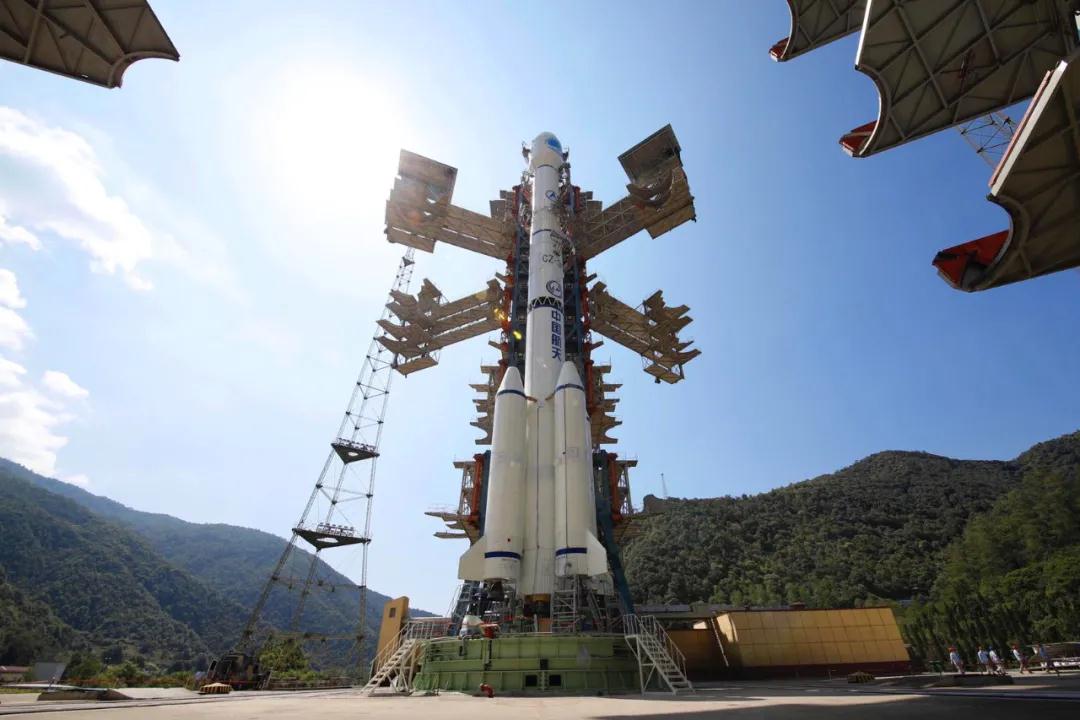
The Long March 3B carrier rocket that carried out this launch mission was developed by the First Academy of China Aerospace Science and Technology Corporation.The Chang 3A series launch vehicles consist of three large cryogenic liquid launch vehicles, Chang 3A, Chang 3B, and Chang 3C.Since the launch of my country's first Beidou navigation test satellite on October 31, 2000, the Changsan-A series carrier rockets have carried out a total of 44 Beidou satellite mission launches, successfully escorting 59 Beidou navigation satellites into space, with a launch success rate of 100%., creating a Chinese miracle in the construction of the world's satellite navigation system.Therefore, the Changsan-A series rockets are also called the “exclusive trains” of the Beidou network.

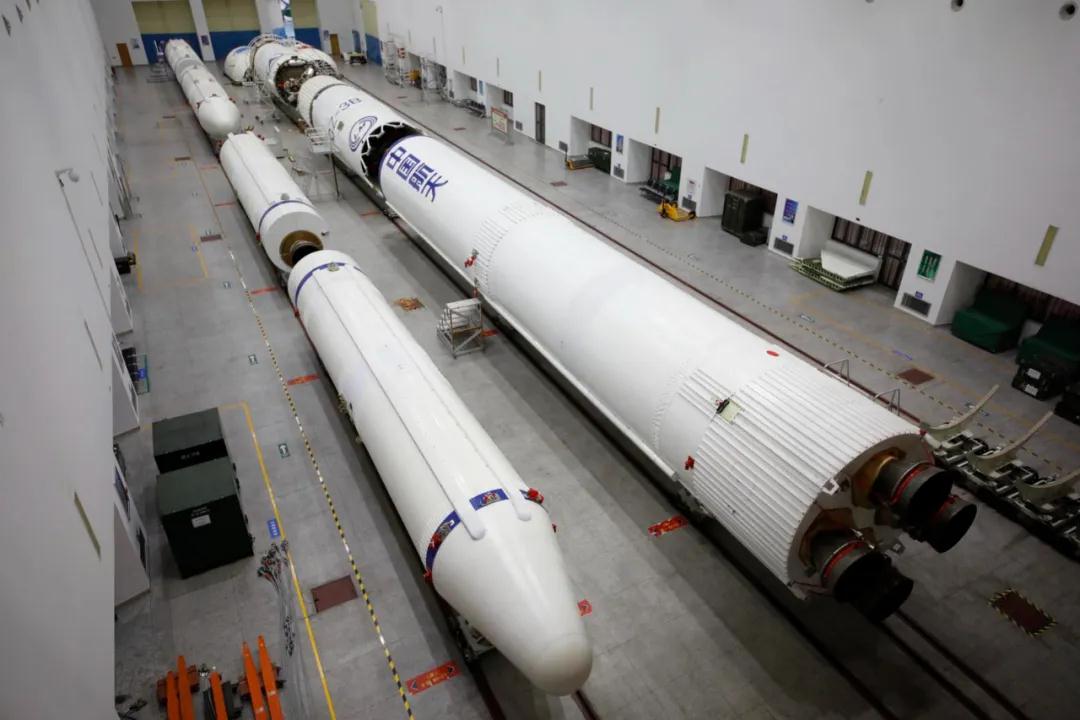
This mission successfully overcame many difficulties such as the impact of the COVID-19 epidemic. The launch team strictly implemented various epidemic prevention measures, optimized processes, and strictly controlled quality in accordance with the requirements of "stricter and more rigorous, detailed and detailed" put forward by the overall project. It achieved two foolproof and two comprehensive victories in epidemic prevention and control and model tasks.
This mission is the 336th flight of the Long March series of launch vehicles.
This article is reproduced from "China Aerospace News", support the protection of intellectual property rights, please indicate the original source and author when reprinting. If there is any infringement, please contact us to delete it.
Related Recommendations