






















Service Hotline
News

News

Beidou expert Academician Yang Yuanxi explained in detail the new development direction of the Beidou satellite navigation system and (BDS+) at the ICG+2016 conference
2021-12-28
937
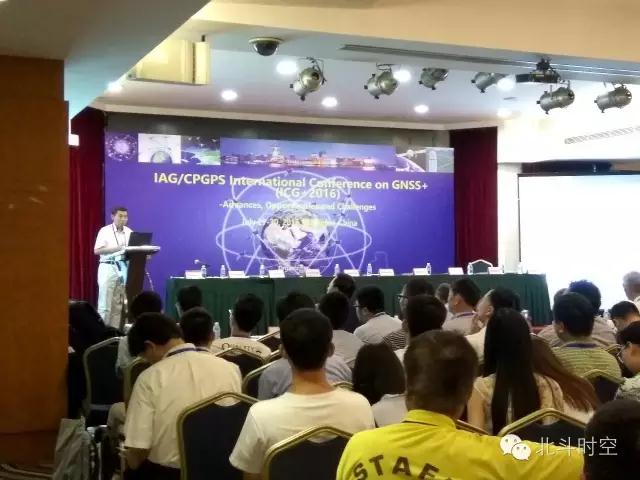
2016Year7moon27Solstice30On the same day, it was jointly sponsored by the Shanghai Observatory of the Chinese Academy of Sciences and Shanghai Jiao Tong University.“IAG/CPGPSinternationalityGNSS+General Assembly (ICG+2016) ”Held in Shanghai. existAt this meeting, Yang Yuanxi, an academician of the Chinese Academy of Sciences, gave a keynote speech.The Beidou Satellite Navigation System was introduced in detail through five aspects, which are: the background and development process of the Beidou Satellite Navigation System, the new development trend of the Beidou Satellite Navigation System (BDS), the concept and assumptions of BDS+, the BDS+ possibility model and the key technologies of BDS+.The Beidou space-time team was fortunate to be on site to study Academician Yang’s report up close. The following is an overview of these five points: The content is compiled and translated by Beidou Spacetime based on the English speech given by Academician Yang Yuanxi at the conference.。
1. Background and development history of Beidou satellite navigation system
China's Beidou satellite navigation system has implemented a "three-step" development strategy. Since the launch of the Beidou-1 system project construction in 1994, the development of Beidou satellite navigation has developed from the original Beidou-1 system to the Beidou global system (also known as BDS-3). The Beidou-1 system adopts an active positioning system and can provide positioning, timing, wide-area differential and short message communication services for Chinese users. The Beidou-2 system project construction was launched in 2004. This system is compatible with the Beidou-1 technical system and adds a passive positioning system. It can provide positioning, speed measurement, timing wide area differential and short message communication services for users in the Asia-Pacific region. The "Beidou Global System" currently has 5 satellites in orbit for testing. These 5 satellites jointly develop inter-satellite links and other test verification work, and connect to the network to provide services in a timely manner. The "Beidou Global System" plans to provide basic services to countries along the "Belt and Road" and surrounding countries in 2018; around 2020, it will complete the launch and networking of 35 satellites.Can provide services to global users 。

Kinghelm product Kinghelm Small Pepper WiFi Antenna
2. New development trends of Beidou Satellite Navigation System (BDS)
Focusing on the future, BDS faces the following main tasks: build a complete constellation system; upgrade the ground operation and control center to make it more stable; improve the performance of satellite atomic clocks; provide global PNT services; increase autonomous navigation capabilities; add new signal frequency bands; make it compatible and interoperable with other GNSS; make BDS's satellite-based enhancement system compatible with other GNSS wide-area enhancement systems.
In order to complete these tasks,BDS will further develop inter-satellite link technology, new orbit determination strategies, integration with satellite-based enhancement systems, and multi-frequency signal systems.
3. Concept and idea of BDS+
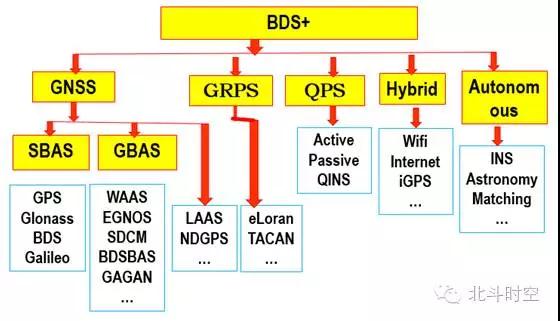
Academician Yang Yuanxi also gave a detailed interpretation of the "Beidou+" concept."Beidou+" has two meanings: one refers to "Beidou+" application refers to the integrated application of Beidou and other electronic products, or the embedding of Beidou chips into other service terminals and service products to form other more functional services and applications based on Beidou location services; the second refers to the integration of Beidou with other navigation systems, such as the US GPS system, the Russian The GLONASS system, the European Galileo system, inertial navigation, astronomical navigation, physical navigation, etc. form a multi-system integrated positioning and navigation timing (PNT) system, thereby forming a global seamless PNT service system, whose continuity, observability, and robustness will be effectively improved."
all in all,The core elements of "Beidou+" are: multiple information sources, robust operation control systems, integrated sensors, adaptive data fusion and intelligent and unified data PNT services.
The possible model of Beidou Navigation Satellite System (BDS+) is based on the above discussion,Academician Yang further introduced the possible model of "Beidou+". Including compatibility and interoperability with multiple GNSS systems, integration with ground radio navigation systems (Doppler/ROLAN/TACAN/Omega/Very High Frequency VOR/Alpha/Wi-Fi, etc.), integration with inertial navigation systems, integration with other navigation means or spatio-temporal information generation means (micro atomic clocks, geomagnetism, gravity, imaging, geographical information, sonar, astronomical information, etc.), and integration with quantum positioning systems (Quantum Positioning System, QPS).
The figure below presents the model based on theseThe "NorthDou+”Architecture。
4. Key technologies of Beidou Navigation Satellite System (BDS+)
Academician Yang shared the key technologies that may be applied in various models of "Beidou+", includingUltra-stable chip-level atomic clock, ultra-stable IMU, chip integrated multi-sensor, QPS and combined PNT, adaptive data fusion and parallel computing in multi-mode PNT information data fusion, etc.
At the end of the report, Academician Yang once again emphasized the advantages of "Beidou+" in the future, and said that the arrival of the "Beidou+" era will not only drive industrial development,It will also form huge application potential.
This article is reprinted from the "Heaven and Earth Integrated Information Network" and supports the protection of intellectual property rights. Please indicate the original source and author when reprinting. If there is any infringement, please contact us to delete it.
Related Recommendations