






















Service Hotline
News

News

Five basic characteristics of the new industrial revolution/intelligent manufacturing
2021-12-28
1069
The new industrial revolution is coming. In recent years, many countries have put forward their own industrial transformation and upgrading development strategies and naming strategies. For example, Germany is called Industry 4.0, China is called smart manufacturing, etc. However, there have always been different opinions on the basic connotation and characteristics of this new industrial revolution marked by intelligence that is spreading across the world, and each has its own wording. Regarding intelligent manufacturing, there are many definitions, each with its own origin. If we cannot clearly understand the new era and accurately grasp the industrial revolution,/Without the basic characteristics of intelligent manufacturing, it will be difficult to truly and effectively promote the infrastructure construction of the new industrial revolution and implement intelligent manufacturing in enterprises.
The author sorted out the connotation of the new industrial revolution and summarized its five basic characteristics:
⑴ "Human wisdom" changes to "wit";
⑵ Sensors are widely available at low prices;
⑶Software-defined manufacturing;
⑷True integration of informatization and informatization (software closed loop);
⑸ Optimize the allocation of manufacturing resources on a large scale.They are introduced separately below.
1. "Human wisdom" turns into "wit"
Human knowledge continues to enter software, the knowledge carrier shifts from carbon-based knowledge to silicon-based knowledge, and digital productivity surges.
Smart manufacturing is not an enigmatic and difficult-to-understand term. In layman's terms, the so-called intelligent manufacturing is a process of "human intelligence becomes intelligent" - that is, human intelligence (referred to as "human intelligence") is refined from tacit knowledge to explicit knowledge, modeled and algorithmized, and then various modeled knowledge (mechanical models, data analysis models, etc.) are embedded into software, the software is embedded into chips, and the chips are embedded into a box./module, and then put theBox/The module is embedded in the physical device, thereby giving the machine a certain degree of autonomy and giving the machine a certain degree of "intelligence" (referred to as "wit"). We call this process "empowerment."
In this way, the machine has a certain degree of human thinking ability with the support of software. When the software algorithm is better, the chip computing power is stronger, and the more industrial data is, the higher the degree of "witness" will be. Therefore, when the "wit" reaches a certain level, it will have the ability to partially or completely replace the human body./Functions of the human brain. when human body/After the human brain leaves the system loop of the work scene, the machine can still work autonomously like a human being on site without human participation. It can even work better, optimizing the allocation of manufacturing resources. As shown in the picture1shown.
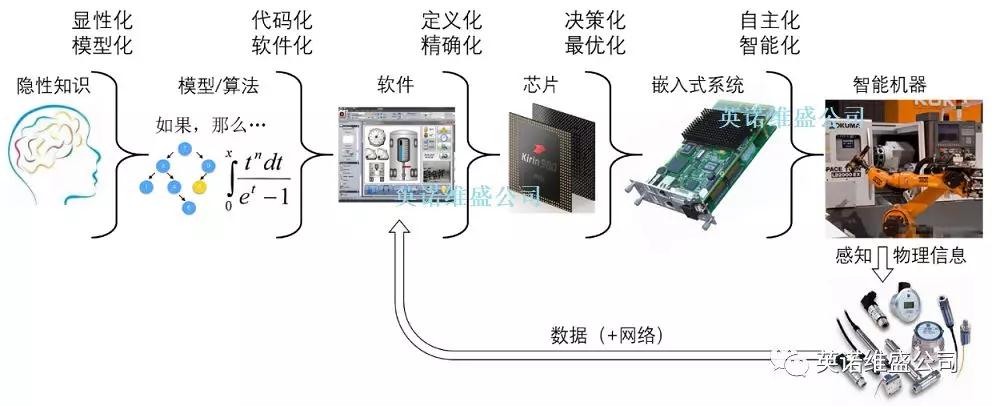
picture1 The process of turning "human intelligence" into "witness"
This kind of manufacturing activity that turns "human intelligence" into "witness" is what the author calls intelligent manufacturing. It is not difficult to see from the above description process that the key enabling element is industrial software.
Industrial software is the top product of industrialization. it encapsulates industrial technology/Knowledge has established an automatic data flow rule system and built the brain and nerves of the machine, so the machine becomes smarter and its functions can be adjusted at any time. Industrial software describes, integrates, simulates, accelerates, amplifies, optimizes, and innovates traditional manufacturing processes, forming a new industrial intelligence model—software-defined manufacturing.
The first and second industrial revolutions greatly liberated the human body. The third industrial revolution has greatly liberated the human brain. The principle of liberating the human brain is that a large amount of "human intelligence" enters the software. Therefore, digital software as a means of R&D and management has brought about revolutionary changes in product R&D and management, with new concepts such as digital twins and data analysis models emerging one after another; at the same time, digital software on the products themselves has brought about revolutionary changes in machines.40In machines years ago, apart from the power cord, there were very few wires on the equipment. In today's equipment, a large number of wires have appeared, and these wires are connected to certain boxes on the machine. Inside these boxes, there are multi-layer circuit boards and a large number of chips. The chips run software, and the software contains a large amount of "human intelligence", and these "human intelligence" have been transformed into "wit".
If more "human intelligence" can be transformed into "wit" and traditional machines can be transformed into "intelligent machines", if more autonomous and controllable machines can be developed,Industrial software, if industrial technology/If knowledge can be more software-based, it will be possible to liberate a large number of knowledge-based technicians from repetitive labor, let machines generate products, and let the liberated technicians produce knowledge and manage machines more easily. This can realize the re-division of labor between people and machines and realize industrial technology./The continuous accumulation and inheritance of knowledge enable enterprises to achieve sustainable and high-quality development.
2. Sensors are widely available at low prices
Sensors add "five senses" to machines, greatly enhancing the machine's ability to perceive the state of the environment, and accelerating the digitization of physical space information.
Machines cannot become intelligent machines without "state awareness"(Even if "state awareness" is achieved, other conditions must be met to achieve it). To achieve "status awareness", a variety of "sensing devices" are needed. Whether it is smart manufacturing, industrial4.0, Industrial Internet or Internet of Things are all inseparable from various sensors.
The sensor is made of national standardGB7665-87To standardize and define: "A device or device that can sense the specified measured value and convert it into a usable output signal according to certain rules, usually composed of sensitive components and conversion components." The "available output signal" refers to an electrical signal that is easy to process and transmit. Generally, sensors are composed of three parts: sensitive components, conversion components and conversion circuits.
Sensitive components, which is the "substance with sensing function" as the "effect substance" of the "sensing device". Therefore, sensors are developed from "effect substances" that have "substances with sensing functions".Without scientific effects (physical effects, chemical effects, etc.) substances as sensing devices, there would be no sensors.。
Common sensors include heat-sensitive sensors, light-sensitive sensors, temperature-sensitive sensors, force-sensitive sensors, gas-sensitive sensors, humidity-sensitive sensors, sound-sensitive sensors, magnetic sensors, taste-sensitive sensors, and radiation-sensitive sensors, totaling ten categories. Various sensors are shown in the picture2shown.
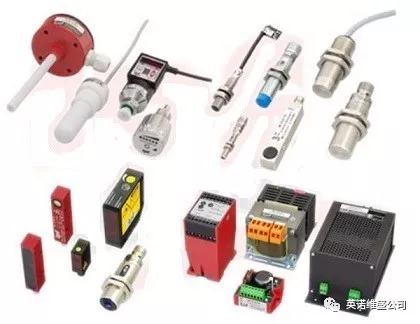
Figure 2
Various sensors
(pictures from the Internet)The development of the Industrial Internet/Industrial Internet of Things in recent years has proven that the combination of high-performance machinery and equipment, low-cost sensors, industrial networks, the Internet, and industrial big data collection and analysis technology can effectively improve the efficiency and effectiveness of existing industries and produce new technologies, new models, and new business formats. One of the key factors is low-cost sensors. In recent years, sensor technology has achieved leapfrog development. New sensors are emerging one after another, costs are continuously reduced, and performance is continuously improved. This has become the norm of research and development in the sensor industry. It is precisely because the cost of sensors continues to decrease and has dropped to the cost line that can be deployed on a large scale that the large-scale application of sensors can become the choice of enterprises.
GEThe company has a lot of experience it can learn from in terms of sensor applications. As early as2005Year,GEIts aircraft engine company was reorganized intoGEAviation has begun to change its business model. The company's original business was only the production of aero engines. Later, it installed numerous sensors on aircraft to collect various parameters of the aircraft in real time. It used big data analysis technology to provide airlines with a complete set of solutions for operation and maintenance management, capacity assurance, operation optimization and financial planning, as well as various services such as safety controls and navigation predictions, which produced good economic benefits for the company.
Take Alitalia as an example,GEHundreds of sensors are installed on each of their aircraft, which can collect many data such as engine operation, temperature and fuel consumption in real time, and useGEAfter massive analysis by the software, Alitalia can accurately provide the ideal control method.145Flying a plane saves money for one year1500Thousands of dollars in fuel costs. Through this data, the possibility of engine failure can also be predicted in advance, and proactive preventive maintenance can be carried out to avoid flight delays, cost increases, and even greater safety accidents caused by machine failures.
2013Year1moon,GEIn a New York battery manufacturer, a total of1More than 10,000 sensors are used to monitor data such as temperature, energy consumption and air pressure during production, and factory managers can useiPadObtain these data to monitor production and effectively optimize the allocation of production resources.
The low-cost popularization of sensors has undoubtedly lowered a huge cost threshold for the new industrial revolution. It has established a rainbow bridge from the physical space to the digital space, allowing spatio-temporal information to be continuously transformed into bit data streams.
3. Software-defined manufacturing
Industrial software becomes the brain of the machine, algorithms/Computing power increases dramatically, software defines materials/Component/The spatial and temporal representation of the system.
Although software is studied as a relatively independent major in many universities and scientific research units, the author believes that studying software alone can easily break away from the hardware foundation on which the software runs.dataanddecision makingThe physical device controlled. Because software has never been an artifact that only has "computing" properties.
Rather, it is an artifact with a more important "control" attribute.。As a highly integrated digital carrier of data, information and knowledge, softwareMust survive and run in the chip。Software and chips form a symbiotic relationship. The function and performance of the chip restrict the running speed of the software and the definable“ability”, and the programmed instructions of the software continuously drive the gate circuits and field effect transistors in the chip to operate "on" and "off",thereforeFrom the day it was born, the software has the "accuracy" of driving the chip.CPS"feature。
The relationship between software and chips is also subtle and constantly changing. In the past, software had to adapt to the chip, and software had to be developed based on the constraints of the chip; today, chips are often designed to run the software better and maximize software performance, that is, chips are developed based on software requirements.
First of all, the chip has the function of "accommodating, computing, and storing" the software, and the software has the function of "accommodating, computing, and storing" the chip.“Assignment, empowerment, wisdom”role. Only when the respective advantages of software and chips are matched together can the best benefits be achieved. Software and chips together form a fusion, a "quasi-CPS", it's hard to say who "defines" who. But two points are obvious: software is the target of the powerful computing power of the chip. Without the support of the powerful computing power of the chip, it is difficult for the software to "empower" physical entities./The role of "empowering intelligence"; human knowledge contained in software is the source of "intelligence" of artificial systems. Without the logical guidance of various models and algorithmic knowledge in software, the powerful computing power of the chip will lose its use, and it will also be unable to form "empowerment" of physical entities./"Intelligence" function.
Secondly, the decisions and data generated by the software have precise control over the physical equipment.
byCPUTake the field effect transistor in the gate circuit as an example. Driven by software digital instructions, the high level (on/current) is1, low level (off/breaking current) is0, so the field effect transistor is constantly "turning on" at extremely high speeds./The calculation is performed in the "off" state, and finally a group of gate circuits output a series of "off" states formed after calculation.1/0"Arranged binary bit data, these bit data can be used to drive display devices (such as various display screens), or can be used to drive controllers in physical devices to allow machines or products to operate accurately, thus reflecting the software's control over chips, peripherals, and physical devices.
Early software was only used on computers, and the scope of the hardware only included some external devices such as display and printing. The results of the software operation only needed to be displayed on the hardware screen, which might be display data, curves or surfaces, or images or sounds. However, these calculation results did not need to form a "closed loop", as long as they could assist people in making decisions. Today, the scope of hardware has expanded to all industrial equipment connected to computers. The results of software operation are used to drive physical equipment and form a "closed loop" with the physical equipment (see the next section). That is, every subtle movement of the physical equipment is sensed and fed back to the software through sensors. The software performs calculations based on the "at this moment" working scenario of the physical equipment, makes decisions based on the embedded mechanism model or reasoning rules, and gives the next optimized and most accurate action instructions for the physical equipment. Therefore, the relationship between software, chips, and industrial equipment has become real-time, close, and colorful.
The software calculates from the driver chip, "software+Chips drive the operation of computer peripherals and develop into software+"Chip" drives industrial physical equipment and its digital twin to operate accurately, making software play a powerful "defining" role in physical equipment.Software definition has now become a technical phenomenon in the manufacturing industry: software not only defines parts, materials, but also products, tooling, processes, assembly, production lines, production processes, supply chains, product usage scenarios, product maintenance and upgrades, customers, sales, enterprises, and everything that can be defined.
4. True integration of informatization and informatization (software closed loop)
Bits embrace atoms,IThand in handOT, Cyber integrates physics, and the digital instructions given by industrial software accurately control physical equipment across time and space.
The "Three-Body Intelligence Model" of "Three-Body Intelligence Revolution"”The two big cycles in the software have given us a good inspiration: we should re-understand software from the basic role of knowledge generation and knowledge flow, and understand why today's software is "closed loop".Physical entity→Conscious human body→Digital virtual body→Physical entityThis great cycle has clearly told us that in the past hundreds of thousands of years of interaction with the physical world, humans have accumulated a large amount of knowledge about understanding and transforming the world. When the interaction of two bodies (physical entity, conscious human body) evolves into the interaction of three bodies, the monotonous situation of "two bodies with one interface" has changed dramatically, turning into the complex situation of "three bodies with three interfaces".
Physical entity→Conscious human body→Digital virtual body→Physical entityThe big cycle is actually a particularly important knowledge cycle. It forms a closed loop for software and is the only way to move from conventional software to industrial software. It is also the origin of the connotation of software definition.
Combining the views put forward by Dr. An Xiaopeng, executive member of the Conference of 100 Information Technology, in the article "Future Industry from a Software Perspective", the author provides a logical closed loop to realize software empowerment and enablement based on the knowledge flow cycle of the three-body intelligent model: physical world operation → operation regularization (mapped to human consciousness activities) → regular modeling → model algorithmization → algorithm coding (entering the digital virtual body) → code softwareization → software optimization of the operation of the physical world (and human behavior), as shown in the figure3shown.
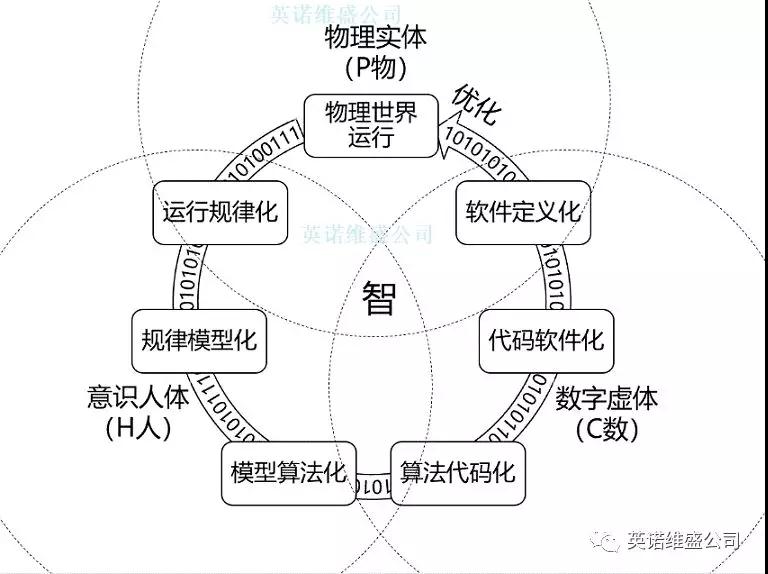
picture3 From three-body intelligent model to software-defined model
in the picture3In a logical closed loop, we sort out and summarize the knowledge accumulated by humans in the long-term interaction with the physical world, find the operating rules of the physical world (including materials, equipment, etc.), and then digitize this knowledge, establish rules for the automatic flow of bit data based on industrial software, and then use the automatically flowing bit data to This knowledge is carried and transported to wherever needed, thus guiding machines or people with correct and ubiquitous knowledge. Under the uncertainty inside and outside the system, complex work scenarios and given resource constraints, through continuous repetition of the intelligent process of "state awareness, real-time analysis, autonomous decision-making, precise execution, and learning improvement",Give the right data, in the right version, to the right people and machines at the right time, so you can do things right and optimally the first time, and even do it better next time.。(author1997Year Translation Boeing CompanyexistDCAC/MRMProject information, including "4indivualright”:right data,right version,right time,right person,Compiled from its original meaning)
Entering digital virtuality with human knowledge, using digital virtuality as the basic connotation of software definition, emphasizing the "closed-loop" characteristics of today's software that are different from traditional software - accurately controlling the shape of machine equipment and the microstructure of materials with software-defined bit data flow is the core content of intelligent manufacturing. Today's software no longer only appears to assist human decision-making, but in an autonomous manner, transcending the human body./The human brain directly drives the operation of physical devices.
The software closed loop forms a true integration of informatization and informatization, creating intelligent manufacturing./Enabling technologies for the industrial InternetCPS(Cyberphysics systems). Under the influence of software definition,CPSIt can accurately control the position of each material atom and the relative position between atoms (lattice), accurately control each molded part and the relative position between each part, and accurately control the operation, cycle, time and energy consumption of each machine and equipment. This has become the most important purpose of the new industrial revolution.
5. Optimize the allocation of manufacturing resources on a large scale
Based on the industrial Internet, we can realize the optimal allocation of manufacturing resources in multiple domains instead of a single domain, and in a large scale instead of a small scale.
exist2017Year11moon27The State Council of Japan issued "On deepening the "Internet+The "Guiding Opinions on Developing the Industrial Internet for Advanced Manufacturing Industry" states: "The Industrial Internet is a new industrial revolution characterized by digitization, networking, and intelligence.critical infrastructure, accelerate its developmentConducive to accelerating the development of intelligent manufacturing, with greater range, higher efficiency, and more precisionOptimize production and service resource allocation, promote the transformation and upgrading of traditional industries, spawn new technologies, new business formats, and new models, and provide new momentum for the construction of a manufacturing power.
”in the past20In 2016, companies implemented many digital/Information transformation projects have incorporated many enterprise information systems, but their scope of action is often "one factory, one workshop," and the optimal allocation of manufacturing resources is limited to local areas./within the small scope of this enterprise. For manufacturing resources that require large-scale configuration optimization, there are often no good solutions due to severe time and space constraints.
The purpose of the Industrial Internet is to achieve "larger scale, higher efficiency, and more preciseOptimize production and service resource allocation"The new industrial network born out of "is the key infrastructure for the implementation of intelligent manufacturing. The Industrial Internet helps enterprises to break through theThe invisible, intangible, and insurmountable "wall" between the physical world and the digital world has broken through the time and space limitations that severely restricted enterprises in the past.
The industrial cloud platform is the initial stage and basic form of the industrial Internet.Gradually running the enterprise's R&D tools, core business systems, key equipment, etc. on the cloud can maximize the convenience of integration between various systems under a unified cloud architecture, allowing data to flow smoothly and automatically between various systems through the cloud, promoting mutual interconnection and interoperability. This can not only effectively improve operational efficiency and implement refined management, but also optimize the allocation of enterprise resources within a wide range, thereby generating economic benefits and comprehensively improving the overall management level of the enterprise. Nowadays, most industrial Internet platforms are installed on private clouds, public clouds or hybrid clouds.
When more and more industrial elements enter the Industrial Internet, most supply chains will also become part of the Industrial Internet. according toIBMA report released shows that in the "software-defined supply chain" environment, under the industrial Internet platform and industrialAPPWith the support of90%, business operation and management costs are greatly reduced.
The industrial Internet has been used to connect industrial elements on a large scale and has achieved many tangible results: For example, the "New Energy Industry Industrial Internet Platform" developed by Qinghai Guodian Green Energy Company accesses data every second at the perception layer.About 3600 items,28The power station is connected to the platform and realizes "no one on duty and few people on duty" through centralized monitoring, saving operating personnel costs for power generation enterprises.40%;Youye Company is a company in Shandong that produces30010,000 tons of steel enterprises have implementedThingswiseIndustrial Internet platform, one year saved4000Ten thousand yuan;Oriental Guoxin Company will domestic1000in an iron-making blast furnace310The base is connected to the ironmaking big data intelligent interconnection platform to reduce smelting energy consumption.3%~10%,Improve labor productivity5%Above, reduce safety accidents60%; After Shugen Internet implemented the Genyun Industrial Internet platform for an injection molding machine equipment manufacturing company, the factory’s equipment failure was “discovered.-Response” period starts from1hours and above reduced to15Within minutes, shorten response time75%, the arrival time is shortened50%, and provide customers with transparency in the processing process to improve customer satisfaction.50%Above; Qujing Cigarette Factory builds a cigarette digital factory based on Hualong Schindler’s Jupiter Industrial Internet platform, with an effective operation rate from89%rise to96%, spare parts inventory takes up funds from1.2100 million/year falls to0.38100 million/year, every100The cost of 10,000 large boxes is less than that of enterprises of the same size0.6100 million/Year;Beijing Zhitong Company implemented Zhitong Industrial Internet for a dairy group to improve machine efficiency.15%, quality traceability is reduced from hours to minutes, and the effectiveness of quality analysis is increased.50%, the number of statistical inspection personnel in the workshop decreased50%,Reduction in production and recording labor80%,etc.
The connection of large-scale industrial factors gives enterprises the possibility to optimize the allocation of manufacturing resources at the large system level, and thus obtains better corporate management and control capabilities, which effectively promotes the transformation and upgrading of enterprises.
6. Summary
The new industrial revolution marked by intelligence has brought unprecedented opportunities to global industrial transformation and upgrading, provided a huge driving force, created countless new technologies, new models and new business formats, and also produced many characteristics of the new industrial era.
Based on the author’s several years of observation and patient combing of the new industrial revolution in many countries, I have found that many of the characteristics of the new industrial era, hundreds of them, can be summarized into these five:
⑴ "Human intelligence" turns to "wit" - human knowledge continues to enter software, the knowledge carrier shifts from mainly carbon-based knowledge to mainly silicon-based knowledge, and digital productivity surges;
⑵ Low-cost and popularization of sensors - sensors add "features" to machines, greatly enhance machine perception capabilities, and accelerate the digitization of physical space information;
⑶Software-defined manufacturing - industrial software becomes the brain and algorithm of the machine/Computing power increases dramatically, software defines materials/Component/spatiotemporal representation of the system;
⑷True integration of the two (software closed loop) - bits embrace atoms,IThand in handOT, cyber fusion physics, digital instructions given by the software accurately control physical equipment across time and space;
⑸ Optimize the allocation of manufacturing resources on a large scale - based on the industrial Internet, realize the optimal allocation of manufacturing resources in multiple domains instead of a single domain, and in a large scale rather than a small scale.
Without clarifying the basic characteristics of the new industrial revolution, smart manufacturing cannot be implemented in enterprises. A clear understanding of the above five basic characteristics can allow companies to enter the fast lane of intelligent manufacturing as soon as possible.
This article is reproduced from "Zhao Min", support the protection of intellectual property rights, please indicate the original source and author when reprinting. If there is any infringement, please contact us to delete it.
Related Recommendations