























서비스 핫라인
뉴스

뉴스

5G 대규모 구축이 직면한 과제와 대응책
2021-12-28
908
요약:With the development of my country’s 5G commercial licenseProvisioning, network-scale deployment has become crucial. This article analyzes in detail the potential for 5G-scale deployment from multiple perspectives.적절한 시기, 그리고 6가지 측면에서 직면할 수 있는 문제와 과제를 살펴보고, 마지막으로 주요 과제에 집중합니다.Corresponding measures will be taken.
머리말
2018년 12월 6일, 산업정보부는 3대 통신사업자에 5G 시스템 중저대역 시험 주파수 사용 허가를 발급했습니다. 그중 차이나텔레콤과 차이나유니콤은 3500MHz 대역, 차이나모바일은 2600MHz와 4900MHz 대역의 시험 주파수 사용 허가를 받았습니다. 주파수 자원은 이동통신망의 핵심 전략 자원입니다. 이번 5G 시스템 시험 주파수 사용 허가 발급은 통신사업자들이 5G 대규모 시험 네트워크 구축을 전면적으로 추진할 수 있도록 효과적으로 보장하고, 우리나라 5G 산업 사슬의 성숙도와 발전을 더욱 촉진할 것입니다.
The three major operators are also actively carrying out 5G trial network construction across the country. China Mobile built a large-scale trial network in five cities: Shanghai, Suzhou, Hangzhou, Guangzhou and Wuhan in 2018, and expanded it to 40 cities in 2019. China Telecom has built a cross-province and cross-domain large-scale trial network with SA as the main component and SA/NSA hybrid networking, and has launched 5G innovation demonstration pilots in 17 cities including Beijing, Shanghai, Guangzhou, and Shenzhen. China Unicom has promoted the deployment of "7+33+n" 5G trial network, covering the core areas of seven cities including Beijing, Shanghai, Guangzhou, Shenzhen, Nanjing, Hangzhou, and Xiongan, achieving hotspot area coverage in 33 cities, and customizing 5G networks in n cities.
On June 6, 2019, the Ministry of Industry and Information Technology issued 5G commercial licenses to China Telecom, China Mobile, China Unicom, and China Radio and Television. my country has officially entered the first year of 5G commercialization. Large-scale deployment of 5G network construction is the primary task faced by telecom operators. This article analyzes the possible problems and challenges faced by large-scale deployment of 5G from multiple perspectives such as standards, equipment, basic resource reserves, and vertical industry applications.
대규모 5G 구축 시기
The early issuance of my country's 5G commercial licenses does not mean that the conditions for large-scale deployment will be immediately met.4G 상용화 과정을 비교해 보면, R8 표준의 첫 번째 버전이 2009년에 공표되었고 해외 통신사들은 같은 해에 상용 서비스를 시작했습니다. ITU가 2012년에 LTE-Advanced를 공식 4G 표준으로 승인한 후, 우리나라는 2013년 2009월에 4G 사업 허가를 공식적으로 발급했습니다. 성숙한 표준, 장비, 그리고 해외 대규모 구축 경험을 참고할 수 있었기 때문에 국내 통신사들은 곧바로 대규모 네트워크 구축에 착수할 수 있었습니다.5G의 완전한 표준(R16)은 2020년까지 공포되지 않을 예정입니다. 현재 표준, 칩, 장비 및 애플리케이션은 완전한 배포를 위한 준비가 되어 있지 않습니다.대규모 5G 구축 시기는 여러 중요한 요소에 따라 달라집니다.
1.1 표준 프로세스
The two version standards of R15 (Option3 and Option2) were promulgated in December 2017 and June 2018 respectively, and the late drop version standard (Option4/7) was promulgated in June 2019. The R16 standard that truly realizes all the functions of 5G will be promulgated in March 2020 and frozen in June. From the standard process, the current network can only support eMBB and basic URLLC services.
1.2 Chips and equipment are mature
In January 2019, the IMT-2020 (5G) Promotion Group announced at the 5G technology research and development test phase 3 summary meeting held in Beijing that the 5G phase 3 test was basically completed. Both 5G base stations and core network equipment can support non-independent networking and independent networking modes. The main functions are in line with expectations and have reached pre-commercial levels.
2019년 5월 21일, 산업정보부는 국무원 정보판공실에서 개최된 국무원 정례 정책 브리핑에서 우리나라의 5G 제품이 점차 성숙해지고 있으며, 시스템, 칩, 단말기 및 기타 연결 요소들이 기본적으로 상용화 수준에 도달하여 상용 배포 준비가 완료되었다고 밝혔습니다.
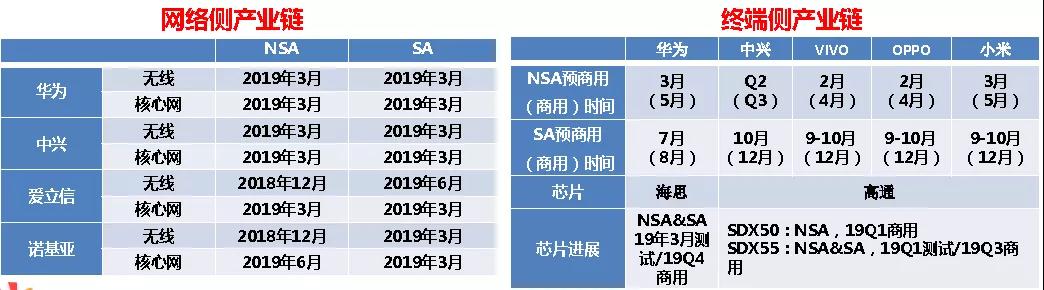
주요 5G 네트워크 측 및 단말기 측 제품의 공급 과정은 표 1과 표 2에 나타나 있습니다.
1.3 Basic resource reserves
4G 네트워크와 비교했을 때, 5G는 네트워크 구조부터 장비 형태까지 혁명적인 변화를 겪었으며, 다양한 기본 자원에 대한 요구 조건도 더욱 엄격해졌습니다. CU/DU/AAU 재구성 및 새로운 비즈니스 요구 사항은 5G 액세스 네트워크 구조의 조정을 촉발했으며, 프런트홀 추가, CU/DU 집적(C-RAN 네트워킹), UPF/MEC 싱킹 등 주요 변화가 발생했습니다. 액세스 측 전송 자원(광 스위치, 회선, 광 케이블)과 집적 설비실이라는 두 가지 기본 물리적 자원에 대한 수요는 대규모 기지국 구축에 앞서 최대한 조정, 최적화 및 확충되어야 합니다.
기존 타워와 층별 자원은 이미 3대 통신 사업자의 다양한 표준 및 주파수 대역의 2/3/4G 네트워크 장비를 수용하고 있습니다. 공동 구축 및 공유 수준이 매우 높아 5G AAU를 추가하는 것은 매우 어렵고, 특히 여러 사업자의 동시 구축 요구 사항을 충족하는 것은 더욱 어렵습니다. 대규모 구축에 앞서 기존 타워와 시스템을 상세히 분석, 통합 및 최적화하여 기존 사이트의 가용성과 가치를 향상시켜야 합니다.
1.4 Application maturity
5G 설계 목표는 3대 시나리오(eMBB/uRLLC/mMTC)의 요구 사항을 완벽하게 충족하는 것입니다. 즉, C가 주도권을 쥐는 단계에서 C와 B가 함께 발전하는 단계로 나아가는 것입니다. 어떤 관점에서 보면, 5G의 임무는 다양한 수직 산업을 완벽하게 지원하고, 수직 산업과의 통합을 통해 사회 각계각층의 정보화 및 지능화를 가속화하는 것입니다. 현재 5G와 수직 산업의 통합 적용은 아직 초기 탐색 단계에 있습니다(그림 1 참조). 통신 사업자들은 다양한 5G+ 애플리케이션 시연을 통해 네트워크 역량과 적용 가능성을 보여주고, 플랫폼을 구축하고, 네트워크를 형성하고, 그룹을 만들어 상호 침투와 상호 영향을 도모함으로써 5G 애플리케이션의 진정한 상용화를 추진하고, 더 나아가 완벽한 네트워크 구축을 촉진하고 있습니다.
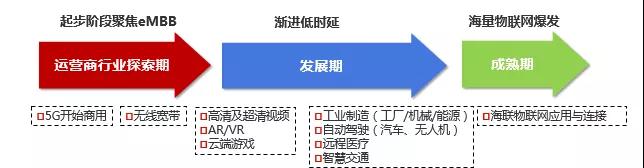
Figure 1 5G application development stages and typical applications
1.5 Local government support
Based on the maturity of standards and technologies, local governments have introduced policies to support the development of 5G-related infrastructure and industries, and formulated clear action plans and development goals. Taking the "Implementation Opinions of the Zhejiang Provincial People's Government on Accelerating the Development of the 5G Industry" as an example, it has detailed plans for 2 time nodes (2020 and 2022) that need to be Based on the completed construction tasks and network coverage goals, by 2022, 5G can be widely used and deeply integrated in various economic and social fields, reach the international leading level, build an excellent 5G industrial ecosystem, and become a national 5G network construction pioneer area and an internationally influential 5G industry development cluster area and 5G innovative application demonstration area.
1.6 대규모 배포에 적합한 시기
위의 요인들을 고려하여 국내 5G 네트워크 구축 속도는 다음과 같이 권장한다. 2019년에는 주요 도시 및 수요가 높은 지역의 핫스팟을 시작으로 점진적으로 확대해 나간다. 2020년에는 R16 표준 공식 발표 이후 첫 대규모 구축을 추진하고, 네트워크 기반 서비스를 더욱 발전시킨다. 2022년부터 2012년까지는 네트워크 구축의 폭과 깊이를 지속적으로 확대하고, 커버리지 및 비즈니스 시나리오에 기반한 네트워크 구축 전략과 역량을 정교화하여 다양한 산업과 5G의 통합 발전을 효과적으로 지원한다.
직면한 도전
표준 및 장비가 성숙된 후에도 5G 네트워크의 대규모 구축을 추진하는 데에는 네트워크 계획, 기본 자원 및 엔지니어링 구현 측면에서 다양한 어려움과 과제가 남아 있으며, 이는 다음과 같이 요약할 수 있습니다.
2.1 네트워크 NSA/SA 배포 선택
In the early stage, 5G mainly uses large-bandwidth access capabilities to support large-traffic services, such as VR, AR, 4K/8K high-definition live broadcast backhaul, etc. In order to quickly commercialize 5G, NSA (Option 3 solution) based on 4G core network EPC can be deployed in the early stage. With the maturity of standards, equipment and industries, and the demand for more low-latency and large-connection services, it has become a must to build an SA (5GC+NR, Option 2 solution) network that fully supports 5G new business requirements and related functions.
시장 기회를 포착하는 관점에서 볼 때, NSA 기반 5G 네트워크를 신속하게 구축한 후 이를 SA 네트워크로 전환 및 업그레이드하는 것이 필요합니다. 하지만 종합적인 구축 비용(TCO) 분석 결과, NSA를 먼저 구축하는 비용이 수요에 맞춰 SA 네트워크를 직접 구축하는 비용보다 높습니다.
2.2 What are the changes and impacts of gNB after CU/DU reconstruction?
The 5G base station gNB after CU/DU reconstruction is divided into three parts of logical functions CU+DU+AAU, which raises the following questions: whether the physical entities of CU/DU are jointly installed or separated, what method is used for fronthaul bearer between AAU and DU, the impact of the form (volume, weight, power consumption) of AAU, and whether the wireless access network architecture needs to be adjusted. Among these issues, the form and deployment of CU and DU are the most critical. Currently, the equipment form provided by the industry is a combination of CU/DU, which is similar to the 4G BBU. It can be deployed centrally or decentrally. The transmission bearer is divided into fronthaul + backhaul. Based on business needs in the later stage, CU and DU are independent physical entities, forming a three-level architecture (CU-DU-AAU). The CU deployment location can be high or low. Based on business needs, DU can be aggregated or dispersed. The transmission bearer is divided into fronthaul + midhaul + backhaul.
2.3 5G NR 액세스 네트워크 아키텍처에 조정 사항이 있습니까?
Since the emergence of distributed base stations (BBU+RRU), wireless access networks have two construction modes: DRAN and C-RAN. The C-RAN mode uses BBU to centrally save computer room resources. Baseband resource collaboration improves efficiency and effectively reduces remote construction costs, but it also increases transmission resources and maintenance pressure. In the 5G era, C-RAN has more important value. In the face of diverse and flexible business scenarios, the wireless access network architecture is required to be more flexible and robust, and the network supports on-demand access to services; CU/DU separation and DU aggregation are conducive to the introduction of SDN/NFV, enabling flexible resource orchestration/slicing and automatic network maintenance; vertical industry integration requires network functions to be decentralized, MEC is deployed, and the media surface is decentralized. The 5G NR access network based on C-RAN can effectively support telecom operators to optimize connection services, strengthen connection applications, and build the ability to compete head-on with Internet companies. Of course, it also faces huge construction and maintenance pressure on basic resources such as computer rooms, pipelines, and optical switches.
2.4 6GHz 이하 대역에서의 매크로 스테이션/마이크로 스테이션 사이트 자원 만족도
국내 3대 통신 사업자는 모두 6GHz 이하의 5G 주파수 대역을 확보했습니다. 커버리지 측면에서 차이나 모바일의 2.6GHz 대역이 가장 강력합니다. 산업 성숙도 측면에서 차이나 텔레콤과 차이나 유니콤은 3.5GHz 대역을 확보했습니다. 현재 3대 통신 사업자는 2/3/4G 네트워크 기지국 자원을 매우 풍부하게 보유하고 있지만, 기지국 자산은 사업자 소유, 타워 회사 소유, 제3자 소유, 그리고 공공 자산(가로등, 바닥재 등)을 포함하여 매우 다양합니다.
The availability of existing site sites involves many factors. From a coverage perspective, it includes the coverage capabilities of 5G base stations (2.6/3.5GHz), the satisfaction of existing site sites, the acquisition of new site sites, and the acquisition of pole resources for small and micro base stations; from the transformation of existing resources, it includes equipment room facilities and sky towers From the perspective of network structure, it includes basic resource system issues under C-RAN networking and how to anchor 4G base stations; from the perspective of meeting business needs, the analysis includes different value areas, special business scenarios, and different network deployment and site requirements for 2B services.
2.5 5G gNB equipment requirements for supporting transformation
The new 5G gNB base station has much higher requirements for computer room facilities and antenna facilities than the previous 2/3/4G base stations. The main reason is that the new AAU equipment has increased in size, weight and power consumption. Table 3 is the current parameter table of typical equipment.
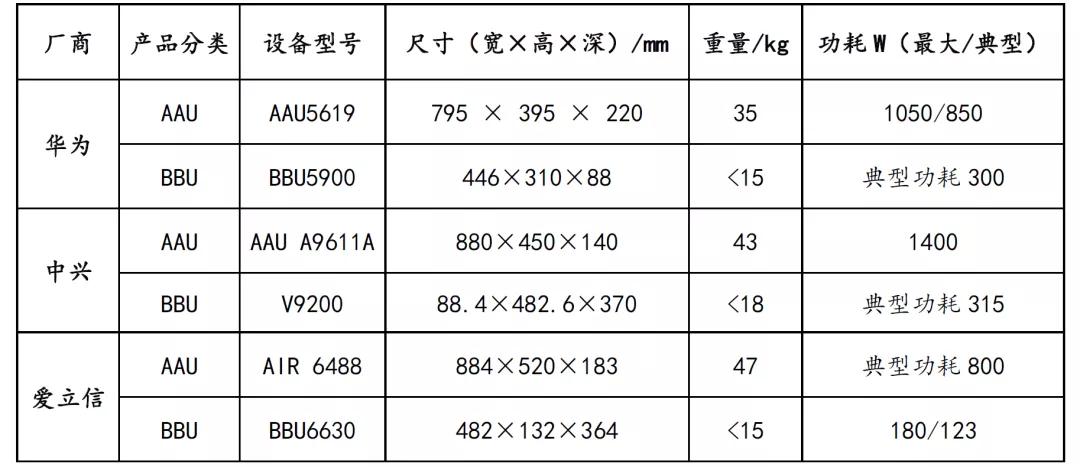
Table 3 Physical parameters of 5G gNB equipment from major manufacturers
새로운 AAU 제품의 형태와 물리적 매개변수는 네 가지 요소를 가져옵니다.
a) The sky space is tight. Under the background of co-construction and sharing, multi-operators and multiple systems are deployed on the same tower, which leads to the shortage of antenna resources and the difficulty of adding 5G AAU equipment.
b) 하중 지지 요구 사항이 더 높습니다. 5G AAU는 일반적으로 크기가 크고(35L 이상), 무게가 무거우며(40kg 이상), 풍상면적이 넓습니다(0.5m² 이상). 따라서 스카이 타워 마스트의 공정 변경 요구 사항이 4G보다 훨씬 더 높습니다.
c) Landscape beautification is limited. The existing beautified antenna has limited internal installation space and cannot meet the installation space and equipment heat dissipation requirements of 5G AAU.
d) AC/DC 전원 공급 시스템의 변환. 5G 시스템 추가는 기존 기지국의 AC 및 DC 전원 공급 시스템에 더 큰 부담을 줄 것입니다. 특히 여러 기지국을 공유하는 시나리오에서는 AC 전력망 용량 부족과 변환 문제가 대규모 5G 구축의 주요 제약 요인이 될 수 있습니다. 전원 공급 시스템은 그림 2에 나타나 있습니다.
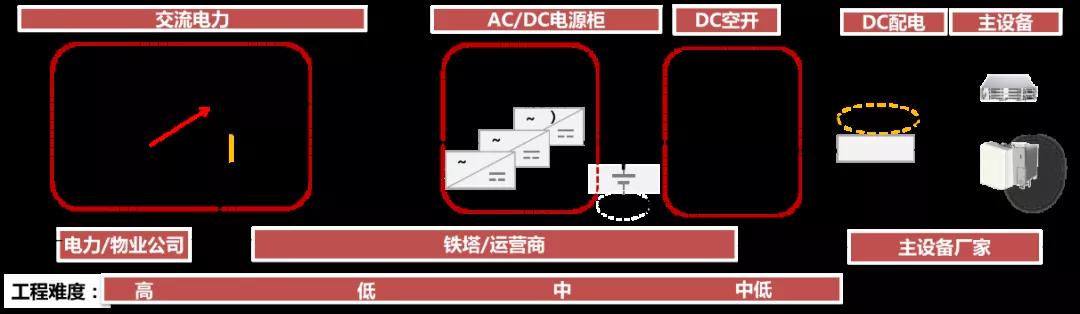
Figure 2 5G base station AC and DC power supply system diagram
2.6 5G 실내 분포 구축 모델에 대한 논의
The indoor environment is an area with high incidence of data services, and many scenarios are also high-value areas for 5G services. However, the construction of 5G indoor distribution needs to face and consider the following issues.
a) 상이.
(a) DAS, 소형 패널, 누설 케이블, 가죽 스테이션 등을 포함한 기존 네트워크 실내 커버리지 구축 방식의 다양성.
(b) 5G needs to provide diversified business support capabilities.
(c) 다양한 촬영 장면 유형을 구성하는 방법에 대한 문제에 직면함.
b) 복잡성.
(a) 기존 DAS는 모니터링 및 관리가 불가능한 수동형 실내 서브시스템입니다. 고장 수리 및 신규 연결 구축이 어렵습니다.
(b) 디지털 회의실 분배 시스템 구축 비율이 높지 않아 정밀 평가 및 네트워크 자원 예측을 지원할 수 없습니다.
(c) How to transform and maintain requires huge investment in manpower and material resources.
c) 가치.
(a) Typical indoor business scenarios of 5G include VR/AR, smart manufacturing, smart energy, wireless medical, etc.
(b) 다양한 가치 시나리오에 따라 맞춤형 실내 커버리지 시스템 솔루션이 필요합니다.
d) 경제적이다.
(a) The demand is huge and there are many sites, so most of the existing rooms need to be upgraded.
(b) 통신 사업자들은 4G 네트워크 중후반기에 디지털 룸 분배 솔루션을 대규모로 도입해 왔습니다. 5G 시대에는 디지털 룸 분배의 활용도가 크게 증가하고 비용도 효과적으로 절감될 것입니다.
(c) Different scenarios require construction methods to achieve optimal cost performance.
대책
3.1 전반적인 대응 방안
a) Begin with the end in mind and bury your capabilities in advance. In-depth exploration of existing site sites, computer rooms, transmission and other resources, with the goal of comprehensive 5G SA network coverage, combined with 5G NR wireless access network network structure adjustment, and in accordance with the C-RAN overall plan, resource planning and capacity reservation are carried out in advance to form complete basic resources (site sites, computer rooms, pipelines, optical cables) for large-scale commercial use.
b) Equipment is on standby and supporting equipment is available first. Considering the upgrading and supply capabilities of the initial 5G main equipment, there is no rush for full deployment. Based on the site part of the 5G comprehensive deployment plan, site sites, antennas, equipment room facilities and other facilities that need to be renovated or newly built will be renovated in advance as needed to meet the needs of rapid and large-scale deployment of 5G.
c) 특별 프로젝트를 설정하고 함께 추진한다. 5G 네트워크의 대규모 구축을 위해 전용 5G 엔지니어링 구현 센터와 무선, 전송, 전산실, 종합 서비스 등을 아우르는 다분야 추진 모델을 구축하여 전문 분야 간 소통 및 협력 손실을 줄이고 프로젝트 건설 진행 상황과 품질을 향상시킨다.
d) First-mover advantage and locked-in resources. Leverage China Mobile's 5G first-mover scale deployment advantage and combine site attributes to lock high-quality site, antenna, and computer room resources with tower companies in advance.
3.2 Use C-RAN as the basic architecture to form basic resource capability reserves
5G의 대규모 구축에 앞서 기본 자원의 용량 확보가 필수적입니다. 투자 및 운영·유지보수 비용 절감, 미래지향적 기술 개발 및 사업화 측면에서 C-RAN은 5G NR 무선 액세스 네트워크의 인프라로 활용됩니다. C-RAN의 계획 및 구축은 통합 서비스 영역 구축을 기반으로 하며, 전체 네트워크 계획 및 이에 따른 기본 자원 용량 확보는 표면(통합 서비스 영역)에서 지점(C-RAN 컨버전스 룸), 그리고 회선(프론트홀/백홀 베어러 네트워크) 순으로 진행할 수 있습니다. 향후 5G 무선 네트워크의 신속한 구축을 위해서는 기존 4G 네트워크 계획 단계에서 5G 진화를 위한 C-RAN 아키텍처 진화 계획을 종합적으로 수립하는 것이 바람직합니다. 구체적인 제안 사항은 다음과 같습니다.
a) Carry out transmission planning based on fronthaul access of remote RRU sites as transmission service access requirements, with an optical cable network as the target guide and comprehensive service area as the scope to carry out C-RAN area subdivision planning. It is recommended that a single C-RAN area include about 8 to 10 macro station physical points, with an area of 0.5 to 5km2, and a single integrated service area is subdivided into 3 to 4 C-RAN areas.
b) C-RAN 아키텍처의 진화 요구사항을 고려하여 접속 전산실 계획을 수립하고, BBU 중앙 설정 지점으로 적합한 조건의 전산실을 선정한다. 전산실 위치는 2차 광 분배 지점 주변에 선정하는 것이 좋으며, 이는 두 개의 컨버전스 전산실을 위쪽으로 이중 설치하여 링 구조를 형성하는 데 유리하다. 전산실 면적은 최소 20m² 이상으로 설정하는 것이 좋다.
c) Carry out fronthaul access planning for C-RAN evolution: At this stage, colored optical fiber can be considered for fronthaul. A single physical point can be reasonably designed to combine and demultiplex and transmit fiber core configuration based on the number of frequency points currently used and subsequent frequency expansion requirements. In terms of the selection of remote site access points, co-located stations can prioritize the use of existing optical cable routes, such as macro sites using old aggregation access rings, and micro sites using old uplink optical cables. Sites across the comprehensive business area need to adjust their connections. According to the new site plan, it is recommended that new site sites access level 2 and below optical exchanges nearby, and it is not recommended to directly access through level 1 optical exchanges, which will help save backbone fiber core resources.
3.3 Complete the optimization and integration of sky surfaces in advance to ensure the availability of towers and masts at existing sites
In order to solve the problem of tight antenna resources in 5G construction, on the premise of reusing the old site as much as possible, combined with the current situation of antenna resources, high-quality space is prepared for 5G AAU according to the following priorities: reuse old poles - build new poles - replace poles - antenna integration (multi-port antenna).
안테나 통합 작업은 5G 대규모 구축에 앞서 단일 프로젝트로 사전 진행할 수 있습니다. 다음의 시정 원칙을 따르는 것이 좋습니다.
a) The scope of sky surface integration and transformation is urban areas, counties and hotspot area sites. Rural areas and traffic trunk road sites will not be subject to sky surface integration for the time being.
b) 기존 하늘 표면의 총 개수를 변경하지 않고, 원칙적으로 새로운 하늘 시스템을 추가하거나 기존 하늘 시스템을 줄이지 않습니다(단, 단일 하늘 표면을 가진 사이트 시스템은 제외).
c) 가능한 한 5G 안테나와 기존 4G 안테나는 하나의 안테나 시스템을 공유해야 합니다.
d) 안테나 재구축 과정에서 네트워크 최적화 및 조정이 동시에 이루어져야 합니다. 네트워크 커버리지의 안정성을 위해 안테나 재구축 및 통합 과정 동안 주요 4G 커버리지 계층을 최대한 고정된 상태로 유지하도록 노력해야 합니다.
3.4 Classification transformation of AC and DC power supply systems
AC-DC 전력 시스템 변환은 한편으로는 기존 사이트의 현황을, 다른 한편으로는 5G 장비 및 향후 발전 방향을 고려해야 합니다. AC-DC 시스템에 필요한 현재 장비 요구 사항은 표 4에 나와 있습니다.
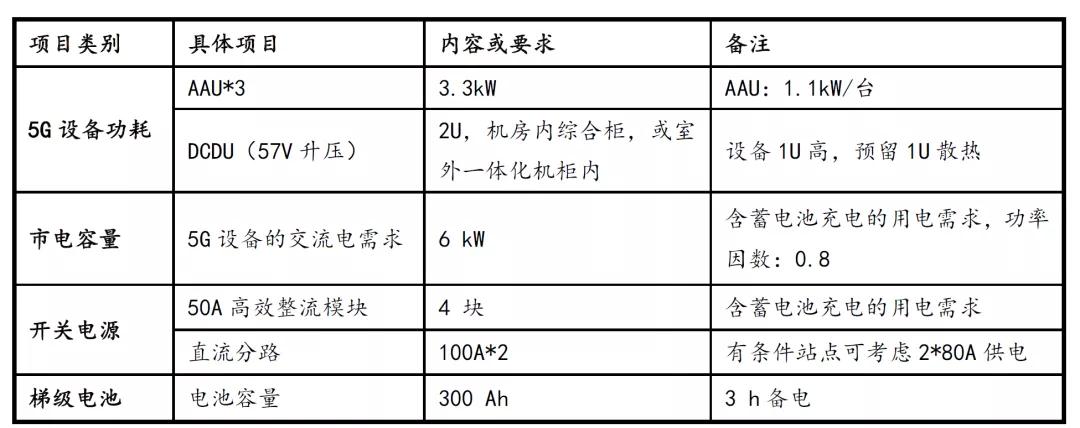
표 4. AC 및 DC 시스템용 5G gNB 장비 요구 사항
변환 원리 및 단계:
a) Power matching: Priority is given to reusing the original machine room, switching power supply and battery, and appropriately adding power supply matching according to the site conditions to meet the power supply construction needs of 5G construction.
b) 외부 전원: 기존 외부 전원 공급 장치를 우선적으로 사용합니다. 외부 전원이 부족한 경우, 배터리 피크 부하 감소, 용량 확장 등의 방법을 통해 5G 외부 전원 요구 사항을 해결하여 구축 비용을 최소화할 수 있습니다. 외부 전원 변환은 어렵지만, 그림 3에 제시된 단계에 따라 변환을 완료할 수 있습니다.
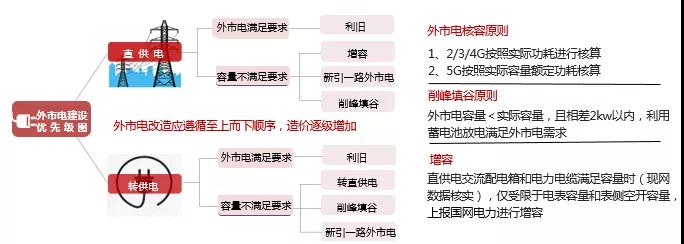
그림 3. 교류 시스템 전환 계획
3.5 시나리오에 기반한 차별화된 객실 배분 시스템 구축
There are many indoor distribution construction scenarios. It is recommended to follow differentiated meeting strategies based on 5G business characteristics and needs.
a) It is recommended to use digital room separation for high-value areas.
b) 중간 가치 영역에는 피코 기지국과 DAS를 사용하십시오.
c) 가치가 낮은 영역에는 실외용 덮개를 실내에 사용하십시오.
d) Use 5G information sources to feed into existing DAS systems for specific scenarios.
맺음말
세우다5G의 목적은 올바른 사용이 아니라, 5G를 잘 활용하는 것입니다.5G network coverage will be launched first in hotspot areas and areas with high demand, and then continue to develop and advance based on the needs of users and services.5G 네트워크의 주된 목표는 사물의 상호 연결과 지능형 사회를 실현하는 것입니다. 따라서 네트워크 구축 전략과 방식은 4G 네트워크와는 확연히 다릅니다. 견고하고 강력하며 유연한 5G 네트워크를 구축하기 위해서는 모든 자원 측면을 더욱 세심하게 고려해야 합니다.
면책조항: 이 기사는 인터넷에서 발췌한 것입니다."에서 재인쇄됨 C114 Communication Network" supports the protection of intellectual property rights. Please indicate the original source and author when reprinting. If there is any infringement, please contact us to delete it.
관련 추천
Kinghelm 영업 부국장 펑후이성: 선전의 하카족 출신으로, 끊임없는 노력으로 초심을 잃지 않고 살아가고 있다
2026-08-03
2313
송스창의 전략론: 2026 상하이 일렉트로니카 다이얼로그 주요 내용
2026-07-21
2521