























สายด่วนบริการ
ข่าวสาร

ข่าวสาร

ความท้าทายและมาตรการรับมือในการนำ 5G มาใช้ในวงกว้าง
2021-12-28
908
สรุป:With the development of my country’s 5G commercial licenseการจัดสรรทรัพยากรและการวางระบบเครือข่ายขนาดใหญ่มีความสำคัญอย่างยิ่ง บทความนี้วิเคราะห์ศักยภาพในการวางระบบ 5G ในวงกว้างอย่างละเอียดจากหลายมุมมองthe appropriate time, as well as the problems and challenges that may be faced in 6 aspects, and finally focus on the main challengesจะมีการดำเนินการตามมาตรการที่เหมาะสม
คำนำ
On December 6, 2018, the Ministry of Industry and Information Technology issued 5G system mid- and low-band test frequency licenses to the three major telecom operators. Among them, China Telecom and China Unicom obtained test frequency use licenses in the 3500MHz band, and China Mobile obtained test frequency use licenses in the 2600MHz and 4900MHz frequency bands. Frequency resources are the core strategic resources of mobile communication networks. The issuance of my country's 5G system trial frequency licenses effectively guarantees telecom operators to comprehensively carry out the construction of 5G large-scale trial networks and further promotes the maturity and development of my country's 5G industry chain.
ผู้ให้บริการรายใหญ่ทั้งสามรายกำลังดำเนินการก่อสร้างเครือข่ายทดลอง 5G ทั่วประเทศอย่างแข็งขัน China Mobile สร้างเครือข่ายทดลองขนาดใหญ่ใน 5 เมือง ได้แก่ เซี่ยงไฮ้ ซูโจว หางโจว กวางโจว และหวู่ฮั่น ในปี 2018 และขยายไปยัง 40 เมืองในปี 2019 China Telecom ได้สร้างเครือข่ายทดลองขนาดใหญ่ข้ามจังหวัดและข้ามโดเมน โดยใช้ SA เป็นส่วนประกอบหลักและเครือข่ายไฮบริด SA/NSA และได้เปิดตัวโครงการนำร่องสาธิตนวัตกรรม 5G ใน 17 เมือง รวมถึงปักกิ่ง เซี่ยงไฮ้ กวางโจว และเซินเจิ้น China Unicom ได้ส่งเสริมการติดตั้งเครือข่ายทดลอง 5G แบบ "7+33+n" ครอบคลุมพื้นที่หลักของ 7 เมือง ได้แก่ ปักกิ่ง เซี่ยงไฮ้ กวางโจว เซินเจิ้น หนานจิง หางโจว และซงอัน บรรลุการครอบคลุมพื้นที่ฮอตสปอตใน 33 เมือง และปรับแต่งเครือข่าย 5G ใน n เมือง
เมื่อวันที่ 6 มิถุนายน 2019 กระทรวงอุตสาหกรรมและเทคโนโลยีสารสนเทศได้ออกใบอนุญาตประกอบการ 5G ให้แก่ China Telecom, China Mobile, China Unicom และ China Radio and Television ประเทศจีนได้เข้าสู่ปีแรกของการใช้งาน 5G อย่างเป็นทางการแล้ว การขยายเครือข่าย 5G ในวงกว้างเป็นภารกิจหลักที่ผู้ให้บริการโทรคมนาคมต้องเผชิญ บทความนี้วิเคราะห์ปัญหาและความท้าทายที่อาจเกิดขึ้นจากการขยายเครือข่าย 5G ในวงกว้างจากหลายมุมมอง เช่น มาตรฐาน อุปกรณ์ ทรัพยากรพื้นฐาน และการประยุกต์ใช้ในอุตสาหกรรมต่างๆ
Timing of large-scale 5G deployment
The early issuance of my country's 5G commercial licenses does not mean that the conditions for large-scale deployment will be immediately met.เมื่อเปรียบเทียบกระบวนการเชิงพาณิชย์ของ 4G มาตรฐาน R8 เวอร์ชันแรกถูกประกาศใช้ในปี 2552 และผู้ให้บริการต่างประเทศเริ่มใช้งานเชิงพาณิชย์ในปีเดียวกัน หลังจากที่ ITU อนุมัติ LTE-Advanced เป็นมาตรฐาน 4G อย่างเป็นทางการในปี 2555 ประเทศของเราได้ออกใบอนุญาต 4G อย่างเป็นทางการในเดือนธันวาคม 2556 เนื่องจากมีมาตรฐาน อุปกรณ์ และประสบการณ์การก่อสร้างในระดับใหญ่จากต่างประเทศให้เป็นแบบอย่าง ผู้ให้บริการในประเทศจึงสามารถดำเนินการติดตั้งเครือข่ายขนาดใหญ่ได้ทันทีThe complete standard for 5G (R16) will not be promulgated until 2020. Currently, standards, chips, equipment and applications are not ready for full deployment.จังหวะเวลาในการติดตั้งใช้งาน 5G ในวงกว้างนั้นขึ้นอยู่กับปัจจัยสำคัญหลายประการ
1.1 กระบวนการมาตรฐาน
The two version standards of R15 (Option3 and Option2) were promulgated in December 2017 and June 2018 respectively, and the late drop version standard (Option4/7) was promulgated in June 2019. The R16 standard that truly realizes all the functions of 5G will be promulgated in March 2020 and frozen in June. From the standard process, the current network can only support eMBB and basic URLLC services.
1.2 Chips and equipment are mature
In January 2019, the IMT-2020 (5G) Promotion Group announced at the 5G technology research and development test phase 3 summary meeting held in Beijing that the 5G phase 3 test was basically completed. Both 5G base stations and core network equipment can support non-independent networking and independent networking modes. The main functions are in line with expectations and have reached pre-commercial levels.
เมื่อวันที่ 21 พฤษภาคม 2019 กระทรวงอุตสาหกรรมและเทคโนโลยีสารสนเทศได้แถลงในการประชุมสรุปนโยบายประจำของคณะรัฐมนตรีที่จัดโดยสำนักงานข้อมูลข่าวสารคณะรัฐมนตรีว่า ผลิตภัณฑ์ 5G ของประเทศกำลังมีความก้าวหน้ามากขึ้นเรื่อยๆ และระบบ ชิป อุปกรณ์ปลายทาง และส่วนประกอบอื่นๆ ได้เข้าสู่ระดับเชิงพาณิชย์แล้ว และพร้อมสำหรับการใช้งานเชิงพาณิชย์
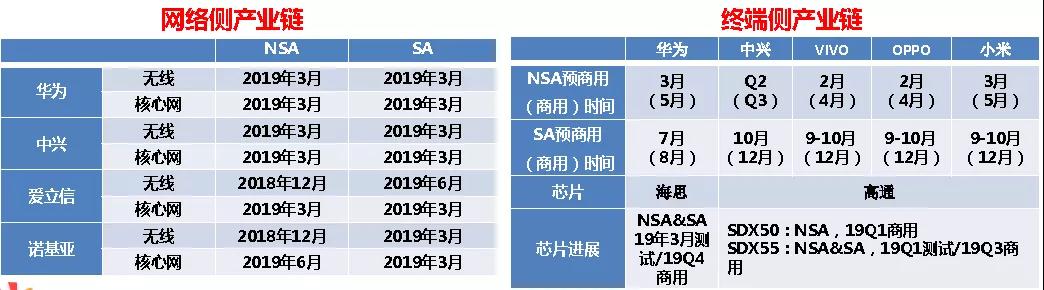
The supply process of main 5G network side and terminal side products is shown in Table 1 and Table 2.
1.3 ปริมาณสำรองทรัพยากรพื้นฐาน
เมื่อเปรียบเทียบกับเครือข่าย 4G เครือข่าย 5G ได้มีการเปลี่ยนแปลงอย่างก้าวกระโดด ตั้งแต่โครงสร้างเครือข่ายไปจนถึงรูปแบบอุปกรณ์ และมีความต้องการทรัพยากรพื้นฐานต่างๆ ที่สูงขึ้นและเข้มงวดมากขึ้น การปรับโครงสร้าง CU/DU/AAU และข้อกำหนดทางธุรกิจใหม่ๆ ได้กระตุ้นให้เกิดการปรับโครงสร้างเครือข่ายการเข้าถึง 5G โดยมีการเพิ่มส่วนรับส่งสัญญาณด้านหน้า (fronthaul bearing), การรวม CU/DU (เครือข่าย C-RAN), การรับส่งสัญญาณ UPF/MEC และการเปลี่ยนแปลงที่สำคัญอื่นๆ ความต้องการทรัพยากรการส่งสัญญาณฝั่งเข้าถึง (สวิตช์ใยแก้วนำแสง ท่อส่งสัญญาณ สายเคเบิลใยแก้วนำแสง) และห้องอุปกรณ์รวมสัญญาณ ซึ่งเป็นทรัพยากรทางกายภาพพื้นฐานสองอย่าง จำเป็นต้องได้รับการปรับปรุง เพิ่มประสิทธิภาพ และเพิ่มให้มากที่สุดเท่าที่จะเป็นไปได้ก่อนการติดตั้งสถานีฐานขนาดใหญ่
The existing towers and floor resources already carry 2/3/4G network equipment of various standards and frequency bands from the three major telecom operators. The degree of co-construction and sharing is very high. It is very difficult to add 5G AAUs, especially to meet the simultaneous deployment of multiple operators. Before large-scale deployment, the existing towers and systems need to be detailed, integrated and optimized to improve the availability and value of the existing sites.
1.4 ความพร้อมของแอปพลิเคชัน
The design goal of 5G is to fully meet the needs of the three major scenarios (eMBB/uRLLC/mMTC), evolving from to C as the main player to to C and to B flying together. From a certain perspective, the mission of 5G is to fully enable various vertical industries and drive the informatization and intelligent upgrading of all walks of life in society through integration with vertical industries. At present, the integrated application of 5G and vertical industries is still in the preliminary exploration stage (as shown in Figure 1). Telecom operators demonstrate network capabilities and application prospects through various 5G+ application demonstrations, set up platforms, build circles, and form groups to achieve mutual penetration and mutual influence, driving the true commercial maturity of 5G applications, which in turn promotes more complete network construction.
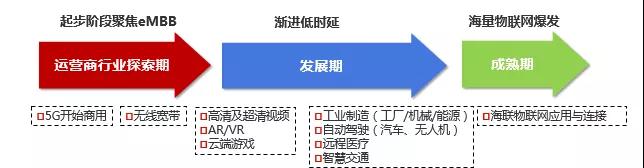
รูปที่ 1 ขั้นตอนการพัฒนาแอปพลิเคชัน 5G และแอปพลิเคชันทั่วไป
1.5 Local government support
จากความพร้อมของมาตรฐานและเทคโนโลยี รัฐบาลท้องถิ่นได้ออกนโยบายเพื่อสนับสนุนการพัฒนาโครงสร้างพื้นฐานและอุตสาหกรรมที่เกี่ยวข้องกับ 5G และกำหนดแผนปฏิบัติการและเป้าหมายการพัฒนาที่ชัดเจน ยกตัวอย่างเช่น "ความเห็นในการดำเนินการของรัฐบาลมณฑลเจ้อเจียงเกี่ยวกับการเร่งพัฒนาอุตสาหกรรม 5G" มีแผนรายละเอียดสำหรับ 2 ช่วงเวลา (ปี 2020 และ 2022) ซึ่งต้องดำเนินการโดยอิงจากงานก่อสร้างที่แล้วเสร็จและเป้าหมายการครอบคลุมเครือข่าย ภายในปี 2022 5G จะต้องสามารถใช้งานได้อย่างกว้างขวางและบูรณาการอย่างลึกซึ้งในหลากหลายด้านเศรษฐกิจและสังคม บรรลุระดับผู้นำสากล สร้างระบบนิเวศอุตสาหกรรม 5G ที่ยอดเยี่ยม และเป็นพื้นที่บุกเบิกการก่อสร้างเครือข่าย 5G ระดับชาติ พื้นที่คลัสเตอร์การพัฒนาอุตสาหกรรม 5G ที่มีอิทธิพลระดับนานาชาติ และพื้นที่สาธิตการประยุกต์ใช้ 5G นวัตกรรม
1.6 The right time for large-scale deployment
Based on the above factors, it is recommended that the pace of domestic 5G network deployment is as follows: In 2019, it will start in hotspot areas in key cities and areas with high demand, and then continue to develop and advance; in 2020, the first large-scale deployment will be carried out after the official launch of the R16 standard, and network-driven services will further mature. From 2012 to 2022, the breadth and depth of network deployment will continue to be expanded, and the network deployment strategy and capability will be refined based on coverage and business scenarios to effectively match and support the integrated development of various industries and 5G.
ความท้าทายที่ต้องเผชิญ
After standards and equipment mature, promoting large-scale deployment of 5G networks will still face various difficulties and challenges in network planning, basic resources, and engineering implementation, which can be summarized as follows.
2.1 Choice of network NSA/SA deployment
In the early stage, 5G mainly uses large-bandwidth access capabilities to support large-traffic services, such as VR, AR, 4K/8K high-definition live broadcast backhaul, etc. In order to quickly commercialize 5G, NSA (Option 3 solution) based on 4G core network EPC can be deployed in the early stage. With the maturity of standards, equipment and industries, and the demand for more low-latency and large-connection services, it has become a must to build an SA (5GC+NR, Option 2 solution) network that fully supports 5G new business requirements and related functions.
จากมุมมองของการคว้าโอกาสทางการตลาด จำเป็นต้องเร่งสร้างเครือข่าย 5G บนพื้นฐานของ NSA ก่อน จากนั้นจึงค่อยปรับปรุงและอัปเกรดเป็นเครือข่าย SA จากการวิเคราะห์ต้นทุนการก่อสร้างโดยรวม (TCO) พบว่า ต้นทุนการสร้าง NSA ก่อนนั้นสูงกว่าการติดตั้งเครือข่าย SA ตามความต้องการโดยตรง
2.2 การเปลี่ยนแปลงและผลกระทบของ gNB หลังจากการสร้าง CU/DU ใหม่มีอะไรบ้าง?
The 5G base station gNB after CU/DU reconstruction is divided into three parts of logical functions CU+DU+AAU, which raises the following questions: whether the physical entities of CU/DU are jointly installed or separated, what method is used for fronthaul bearer between AAU and DU, the impact of the form (volume, weight, power consumption) of AAU, and whether the wireless access network architecture needs to be adjusted. Among these issues, the form and deployment of CU and DU are the most critical. Currently, the equipment form provided by the industry is a combination of CU/DU, which is similar to the 4G BBU. It can be deployed centrally or decentrally. The transmission bearer is divided into fronthaul + backhaul. Based on business needs in the later stage, CU and DU are independent physical entities, forming a three-level architecture (CU-DU-AAU). The CU deployment location can be high or low. Based on business needs, DU can be aggregated or dispersed. The transmission bearer is divided into fronthaul + midhaul + backhaul.
2.3 Is there any adjustment to the 5G NR access network architecture?
นับตั้งแต่การเกิดขึ้นของสถานีฐานแบบกระจาย (BBU+RRU) เครือข่ายการเข้าถึงไร้สายมีโหมดการสร้างสองแบบ ได้แก่ DRAN และ C-RAN โหมด C-RAN ใช้ BBU เพื่อประหยัดทรัพยากรห้องคอมพิวเตอร์ส่วนกลาง การทำงานร่วมกันของทรัพยากรเบสแบนด์ช่วยเพิ่มประสิทธิภาพและลดต้นทุนการสร้างระยะไกลได้อย่างมีประสิทธิภาพ แต่ก็เพิ่มทรัพยากรการส่งสัญญาณและแรงกดดันในการบำรุงรักษาด้วย ในยุค 5G C-RAN มีคุณค่าที่สำคัญยิ่งขึ้น เมื่อเผชิญกับสถานการณ์ทางธุรกิจที่หลากหลายและยืดหยุ่น สถาปัตยกรรมเครือข่ายการเข้าถึงไร้สายจำเป็นต้องมีความยืดหยุ่นและแข็งแกร่งมากขึ้น และเครือข่ายต้องรองรับการเข้าถึงบริการตามความต้องการ การแยก CU/DU และการรวม DU เอื้อต่อการนำ SDN/NFV มาใช้ ทำให้สามารถจัดการ/แบ่งส่วนทรัพยากรได้อย่างยืดหยุ่นและบำรุงรักษาเครือข่ายโดยอัตโนมัติ การบูรณาการอุตสาหกรรมแนวดิ่งต้องการให้ฟังก์ชันเครือข่ายกระจายศูนย์ มีการใช้งาน MEC และพื้นผิวสื่อกระจายศูนย์ เครือข่ายการเข้าถึง 5G NR ที่ใช้ C-RAN สามารถสนับสนุนผู้ให้บริการโทรคมนาคมในการเพิ่มประสิทธิภาพบริการการเชื่อมต่อ เสริมสร้างแอปพลิเคชันการเชื่อมต่อ และสร้างความสามารถในการแข่งขันกับบริษัทอินเทอร์เน็ตได้อย่างมีประสิทธิภาพ แน่นอนว่า มันยังเผชิญกับแรงกดดันอย่างมากในการก่อสร้างและบำรุงรักษาทรัพยากรพื้นฐาน เช่น ห้องคอมพิวเตอร์ ท่อส่ง และสวิตช์ใยแก้วนำแสง
2.4 Satisfaction of macro station/micro station site resources under Sub 6GHz
ผู้ให้บริการโทรคมนาคมในประเทศทั้งสามรายต่างก็ได้รับคลื่นความถี่ 5G ที่ต่ำกว่า 6GHz แล้ว ในแง่ของความสามารถในการครอบคลุมพื้นที่ China Mobile มีศักยภาพสูงสุดในคลื่นความถี่ 2.6GHz จากการวิเคราะห์ความพร้อมของอุตสาหกรรม China Telecom และ China Unicom ได้รับคลื่นความถี่ 3.5GHz แล้ว ในปัจจุบัน ผู้ให้บริการโทรคมนาคมรายใหญ่ทั้งสามรายมีทรัพยากรสถานที่ตั้งเครือข่าย 2/3/4G จำนวนมาก แต่กรรมสิทธิ์ในสถานที่ตั้งนั้นมีความหลากหลายมาก ทั้งที่เป็นของผู้ให้บริการเอง บริษัทเจ้าของเสาสัญญาณ บริษัทเอกชน และทรัพย์สินสาธารณะ (เสาไฟ พื้นที่ต่างๆ เป็นต้น)
The availability of existing site sites involves many factors. From a coverage perspective, it includes the coverage capabilities of 5G base stations (2.6/3.5GHz), the satisfaction of existing site sites, the acquisition of new site sites, and the acquisition of pole resources for small and micro base stations; from the transformation of existing resources, it includes equipment room facilities and sky towers From the perspective of network structure, it includes basic resource system issues under C-RAN networking and how to anchor 4G base stations; from the perspective of meeting business needs, the analysis includes different value areas, special business scenarios, and different network deployment and site requirements for 2B services.
2.5 5G gNB equipment requirements for supporting transformation
The new 5G gNB base station has much higher requirements for computer room facilities and antenna facilities than the previous 2/3/4G base stations. The main reason is that the new AAU equipment has increased in size, weight and power consumption. Table 3 is the current parameter table of typical equipment.
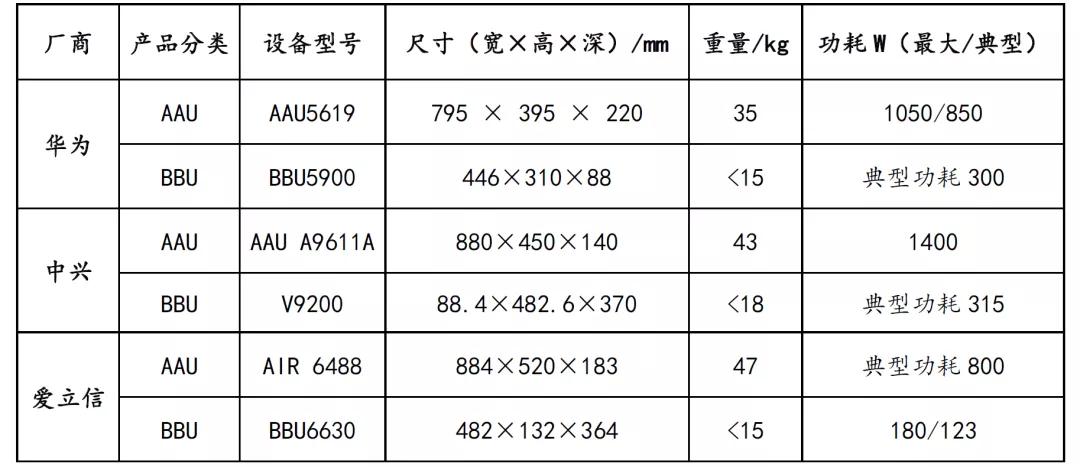
Table 3 Physical parameters of 5G gNB equipment from major manufacturers
รูปแบบและคุณสมบัติทางกายภาพของผลิตภัณฑ์ AAU รุ่นใหม่ประกอบด้วยปัจจัยสี่ประการ
a) The sky space is tight. Under the background of co-construction and sharing, multi-operators and multiple systems are deployed on the same tower, which leads to the shortage of antenna resources and the difficulty of adding 5G AAU equipment.
b) ข้อกำหนดด้านการรับน้ำหนักสูงกว่า เสาอากาศ 5G มักมีขนาดใหญ่ (มากกว่า 35 ลิตร) หนัก (มากกว่า 40 กิโลกรัม) และมีพื้นที่รับลมขนาดใหญ่ (มากกว่า 0.5 ตารางเมตร) ข้อกำหนดในการปรับเปลี่ยนกระบวนการผลิตสำหรับเสาเสาอากาศจึงสูงกว่าของเสาอากาศ 4G อย่างมาก
ค) การปรับปรุงภูมิทัศน์มีข้อจำกัด เสาอากาศที่ปรับปรุงภูมิทัศน์แล้วมีพื้นที่ติดตั้งภายในจำกัด และไม่สามารถตอบสนองความต้องการด้านพื้นที่ติดตั้งและการระบายความร้อนของอุปกรณ์สำหรับ 5G AAU ได้
d) การปรับปรุงระบบจ่ายไฟ AC/DC การเพิ่มระบบ 5G จะสร้างแรงกดดันมากขึ้นต่อระบบจ่ายไฟ AC และ DC ของสถานีฐานที่มีอยู่ โดยเฉพาะอย่างยิ่งในสถานการณ์ที่มีการใช้สถานีฐานหลายแห่งร่วมกัน ความจุของไฟ AC หลักที่ไม่เพียงพอและการแปลงไฟเป็นปัจจัยจำกัดที่สำคัญสำหรับการใช้งาน 5G ในวงกว้าง ระบบจ่ายไฟแสดงในรูปที่ 2
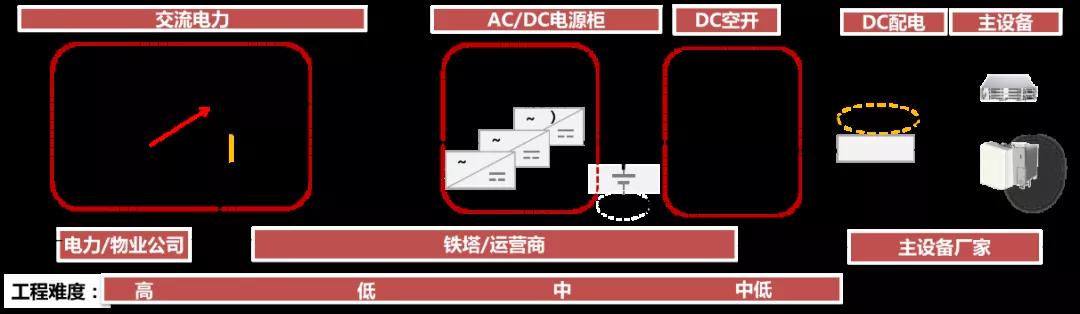
Figure 2 5G base station AC and DC power supply system diagram
2.6 การอภิปรายเกี่ยวกับแบบจำลองการก่อสร้างระบบกระจายสัญญาณ 5G ภายในอาคาร
The indoor environment is an area with high incidence of data services, and many scenarios are also high-value areas for 5G services. However, the construction of 5G indoor distribution needs to face and consider the following issues.
a) ความหลากหลาย
(a) Diversity of existing network indoor coverage construction modes, including DAS, small panels, leaky cables, leather stations, etc.
(b) 5G needs to provide diversified business support capabilities.
(c) Facing the problem of how to construct diverse coverage scene types.
ข) ความซับซ้อน
(a) Traditional DAS is a passive room subsystem that cannot be monitored and managed. It is difficult to repair faults and build new connections.
(b) สัดส่วนการใช้งานระบบกระจายสัญญาณห้องประชุมดิจิทัลไม่สูง และไม่สามารถรองรับการประเมินอย่างละเอียดและการคาดการณ์ทรัพยากรเครือข่ายได้
(c) How to transform and maintain requires huge investment in manpower and material resources.
ค) คุณค่า
(ก) ตัวอย่างสถานการณ์การใช้งาน 5G ในอาคารทั่วไป ได้แก่ VR/AR, การผลิตอัจฉริยะ, พลังงานอัจฉริยะ, การแพทย์ไร้สาย เป็นต้น
(b) Customized indoor coverage system solutions are required for different value scenarios.
d) ประหยัด.
(a) The demand is huge and there are many sites, so most of the existing rooms need to be upgraded.
(b) Operators have introduced digital room distribution solutions on a large scale in the middle and late stages of 4G networks. Facing 5G, the usage of digital room distribution will increase significantly and the cost will be effectively reduced.
(ค) สถานการณ์ที่แตกต่างกันต้องใช้วิธีการก่อสร้างเพื่อให้ได้ประสิทธิภาพด้านต้นทุนที่ดีที่สุด
ตอบโต้
3.1 แนวคิดการตอบสนองโดยรวม
ก) เริ่มต้นโดยคำนึงถึงเป้าหมายสุดท้ายและวางแผนความสามารถล่วงหน้า สำรวจสถานที่ตั้งสถานีฐาน ห้องคอมพิวเตอร์ ระบบส่งสัญญาณ และทรัพยากรอื่นๆ ที่มีอยู่โดยละเอียด โดยมีเป้าหมายเพื่อให้ครอบคลุมเครือข่าย 5G SA อย่างครบถ้วน ควบคู่ไปกับการปรับโครงสร้างเครือข่ายการเข้าถึงไร้สาย 5G NR และดำเนินการวางแผนทรัพยากรและการสำรองกำลังการผลิตล่วงหน้าให้สอดคล้องกับแผนโดยรวมของ C-RAN เพื่อสร้างทรัพยากรพื้นฐานที่สมบูรณ์ (สถานที่ตั้งสถานีฐาน ห้องคอมพิวเตอร์ ท่อส่งสัญญาณ สายเคเบิลใยแก้วนำแสง) สำหรับการใช้งานเชิงพาณิชย์ขนาดใหญ่
b) Equipment is on standby and supporting equipment is available first. Considering the upgrading and supply capabilities of the initial 5G main equipment, there is no rush for full deployment. Based on the site part of the 5G comprehensive deployment plan, site sites, antennas, equipment room facilities and other facilities that need to be renovated or newly built will be renovated in advance as needed to meet the needs of rapid and large-scale deployment of 5G.
c) Set up special projects and make progress together. For the large-scale deployment of 5G networks, a dedicated 5G engineering implementation center and a multi-professional promotion model including wireless, transmission, computer room, and full-service are established to reduce professional communication and coordination losses and improve project construction progress and quality.
d) First-mover advantage and locked-in resources. Leverage China Mobile's 5G first-mover scale deployment advantage and combine site attributes to lock high-quality site, antenna, and computer room resources with tower companies in advance.
3.2 ใช้ C-RAN เป็นสถาปัตยกรรมพื้นฐานเพื่อสร้างคลังสำรองทรัพยากรขั้นพื้นฐาน
ก่อนการใช้งาน 5G ในวงกว้าง จำเป็นต้องสำรองทรัพยากรพื้นฐานไว้ก่อน ในแง่ของการลดต้นทุนการลงทุน การดำเนินงานและการบำรุงรักษา รวมถึงการพัฒนาเทคโนโลยีและการดำเนินธุรกิจที่มุ่งเน้นอนาคต C-RAN จึงถูกนำมาใช้เป็นโครงสร้างพื้นฐานของเครือข่ายการเข้าถึงไร้สาย 5G NR การวางแผนและการก่อสร้าง C-RAN ขึ้นอยู่กับการสร้างพื้นที่ให้บริการแบบครบวงจร การวางแผนเครือข่ายโดยรวมและการสำรองทรัพยากรพื้นฐานที่เกี่ยวข้องสามารถดำเนินการได้ตามลำดับจากพื้นผิว (พื้นที่ให้บริการแบบบูรณาการ) ไปยังจุด (ห้องรวม C-RAN) และจากนั้นไปยังสายส่ง (เครือข่ายรับส่งข้อมูล fronthaul/backhaul) เพื่อให้สามารถรองรับการใช้งานเครือข่ายไร้สาย 5G อย่างรวดเร็วในอนาคตได้ดียิ่งขึ้น ขอแนะนำให้ดำเนินการวางแผนการพัฒนาสถาปัตยกรรม C-RAN สำหรับการพัฒนา 5G ในการวางแผนเครือข่าย 4G ที่มีอยู่โดยเร็วที่สุด ข้อเสนอแนะเฉพาะมีดังต่อไปนี้
ก) ดำเนินการวางแผนการส่งสัญญาณโดยอิงจากการเข้าถึง fronthaul ของไซต์ RRU ระยะไกลเป็นข้อกำหนดการเข้าถึงบริการส่งสัญญาณ โดยใช้เครือข่ายเคเบิลใยแก้วนำแสงเป็นแนวทางเป้าหมาย และพื้นที่ให้บริการแบบครบวงจรเป็นขอบเขตในการวางแผนการแบ่งพื้นที่ C-RAN ขอแนะนำว่าพื้นที่ C-RAN หนึ่งแห่งควรประกอบด้วยจุดทางกายภาพของสถานีขนาดใหญ่ประมาณ 8 ถึง 10 จุด โดยมีพื้นที่ 0.5 ถึง 5 ตารางกิโลเมตร และพื้นที่ให้บริการแบบครบวงจรหนึ่งแห่งควรแบ่งย่อยออกเป็น 3 ถึง 4 พื้นที่ C-RAN
b) Carry out access computer room planning oriented to the evolution needs of C-RAN architecture, and select computer rooms with good conditions as BBU centralized setting points. It is recommended that the location of the computer room be selected around the first-level fiber distribution point, which is conducive to double-hanging two convergence computer rooms upwards to form a ring. For the computer room area, it is recommended to configure at least 20 m2.
ค) ดำเนินการวางแผนการเข้าถึง fronthaul สำหรับการพัฒนา C-RAN: ในขั้นตอนนี้ สามารถพิจารณาใช้ใยแก้วนำแสงสีสำหรับ fronthaul ได้ สามารถออกแบบจุดเชื่อมต่อทางกายภาพจุดเดียวเพื่อรวม แยก และส่งสัญญาณใยแก้วนำแสงตามจำนวนจุดความถี่ที่ใช้งานอยู่ในปัจจุบันและความต้องการขยายความถี่ในอนาคตได้ ในส่วนของการเลือกจุดเชื่อมต่อไซต์ระยะไกล สถานีที่อยู่ร่วมกันสามารถให้ความสำคัญกับการใช้เส้นทางสายเคเบิลใยแก้วนำแสงที่มีอยู่แล้ว เช่น ไซต์ขนาดใหญ่ใช้แหวนเชื่อมต่อแบบรวมศูนย์เดิม และไซต์ขนาดเล็กใช้สายเคเบิลใยแก้วนำแสงอัปลิงก์เดิม ไซต์ต่างๆ ทั่วพื้นที่ธุรกิจจำเป็นต้องปรับการเชื่อมต่อของตน ตามแผนไซต์ใหม่ ขอแนะนำให้ไซต์ใหม่เข้าถึงศูนย์แลกเปลี่ยนใยแก้วนำแสงระดับ 2 หรือต่ำกว่าที่อยู่ใกล้เคียง และไม่แนะนำให้เข้าถึงโดยตรงผ่านศูนย์แลกเปลี่ยนใยแก้วนำแสงระดับ 1 ซึ่งจะช่วยประหยัดทรัพยากรแกนใยแก้วนำแสงของโครงข่ายหลัก
3.3 Complete the optimization and integration of sky surfaces in advance to ensure the availability of towers and masts at existing sites
เพื่อแก้ปัญหาการขาดแคลนทรัพยากรเสาอากาศในการก่อสร้าง 5G โดยอยู่บนพื้นฐานของการใช้พื้นที่เดิมให้มากที่สุดเท่าที่จะเป็นไปได้ ควบคู่ไปกับสถานการณ์ทรัพยากรเสาอากาศในปัจจุบัน จึงได้จัดเตรียมพื้นที่คุณภาพสูงสำหรับ 5G AAU ตามลำดับความสำคัญดังต่อไปนี้: ใช้เสาเดิม - สร้างเสาใหม่ - เปลี่ยนเสา - การรวมเสาอากาศ (เสาอากาศหลายพอร์ต)
งานบูรณาการเสาอากาศสามารถดำเนินการได้ในโครงการเดียวล่วงหน้าก่อนการใช้งาน 5G ในวงกว้าง ขอแนะนำให้ปฏิบัติตามหลักการแก้ไขต่อไปนี้
ก) ขอบเขตของการบูรณาการและการเปลี่ยนแปลงพื้นผิวท้องฟ้าครอบคลุมพื้นที่เมือง อำเภอ และพื้นที่ที่มีความหนาแน่นสูง ส่วนพื้นที่ชนบทและถนนสายหลักที่มีการจราจรหนาแน่นจะยังไม่ได้รับการบูรณาการพื้นผิวท้องฟ้าในขณะนี้
ข) คงจำนวนพื้นผิวท้องฟ้าที่มีอยู่ทั้งหมดไว้เท่าเดิม และโดยหลักการแล้วไม่ควรเพิ่มระบบท้องฟ้าใหม่หรือลดระบบท้องฟ้า (ยกเว้นระบบพื้นที่ที่มีพื้นผิวท้องฟ้าเพียงแห่งเดียว)
c) As much as possible, 5G antennas and existing 4G antennas share an antenna system.
d) ในระหว่างการปรับปรุงเสาอากาศ จำเป็นต้องดำเนินการปรับปรุงและปรับแต่งเครือข่ายไปพร้อมกัน เพื่อความเสถียรของความครอบคลุมเครือข่าย ในระหว่างกระบวนการปรับปรุงและบูรณาการเสาอากาศ ควรพยายามรักษาระดับความครอบคลุมหลักของ 4G ให้คงที่มากที่สุดเท่าที่จะเป็นไปได้
3.4 การแปลงการจำแนกประเภทของระบบจ่ายไฟกระแสสลับและกระแสตรง
The AC-DC power system transformation must take into account the current status of existing sites on the one hand, and the 5G equipment and its subsequent evolution on the other. The current equipment requirements for the AC-DC system are shown in Table 4.
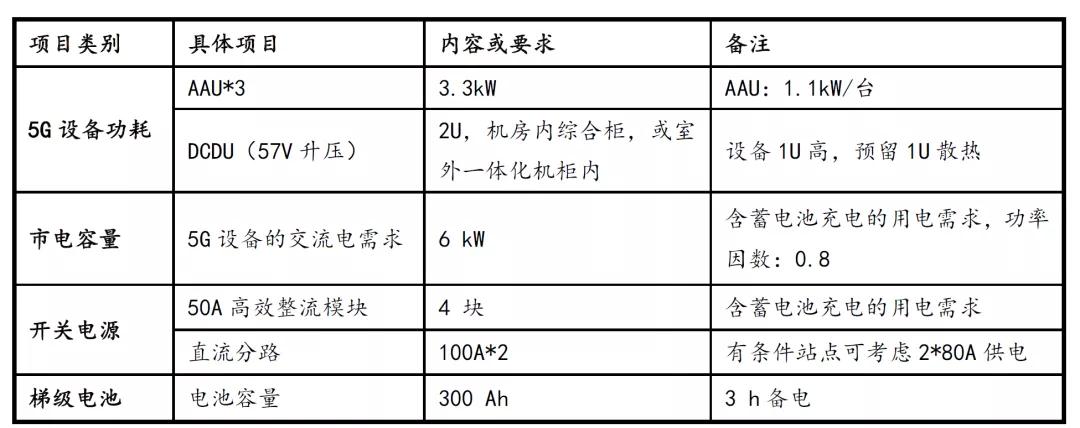
Table 4 5G gNB equipment requirements for AC and DC systems
Transformation principles and steps:
ก) การจับคู่พลังงาน: ให้ความสำคัญกับการนำห้องเครื่องเดิม แหล่งจ่ายไฟแบบสวิตช์ และแบตเตอรี่กลับมาใช้ใหม่ และเพิ่มการจับคู่แหล่งจ่ายไฟให้เหมาะสมตามสภาพพื้นที่ เพื่อตอบสนองความต้องการด้านการก่อสร้างระบบจ่ายไฟสำหรับการก่อสร้าง 5G
b) External mains power: Priority is given to using the original external power supply. In the case of insufficient external power, 5G external power needs can be solved through battery peak shaving, capacity expansion and other means to minimize construction costs. External mains power transformation is difficult, and the transformation can be completed according to the steps shown in Figure 3.
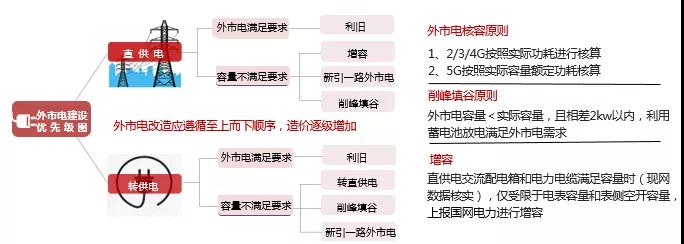
Figure 3 AC system transformation plan
3.5 สร้างระบบการจัดสรรห้องที่แตกต่างกันตามสถานการณ์ต่างๆ
There are many indoor distribution construction scenarios. It is recommended to follow differentiated meeting strategies based on 5G business characteristics and needs.
ก) แนะนำให้ใช้ระบบแบ่งห้องแบบดิจิทัลสำหรับพื้นที่ที่มีมูลค่าสูง
b) ใช้สถานีฐาน Pico + DAS สำหรับพื้นที่ที่มีมูลค่าปานกลาง
c) Use outdoor covering indoors for low-value areas.
d) ใช้แหล่งข้อมูล 5G เพื่อป้อนข้อมูลเข้าสู่ระบบ DAS ที่มีอยู่สำหรับสถานการณ์เฉพาะต่างๆ
สรุป
สร้างการใช้งานอย่างถูกวิธีไม่ใช่เป้าหมายหลักของ 5G แต่การใช้งานอย่างมีประสิทธิภาพต่างหากคือเป้าหมายที่แท้จริงของ 5Gการให้บริการเครือข่าย 5G จะเริ่มในพื้นที่ที่มีผู้ใช้งานหนาแน่นและพื้นที่ที่มีความต้องการสูงก่อน จากนั้นจึงจะพัฒนาและขยายการให้บริการต่อไปตามความต้องการของผู้ใช้งานและบริการต่างๆThe main goal of the 5G network is to realize the interconnection of everything and an intelligent society. Therefore, the network deployment strategies and methods are different from the 4G network. It is more necessary to consider all aspects of resources in order to deploy a robust, powerful and flexible 5G network.
ข้อสงวนสิทธิ์: บทความนี้มาจากอินเทอร์เน็ตพิมพ์ซ้ำจาก " C114 Communication Network" supports the protection of intellectual property rights. Please indicate the original source and author when reprinting. If there is any infringement, please contact us to delete it.
คำแนะนำที่เกี่ยวข้อง
Kinghelm รองผู้อำนวยการฝ่ายขาย เผิง ฮุยเซิง: ชาวฮักกาในเซินเจิ้น ผู้ยึดมั่นในอุดมการณ์ดั้งเดิมด้วยความขยันหมั่นเพียร
2026-08-03
2313
ความหลงใหลในมหาวิทยาลัย Tsinghua: การเอาชนะความท้าทายในด้านวัสดุศาสตร์ - บทสัมภาษณ์กับ Cen Jianjun จาก CEN Ningbo Jinshan New Materials Company
2026-07-14
2687