






















Service Hotline
News

News

[Frontier] Integration analysis of 5G and satellite mobile communication systems
2021-12-28
1042
introduction
With the rapid development of the mobile Internet and the promotion and application of smart terminal devices, people have put forward greater requirements for the speed of mobile communications. The fifth-generation mobile communication system (5G) aims to provide a peak rate of 10Gbps to 20Gbps and a user experience rate of 100Mbps to 1Gbps to meet richer business needs. With its large wireless communication service capacity, multiple services and high speed, 5G can be widely used in densely populated areas. However, it is difficult to take advantage of its advantages in sparsely populated areas or areas where it is difficult to lay terrestrial networks. Compared with terrestrial mobile communication networks, satellite communication systems mainly have incomparable advantages such as wide coverage, large communication capacity, small terrain impact, high flexibility, and adaptability to a variety of services. Therefore, satellites can be used to cover sparsely populated areas or areas where it is difficult to lay down terrestrial networks, forming a good complement to terrestrial networks, thereby achieving true global coverage and providing undifferentiated communication services to global users.
In fact, people's application of satellite communications precedes the construction of terrestrial cellular wireless communications. The world's first commercial communications satellite system was Early Bird, launched and operated by the International Satellite Communications Organization (INTERSAT) in 1965.Satellite systems, while the first generation of cellular wireless communication systems in the world began to be constructed in the 1980s.In recent decades, satellite communication systems that have been put into operation internationally include not only Inmarsat, Thuraya, Viasat, etc. in geostationary orbit, but also Iridium, Global-star, Orbcom, etc. in low earth orbit.Especially since 2015, there has been an international upsurge in the construction of low-orbit Internet communication constellations, such as OneWeb and Starlink, which have attracted much attention in international hotspots.The integration and construction of satellite communication systems and terrestrial wireless communication systems has once again become a development direction that has been in-depth demonstrated internationally.
01Research status of satellite and 5G integration
At the beginning of the 21st century, operators made satellite communications enter the mainstream market by obtaining authorization to form satellite-ground hybrid communications networks. In order to expand satellite communications networks, operators added ground auxiliary components (ATC) or ground supplementary components (CGC). ATC refers to a ground auxiliary base station used for satellite mobile communications. Satellites and a large number of ATC base stations are combined to achieve seamless coverage in large areas, so it can be used to solve satellite problems.There is a problem of poor signal coverage in cities with high-rise buildings and indoors, but it also involves someComplex issues, such as: frequency reuse of satellites and ATC base stations, switching and coordinated control of space and ground systems.
As 5G technology becomes increasingly mature, the integration of 5G and satellites has attracted widespread attention at home and abroad. Standardization organizations such as the International Telecommunications Union (ITU) and the Third Generation Partnership Project (3GPP) have invested a lot of energy in carrying out technical demonstration work related to satellite integration 5G systems.
1) The International Telecommunication Union proposed in 2016 that "the next generation mobile communication network should meet the needs of users to access services anytime and anywhere", and carried out ITU-RM in the field of satellite access technology. Research on the [NGAT_SAT] standard proposes four typical application scenarios for satellite-ground integration, including relay broadband transmission services, data backhaul and distribution services, broadband mobile communication services, and hybrid multimedia services, as shown in the figure below, and clarifies the key features to support the above applications. In addition, ITU is also actively promoting work on the frequency use of satellites and 5G, and has carried out a series of spectrum sharing and electromagnetic compatibility analyzes on satellites and 5G.
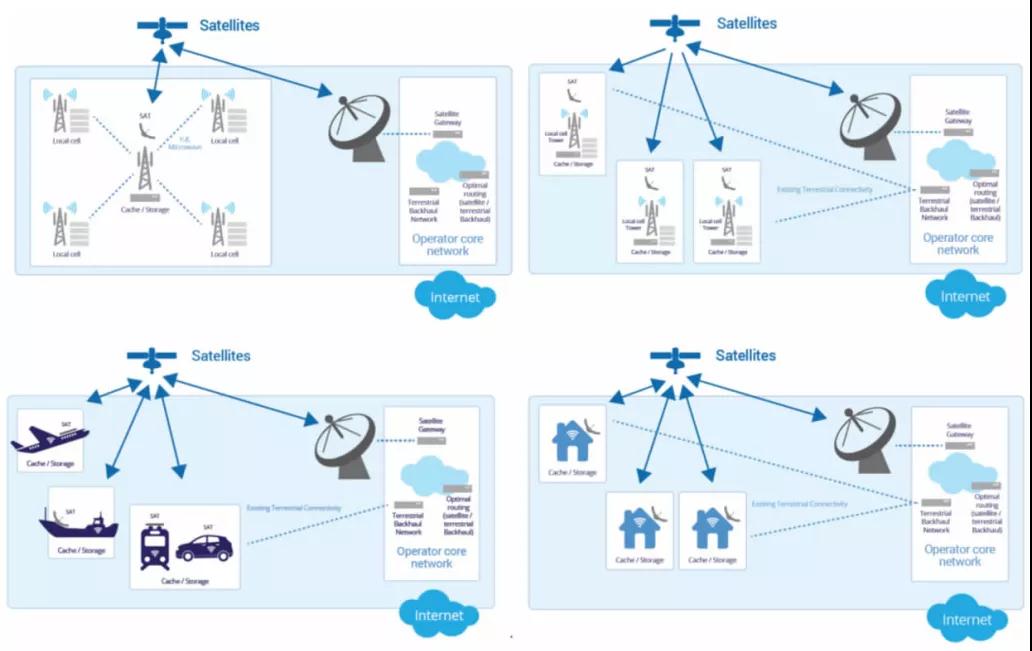
Figure 1 4 application scenarios of satellite-ground integration system given by ITU
2) The Third Generation Partnership Project (3GPP) has begun to demonstrate the advantages of satellite communications for terrestrial mobile communication systems since the Release 14 standard in 2017. In the technical report TR22.822 released at the end of 2017, the 3GPP working group SA1 defined three major methods of using satellite access in 5G: continuous service, ubiquitous service and extended service.Use cases and discuss requirements for new and existing services. Currently, 3GPP mainly relies on a research project called "Non-Terrestrial Network (NTN)" to carry out research on deployment scenarios and air interface design of satellite communications in 5G.
3) In June 2017, Europe established the SaT5G (Satellite and Terrestrial Network for 5G) Alliance, whose members include BT, SES, Avanti, University of Surrey and other European companies and research institutions. It aims to provide a cost-effective, plug-and-play satellite solution for 5G and provide continued growth market opportunities for the satellite industry chain. The 2018 European Network and Communications Conference was held in Ljubljana, Slovenia. At the conference, five SaT5G members demonstrated the integration of satellite and 3GPP network architecture, including VT iDi-rect and SES.
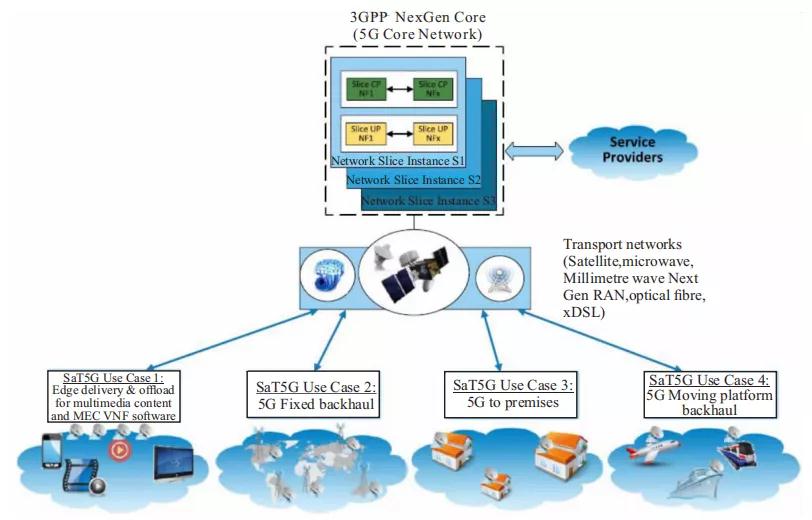
Figure 2 Satellite 5G application scenarios given by Sat5G
4) In order to cope with the 1000x capacity growth target proposed by the 5G system, the SANSA (Shared Access Terrestrial-Satellite Backhaul Network enabled by Smart Antennas) program launched with funding from the European Union H2020 aims to provide a good backhaul link solution for future large-capacity wireless communication systems. The SANSA project proposed low-overhead smart antenna beamforming technology, dynamic intelligent wireless resource management technology for satellite-ground integrated wireless networks, database-assisted dynamic spectrum sharing technology, etc., and carried out in-depth research work.
02 Key technologies for satellite 5G integration
Since there are differences between satellite communications and terrestrial wireless communications in terms of propagation distance, coverage, and power capabilities, the deep integration of the two faces some inevitable challenges. The key technologies for satellite 5G integration are analyzed below from five aspects: system architecture, beam coverage, air interface waveform, spectrum sharing, and network control.
2.1System architecture
In the satellite 5G integration architecture, a mixed high- and low-orbit satellite constellation is considered. At the same time, the design of communication frequency bands also includes low-frequency bands (such as L and S bands) and high-frequency bands (such as Ku and Ka bands), taking into account medium-low speed and broadband transmission service requirements. The satellite coverage area moves as the sub-satellite point moves, and the end user switches between different cells.
The inter-satellite links of low-orbit satellite constellations are composed of laser or microwave links, and multiple satellites are interconnected to form a space communication network with satellites as switching nodes. Constellations are usually designed using polar orbit constellations. This is because satellites in adjacent orbital planes have a relatively stable relative position relationship (except for polar regions or reverse seams), which is conducive to maintaining inter-satellite links and achieving high-latitude area coverage. In addition, the satellite feeder link business is implemented at the gateway station, which realizes the interconnection and interoperability between the satellite network and the ground PSTN, PLMN and the Internet. These operations are all implemented in Ka or Q/V frequency bands.
Currently, there are three main architectures for satellite-ground integration networks. The first is the satellite-ground complementary network. Under this architecture, 5G systems and satellite systems share a network management center, but their respective access networks and core networks remain independent. Access network and some core network functions are provided by satellite gateway stations, and either or both cellular and satellite access modes are supported by terminals. The second type is a satellite-ground hybrid network. Under this architecture, the ground system and the satellite system share the network management center, and the air interface parts are also unified as much as possible to maintain the independence of their respective core networks and frequency bands. The terminal can support both terrestrial and satellite access modes. The third type is the satellite-ground integrated network. Its main features are: the access point (AP), frequency, access network, and core network of the entire system are fully unified planned and designed. It should be pointed out that the satellite-ground integrated network is the highest stage of the satellite-ground integrated communication system and faces huge technical challenges.
2.2 Beam coverage
In the satellite-ground integrated mobile communication system, by adjusting its spot beams and wireless resources, it can provide voice and data services exceeding the predetermined capacity for hotspot areas. This flexible function is achieved through digital beamforming (DBF) technology. At present, digital beamforming technology for satellite communications mainly includes three forms: ground DBF, spaceborne DBF and hybrid DBF. Among them, hybrid digital beamforming has a good compromise between performance and complexity and has been extensively studied. When hybrid DBF is used, the ground network control center calculates the optimized beamforming matrix based on the beam adjustment requirements and corresponding strategies, and then sends the parameters of the beamforming matrix to the satellite through the feed link, and dynamically adjusts the beam coverage to the ground by reconstructing the multi-beam antenna on the satellite.
There are two main types of handovers caused by satellite or terminal movement: one is handover within the satellite system. For low-orbit satellites, their position relative to the ground changes rapidly, so that the terminal is continuously covered by the same satellite for only ten minutes. Therefore, in order to prevent data loss during the handover process, inter-satellite or inter-beam handovers must be prepared in advance and executed quickly. The other is the switching of the terminal between the terrestrial 5G network and the satellite network. This switch needs to consider factors such as supporting on-board processing and bend-pipe transparent forwarding architecture, time synchronization, measurement and information coordination. When the cellular network signal is very weak, the terminal will switch from the cellular network to the satellite network, otherwise it will maintain access to the terrestrial network.
2.3 Air interface waveform
Orthogonal frequency division multiplexing (OFDM) is still the basic transmission system of the 5G system, but the inter-carrier interference (ICI) will cause a serious decline in system performance. This is because the OFDM technology itself is very sensitive to frequency offset, and the crosstalk between sub-carriers caused by the frequency offset will reduce communication performance. In order to effectively resist the impact of residual frequency offset on system performance, a design scheme with variable subcarrier bandwidth can be adopted. For the L-band with a narrow frequency band, since the code rate of the voice service it supports is as low as 2.4Kbps, a subcarrier design of 15KHz or narrower should be used. In the Ka frequency band, the subcarrier width that can be used is larger. This is because users often access the Internet through broadband and the minimum elevation angle is large, which can effectively reduce the impact of the Doppler effect.
In addition, the non-orthogonal multiple access (NOMA) supported by 5G does not require each user to occupy exclusive resources. Users can send and receive information simultaneously on non-orthogonal resources. Based on multi-user joint detection, mutual interference between users can be avoided through signal processing. Compared with traditional orthogonal access methods, the application of NOMA technology can increase spectrum efficiency by more than three times. At present, NOMA chips for terrestrial 5G systems have been developed and promoted and applied. NOMA technology uses complexity in exchange for spectrum efficiency, which also means that it will be difficult to apply to long-latency geostationary orbit (GEO) satellite communication scenarios because a large amount of signaling interactions are used to dynamically control user access parameters. Subsequent technical research work should be carried out on NOMA technology in satellite communications.
2.4 Spectrum sharing
Whether for satellite communications or terrestrial mobile communication systems, the lack of available spectrum has become an urgent problem to be solved. In particular, satellite communications and terrestrial communications have formed a fierce competition in spectrum resources. For example, the C-band and Ka-band, which have been used by satellite communications systems for many years, have been authorized by the ITU for terrestrial 5G systems. The spectrum competition situation between the two specifically includes:
1) Ka-band: In order to meet the rapid growth of user speed and system capacity, both 5G and satellite communications hope to use Ka-band or even millimeter-wave frequency bands. For example: The 2019 World Radiocommunication Conference (WRC-19) used 24.25 GHz-27.5 GHz, 37 GHz-43.5 GHz, 66 GHz-71 GHz, a total of 14.75 GHz bandwidth spectrum identification for 5G and future international mobile communications systems globally; the US FCC has designated 27.5 GHz-28.35 GHz, 37 GHz-38.6 The GHz frequency bands are licensed for use by terrestrial 5G, and these frequency bands overlap to a certain extent with the frequency bands used by satellite communication systems.
2) 3GHz-6GHz C-band: Many countries have proposed using the C-band as a candidate frequency band for 5G systems, including China, the European Union, Japan, and South Korea. However, in Asia, countries such as China, Vietnam, and Malaysia have built a large number of satellite communication systems in this frequency band. It is difficult to coordinate the use of C-band for terrestrial 5G systems.
Optimizing configuration through satellite-ground collaborative planning can improve the efficient use of frequency resources. By building a joint satellite-ground spectrum sensing system, spectrum sharing between satellite-ground communication systems can be achieved and spectrum utilization efficiency can be improved. Compared with terrestrial wireless communication networks, it is much more difficult for cognitive users to detect all spectrums in the network environment. This is caused by the wide area coverage of satellite communications. Rapid update of the spectrum database, beam formation, accuracy of spectrum sensing, and cognitive area description are all research focuses of this technology. In addition, from the perspective of resource integration, unified planning and design of cellular communications and satellite communications to solve interference in the form of "spectrum sharing", thus promoting the shared use of frequency resources, can provide a compatible basis for the deep integration of satellite communications systems and 5G systems.
2.5 Network control
End-to-end network slicing realized through SDN and NFV technology is the biggest feature of the network control cloud in the 5G system. SDN and NFV technologies respectively realize the separation of network bearer and control and the softwareization of core network elements. They provide a solid foundation for realizing network slicing.solid foundation.
When the satellite communication system is deeply integrated with terrestrial 5G, the control function and forwarding function of the satellite core network can be separated, further simplifying the forwarding function. In order to support high-traffic transmission requirements and flexible and balanced traffic load scheduling, business storage and computing capabilities can be moved from the network center to the network edge.
In order to support integration with the ground, in addition to the nine network functions that 3GPP provides basic service functions, it is necessary to add non-3GPP interconnection functions and user plane functions to the user plane of the 5G satellite core network.
03 Challenges and research directions faced by satellite 5G integration
Although a lot of progress has been made in satellite 5G integration work, there will still be many technical challenges to truly realize the beautiful vision of satellite and 5G integration. There are many common challenges in the satellite and terrestrial domains. Below we list the main technical challenges and future research directions.
1) Challenges in the transmission system: In satellite-ground integrated network transmission, Doppler frequency shift, frequency management and interference, power limitation and timing advance are issues that need to be solved urgently. In response to Doppler frequency shift, 5G uses multi-carrier OFDM in the transmission system. Its sub-carrier spacing design does not consider the impact of Doppler frequency shift, which will cause interference between sub-carriers. In terms of power limitation, it ensures high frequency band utilization while reducing the signal peak-to-average ratio. Finally, regarding timing advance, rapid changes in wireless link transmission delays may result in the need to dynamically update the terminal's individual timing advances to ensure that all uplink transmissions are synchronized.
2) Access and resource management challenges: Considering that the long delay of the satellite-ground integrated network has brought challenges to the access control, HARQ, ARQ and other processes of the MAC layer and RLC layer. In terms of access control, in order to support the effective integration of 5G and satellites, it is necessary to design reasonable access mechanisms such as pre-authorization, semi-persistent scheduling and authorization-free. For HARQ, the round-trip time usually exceeds the maximum HARQ timer length, and the HARQ process has strict time requirements. During the scheduling process of the MAC layer and RLC layer, the long delay of the satellite system will also affect the timeliness of scheduling, and the scheduling delay parameters need to be adjusted.
3) Mobility management challenges: In a satellite-ground integrated network, mobility management challenges are even more severe. According to the communication level, it can be divided into network-level switching and link-level switching. According to application scenarios, it is divided into handovers between ground cells, handovers between satellites and ground cells, handovers between satellite cells, and inter-satellite handovers. This issue has been explored but requires further research.
04 Conclusion
Satellite communications and terrestrial cellular communications systems have experienced nearly thirty years of development and have achieved brilliant results. However, due to their inherent limitations, it is difficult to meet people's growing needs for mobile communications and massive data interconnection. In recent years, with the rapid development of Internet of Things technology, future wireless communication systems will be oriented towards the transformation from "people and people" to "people and things" and "things and things", realizing ubiquitous communication and the Internet of Everything. Through the integrated development of satellite communications and terrestrial cellular communications, complementary advantages will be achieved, and new development opportunities will be ushered in. This article introduces and discusses the development status, key technologies, and challenges faced by the integration of satellite communications and 5G, hoping to provide reference and guidance for the development of this technology.
This article is reproduced from "Satellite and Network", support the protection of intellectual property rights, please indicate the original source and author when reprinting. If there is any infringement, please contact us to delete it.
Related Recommendations