




















Servis Hattı
Haberler

Haberler

[Frontier] 5G ve uydu mobil iletişim sistemlerinin entegrasyon analizi
2021-12-28
1044
giriş
With the rapid development of the mobile Internet and the promotion and application of smart terminal devices, people have put forward greater requirements for the speed of mobile communications. The fifth-generation mobile communication system (5G) aims to provide a peak rate of 10Gbps to 20Gbps and a user experience rate of 100Mbps to 1Gbps to meet richer business needs. With its large wireless communication service capacity, multiple services and high speed, 5G can be widely used in densely populated areas. However, it is difficult to take advantage of its advantages in sparsely populated areas or areas where it is difficult to lay terrestrial networks. Compared with terrestrial mobile communication networks, satellite communication systems mainly have incomparable advantages such as wide coverage, large communication capacity, small terrain impact, high flexibility, and adaptability to a variety of services. Therefore, satellites can be used to cover sparsely populated areas or areas where it is difficult to lay down terrestrial networks, forming a good complement to terrestrial networks, thereby achieving true global coverage and providing undifferentiated communication services to global users.
Aslında, insanların uydu iletişimini kullanması, karasal hücresel kablosuz iletişim sistemlerinin kurulmasından önceye dayanmaktadır. Dünyanın ilk ticari iletişim uydu sistemi, 1965 yılında Uluslararası Uydu İletişim Örgütü (INTERSAT) tarafından fırlatılan ve işletilen Early Bird'dü.Uydu sistemleri, dünyanın ilk nesil hücresel kablosuz iletişim sistemlerinin inşasına başlandığı 1980'li yıllardan itibaren gelişme gösterdi.In recent decades, satellite communication systems that have been put into operation internationally include not only Inmarsat, Thuraya, Viasat, etc. in geostationary orbit, but also Iridium, Global-star, Orbcom, etc. in low earth orbit.Especially since 2015, there has been an international upsurge in the construction of low-orbit Internet communication constellations, such as OneWeb and Starlink, which have attracted much attention in international hotspots.The integration and construction of satellite communication systems and terrestrial wireless communication systems has once again become a development direction that has been in-depth demonstrated internationally.
01Research status of satellite and 5G integration
At the beginning of the 21st century, operators made satellite communications enter the mainstream market by obtaining authorization to form satellite-ground hybrid communications networks. In order to expand satellite communications networks, operators added ground auxiliary components (ATC) or ground supplementary components (CGC). ATC refers to a ground auxiliary base station used for satellite mobile communications. Satellites and a large number of ATC base stations are combined to achieve seamless coverage in large areas, so it can be used to solve satellite problems.There is a problem of poor signal coverage in cities with high-rise buildings and indoors, but it also involves someComplex issues, such as: frequency reuse of satellites and ATC base stations, switching and coordinated control of space and ground systems.
5G teknolojisi giderek olgunlaştıkça, 5G ve uyduların entegrasyonu yurt içinde ve yurt dışında geniş ilgi görmüştür. Uluslararası Telekomünikasyon Birliği (ITU) ve Üçüncü Nesil Ortaklık Projesi (3GPP) gibi standardizasyon kuruluşları, uydu entegrasyonlu 5G sistemleriyle ilgili teknik gösterim çalışmalarına büyük enerji harcamıştır.
1) Uluslararası Telekomünikasyon Birliği (ITU), 2016 yılında "yeni nesil mobil iletişim ağının, kullanıcıların her zaman ve her yerde hizmetlere erişme ihtiyaçlarını karşılaması gerektiğini" önermiş ve uydu erişim teknolojisi alanında ITU-RM'yi gerçekleştirmiştir. [NGAT_SAT] standardı üzerine yapılan araştırmalar, aşağıdaki şekilde gösterildiği gibi, röleli geniş bant iletim hizmetleri, veri geri taşıma ve dağıtım hizmetleri, geniş bant mobil iletişim hizmetleri ve hibrit multimedya hizmetleri de dahil olmak üzere uydu-yer entegrasyonu için dört tipik uygulama senaryosu önermekte ve yukarıdaki uygulamaları desteklemek için temel özellikleri açıklığa kavuşturmaktadır. Buna ek olarak, ITU, uyduların ve 5G'nin frekans kullanımına yönelik çalışmaları da aktif olarak teşvik etmekte ve uydular ve 5G üzerinde bir dizi spektrum paylaşımı ve elektromanyetik uyumluluk analizi gerçekleştirmiştir.
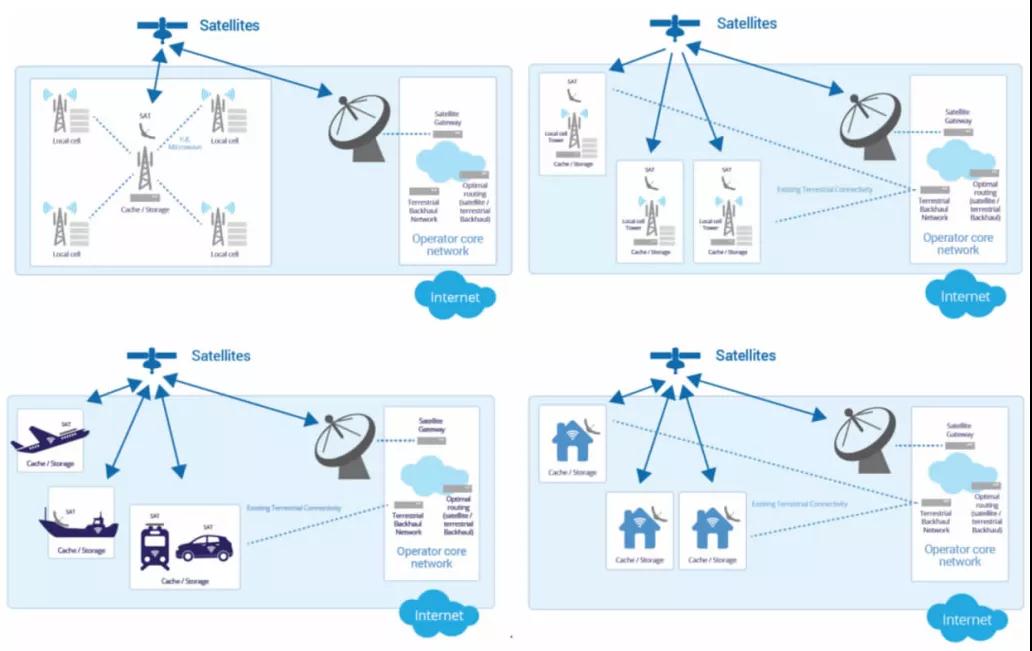
Şekil 1: ITU tarafından verilen uydu-yer entegrasyon sisteminin 4 uygulama senaryosu.
2) The Third Generation Partnership Project (3GPP) has begun to demonstrate the advantages of satellite communications for terrestrial mobile communication systems since the Release 14 standard in 2017. In the technical report TR22.822 released at the end of 2017, the 3GPP working group SA1 defined three major methods of using satellite access in 5G: continuous service, ubiquitous service and extended service.Use cases and discuss requirements for new and existing services. Currently, 3GPP mainly relies on a research project called "Non-Terrestrial Network (NTN)" to carry out research on deployment scenarios and air interface design of satellite communications in 5G.
3) Haziran 2017'de Avrupa, BT, SES, Avanti, Surrey Üniversitesi ve diğer Avrupa şirketleri ve araştırma kurumlarının da aralarında bulunduğu üyelerle SaT5G (5G için Uydu ve Karasal Ağ) İttifakını kurdu. Bu ittifak, 5G için uygun maliyetli, tak ve çalıştır uydu çözümü sağlamayı ve uydu endüstri zinciri için sürekli büyüme pazar fırsatları yaratmayı amaçlamaktadır. 2018 Avrupa Ağ ve İletişim Konferansı Slovenya'nın Ljubljana şehrinde düzenlendi. Konferansta, VT iDi-rect ve SES de dahil olmak üzere beş SaT5G üyesi, uydu ve 3GPP ağ mimarisinin entegrasyonunu gösterdi.
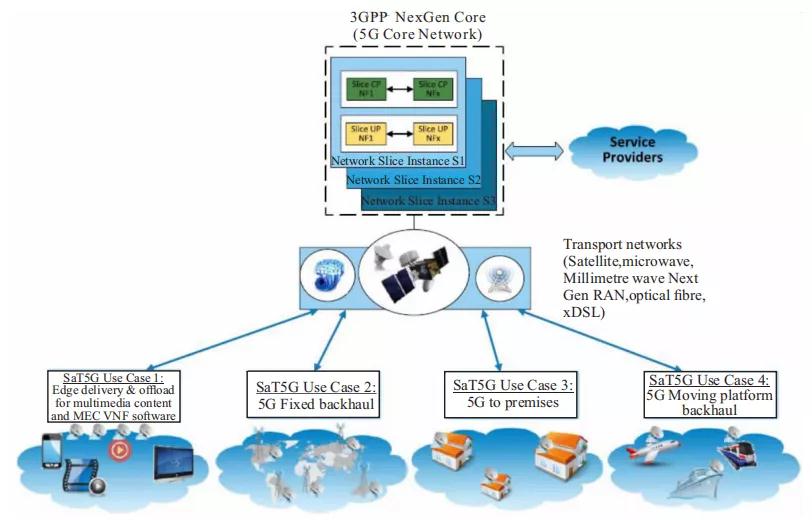
Figure 2 Satellite 5G application scenarios given by Sat5G
4) In order to cope with the 1000x capacity growth target proposed by the 5G system, the SANSA (Shared Access Terrestrial-Satellite Backhaul Network enabled by Smart Antennas) program launched with funding from the European Union H2020 aims to provide a good backhaul link solution for future large-capacity wireless communication systems. The SANSA project proposed low-overhead smart antenna beamforming technology, dynamic intelligent wireless resource management technology for satellite-ground integrated wireless networks, database-assisted dynamic spectrum sharing technology, etc., and carried out in-depth research work.
02 Uydu 5G entegrasyonu için temel teknolojiler
Since there are differences between satellite communications and terrestrial wireless communications in terms of propagation distance, coverage, and power capabilities, the deep integration of the two faces some inevitable challenges. The key technologies for satellite 5G integration are analyzed below from five aspects: system architecture, beam coverage, air interface waveform, spectrum sharing, and network control.
2.1System architecture
In the satellite 5G integration architecture, a mixed high- and low-orbit satellite constellation is considered. At the same time, the design of communication frequency bands also includes low-frequency bands (such as L and S bands) and high-frequency bands (such as Ku and Ka bands), taking into account medium-low speed and broadband transmission service requirements. The satellite coverage area moves as the sub-satellite point moves, and the end user switches between different cells.
Alçak yörünge uydu takımyıldızlarının uydular arası bağlantıları lazer veya mikrodalga bağlantılarından oluşur ve birden fazla uydu, anahtarlama düğümleri olarak görev yapan uydularla bir uzay iletişim ağı oluşturmak üzere birbirine bağlanır. Takımyıldızlar genellikle kutupsal yörünge takımyıldızları kullanılarak tasarlanır. Bunun nedeni, bitişik yörünge düzlemlerindeki uyduların (kutupsal bölgeler veya ters dikişler hariç) nispeten istikrarlı bir göreceli konum ilişkisine sahip olması ve bu durumun uydular arası bağlantıları sürdürmeye ve yüksek enlem alan kapsamını sağlamaya elverişli olmasıdır. Ek olarak, uydu besleme bağlantısı işlemi, uydu ağı ile yer tabanlı PSTN, PLMN ve İnternet arasında bağlantı ve birlikte çalışabilirliği sağlayan ağ geçidi istasyonunda gerçekleştirilir. Bu işlemlerin tümü Ka veya Q/V frekans bantlarında gerçekleştirilir.
Şu anda uydu-yer entegrasyon ağları için üç ana mimari bulunmaktadır. Birincisi, uydu-yer tamamlayıcı ağdır. Bu mimaride, 5G sistemleri ve uydu sistemleri bir ağ yönetim merkezini paylaşır, ancak ilgili erişim ağları ve çekirdek ağları bağımsız kalır. Erişim ağı ve bazı çekirdek ağ fonksiyonları uydu geçit istasyonları tarafından sağlanır ve terminaller hem hücresel hem de uydu erişim modlarını destekler. İkinci tip, uydu-yer hibrit ağdır. Bu mimaride, yer sistemi ve uydu sistemi ağ yönetim merkezini paylaşır ve ilgili çekirdek ağlarının ve frekans bantlarının bağımsızlığını korumak için hava arayüzü parçaları da mümkün olduğunca birleştirilir. Terminal hem karasal hem de uydu erişim modlarını destekleyebilir. Üçüncü tip ise uydu-yer entegre ağdır. Başlıca özellikleri şunlardır: tüm sistemin erişim noktası (AP), frekans, erişim ağı ve çekirdek ağı tamamen birleşik olarak planlanır ve tasarlanır. Uydu-yer entegre ağının, uydu-yer entegre iletişim sisteminin en yüksek aşaması olduğu ve büyük teknik zorluklarla karşı karşıya olduğu belirtilmelidir.
2.2 Beam coverage
Uydu-yer entegre mobil iletişim sisteminde, spot ışınlarını ve kablosuz kaynaklarını ayarlayarak, sıcak nokta alanları için önceden belirlenmiş kapasitenin üzerinde ses ve veri hizmetleri sağlayabilir. Bu esnek işlev, dijital ışın biçimlendirme (DBF) teknolojisi ile elde edilir. Şu anda, uydu iletişimi için dijital ışın biçimlendirme teknolojisi esas olarak üç biçimde mevcuttur: yer tabanlı DBF, uzay tabanlı DBF ve hibrit DBF. Bunlar arasında, performans ve karmaşıklık arasında iyi bir denge sağlayan hibrit dijital ışın biçimlendirme, kapsamlı bir şekilde incelenmiştir. Hibrit DBF kullanıldığında, yer ağı kontrol merkezi, ışın ayarlama gereksinimlerine ve ilgili stratejilere dayanarak optimize edilmiş ışın biçimlendirme matrisini hesaplar ve ardından ışın biçimlendirme matrisinin parametrelerini besleme bağlantısı aracılığıyla uyduya gönderir ve uydudaki çoklu ışın antenini yeniden yapılandırarak ışın kapsama alanını dinamik olarak yere ayarlar.
There are two main types of handovers caused by satellite or terminal movement: one is handover within the satellite system. For low-orbit satellites, their position relative to the ground changes rapidly, so that the terminal is continuously covered by the same satellite for only ten minutes. Therefore, in order to prevent data loss during the handover process, inter-satellite or inter-beam handovers must be prepared in advance and executed quickly. The other is the switching of the terminal between the terrestrial 5G network and the satellite network. This switch needs to consider factors such as supporting on-board processing and bend-pipe transparent forwarding architecture, time synchronization, measurement and information coordination. When the cellular network signal is very weak, the terminal will switch from the cellular network to the satellite network, otherwise it will maintain access to the terrestrial network.
2.3 Air interface waveform
Orthogonal frequency division multiplexing (OFDM) is still the basic transmission system of the 5G system, but the inter-carrier interference (ICI) will cause a serious decline in system performance. This is because the OFDM technology itself is very sensitive to frequency offset, and the crosstalk between sub-carriers caused by the frequency offset will reduce communication performance. In order to effectively resist the impact of residual frequency offset on system performance, a design scheme with variable subcarrier bandwidth can be adopted. For the L-band with a narrow frequency band, since the code rate of the voice service it supports is as low as 2.4Kbps, a subcarrier design of 15KHz or narrower should be used. In the Ka frequency band, the subcarrier width that can be used is larger. This is because users often access the Internet through broadband and the minimum elevation angle is large, which can effectively reduce the impact of the Doppler effect.
In addition, the non-orthogonal multiple access (NOMA) supported by 5G does not require each user to occupy exclusive resources. Users can send and receive information simultaneously on non-orthogonal resources. Based on multi-user joint detection, mutual interference between users can be avoided through signal processing. Compared with traditional orthogonal access methods, the application of NOMA technology can increase spectrum efficiency by more than three times. At present, NOMA chips for terrestrial 5G systems have been developed and promoted and applied. NOMA technology uses complexity in exchange for spectrum efficiency, which also means that it will be difficult to apply to long-latency geostationary orbit (GEO) satellite communication scenarios because a large amount of signaling interactions are used to dynamically control user access parameters. Subsequent technical research work should be carried out on NOMA technology in satellite communications.
2.4 Spectrum sharing
Whether for satellite communications or terrestrial mobile communication systems, the lack of available spectrum has become an urgent problem to be solved. In particular, satellite communications and terrestrial communications have formed a fierce competition in spectrum resources. For example, the C-band and Ka-band, which have been used by satellite communications systems for many years, have been authorized by the ITU for terrestrial 5G systems. The spectrum competition situation between the two specifically includes:
1) Ka-band: In order to meet the rapid growth of user speed and system capacity, both 5G and satellite communications hope to use Ka-band or even millimeter-wave frequency bands. For example: The 2019 World Radiocommunication Conference (WRC-19) used 24.25 GHz-27.5 GHz, 37 GHz-43.5 GHz, 66 GHz-71 GHz, a total of 14.75 GHz bandwidth spectrum identification for 5G and future international mobile communications systems globally; the US FCC has designated 27.5 GHz-28.35 GHz, 37 GHz-38.6 The GHz frequency bands are licensed for use by terrestrial 5G, and these frequency bands overlap to a certain extent with the frequency bands used by satellite communication systems.
2) 3GHz-6GHz C-band: Many countries have proposed using the C-band as a candidate frequency band for 5G systems, including China, the European Union, Japan, and South Korea. However, in Asia, countries such as China, Vietnam, and Malaysia have built a large number of satellite communication systems in this frequency band. It is difficult to coordinate the use of C-band for terrestrial 5G systems.
Optimizing configuration through satellite-ground collaborative planning can improve the efficient use of frequency resources. By building a joint satellite-ground spectrum sensing system, spectrum sharing between satellite-ground communication systems can be achieved and spectrum utilization efficiency can be improved. Compared with terrestrial wireless communication networks, it is much more difficult for cognitive users to detect all spectrums in the network environment. This is caused by the wide area coverage of satellite communications. Rapid update of the spectrum database, beam formation, accuracy of spectrum sensing, and cognitive area description are all research focuses of this technology. In addition, from the perspective of resource integration, unified planning and design of cellular communications and satellite communications to solve interference in the form of "spectrum sharing", thus promoting the shared use of frequency resources, can provide a compatible basis for the deep integration of satellite communications systems and 5G systems.
2.5 Network control
End-to-end network slicing realized through SDN and NFV technology is the biggest feature of the network control cloud in the 5G system. SDN and NFV technologies respectively realize the separation of network bearer and control and the softwareization of core network elements. They provide a solid foundation for realizing network slicing.Sağlam temel.
Uydu iletişim sistemi karasal 5G ile derinlemesine entegre edildiğinde, uydu çekirdek ağının kontrol fonksiyonu ve iletim fonksiyonu ayrılabilir ve iletim fonksiyonu daha da basitleştirilebilir. Yüksek trafik iletim gereksinimlerini ve esnek ve dengeli trafik yükü planlamasını desteklemek için, iş depolama ve hesaplama yetenekleri ağ merkezinden ağ kenarına taşınabilir.
Yere entegre olmayı desteklemek için, 3GPP'nin sağladığı dokuz temel hizmet fonksiyonuna ek olarak, 5G uydu çekirdek ağının kullanıcı düzlemine 3GPP dışı ara bağlantı fonksiyonları ve kullanıcı düzlemi fonksiyonlarının eklenmesi gerekmektedir.
03 Uydu tabanlı 5G entegrasyonunun karşılaştığı zorluklar ve araştırma yönleri
Uydu 5G entegrasyonu çalışmalarında önemli ilerlemeler kaydedilmiş olsa da, uydu ve 5G entegrasyonunun güzel vizyonunu gerçekten gerçekleştirmek için hâlâ birçok teknik zorluk bulunmaktadır. Uydu ve karasal alanlarda birçok ortak zorluk mevcuttur. Aşağıda, başlıca teknik zorlukları ve gelecekteki araştırma yönlerini listeliyoruz.
1) Challenges in the transmission system: In satellite-ground integrated network transmission, Doppler frequency shift, frequency management and interference, power limitation and timing advance are issues that need to be solved urgently. In response to Doppler frequency shift, 5G uses multi-carrier OFDM in the transmission system. Its sub-carrier spacing design does not consider the impact of Doppler frequency shift, which will cause interference between sub-carriers. In terms of power limitation, it ensures high frequency band utilization while reducing the signal peak-to-average ratio. Finally, regarding timing advance, rapid changes in wireless link transmission delays may result in the need to dynamically update the terminal's individual timing advances to ensure that all uplink transmissions are synchronized.
2) Access and resource management challenges: Considering that the long delay of the satellite-ground integrated network has brought challenges to the access control, HARQ, ARQ and other processes of the MAC layer and RLC layer. In terms of access control, in order to support the effective integration of 5G and satellites, it is necessary to design reasonable access mechanisms such as pre-authorization, semi-persistent scheduling and authorization-free. For HARQ, the round-trip time usually exceeds the maximum HARQ timer length, and the HARQ process has strict time requirements. During the scheduling process of the MAC layer and RLC layer, the long delay of the satellite system will also affect the timeliness of scheduling, and the scheduling delay parameters need to be adjusted.
3) Hareketlilik yönetimi zorlukları: Uydu-yer entegre ağında, hareketlilik yönetimi zorlukları daha da ciddidir. İletişim seviyesine göre, ağ seviyesinde anahtarlama ve bağlantı seviyesinde anahtarlama olarak ikiye ayrılabilir. Uygulama senaryolarına göre ise, yer hücreleri arasındaki geçişler, uydular ve yer hücreleri arasındaki geçişler, uydu hücreleri arasındaki geçişler ve uydular arası geçişler olarak sınıflandırılır. Bu konu incelenmiş ancak daha fazla araştırma gerektirmektedir.
04 Sonuç
Satellite communications and terrestrial cellular communications systems have experienced nearly thirty years of development and have achieved brilliant results. However, due to their inherent limitations, it is difficult to meet people's growing needs for mobile communications and massive data interconnection. In recent years, with the rapid development of Internet of Things technology, future wireless communication systems will be oriented towards the transformation from "people and people" to "people and things" and "things and things", realizing ubiquitous communication and the Internet of Everything. Through the integrated development of satellite communications and terrestrial cellular communications, complementary advantages will be achieved, and new development opportunities will be ushered in. This article introduces and discusses the development status, key technologies, and challenges faced by the integration of satellite communications and 5G, hoping to provide reference and guidance for the development of this technology.
Bu makale "Satellite and NetworkFikri mülkiyet haklarının korunmasını destekliyoruz, lütfen yeniden yayınlarken orijinal kaynağı ve yazarı belirtin. Herhangi bir ihlal söz konusuysa, lütfen silinmesi için bizimle iletişime geçin.
İlgili Öneriler
Kinghelm Satış Müdür Yardımcısı Peng Huisheng: Shenzhen'de yaşayan bir Hakka, sıkı çalışarak asıl hedefine sadık kalıyor.
2026-08-03
2352
Song Shiqiang'ın Strateji Üzerine Görüşleri: 2026 electronica Şanghay Diyaloglarından Öne Çıkanlar
2026-07-21
2553