






















Service Hotline
News

News
Overview of the development of GNSS high-precision antennas
2021-12-28
654
introduction
With the continuous development and improvement of satellite positioning technology, high-precision positioning technology has been used in all walks of life in modern life. For example, in fields such as surveying and mapping, precision agriculture, drones, and unmanned driving, high-precision positioning technology can be seen everywhere. Especially with the completion of the networking of Beidou's new generation satellite navigation system and the arrival of the 5G era, the continuous development of Beidou + 5G is expected to promote the application of high-precision positioning technology in airport dispatching, robot inspection, vehicle monitoring, logistics management and other fields. The realization of high-precision positioning technology is inseparable from the support of high-precision antennas, high-precision algorithms and high-precision boards. This article mainly introduces the development and application of high-precision antennas and the current status of technology.
1. Development and application of GNSS high-precision antennas
1.1 Introduction to high-precision antennas
In the field of GNSS, high-precision antennas are a type of antenna that have special requirements for the stability of the antenna phase center. They are usually used in conjunction with high-precision boards to achieve centimeter- or millimeter-level high-precision positioning. In the design of high-precision antennas, there are usually special requirements for the following indicators of the antenna: antenna beam width, low elevation gain, out-of-roundness, roll-off coefficient, front-to-back ratio, multipath resistance, etc. These indicators will directly or indirectly affect the phase center stability of the antenna, thereby affecting the positioning accuracy.
1.2 Application and classification of high-precision antennas
High-precision GNSS antennas were initially mainly used in the field of surveying and mapping to achieve static millimeter-level positioning accuracy in engineering stakeout, topographic mapping, and various control measurement processes. As high-precision positioning technology becomes increasingly mature, high-precision antennas are gradually used in more and more fields, including continuously operating reference stations, deformation monitoring, earthquake monitoring, surveying and mapping, drones, precision agriculture, autonomous driving, driving test and driving training, engineering machinery and other industrial fields. The index requirements for antennas in different applications are also significantly different.
1.2.1 CORS system, deformation monitoring, earthquake monitoring-reference station antenna
When high-precision antennas are used in continuously operating reference stations, accurate position information is obtained through long-term observations, and the observation data is transmitted to the control center in real time through the data communication system. The control center calculates the error correction parameters in the area and then sends the error information to the rover (user end) through the ground-based enhancement system, wide-area enhancement system, satellite-based enhancement system, etc., ultimately allowing the user to obtain accurate coordinate information [1].In applications such as deformation monitoring and earthquake monitoring, it is necessary to accurately monitor the amount of deformation and detect tiny deformations to predict the occurrence of natural disasters.Therefore, in the design of high-precision antennas in applications such as continuously operating reference stations, deformation monitoring, and earthquake monitoring, the first thing that must be considered is its excellent phase center stability and anti-multipath interference capabilities, so that accurate position information can be provided in real time for various enhancement systems. In addition, in order to provide as many satellite correction parameters as possible, the antenna must receive as many satellites as possible, and the four-system full-band configuration has become a standard configuration. In such applications, a reference station antenna (base station antenna) covering the full frequency band of the four systems is usually used as the observation antenna of the system.
1.2.2 Measurement and mapping-built-in measurement antenna
In the field of measurement and mapping, it is necessary to design a built-in measurement antenna that is easy to integrate. The antenna is usually built on the top of the RTK receiver to achieve real-time high-precision positioning in the field of measurement and mapping.The main considerations in the design of built-in measurement antennas include frequency band coverage, beam coverage, phase center stability, antenna size, etc. Especially with the popularization of network RTK applications, full-network built-in measurement antennas that integrate 4G, Bluetooth, and WiFi have gradually occupied a major share of the market. Since their launch in 2016, they have been favored by the majority of RTK receiver manufacturers and have been widely used and promoted.
1.2.3 Driving test and driving training, driverless driving - external measurement antenna
The traditional driving test system has many disadvantages, such as high investment cost, high operation and maintenance costs, large environmental impact, low accuracy, etc. After high-precision antennas are applied to the driving test system, the driving test system changes from manual judgment to intelligent judgment, with high judgment accuracy, which greatly reduces the human and material costs of the driving test.In recent years, unmanned driving systems have developed rapidly. In unmanned driving, positioning technology that combines RTK high-precision positioning and inertial navigation is usually used, which can achieve high positioning accuracy in most environments.In driving test driving training, driverless driving and other systems, the form of external measurement antenna is often used, which requires the antenna to have multi-system and multi-frequency working frequency bands, be able to achieve higher positioning accuracy, have a certain ability to suppress multipath signals, and have good environmental adaptability, and can be used in outdoor environments for a long time without failure.
1.2.4 Drone-high-precision drone antenna
The UAV industry has developed rapidly in recent years. UAVs have been widely used in agricultural plant protection, surveying and mapping, power line inspection and other scenarios. In such scenarios, only high-precision antennas can ensure the accuracy, efficiency and safety of various operations. Since drones have the characteristics of fast speed, light load, and short endurance, the design of high-precision drone antennas mainly focuses on factors such as weight, size, and power consumption, and achieves as wideband a design as possible while ensuring weight and size.
2. Current status of GNSS antenna technology at home and abroad
2.1 Current status of foreign high-precision antenna technology
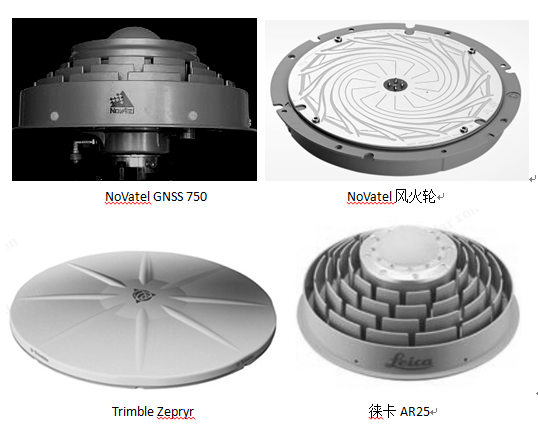
Foreign research on high-precision antennas began earlier, and a series of high-precision antenna products with better performance have been developed, such as NoVatel's GNSS 750 series choke coil antennas, Trimble's Zepryr series antennas, Leica AR25 antennas, etc., among which there are many innovative antenna forms. Therefore, for a long time in the past, my country's high-precision antenna market was dominated by foreign products. However, in the past ten years, with the rise of a large number of domestic manufacturers, foreign high-precision GNSS antennas have basically no advantages in performance. Instead, domestic high-precision manufacturers have begun to expand markets abroad.In addition, some new GNSS antenna manufacturers have developed abroad in recent years, such as Maxtena, Tallysman, etc. Their products are mainly small GNSS antennas used in drones, vehicles and other systems. The antenna form is usually a high dielectric constant microstrip antenna or a four-arm helical antenna form. Foreign manufacturers no longer have an advantage in the design technology of this type of antenna, and domestic and foreign products are entering a period of homogeneous competition.
2.2 Current status of domestic high-precision antenna technology
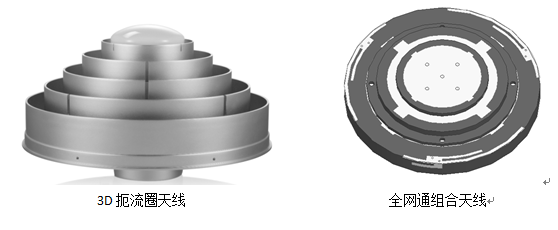
The commercialization of domestic high-precision antennas started late, but has developed rapidly. In the past ten years, a number of domestic high-precision antenna manufacturers have begun to grow and develop, such as Huaxin Antenna, Hi-Tech, Dingyao, Jiali Electronics, etc., and have developed a series of high-precision antenna products with independent intellectual property rights.For example, in the field of base station antennas and built-in measurement antennas, Huaxin's 3D choke antennas, full network combination antennas, etc. not only have reached the international leading level in performance, but also have high product reliability, long service life, and extremely low failure rates, which can meet various environmental applications.In industries such as vehicles and drones, the design technology of external measurement antennas and four-arm helical antennas has become relatively mature, and has been used on a large scale in driving test systems, unmanned driving, drones and other industry applications, and has achieved good economic and social benefits.
3. GNSS antenna market status and prospects
In 2018, the total output value of my country's satellite navigation and location services industry reached 301.6 billion yuan, an increase of 18.3% compared with 2017 [2], and will reach 400 billion yuan in 2020. In 2019, the total output value of the global satellite navigation market was 150 billion euros, and the number of GNSS terminal users reached 6.4 billion units. Against the backdrop of the global economic downturn, the GNSS industry is one of the few industries that has bucked the trend and is rising. The European Global Navigation Satellite Systems Agency predicts that the total output value of the global satellite navigation market will double to more than 300 billion euros in the next ten years, and the number of GNSS terminals will increase to 9.5 billion units.In the global satellite navigation market, terminal equipment used in road traffic, drones and other fields will be the fastest growing market segment in the next decade: intelligent and driverless vehicles are the main development direction of future road vehicles, and cars with autonomous driving capabilities must be equipped with GNSS high-precision antennas. Therefore, the autonomous driving market has a huge demand for GNSS antennas. With the continuous development of my country's agricultural modernization process, the use of plant protection drones and other drones equipped with high-precision positioning antennas will continue to grow.
4. Development trend of GNSS high-precision antennas
After years of development of GNSS high-precision antennas, various technologies have become relatively mature, but there are still many directions to be broken through:1. Miniaturization: Miniaturization of electronic equipment is an eternal development trend. Especially in applications such as drones and handheld devices, the demand for small-sized antennas is more urgent. However, the performance of the antenna will be reduced after the antenna is miniaturized. How to reduce the size of the antenna while ensuring comprehensive performance is an important research direction for high-precision antennas.2. Anti-multipath technology: GNSS antenna anti-multipath technology mainly includes choke coil technology [3], artificial electromagnetic material technology [4][5], etc. However, they all have shortcomings such as large size, narrow bandwidth, and high cost, and cannot achieve universal design. Therefore, it is necessary to study anti-multipath technology with the characteristics of miniaturization and broadband to meet various application needs.3. Multifunctionality: In addition to GNSS antennas, various devices nowadays also integrate more than one communication antenna. Different communication systems may cause various signal interferences to GNSS antennas, affecting normal star collection. Therefore, the GNSS antenna and the communication antenna are integrated into the design through multi-functional integration. The interference between the antennas is taken into consideration during the design, which can improve the electromagnetic compatibility characteristics and improve the performance of the whole machine while increasing the integration level.
5. Conclusion
This article briefly introduces GNSS high-precision antennas, focuses on its applications in different industries and the technical status of high-precision antennas at home and abroad, and provides an overview of its market status and development trends. With the popularization of 5G technology, Beidou + 5G technology will further promote the application of high-precision positioning technology in more and more fields, and high-precision positioning antennas will also usher in greater room for development.
This article comes from "Microwave radio frequency network”, if there is any infringement or other issues, please contact us to delete it.Support the protection of intellectual property rights, please indicate the original source and author when reprinting.
Related Recommendations