























Service Hotline
Nieuws

Nieuws
Overzicht van de ontwikkeling van uiterst nauwkeurige GNSS-antennes
2021-12-28
655
introductie
With the continuous development and improvement of satellite positioning technology, high-precision positioning technology has been used in all walks of life in modern life. For example, in fields such as surveying and mapping, precision agriculture, drones, and unmanned driving, high-precision positioning technology can be seen everywhere. Especially with the completion of the networking of Beidou's new generation satellite navigation system and the arrival of the 5G era, the continuous development of Beidou + 5G is expected to promote the application of high-precision positioning technology in airport dispatching, robot inspection, vehicle monitoring, logistics management and other fields. The realization of high-precision positioning technology is inseparable from the support of high-precision antennas, high-precision algorithms and high-precision boards. This article mainly introduces the development and application of high-precision antennas and the current status of technology.
1. Development and application of GNSS high-precision antennas
1.1 Inleiding tot uiterst nauwkeurige antennes
In de GNSS-wereld zijn precisieantennes een type antenne dat speciale eisen stelt aan de stabiliteit van het fasecentrum. Ze worden doorgaans gebruikt in combinatie met precisieprintplaten om positionering met een nauwkeurigheid van centimeters of millimeters te bereiken. Bij het ontwerp van precisieantennes gelden doorgaans speciale eisen voor de volgende antenne-indicatoren: antennebundelbreedte, lage elevatieversterking, rondheidsafwijking, afvalcoëfficiënt, voor-achterverhouding, meerpadweerstand, enzovoort. Deze indicatoren beïnvloeden direct of indirect de stabiliteit van het fasecentrum van de antenne en daarmee de positioneringsnauwkeurigheid.
1.2 Application and classification of high-precision antennas
Hoogprecisie GNSS-antennes werden aanvankelijk vooral gebruikt in de landmeetkunde en cartografie om statische positioneringsnauwkeurigheid op millimeterniveau te bereiken bij het uitzetten van technische locaties, topografische kartering en diverse controlemetingen. Naarmate de technologie voor hoogprecisiepositionering zich verder ontwikkelt, worden hoogprecisieantennes steeds vaker ingezet in diverse sectoren, waaronder continu werkende referentiestations, vervormingsmonitoring, aardbevingsmonitoring, landmeting en cartografie, drones, precisielandbouw, autonoom rijden, rijtesten en rijtrainingen, machinebouw en andere industriële toepassingen. De eisen die aan antennes worden gesteld, verschillen aanzienlijk per toepassing.
1.2.1 CORS system, deformation monitoring, earthquake monitoring-reference station antenna
Wanneer in continu werkende referentiestations uiterst nauwkeurige antennes worden gebruikt, wordt nauwkeurige positie-informatie verkregen door middel van langdurige observaties. De observatiegegevens worden in realtime via het datacommunicatiesysteem naar het controlecentrum verzonden. Het controlecentrum berekent de foutcorrectieparameters in het gebied en stuurt vervolgens de foutinformatie naar de rover (gebruikerszijde) via het grondgebaseerde verbeteringssysteem, het systeem voor gebiedsverbetering, het satellietgebaseerde verbeteringssysteem, enzovoort, waardoor de gebruiker uiteindelijk nauwkeurige coördinateninformatie verkrijgt [1].In applications such as deformation monitoring and earthquake monitoring, it is necessary to accurately monitor the amount of deformation and detect tiny deformations to predict the occurrence of natural disasters.Therefore, in the design of high-precision antennas in applications such as continuously operating reference stations, deformation monitoring, and earthquake monitoring, the first thing that must be considered is its excellent phase center stability and anti-multipath interference capabilities, so that accurate position information can be provided in real time for various enhancement systems. In addition, in order to provide as many satellite correction parameters as possible, the antenna must receive as many satellites as possible, and the four-system full-band configuration has become a standard configuration. In such applications, a reference station antenna (base station antenna) covering the full frequency band of the four systems is usually used as the observation antenna of the system.
1.2.2 Measurement and mapping-built-in measurement antenna
In de meet- en karteringssector is het noodzakelijk om een ingebouwde meetantenne te ontwerpen die eenvoudig te integreren is. De antenne wordt doorgaans bovenop de RTK-ontvanger geplaatst om realtime, zeer nauwkeurige positionering mogelijk te maken in de meet- en karteringssector.The main considerations in the design of built-in measurement antennas include frequency band coverage, beam coverage, phase center stability, antenna size, etc. Especially with the popularization of network RTK applications, full-network built-in measurement antennas that integrate 4G, Bluetooth, and WiFi have gradually occupied a major share of the market. Since their launch in 2016, they have been favored by the majority of RTK receiver manufacturers and have been widely used and promoted.
1.2.3 Rijexamen en rijopleiding, autonoom rijden - externe meetantenne
The traditional driving test system has many disadvantages, such as high investment cost, high operation and maintenance costs, large environmental impact, low accuracy, etc. After high-precision antennas are applied to the driving test system, the driving test system changes from manual judgment to intelligent judgment, with high judgment accuracy, which greatly reduces the human and material costs of the driving test.De afgelopen jaren hebben onbemande rijsystemen zich snel ontwikkeld. Bij onbemand rijden wordt doorgaans positioneringstechnologie gebruikt die RTK-precisiepositionering combineert met inertiële navigatie, waarmee in de meeste omgevingen een hoge positioneringsnauwkeurigheid kan worden bereikt.Bij rijvaardigheidstrainingen, zelfrijdende auto's en andere systemen wordt vaak gebruikgemaakt van een externe meetantenne. Deze antenne moet geschikt zijn voor meerdere systemen en frequentiebanden, een hoge positioneringsnauwkeurigheid bieden, meerpadsignalen kunnen onderdrukken, goed bestand zijn tegen omgevingsinvloeden en langdurig in de buitenlucht kunnen functioneren.
1.2.4 Drone-high-precision drone antenna
The UAV industry has developed rapidly in recent years. UAVs have been widely used in agricultural plant protection, surveying and mapping, power line inspection and other scenarios. In such scenarios, only high-precision antennas can ensure the accuracy, efficiency and safety of various operations. Since drones have the characteristics of fast speed, light load, and short endurance, the design of high-precision drone antennas mainly focuses on factors such as weight, size, and power consumption, and achieves as wideband a design as possible while ensuring weight and size.
2. Huidige stand van de GNSS-antennetechnologie in binnen- en buitenland
2.1 Current status of foreign high-precision antenna technology
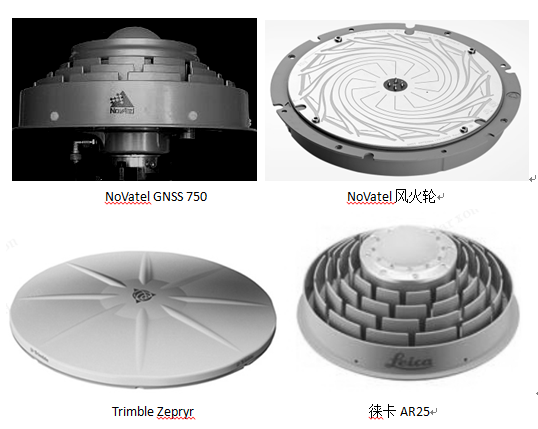
Foreign research on high-precision antennas began earlier, and a series of high-precision antenna products with better performance have been developed, such as NoVatel's GNSS 750 series choke coil antennas, Trimble's Zepryr series antennas, Leica AR25 antennas, etc., among which there are many innovative antenna forms. Therefore, for a long time in the past, my country's high-precision antenna market was dominated by foreign products. However, in the past ten years, with the rise of a large number of domestic manufacturers, foreign high-precision GNSS antennas have basically no advantages in performance. Instead, domestic high-precision manufacturers have begun to expand markets abroad.In addition, some new GNSS antenna manufacturers have developed abroad in recent years, such as Maxtena, Tallysman, etc. Their products are mainly small GNSS antennas used in drones, vehicles and other systems. The antenna form is usually a high dielectric constant microstrip antenna or a four-arm helical antenna form. Foreign manufacturers no longer have an advantage in the design technology of this type of antenna, and domestic and foreign products are entering a period of homogeneous competition.
2.2 Huidige stand van zaken van de binnenlandse technologie voor zeer nauwkeurige antennes
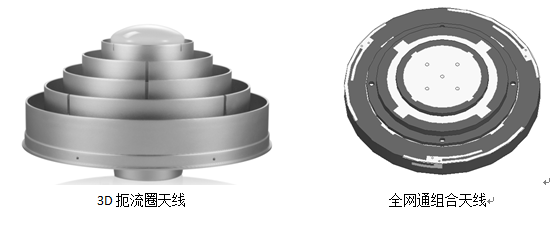
The commercialization of domestic high-precision antennas started late, but has developed rapidly. In the past ten years, a number of domestic high-precision antenna manufacturers have begun to grow and develop, such as Huaxin Antenna, Hi-Tech, Dingyao, Jiali Electronics, etc., and have developed a series of high-precision antenna products with independent intellectual property rights.For example, in the field of base station antennas and built-in measurement antennas, Huaxin's 3D choke antennas, full network combination antennas, etc. not only have reached the international leading level in performance, but also have high product reliability, long service life, and extremely low failure rates, which can meet various environmental applications.In industries such as vehicles and drones, the design technology of external measurement antennas and four-arm helical antennas has become relatively mature, and has been used on a large scale in driving test systems, unmanned driving, drones and other industry applications, and has achieved good economic and social benefits.
3. Status en vooruitzichten van de GNSS-antennemarkt
In 2018 bereikte de totale productiewaarde van de satellietnavigatie- en locatiedienstenindustrie in mijn land 301.6 miljard yuan, een stijging van 18.3% ten opzichte van 2017 [2], en zal in 2020 400 miljard yuan bereiken. In 2019 bedroeg de totale productiewaarde van de wereldwijde satellietnavigatiemarkt 150 miljard euro en bereikte het aantal GNSS-terminalgebruikers 6.4 miljard eenheden. Tegen de achtergrond van de wereldwijde economische neergang is de GNSS-industrie een van de weinige industrieën die de trend heeft doorbroken en in de lift zit. Het Europees Agentschap voor wereldwijde navigatiesatellietsystemen voorspelt dat de totale productiewaarde van de wereldwijde satellietnavigatiemarkt in de komende tien jaar zal verdubbelen tot meer dan 300 miljard euro en dat het aantal GNSS-terminals zal toenemen tot 9.5 miljard eenheden.In the global satellite navigation market, terminal equipment used in road traffic, drones and other fields will be the fastest growing market segment in the next decade: intelligent and driverless vehicles are the main development direction of future road vehicles, and cars with autonomous driving capabilities must be equipped with GNSS high-precision antennas. Therefore, the autonomous driving market has a huge demand for GNSS antennas. With the continuous development of my country's agricultural modernization process, the use of plant protection drones and other drones equipped with high-precision positioning antennas will continue to grow.4. Development trend of GNSS high-precision antennas
Na jarenlange ontwikkeling van uiterst nauwkeurige GNSS-antennes zijn diverse technologieën relatief volwassen geworden, maar er zijn nog steeds veel uitdagingen te overwinnen:1. Miniaturisatie: Miniaturisatie van elektronische apparatuur is een voortdurende ontwikkelingstrend. Vooral in toepassingen zoals drones en handheld apparaten is de vraag naar kleine antennes steeds groter. De prestaties van de antenne zullen echter afnemen na miniaturisatie. Hoe de afmetingen van de antenne te verkleinen en tegelijkertijd optimale prestaties te behouden, is een belangrijk onderzoeksgebied voor uiterst nauwkeurige antennes.2. Antimultipath-technologie: De antimultipath-technologie voor GNSS-antennes omvat hoofdzakelijk choke-coil-technologie [3], kunstmatige elektromagnetische materiaaltechnologie [4][5], enzovoort. Deze technologieën hebben echter allemaal nadelen, zoals een groot formaat, een smalle bandbreedte en hoge kosten, en zijn niet universeel toepasbaar. Daarom is het noodzakelijk om antimultipath-technologie te ontwikkelen die zowel miniaturisatie als een brede bandbreedte combineert om aan de uiteenlopende toepassingsbehoeften te voldoen.3. Multifunctionality: In addition to GNSS antennas, various devices nowadays also integrate more than one communication antenna. Different communication systems may cause various signal interferences to GNSS antennas, affecting normal star collection. Therefore, the GNSS antenna and the communication antenna are integrated into the design through multi-functional integration. The interference between the antennas is taken into consideration during the design, which can improve the electromagnetic compatibility characteristics and improve the performance of the whole machine while increasing the integration level.5. Conclusie
Dit artikel geeft een korte introductie tot GNSS-antennes met hoge precisie, richt zich op de toepassingen ervan in verschillende industrieën en de technische status van deze antennes in binnen- en buitenland, en biedt een overzicht van de marktstatus en ontwikkelingstrends. Met de popularisering van 5G-technologie zal Beidou + 5G-technologie de toepassing van positioneringstechnologie met hoge precisie in steeds meer sectoren verder stimuleren, waardoor er ook voor positioneringsantennes met hoge precisie meer ruimte voor ontwikkeling ontstaat.Dit artikel komt van "Microgolf radiofrequentie netwerkMocht er sprake zijn van inbreuk op rechten of andere problemen, neem dan contact met ons op zodat we het kunnen verwijderen.Steun de bescherming van intellectuele eigendomsrechten; vermeld bij herpublicatie de oorspronkelijke bron en auteur.
Related Recommendations