






















Service Hotline
News

News
6G in 2030: 5 major trends, 13 core technologies
2021-12-28
684
5G has been fully commercialized. As 5G continues to penetrate vertical industries, people's ideas for 6G are gradually put on the agenda. Facing 2030+, 6G will fully support the digitization of the entire world on the basis of 5G, combined with the development of artificial intelligence and other technologies, to realize the ubiquitous availability of wisdom, fully empower everything, promote society to move towards a "digital twin" world that combines virtuality and reality, and realize the beautiful vision of "digital twin, ubiquitous intelligence".
Around this overall vision, 6G networks willEnjoy life intelligently、Smart production、Zhihuan SocietyThese three aspects have given rise to new application scenarios, such as twin digital humans, holographic interaction, super transportation, synaesthesia interconnection, intelligent interaction, etc.
These scenarios will require terabit-level peak rates, sub-millisecond latency experience, mobile speeds exceeding 1,000km/h, and new network capabilities such as endogenous security, endogenous intelligence, and digital twins. In order to meet the higher requirements of new scenarios and new services, 6G air interface technology and architecture require corresponding changes.

01 future network technology
At present, with the deep integration of information and communication technology, big data and artificial intelligence, the further expansion of network ubiquity, the continuous improvement of user experience and personalized service requirements, and the continuous emergence of many new enabling technologies, future networks also show the following major characteristics and development trends.
1. Full spectrum communication
As communication needs continue to increase, mobile communication networks require more spectrum. Since the spectrum below 6GHz has been allocated, the millimeter wave frequency bands of 26GHz and 39GHz have also been allocated to 5G. Higher frequency bands, such as THz and visible light, need to be studied to meet the needs of higher capacity and ultra-high experience rates.
Visible light usually refers to the electromagnetic wave in the frequency band 430~790THz (wavelength 380~750nm), which has about 400THz candidate spectrum. Terahertz refers to the electromagnetic wave in the frequency band 0.1~10THz (wavelength 30~3000 microns), which has about 10THz candidate spectrum. Both have the characteristics of large bandwidth, easy to achieve ultra-high-speed communication, and are a potential supplement to future mobile communication systems.

▲Frequency distribution
Both visible light and terahertz have large space transmission losses, so they are not suitable for long-distance transmission in terrestrial communications, but are suitable for providing greater capacity and higher rates in local and short-distance scenarios.
In order to improve coverage, visible light communication can take advantage of its low power consumption, low cost, easy deployment and other characteristics, and combine it with lighting functions to achieve wider coverage using ultra-dense deployment; terahertz communication, due to its short wavelength, small antenna array size and low transmission power, is more suitable for use in combination with ultra-large-scale antennas to form a terahertz beam with a narrower width and better directivity, which can effectively suppress interference and improve coverage distance.
From the perspective of the deployment of the entire 6G mobile communication network, it is necessary to comprehensively consider cost, demand and business experience, and effectively use all available frequency resources according to scenarios. Frequency bands below 6GHz will still play an important role, especially in providing seamless network coverage. Millimeter waves will play a more important role. THz and visible light bands will provide greater capacity and higher rates in local and short-distance scenarios.
Therefore, after visible light and terahertz communications are introduced into mobile communication networks, it is necessary to consider deep integration networking of all frequency bands below 6 GHz, millimeter wave, terahertz, visible light, etc., to achieve dynamic complementation of each frequency band to optimize the overall service quality of the entire network and reduce network energy consumption.
2. Integration of sky, sky and earth
▲Air, space and ground integrated network
While greatly improving the user experience rate, future networks must also meet the network service needs of airborne Internet on aircraft, ships, etc., ensure the service continuity of high-speed moving ground vehicles, high-speed railways and other terminals, support the deployment of massive IoT devices such as instant rescue and disaster relief, environmental monitoring, forest fire prevention, uninhabited land inspections, ocean container information tracking, etc., and achieve low-cost coverage in sparsely populated areas. Therefore, the main form in the future is to expand network coverage to three-dimensional coverage networks in natural spaces such as space, deep mountains, deep seas, and land. Therefore, it is necessary to build an integrated network of space, space, and ground to achieve three-dimensional "ubiquitous coverage" of communication networks throughout the world.
The space-space-ground integrated network mainly includes three parts: space bases composed of satellites in different orbits, space bases composed of various aerial vehicles, and ground bases composed of satellite ground stations and traditional ground networks.Wide coverage, flexible deployment, ultra-low power consumption, ultra-high accuracy and not susceptible to ground disastersand other characteristics.
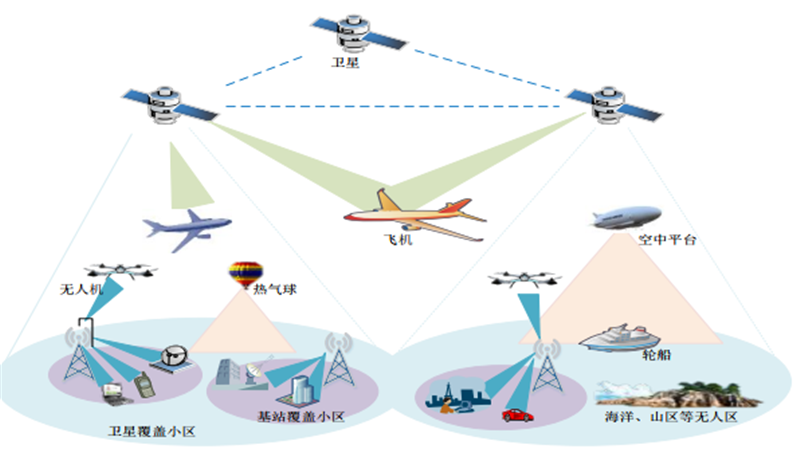
The 6G-oriented air, space and ground integration regards satellite communication networks as an important supplement and extension of terrestrial communication networks, and deeply integrates the two to significantly improve user air interface access capabilities and three-dimensional coverage capabilities. Through the collaborative scheduling of satellite-ground resources and seamless satellite-ground roaming of the space-space-ground integrated network, it can provide users with imperceptible consistent services, ensuring robust network resilience and green and intensive resources.
3. DOICT integration
6G is a new generation of mobile communication system that is deeply integrated with communication technology, information technology, big data technology, AI technology, and control technology. It shows strong interdisciplinary and cross-field development characteristics.The 6G vision of "digital twins and ubiquitous intelligence" requires end-to-end design from information collection, information transmission, information calculation, and information application. DOICT integration will be the development trend of 6G end-to-end information processing and service architecture.
The deep integration of ICT promotes full-dimensional definability of the network, which is the foundation of flexible networks. The deep integration of DICT promotes the comprehensive penetration of artificial intelligence and big data into the network, which is the foundation of intelligent networks. The deep integration of DOICT promotes the development of deterministic networks and is the foundation of automation systems and digital twin systems.
DOICT will realize the deep integration of cloud, network, edge, terminal and industry based on the flow of big data, create a trusted environment with means represented by blockchain, improve the efficiency of resource utilization of all parties, and collaboratively upgrade cloud-edge computing capabilities, network capabilities, terminal capabilities and business capabilities.
4. Network reconfigurability
With the rapid development of mobile communication technology, business needs and scenarios have become more diversified and personalized. In the future, 6G networks will adopt a more flexible reconfigurable architecture design.
On the one hand, based on shared hardware resources, the network allocates corresponding network and air interface resources to different users' different services, realizing end-to-end on-demand services. While providing the ultimate service, it also realizes resource sharing to maximize resource utilization and reduce network construction costs. On the other hand, the minimalist network architecture and flexible and scalable network features provide great convenience for subsequent network maintenance, upgrades and optimization, further reducing operators' network operating costs. In addition, the characteristic requirements inherent in 6G intelligence also require stronger computing power and scalability for the network.
5. Perception-communication-computing integration
Perception-communication-computing integration refers to an end-to-end information processing technology framework that simultaneously executes information collection and information calculation during the information transmission process. It will break the chimney information service framework of terminal information collection, network information transmission, and cloud edge calculation. It is a technical requirement for providing highly coupled services of perception, communication, and computing such as unmanned, immersive, and digital twins.
Perception-communication-computing integration is specifically divided into two levels: functional collaboration and functional fusion. In the functional collaboration framework, sensory information can enhance communication capabilities, communication can expand the dimension and depth of perception, computing can perform multi-dimensional data fusion and big data analysis, perception can enhance computing model and algorithm performance, communication can bring ubiquitous computing, and computing can realize ultra-large-scale communication.
In the functional integration framework, sensing signals and communication signals can integrate waveform design and detection and share a set of hardware equipment. At present, radar communication integration technology has become a hot spot. The integration of terahertz detection capabilities and communication capabilities, as well as the integration of visible light imaging and communication, have become potential 6G technology trends. Perception and computing are integrated into a computing power-aware network, and computing and network are integrated to achieve end-to-end definable network and microservice architecture.
In the future, perceptual communication computing can achieve functional reconfiguration based on the development of software-defined chip technology.
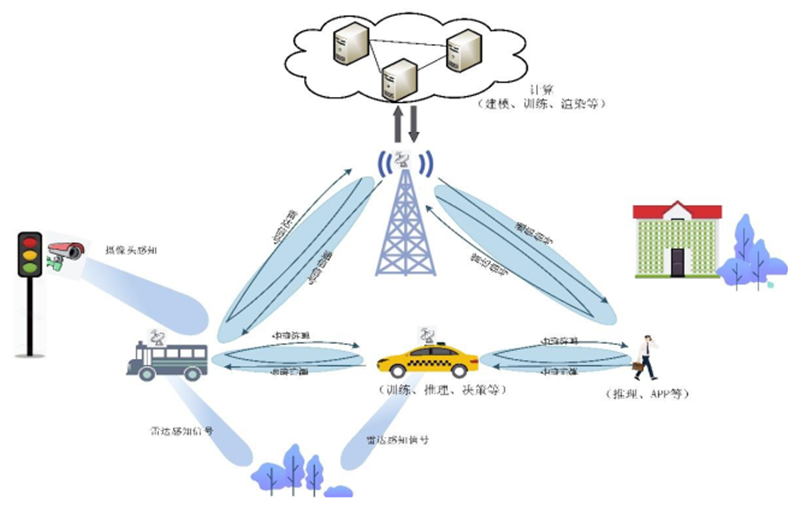
▲Perception-communication-computing integrated application scenario
Application scenarios for sensing-communication-computing integration include unmanned services, immersive services and digital twin services. In the field of unmanned business, it provides intelligent agent interaction capabilities and collaborative machine learning capabilities; in the field of immersive business, it provides the sensing and rendering capabilities of interactive XR, and the sensing, modeling and display capabilities of holographic communication; in the field of digital twin business, it provides the sensing, modeling, reasoning and control capabilities of the physical world; in the field of body area network, it provides personnel monitoring, human parameter sensing and intervention capabilities.
02wireless enabling technology
Faced with the new index requirements brought by new application scenarios, such as Tbps-level peak rates, Gbps-level user experience rates, and near-wired connection latency, it is difficult to meet the requirements by relying solely on existing 5G technology. For this reason, the industry is also actively researching some new technologies, new architectures, and new designs, hoping to form some new breakthroughs. This chapter will analyze the potential key technologies of future wireless access networks from three aspects: basic transmission technology, protocol and architecture design, and autonomous network technology.
As we all know, larger bandwidth can increase the peak rate of the system, but the improvement of spectrum efficiency also depends on the development of physical layer transmission technology.
1. Distributed ultra-large-scale MIMO
After the introduction of ultra-large-scale MIMO, 4G/5G network capacity has been greatly improved. However, due to path loss and inter-cell interference, cell edge user experience still needs to be improved. Distributed ultra-large-scale MIMO extends the traditional centralized deployment method to distributed deployment, introduces intelligent collaboration between multiple distributed nodes, and realizes joint scheduling of resources and joint transmission of data, as shown in the figure below. Through distributed deployment and intelligent collaboration, on the one hand, it effectively eliminates interference and enhances signal reception quality; on the other hand, it effectively enhances coverage, bringing users a borderless performance experience. In the future 6G network, especially in higher frequency bands and dense deployment scenarios, it will show great application potential.
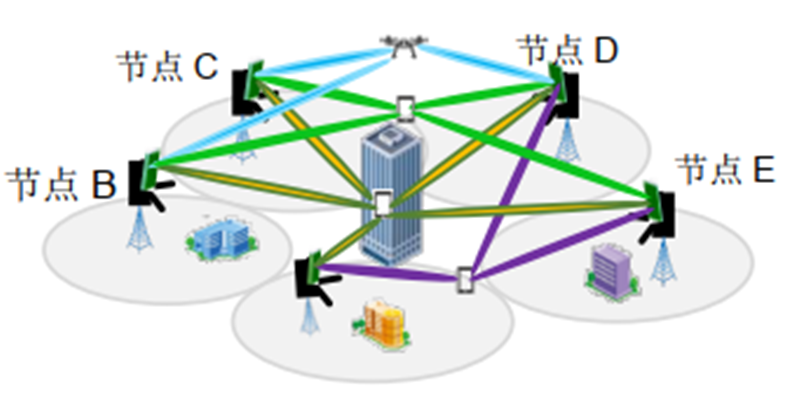
▲Distributed ultra-large-scale MIMO diagram
The industry has theoretically demonstrated the advantages of distributed MIMO in improving channel capacity. Theoretical analysis shows that under the same conditions of the same total number of antennas, total transmit power and coverage, the performance of the distributed MIMO system is more uniform than that of centralized MIMO because there are always distributed nodes closer to the users and intelligent collaboration of scheduling and shaping is used. In particular, the performance gain for edge users is more significant.
Due to the significant increase in antenna scale and node number, distributed ultra-large-scale MIMO poses challenges to the information exchange capabilities between nodes, joint collaboration node selection and shaping scheme design, algorithm complexity, interference processing, etc. At the same time, coherent joint transmission also puts forward higher requirements for the consistency of the transceiver channels between nodes, and further research on air interface calibration solutions is required.
2. Smart metasurface
▲RIS auxiliary communication system
Reconfigurable Intelligent Surface (RIS) controls electromagnetic waves through structural units on the surface. By adjusting the parameters and position of each structural unit, it can adjust the amplitude and phase distribution of arbitrary electromagnetic wave reflection/shooting. It has positive significance in solving traditional wireless communication pain points such as non-line-of-sight transmission and reducing coverage holes.
The figure below shows a system diagram of wireless communication assisted by RIS. The base station controls the RIS, and the RIS adjusts the amplitude and phase of its own structural units based on the control, thereby achieving controlled reflection of the signal transmitted by the base station. Compared with traditional relay communication, RIS can work in full-duplex mode and has higher spectrum utilization. RIS does not require RF links and large-scale power supply, and will have advantages in terms of power consumption and deployment costs.
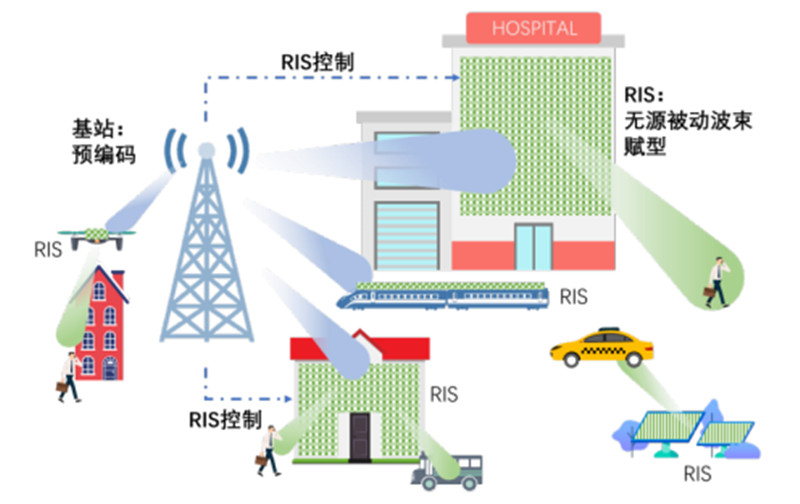
The actual application effect of RIS in wireless mobile communications depends on the research maturity of metamaterials and the accuracy and efficiency of digitally controlled metamaterials. At the same time, the problem of difficult estimation of metasurface channels caused by passive characteristics, the practical joint precoding scheme of base stations and RIS, and the RIS network architecture and control scheme all need to be further studied.
3. Super Nyquist transmission technology
▲Schematic diagram of transceiver block diagram of Super Nyquist transmission system
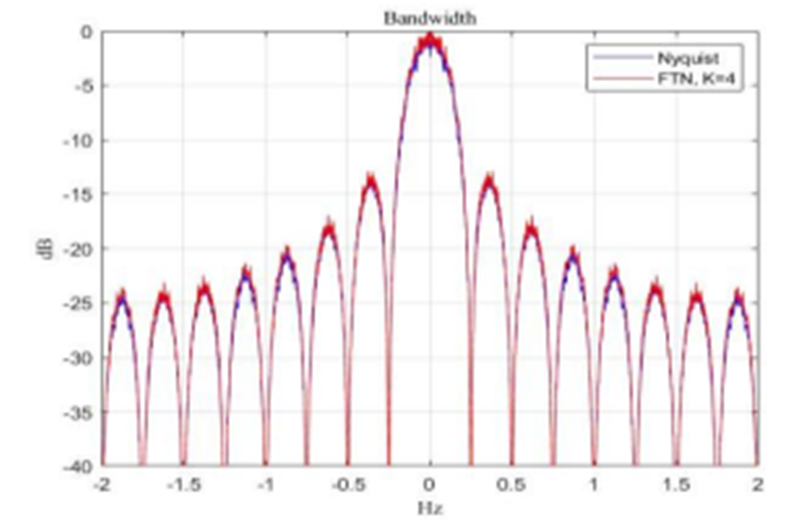
▲Bandwidth comparison between super-Nyquist system and Nyquist system
In traditional communication systems, in order to avoid inter-symbol interference (ISI, Inter-Symbol Interference), the Nyquist criterion is usually used, thereby limiting the transmitted symbol rate. Super Nyquist transfer technique error smell found citing source. Use a faster rate to send symbols, artificially introduce ISI during transmission, and then use a more advanced receiver to eliminate ISI through oversampling at the receiving end, as shown in the figure below, thereby improving the actual transmission rate and spectrum utilization of the link.
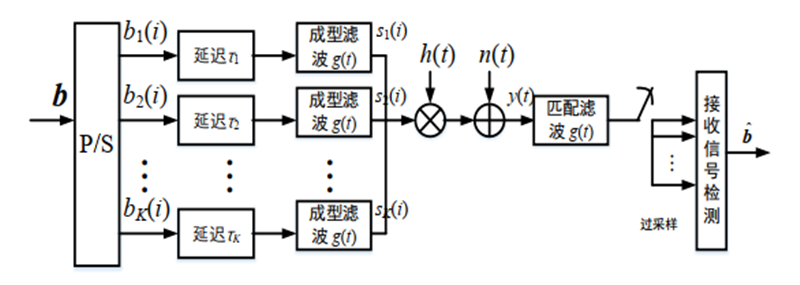
In a multi-antenna antenna system, super-Nyquist transmission technology is used to generate delays between transmitting antennas, and oversampling is used to create virtual receiving antennas, which can improve spatial multiplexing and diversity gain when the number of user-side antennas is limited. Therefore even single antenna users can achieve spatial multiplexing gain. As can be seen from the figure below, when the signal-to-noise ratio is high, the virtual antenna system based on super-Nyquist transmission has a significant gain compared with the traditional MISO. When the signal-to-noise ratio is 10dB, a capacity gain of more than 40% can be obtained.
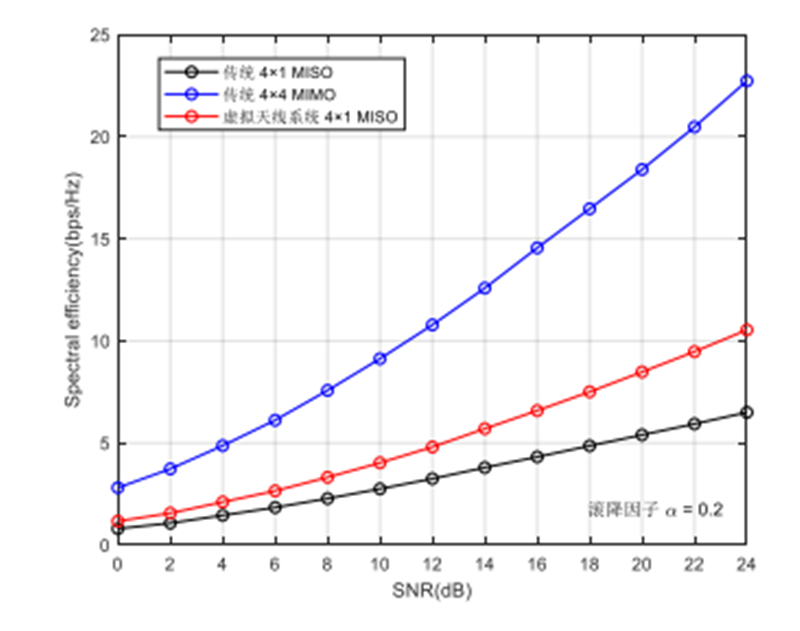
▲Comparison of capacity between super-Nyquist transmission and traditional Nyquist transmission systems
The optimal decoding algorithm for super-Nyquist transmission technology is the Viterbi decoding algorithm based on maximum likelihood sequence estimation. However, its complexity increases exponentially with the increase in overlap. Therefore, low-complexity receiver design is crucial to the practical development of this system. At the same time, multi-carrier and large-scale antennas will still be mainstream technologies in the future. How to combine them with OFDM/MIMO technology and consider the impact of actual multipath fading channels on the system requires in-depth discussion.
4. Transform domain waveform
Waveform technology plays an important role in the air interface design of wireless communication systems in the past generations. The performance of OFDM waveforms used in 4G and 5G systems depends on the orthogonality between its subcarriers. If the orthogonality between subcarriers is destroyed by factors such as Doppler frequency offset, performance will often decrease significantly.
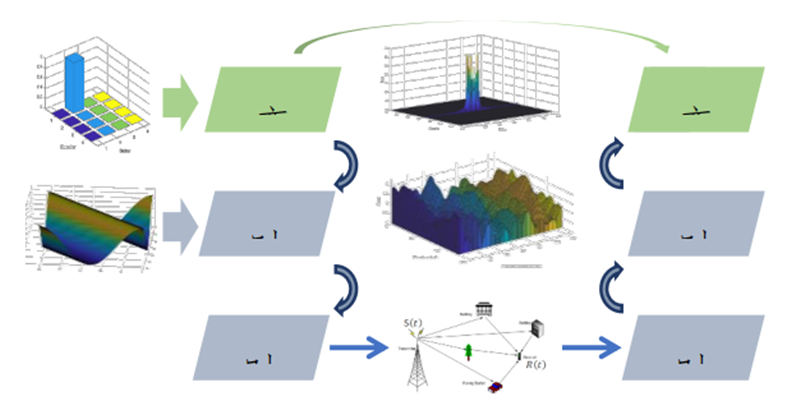
▲Schematic diagram of transform domain waveform principle
Transform domain waveforms are designed to overcome the above-mentioned shortcomings of OFDM waveforms. Different from the traditional waveform scheme that considers the transmitted symbols to be located in the classic time-frequency domain, the transform domain waveform considers the transmitted symbols to be located in other dual domains (such as delay-frequency, time-varying-Doppler and other dual domains), as shown in the figure below. Through transformation between dual domains, transform domain symbols can achieve a multi-dimensional diversity effect, thereby effectively utilizing unfavorable factors such as Doppler frequency offset in OFDM waveforms as a diversity degree of freedom to improve transmission performance.
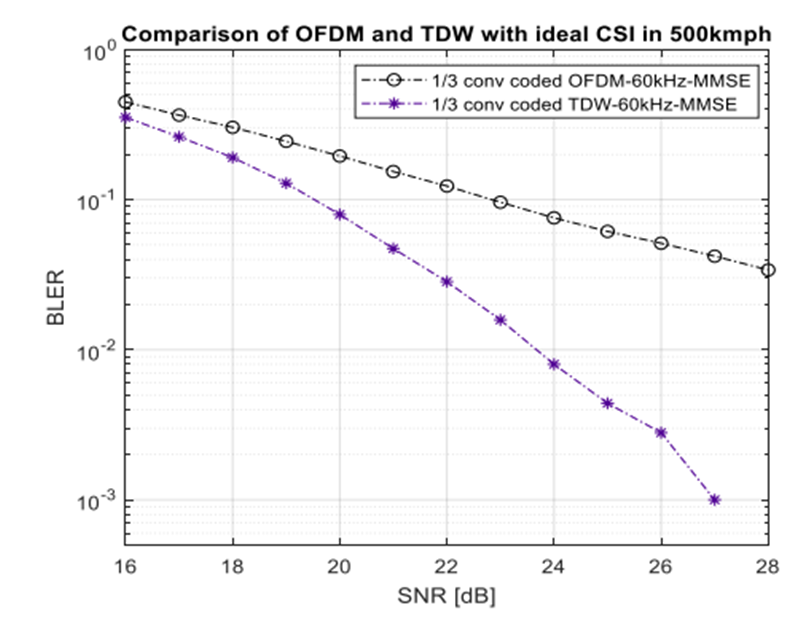
▲Transform domain waveform and OFDM performance comparison
The figure above shows the block error rate performance comparison between the ideal channel estimation assumption down-conversion domain waveform and OFDM in a 500km/h mobile environment. The CDL channel model is considered in the simulation. The subcarrier spacing is 60kHz. The channel coding is a convolutional code with a code rate of 1/3. The number of subcarriers is 128. The transform domain waveform considers the joint processing of six consecutive time domain OFDM symbols. The results show that transform domain waveforms can effectively cope with Doppler frequency offset in high-speed mobile environments and achieve better block error rate performance.
Although relevant research shows that the transform domain waveform scheme can achieve significant gains compared with the traditional OFDM-based waveform scheme in high-speed movement and other scenarios, how to accurately recover the transmitted signal at a lower cost is an important topic in transform domain waveform research. In addition, how to design efficient reference signals to accurately acquire multi-antenna channels with low overhead requires further research.
5. AI-driven physical links
Since 5G communications, the intelligence of wireless networks has become an important topic, aiming to achieve more efficient allocation and utilization of network resources. As one of the main enabling technologies for wireless network intelligence, AI technology is penetrating into all levels of the core network, network management, and the physical layer and high-level protocol stack of the access network. Among them, physical layer AI generally refers to technical solutions that use artificial intelligence/machine learning methods to realize or enhance the physical layer functions of wireless networks.
AI can be mainly applied to CSI processing, receiver design, and end-to-end link design at the physical layer. For example, the neural network in deep learning is used to learn the compressed representation of high-dimensional CSI in wireless communications, thereby reducing the CSI feedback overhead; the artificial neural network is used to learn the inverse mapping from the received interference signal to the original signal, which eliminates the need for explicit channel estimation and equalization; jointly optimizing the transmitter and receiver in a specific channel environment can learn non-ideal effects in the channel and improve transmission performance.
However, using AI modules to replace traditional physical layer modules in a "black box" manner will be difficult to surpass traditional designs in terms of performance. In contrast, the idea of combining artificial intelligence methods with human expert knowledge is a better choice that can draw on the advantages of both parties. In addition, to fully realize the potential of AI in reducing overhead and complexity, reference signals and air interface resource allocation need to be designed accordingly and even jointly designed between multi-link modules, which may have more impact on the existing air interface framework and signaling design.
6. Plug and play link control
▲Plug and play link control
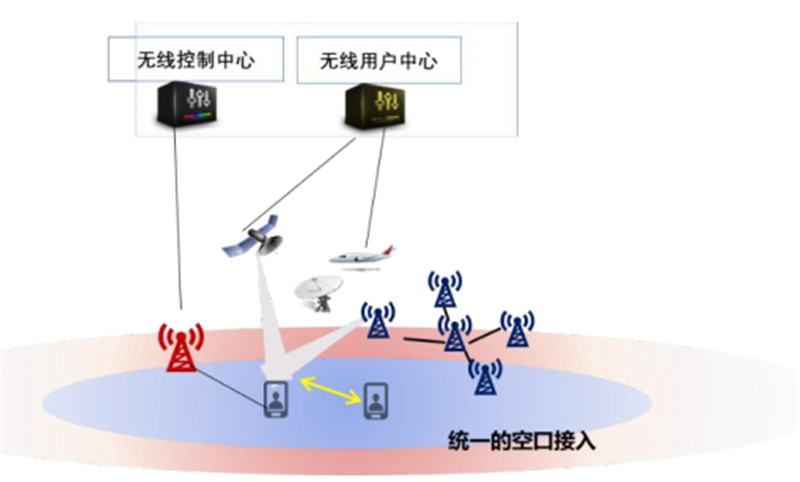
The 6G wireless access network needs to have automatic coverage expansion capabilities to better complete three-dimensional full-scenario coverage. When a new network service body joins the network, it can quickly handshake, plug and play, and achieve coverage expansion. Plug and play link control technology includes the following aspects:
Process awareness:Sense various types of access requests and initiate appropriate handshakes and control signaling processes. Different types of access points need to be accurately identified and accessed quickly to achieve flexible expansion of coverage.
Cloud-to-edge control and coordination:The cloud provides flexible and precise management and control of edge access points, including access control, automatic allocation of bandwidth resources, and coordination between links. Cloud processing can introduce AI capabilities to support the above functions.
Auto-generated and self-optimized access points:Utilize digital twin/AI and other technologies to conduct fully automated, full life cycle management and monitoring of various access points. When the access point is newly added to the network, it can automatically complete the configuration and realize self-generation; when the access point is running, it can adjust parameters and automatically optimize according to real-time scenarios, and improve services as needed to better meet the needs of users.
High-speed and efficient transmission channels as well as large-bandwidth and high-real-time transmission bandwidth are needed between the cloud and the edge to ensure real-time information interaction between plug-and-play interfaces. Powerful digital twins and AI algorithm support are also needed to complete automatic management and control of remote access points.
7. Adaptive air interface QoS control
The 6G era will be a highly data-based and intelligent era. New services such as holographic imaging, XR services, and virtual space perception and interaction have put forward more extreme requirements for the service quality assurance of 6G networks.
Adaptive air interface QoS control is based on end-to-end QoS constraints. It realizes QoS guarantee of air interface transmission data based on real-time air interface transmission characteristics, relatively limited air interface resources, transmission-feedback time constraints, etc. It is a key technology for on-demand air interface services and efficient network capabilities.
Adaptive air interface QoS control includes the following aspects:
1. Flexible QoS detection mechanism:Combined with AI/big data technology, it can realize QoS detection and modeling of carried services, as well as adaptive adjustment.
2. Deep integration of business QoS and air interface capabilities:Explore a new QoS mechanism that combines business QoS and air interface service capabilities. Based on the precise requirements of the service, the wireless access network matches the service requirements with the real-time air interface status through scheduling and wireless resource management.
3. AS layer end-to-end QoS mechanism:The terminal combines the QoS information provided by the access network to perform more refined QoS management to achieve accurate and efficient transmission of uplink and downlink data over the air interface.
Facing the future, the business requirements of 6G networks are constantly evolving. The QoS mechanism involves the core network, transmission network, and access network. A QoS mechanism that is unified and coordinated with the core network, transport layer, and access network is an issue that needs to be considered in the future.
03network enabling technologies
1. Lightweight signaling solution
From the perspective of the development process from 2G, 3G, 4G to 5G, the continuous expansion of network scale and the increasing complexity have led to complex and redundant network architecture. According to existing network development trends, the complexity of the 6G network supporting the Internet of Everything will increase exponentially. Lightweight signaling solutions are an inevitable choice for 6G design.
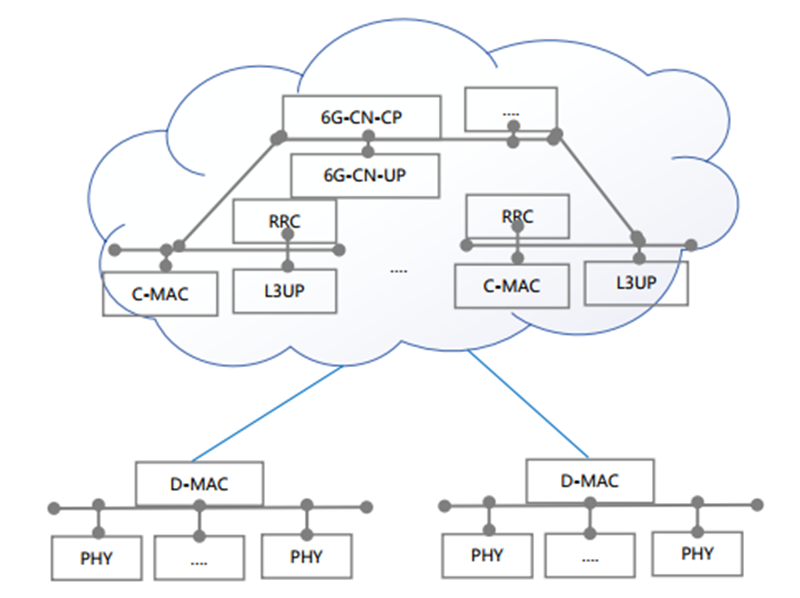
The 6G wireless access network needs to be designed according to a unified signaling scheme and integrate multiple air interface access technologies under unified signaling control to achieve unified control of the air interface and reduce the complexity of terminal access to the network. In terms of protocol stack function design, differentiated protocol function design can be considered, protocol function distribution and interface design can be optimized, and AI technology can be combined to further enhance protocol functions.
In terms of network functions, 6G networks can be divided intoWide coverage of signaling layerandOn-demand data layer. Through the mechanism of separating the signaling plane and the user plane, a unified signaling overlay is used to ensure reliable mobility management and fast service access; through dynamic on-demand data layer loading, the business needs of network users are met. The two work together flexibly to reduce the number of base stations deployed and improve users' service perception experience.
▲Lightweight signaling control
Lightweight signaling solutions require high reliability, low latency, and low-cost transmission network support. The transmission network requires flexible topology and sufficient bandwidth. An integrated design of wireless control center-transmission network-network access point is required. In addition, the separation of signaling and services requires coordinating the available frequency bands of 6G to give full play to the advantages of wide coverage and flexible service loading.
2. End-to-end service design
▲Protocol based on service-oriented architecture
▲Cloud technology evolution trend
With the deep integration of DOICT technology and the emergence of a large number of new services, operators need the network to have the ability to respond quickly to new demands to quickly provide network services. Cloud-native-based service technology is an important technology that enables the above capabilities and drives the evolution of protocol functions towards a service-based architecture. The protocol function based on the service-oriented architecture has the ability to run the protocol function according to business needs. The technical characteristics are reflected in the following aspects:
1. Protocol functions driven by cloud native service technology:On the premise of complying with the logical constraint relationships of each protocol layer, the protocol functional entities are reconstructed into flexibly combined modules. Each module can be flexibly combined, deployed and operated as needed to realize new network business service capabilities.
2. Interfaces driven by cloud-native service technology:The internal and external interfaces of the access network are reconstructed based on the cloud-native service-oriented interface form and interface protocols, which already support the flexible combination of protocol function modules and the opening of network capabilities;
3. Capability opening driven by cloud native service technology:Provide third parties with a convenient, fast and unified access network information exchange mechanism and policy adjustment mechanism to achieve a win-win situation through intelligence integration.

The reconstructed protocol functions include two categories: basic functions and incremental functions:
1. Basic functions include community-level functions, such as connection management, user plane management, UE energy saving management and other functions as well as corresponding network services.
2. Incremental functions include access network service registration, data collection and storage, capability exposure, AI analysis and decision-making, and corresponding network services.
The high real-time and high flexibility of access network functions place high demands on the platform's storage, computing power and real-time information interaction. Whether DOICT deep integration technology can support this requirement requires further research and verification. At the same time, the functions of the access network are tightly coupled, and how to achieve "high cohesion and low coupling" with reasonable functions is a complex system project. Moreover, compared with traditional solutions, current servitization technology brings an increase in the cost of a single device. How to achieve a balance between costs and benefits is a systemic problem.
The protocol based on the service-oriented architecture runs on the cloud platform, using cloud native to achieve micro-service-based development, deployment and management. Cloud-native platforms need to adapt to network characteristics to achieve efficient, open, and cross-cloud deployment.
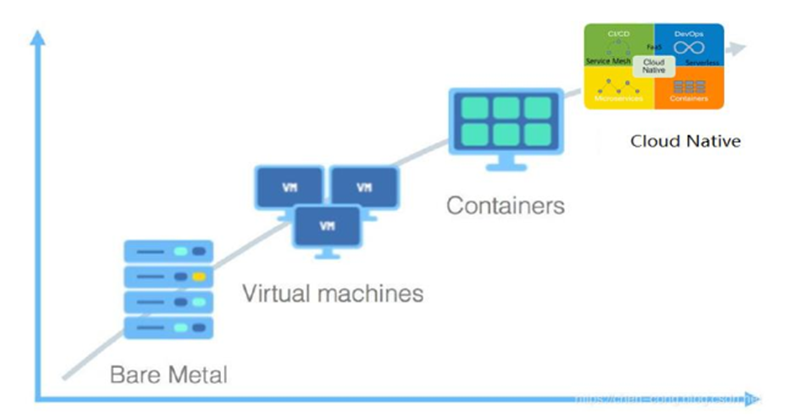
In the past 20 years, computing technology has experienced rapid development from bare metal to virtual machines to containers, and cloud native has become the most suitable technical practice for cloud architecture. Cloud native is an ideological concept for cloud application design. It is the best practice path to give full play to cloud performance. It can help operators build elastic, reliable, loosely coupled, easy-to-manage and observable network systems, improve delivery efficiency, and reduce operation and maintenance complexity. Representative technologies include immutable infrastructure, service mesh, declarative API, Serverless, etc. Cloud native technology architecture has the following typical characteristics:
The ultimate elasticity enables second-level or even millisecond-level responses;
The highly automated scheduling mechanism can achieve strong self-healing capabilities;
The high degree of adaptability enables large-scale, replicable deployment capabilities across regions, platforms, and even service providers.
Cloud native greatly lowers the threshold for cloud computing, enables cross-domain collaboration between R&D and operation and maintenance, increases the speed of open iteration, and empowers business innovation. Currently, cloud native hot technologies are exploding, including multi-cloud container orchestration, cloud native servers, cloud native storage, cloud native networks, cloud native databases, cloud native message queues, service grids, Serverless containers, Function as a Service (FaaS), Backend as a Service (BaaS), etc.
Telecom services have higher requirements for performance, low latency, reliability, security, and equipment costs. These require cloud native technology to evolve according to the characteristics of telecom services to meet the high standards of telecom services.
3. Intelligent sensing function
▲Cross-layer joint architecture design
There are more and more cloud-based interactive services with ultra-low latency and high bandwidth for 6G. The existing "layered" and "chimney" design of the application layer, business transmission layer, and mobile network layer results in longer data packet transmission times and a decrease in user experience.
In order to achieve accurate real-time matching of business transmission capabilities and network capabilities, it is necessary to introduce high-precision real-time measurement and feedback of each protocol layer of the end-to-end network to enable collaborative optimization, and introduce intelligent processing functions on the network side, including intelligent estimation and prediction. On the one hand, the measurement and interaction data are preprocessed to achieve dimensionality reduction and compression. On the other hand, subscription and notification are performed according to the needs of the application layer & business transmission layer to reduce the cost of network transmission.
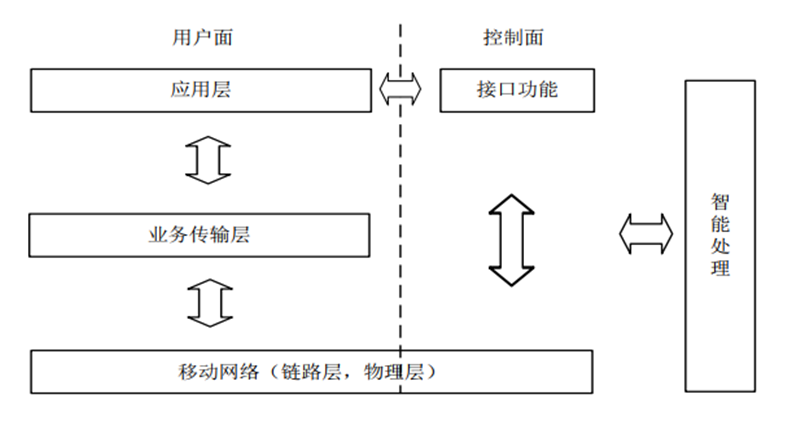
At the same time, it carries out in-depth intelligent perception of the transmission requirements of the application layer, realizes real-time perception and prediction of packet-level transmission requirements while fully protecting user privacy, and provides fine-grained guidance for congestion control of the business transmission layer and resource scheduling of the mobile network layer.
The smart sensing network service system requires collaboration between multiple protocol layers, multiple network elements, and multiple technical fields. It faces many challenges such as difficulty in verifying technical solutions and the introduction of potential non-standard functions. At the same time, since the joint design of each protocol layer and the standardization of interactions involve multiple standards organizations and working groups, the advancement of new technologies in standardization faces great challenges.
4. Network autonomy system based on digital twins
Digital twin technology refers to the establishment of a virtual entity from the physical world entity in the digital world through digital means, thereby realizing dynamic observation, analysis, simulation, control and optimization of the physical world entity. Digital twin network technology includes functional modeling, network element modeling, network modeling, network simulation, parameter and performance models, automated testing, data collection, big data processing, data analysis, artificial intelligence machine learning, fault prediction, topology and routing optimization. In this way, difficult-to-solve problems at each stage of the network can be transferred to the digital world for solution, and the network's autonomy can be realized through monitoring, prediction, optimization, and simulation.
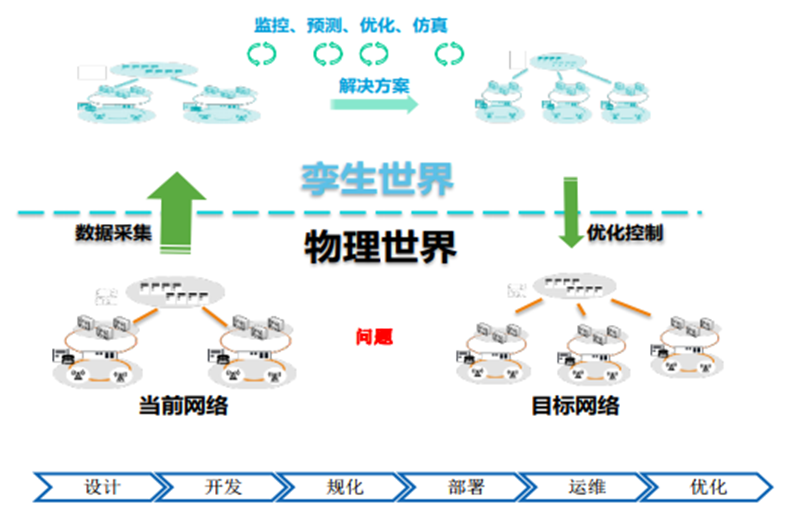
▲Digital twins realize network autonomy
Based on digital twin technology and artificial intelligence technology, 6G network will be an autonomous network with self-optimization, self-evolution and self-growth capabilities. The self-optimizing network predicts the trend of future network status in advance and intervenes in advance for possible performance degradation. The digital domain continuously optimizes and simulates the optimal state of the physical network, and issues corresponding operation and maintenance operations in advance to automatically correct the physical network.
The self-evolving network analyzes and makes decisions on the evolution path of network functions based on artificial intelligence, including the optimization and enhancement of existing network functions and the design, implementation, verification and implementation of new functions. The self-growing network identifies and predicts different business needs, automatically orchestrates and deploys network functions in each domain, and generates end-to-end service flows that meet business needs; it automatically expands sites with insufficient capacity, and performs automatic planning, hardware self-starting, and software self-loading for areas without network coverage.
As a new concept applied in the network field, digital twin technology needs to form more consensus in the industry. Judging from the process in industry and other industries, this takes a long time. At the same time, digital twin technology relies on a large amount of data collection, which will increase equipment costs, and the method of data collection also requires breakthrough innovation.
5. Deterministic data transmission
The concept of determinism was first proposed and standardized by IEEE. The IEEE 802.1 Working Group created the Audio Video Bridging (AVB) Task Group in 2007 with the goal of replacing HDMI, speakers, and coaxial cables in the home with Ethernet. With the successful application of the IEEE 802.1AVB standard in studios, sports and entertainment venues, this technology has begun to attract the attention of the industrial and automotive communities.
In 2012, the IEEE 802.1AVB Task Group was renamed the Time-Sensitive Networking (TSN) Task Group. The TSN standard extends AVB technology, has time synchronization, delay guarantee and other mechanisms to ensure real-time performance, and supports traffic scheduling and shaping, reliability, configuration management and other related protocols. In 2015, the IETF established the Deterministic Network (DetNet) Working Group, which is committed to extending Ethernet-based deterministic technology to wide-area IP networks to provide worst-case bounds on delay, packet loss, and jitter to provide deterministic data transmission.
As can be seen from the above, deterministic transmission for fixed networks has been proposed for 10 years, but research on deterministic transmission for mobile networks has just started. This is mainly due to 1. The air interface is easily affected by the environment and the transmission quality is difficult to predict; 2. The lack of end-to-end deterministic guarantee mechanism.
In the 6G era, deterministic data transmission will become the representative capability of 6G networks, achieving features such as bounded delay, low jitter, high reliability, and high-precision time synchronization. Difficulties that need to be overcome include the following aspects:
1. How to achieve flexible resource reservation and real-time scheduling on wireless air interfaces.The unpredictability of the air interface is the main bottleneck in achieving end-to-end deterministic transmission. This requires that in the 6G era, first of all, air interface resources are sufficient and unrestricted, and data packets can be flexibly scheduled in real time within the access network to ensure that packets can be processed and sent out within the specified time.
2. How to implement a wide-area deterministic transmission mechanism.IEEE TSN technology is difficult to apply to wide areas. This is mainly because the CNC in the TSN system cannot perform large-scale path calculations and accurate real-time scheduling, and the time synchronization accuracy becomes lower and lower as the path lengthens.
3. How to achieve cross-layer and cross-domain deterministic mechanism integration.In the 5G era, mobile networks are still a layer of networks carried on top of IP, which poses severe challenges to deterministic transmission scheduling for cross-domain collaboration. In the 6G era, from the beginning of network design, it is hoped to achieve heterogeneous access, fixed-mobile integration, and collaborative management. Mobile networks need to absorb the second- and third-layer deterministic transmission protocols of existing fixed networks to achieve deployment integration, protocol support, and collaborative scheduling, thereby achieving end-to-end cross-layer and cross-domain deterministic data transmission.
6. Programmable network
The 6G network needs to support network programmability and realize the collaboration of access, edge, core, wide area and data networks, so that the telecom network has full-scenario customizable capabilities across multiple services, multiple fields, and the entire life cycle. Network programmability is reflected at many levels, from bottom to top: chip programmable (such as P4, POF), FIB programmable (such as OpenFlow), RIB programmable (such as BGP, PCEP), device OS programmable, device configuration programmable (such as CLI, NETCONF/YANG, OVSDB), controller programmable and service programmable (such as GBP, NEMO).
Future networks need to meet programmability capabilities from four dimensions: network elements, protocols, services, and management:
1. Equipment network elements are programmable:As data service types become more diversified and personalized, and users have ever-increasing demands for new network functions, the protocol stacks of equipment network elements support limited network functions, and the network card chips used cannot predict all possible network functions in the next few years. As the basic component of the network, the network element needs its hardware architecture to allow users to redefine functions and complete different types of protocols, encapsulation and decapsulation processing as needed.
At the same time, the upper software architecture is composed of modules or APIs with clearly divided functions, allowing users to reorganize these modules or call interfaces to achieve customized purposes, such as classification, shaping, QoS, etc. Equipment network elements support programmability, making it possible to efficiently support user customization and the continuous evolution of new protocols.
2. Network protocol is programmable:The functional division of telecommunications networks and data networks is becoming increasingly blurred, and network protocols and architectures are also interpenetrating each other. As application scenarios continue to evolve, new demands for network protocol stack functions emerge one after another, and the evolution and innovation of network protocols continue to emerge (such as NewIP, SRv6, QUIC, etc.). Faced with the long-term coexistence of old and new protocols, it is inevitable that protocols within and between end-to-end networks can support synchronous switching, and even end-to-end network protocols for slicing can be selected on demand based on user service types and quality requirements. This will enable smooth switching from the post-5G+ network to the 6G network.
3. Business paths are programmable:As end-to-end networks carry more and more services, we need to see that there is a sequence of time for the network or network elements to complete new service upgrades. It supports on-demand configuration of different user data and use of different business processing paths. It can not only adopt the reuse and transformation scheme, but also realize the gradual diversion to innovative network architecture, smooth switching, and meet the unlimited expansion of user needs on the basis of limited cost. Furthermore, the forwarding path from the terminal, access network, core network, wide area network, to the entire data center network is measurable and adjustable, so that end-to-end business, network, and edge collaboration can be truly realized, and end-to-end network assurance can be achieved.
4. The management method is programmable:As telecommunications networks become increasingly complex, intra-network operation and maintenance costs remain high, and inter-network operation and maintenance barriers have not yet been cleared, resulting in insufficient commercial monetization capabilities and slowing down the launch of new services. Management method programming means that in terms of monitoring and management methods, network elements in the network should support multiple or customized management methods to promote the three improvements of resource efficiency, energy efficiency, and operation and maintenance efficiency, and achieve a closed-loop autonomous network system oriented to user experience.
We previously reported on the application of 5G in 21 vertical industries. As 5G continues to become more popular, the demand for future-oriented communications will become clearer. Related fields of new businesses, new applications, new services, and new materials are developing rapidly, and new technologies such as cloud computing, big data, blockchain, and artificial intelligence are constantly integrating with communication technologies. These urgent needs combine with the latest changes and development trends to continuously promote the design and research of 6G. Although the current ideas for 6G may seem a bit fanciful, the development speed of technology often exceeds people's expectations.
This article is reproduced from“China Electronics Society", support the protection of intellectual property rights, please indicate the original source and author when reprinting. If there is any infringement, please contact us to delete it.
Related Recommendations