






















Service Hotline
News

News
Only 91 base stations were built in two years. Why is 5G millimeter wave so difficult?
2021-12-28
584
If the sub-6GHz 5G network is compared to expanding a single-lane highway in an old city, then millimeter wave 5G is equivalent to building a new four- to eight-lane highway in a new city.
Compared with sub-6GHz, millimeter wave not only has the advantages of large bandwidth, high capacity, and low latency, but also because it is in the ultra-high frequency band, it is like an uncultivated virgin land for the mobile industry, an unpolluted pure land that can be used freely without worrying about wireless interference.
Millimeter wave was once considered the most valuable spectrum resource in the 5G era. But currently, while sub-6GHz 5G is developing rapidly around the world, the development of millimeter wave 5G is quite slow, and it has even fallen into a dilemma.
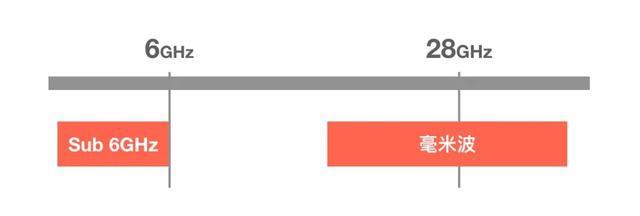
1 、Regarding the development dilemma of millimeter wave 5G, South Korea, as a global 5G pioneer, should be the most typical example. South Korea auctioned the 3.5GHz and 28GHz 5G frequency bands as early as 2018. After acquiring the 5G frequency bands, South Korea's three major operators submitted a 3-5 year 5G base station construction plan to South Korean regulators. Among them, they promised to build 45,215 28GHz millimeter wave 5G base stations within 3 years (by the end of 2021).
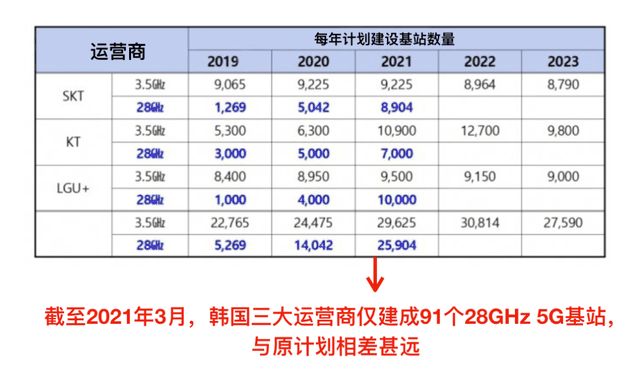
However, although South Korea's 3.5GHz 5G network construction is in full swing, the construction of 28GHz 5G is very slow. As of March 2021, South Korea's three major operators have built only 91 28GHz 5G base stations in total, which is far from the original plan.
South Korean regulators have repeatedly called on operators to speed up the construction of millimeter wave 5G, and even warned that if the set goals cannot be achieved by the end of 2021, the 28GHz frequency band will be withdrawn. However, the Korean operators' response was just to spread their hands and express their helplessness. Operators said that the millimeter wave service model is unclear, the technology and equipment are not mature, and the coverage capacity is only 10%-15% of 3.5GHz. It requires the deployment of very dense base stations. The network investment cost has increased exponentially compared with 3.5GHz. It is not suitable for building a nationwide network and can only be used for hotspot areas and 5G private network deployment.

Korean operators also said that there is no need for South Korea to compete with the United States for first place in the construction of 28GHz 5G. Because the fiber-optic broadband penetration rate in the United States is low, they hope to use 5G millimeter-wave fixed wireless to replace fiber-to-the-home. However, South Korea's fiber-optic broadband penetration rate is high, and the millimeter-wave frequency band will be mainly used for mobile services and enterprise private networks. However, for consumer-oriented mobile services, a large number of base stations need to be deployed, and network deployment costs are too high. For 2B private networks in vertical industries, the current business model is not yet mature.
Since the deployment cost of millimeter wave 5G network is too high and operators are unwilling to invest, let the three operators jointly build and share it. In view of the slow progress of millimeter wave 5G deployment, the Korean industry has put forward such suggestions.
But the problem comes again. On the one hand, if three operators jointly build and share the millimeter wave 5G public network, because the millimeter wave wireless coverage is too small, communication interruptions are prone to occur when the terminal moves from one operator's network area to another operator's area. On the other hand, for 5G private networks, it will be the focus of competition among operators in the 2B field in the future, and it will be difficult for operators to achieve co-construction and sharing cooperation.
South Korea is not an exception. The United States commercialized 5G millimeter wave as early as 2019. According to the latest test data from market research company OpenSignal, the availability rate of its 5G millimeter wave network is currently less than 1%. According to statistics, as of January 2021, only 8 operators in the world have provided 5G millimeter wave services. These data show the slow progress of global 5G millimeter wave development.
2、What happened to 5G millimeter wave? Why is development so slow? Below we use a table to illustrate.

Coverage ability
The advantages of millimeter wave are large bandwidth and high capacity. However, due to its high frequency, short wavelength, free space propagation loss, penetration loss and diffraction loss, the coverage of a single cell is very small. Actual measurements show that even if the terminal is in a line-of-sight (LoS) environment, the coverage of a millimeter wave cell is only about 100 meters, which is almost the same as the coverage of Wi-Fi. Compared with sub-6GHz, the worse the millimeter wave diffraction ability, the worse the penetration ability, making it difficult to penetrate obstacles such as walls, doors, and room furniture. Therefore, in urban areas with dense buildings, operators need to build more base stations and ensure that the base stations and terminals are in line-of-sight to achieve stable and high-speed communications.
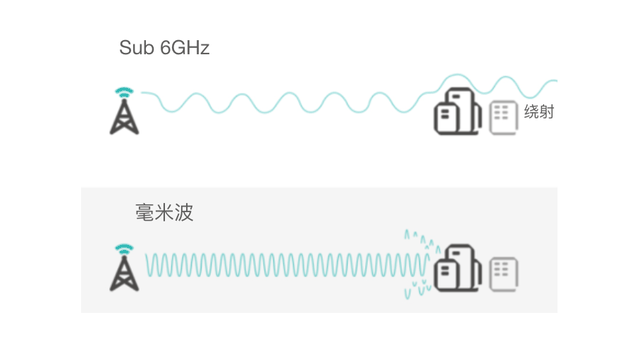
Even if 5G private networks are deployed in spots for 2B scenarios, on the one hand, more base stations need to be built in larger campuses, large factories, etc.; on the other hand, because there are various obstacles such as walls, doors, equipment, etc. in indoor places such as factories, office buildings, and hospitals, it is necessary to maintain a line-of-sight environment between terminals and base stations to maintain high-speed and stable communications. It is also necessary to deploy more base stations at multiple points, which will bring higher network deployment costs.
The solution is to increase the coverage through Massive MIMO+ beamforming, but this will increase the number of antenna units, power amplifiers, low-noise amplification and other components, and the cost of the equipment will also increase. In addition, millimeter wave coverage can also be expanded by installing repeaters and reflectors.
Base station unit price
Compared with sub 6GHz, millimeter wave not only requires the construction of more base stations, but the bigger problem is that the unit price of millimeter wave base stations is about 30% to 40% higher than that of sub 6GHz.
The main reasons are:
1) Most operators around the world have deployed 5G networks through sub 6GHz, which has the advantage of scale. However, there are very few millimeter wave base stations in the world and the unit price is higher;
2) The DU and RU of the sub 6GHz base station are separated, and the DU can be deployed centrally, while the RU and DU of the millimeter wave base station are co-located, so the price is more expensive;
3) There are internal architectural differences between millimeter wave base stations and sub 6GHz base stations (for example, millimeter wave base stations have more antenna units).
Terminal Ecology
Regarding the sub-6GHz terminal ecosystem, there are currently more and more types of smartphones, 5G CPEs, and 5G modules, and the terminal ecosystem is growing. However, the millimeter-wave terminal ecosystem is still in a very early stage, especially in the 2B field. At the same time, global terminal chip manufacturers are more optimistic about the sub-6GHz ecosystem and will not develop modems that use millimeter waves alone. This means that there will be no 5G private network that independently uses millimeter waves.
construction and operating costs
As mentioned before, if you use millimeter waves to build a 5G public network, you need to deploy dense base stations. The construction and operation costs will increase exponentially compared to sub 6GHz. What if you use millimeter waves to deploy a 5G private network? At present, one of the biggest obstacles to the development of 5G 2B private networks is that its cost is higher than that of Wi-Fi. The cost of deploying 5G private networks using millimeter wave is higher than that of sub-6GHz. Obviously, this further raises the threshold for enterprise 5G private network deployment.
This content comes from the Internet/Internet mercenary, this website only provides reprinting. The views, stance, technology, etc. of this article have nothing to do with this website. If there is any infringement, please contact us to delete it!
Related Recommendations