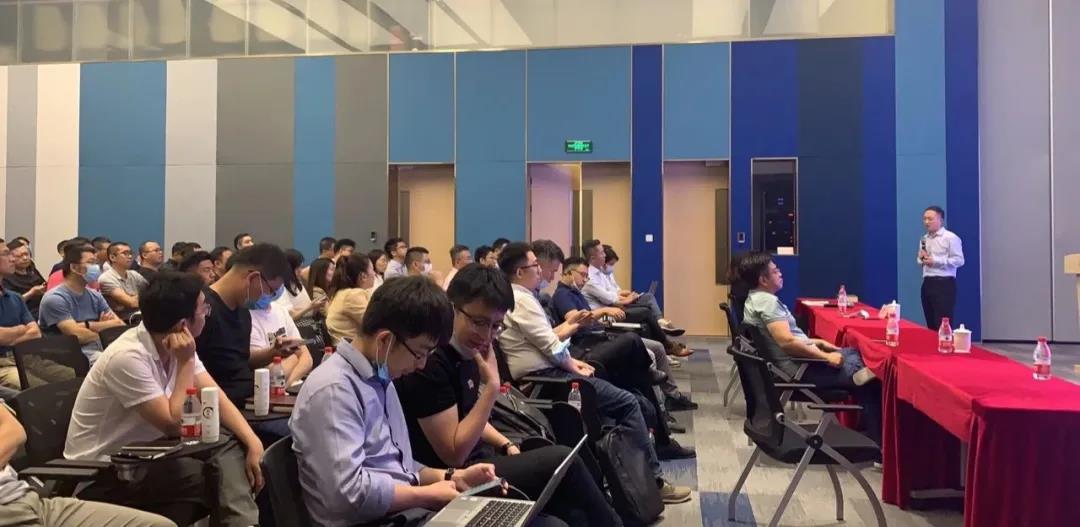
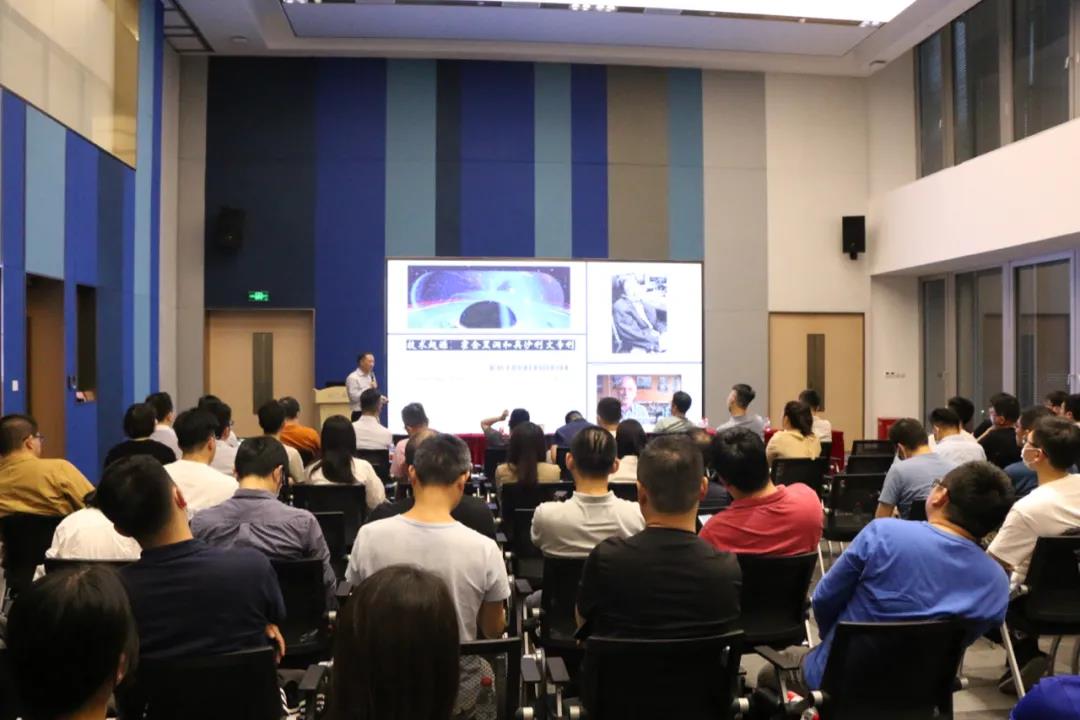
| Can 5G replace Wi-Fi 6?On the evening of June 9, 2021, the sixth "Chip Everyone Says/I Say IC" industry salon organized by Zhangjiang Hi-Tech and Xinmo Research was held in Zhangjiang Science City. During the salon, Zhang Pengfei, Chairman and CEO of Broadcom Integration, gave a wonderful speech on the theme of "Reconstruction of the Internet of Things: Talk about Wi-Fi 6". The salon attracted the participation of middle and high-level executives from well-known companies such as Huawei, Huahong Grace, Unisoc, Pingtouge, and Intel.During the on-site communication session, Zhang Pengfei had a heated discussion with the audience on industry hot spots, industry opportunities, corporate strategies and other issues. Zhang Pengfei, Chairman and CEO of Broadcom IntegrationMr. Zhang Pengfei is the chairman and CEO of Broadcom Integration and has more than 20 years of experience in the semiconductor industry. Mr. Zhang Pengfei studied in the Department of Electronic Engineering at Tsinghua University with his bachelor's, master's and doctoral degrees. In 1994, he went to the United States to engage in postdoctoral research at the University of California, Los Angeles (UCLA). He once co-founded Resonext Communications, an integrated circuit design company in the United States with his partners, which was later successfully acquired by RF Micro Devices, a listed company in the United States. In 2005, after Zhang Pengfei returned to China, he established Broadcom Integration in Shanghai Zhangjiang High-Tech Park, focusing on the R&D and sales of wireless communication integrated circuit chips. It provides low-power, high-performance wireless radio frequency and microprocessor SOC chips to domestic and foreign customers, including many world-renowned brands, and provides complete solutions for intelligent transportation and the Internet of Things. In April 2019, Broadcom Integration was listed on the A-share main board.The following is the content of Mr. Zhang Pengfei’s wonderful speech compiled by Xinmo Research.Zhang Pengfei:
Everyone is familiar with Wi-Fi, and everyone has at least one device that uses Wi-Fi. In the past two years, with the launch of Wi-Fi 6 technology, many terminal products have been upgraded to Wi-Fi 6, and Wi-Fi 6 has also attracted media and news attention. Today, I want to talk to you about Wi-Fi 6 and what new technology upgrades, new application scenarios and new investment opportunities it has.I will expand on the following points:1. The origin of Wi-Fi technology; 2. Five major application bottlenecks of Wi-Fi 5; 3. Nine major technological upgrades of Wi-Fi 6; 4. Comparing Wi-Fi 6 and 5G; 5. Design challenges of Wi-Fi 6 chips; 6. The rise of the Wi-Fi industry; 7. Wi-Fi market size forecast; 8. Broadcom integrated Wi-Fi products.
The Origin of Wi-Fi Technology
The electronic information industry has developed for more than 50 years and has created many products that have changed the world. Computers and mobile phones are the two most representative products. The very important supporting technology behind this is transmission and connection.We use more than one wireless transmission protocol every day, and every mobile phone contains at least three protocols: cellular network, Wi-Fi and Bluetooth. There are three important dimensions for measuring wireless transmission technology: distance, bandwidth and battery life. From a technical perspective, there is no way to achieve the ultimate in these three dimensions, and even if it is done, the cost will be very high. This is why there are three wireless transmission protocols in mobile phones. Cellular networks choose to optimize distance, Wi-Fi chooses to optimize bandwidth, and Bluetooth chooses low power consumption.Since 1999, WLAN has had a Wi-Fi wireless communication protocol standard. And after a long period of development, before Wi-Fi 6, it experienced five generations of technological development, and the main theme was to increase the amount of data transmitted per unit time. For example, the third-generation Wi-Fi 802.11a and 802.11g protocols can transmit emails; the fourth-generation Wi-Fi protocol allows devices to surf the Internet freely, and the fifth-generation Wi-Fi protocol 802.11ac allows devices to play videos smoothly. With the upgrade of technology, more and more users are using Wi-Fi, and Wi-Fi has begun to succeed in industry and business. User bottlenecks have also emerged.
Five major application bottlenecks of Wi-Fi 5
Let’s first look at a typical Wi-Fi application scenario. In an office environment, there is an AP, which can be a router, a hotspot, or a gateway. Many devices in the office are connected to the outside Internet through APs. An AP and all devices connected to it form a BSS. The devices connected to the AP are called STA. Within a BSS, there is an AP. All STAs accessing the AP at a certain point in time need to compete for the wireless transmission medium to connect to the Internet. Two adjacent BSS are called OBSS.After understanding this, we can figure out what technical bottlenecks exist in Wi-Fi technology before the arrival of Wi-Fi 6.(1) The coexistence of multiple devices leads to serious congestionWith the widespread application of Wi-Fi, more and more STAs are connected to an AP in a BSS, and the probability of each STA accessing the AP is reduced. The actual situation is that within a BSS, if a channel utilization reaches 75%, it has reached saturation. Add another STA, and serious lagging will occur. OBSS still interfere with each other.(2) The proportion of short frame data is too highWhen the AP transmits STA data, it needs to package the data and send it out. This process will generate some management and control overhead in order to make effective and secure data connections. Only the more valid data, the higher the transmission media utilization. Normally, what we use Wi-Fi to send are short messages, and the amount of effective data is not large. Only when sending 4K and 8K information will there be a large amount of valid data. In this case, the utilization of the wireless medium during the packet assembly process is very, very low.(3) Serious shortage of spectrum resourcesWe use the 2.4GHz frequency band the most. Even with the smallest bandwidth of 20MHz there are only three available channels. If a 40MHz bandwidth is used, only one channel can be selected in the 2.4GHz band. From the perspective of frequency resources, 2.4GHz is very difficult to use. For example, if the 802.11ap protocol uses a 160MHz bandwidth, only two channels can be used even in the 5GHz band. Congestion in many cases is caused by insufficient channels.(4) Low power consumptionThere are more and more users of the Internet of Things, and a very important requirement for the application of the Internet of Things is to reduce power consumption. In the Wi-Fi industry, low power consumption is still not paid enough attention. Today’s electronic devices can have their batteries replaced once a year. It's been done very well. When the Internet of Things era arrives, assuming there are 100 such devices at home, two batteries will have to be replaced every week, which will put a lot of pressure on users. Therefore, delaying battery life is a very important challenge.(5) Outdoor long distanceWi-Fi is an indoor transmission protocol, why use it outdoors? Now with the arrival of the Internet of Things, the demand for outdoor scenes has increased. For example, for security monitoring and leisure and entertainment facilities, we need more reliable outdoor transmission protocols.These are all difficulties and challenges in efficiency that arise in Wi-Fi application scenarios due to the rapid development of the industry before the arrival of Wi-Fi6. This is also the industrial technical background for IEEE to launch Wi-Fi 6 from the perspective of wireless standard formulation.
Wi-Fi 6 nine major technical upgrades
What has Wi-Fi 6 done? To sum up, Wi-Fi 6 has nine major technical upgrades.(1) Higher-order modulation technology 1024QAM.Wi-Fi 6 uses higher-end 1024QAM modulation technology, which increases the maximum data transmission rate by 25% compared with Wi-Fi 5.Wi-Fi 5 uses 256QAM modulation technology, and the single symbol data density is 8. Wi-Fi 6 uses 1024QAM vector modulation, and the single symbol data density reaches 10.(2) Subcarrier data increased by 4 timesWi-Fi uses multi-carrier technology. The number of sub-carriers in Wi-Fi 5 is 256. Wi-Fi 6 has increased by 4 times, and the number of sub-carriers has reached 1024. The increase of subcarriers has two benefits, one is to improve spectrum utilization, and the other is to improve transmission time utilization.Subcarriers are grouped into RU groups of different sizes and allocated to each STA in RU units. Using OFDMA technology, different information data can be packed into the same packet to avoid spectrum waste caused by short packets. It also reduces competition between STAs and reduces latency.The Wi-Fi 5 standard already supports downlink multi-user concurrency; Wi-Fi 6 adds uplink multi-user concurrency. There are many requirements: channel matrix measurements, clock management, power control. Both MU-MIMO technology and OFDMA technology solve the problem of multi-device transmission. OFDMA technology solves it through frequency reuse, while MU-MIMO technology solves it through spatial multiplexing.BSS coloring technology draws on the 802.11ah protocol. For example, data transmission is like eating in a hall. Each table is a BSS. Under Wi-Fi 5, you cannot speak as long as there is one person talking in the hall, but under Wi-Fi 6, you can speak as long as the person at the table does not speak. Using this method, 64 different BSSs can coexist.(6)TWT( target wait time)The most effective way to reduce power consumption is to put inactive devices into sleep mode. Since Wi-Fi 6 serves Internet of Things applications, it is set to allow STA to sleep safely but remain offline. The AP and STA negotiate the wake-up period and exchange information regularly to help increase the AP broadcast period and improve the AP's control capabilities. In other words, Wi-Fi 6 reduces the number of competing devices and reduces power consumption by improving the management and control capabilities of devices.(7) Supports 2.4GHz and 6Ghz frequency bandsIn order to solve the problem of lack of spectrum resources, Wi-Fi 6 supports the 2.4GHz and 6Ghz frequency bands. The 2.4GHz band was added because of its low transmission loss and reliable connection. The 6G frequency band is the exclusive frequency band of Wi-Fi 6, which increases spectrum resources by 3 times (including channels 59/29/14/7). There are no other devices with historical versions in the 6G frequency band, so compatibility is not required, and system efficiency is further improved.Wi-Fi 6 has customized 20MHz exclusive products for the special requirements of low power consumption, low cost, and low speed for Internet of Things applications. IOT Wi-Fi 6 terminals only need to support 20MHz bandwidth, the system is simple, and it is suitable for lighting, entrainment, remote control, wearable, health care, medical and other application scenarios.The encryption security level of Wi-Fi 6 has been upgraded from WPA 2 to WPA 3, with an encryption word of 192b, which can resist "dictionary" attacks. To protect the security of data before it is cracked, the security level in company, home, and enterprise scenarios is higher than that of cellular networks.
Every time the cellular network is upgraded, someone will come out and say that Wi-Fi is no longer needed. This statement was very popular with 4G-LTE. Now that cellular networks have developed to 5G, will they replace Wi-Fi? I think it's unlikely. Let’s first take a look at the technical comparison between Wi-Fi 6 and 5G.Compared with 5G, Wi-Fi 6 has better capacity and latency; the coverage cost per unit area is also lower than 5G; 5G network layering makes Wi-Fi easier to access; security upgrades make it easier to manage and control data, and data security is more reliable; forward-compatible equipment makes network upgrades possible Carry out step by step; globally unified frequency bands and protocols make Wi-Fi 6 easier to popularize than 5G; the newly added 6GHz frequency band enhances the competitiveness of 5G millimeter wave; users’ habits of using Wi-Fi can continue to promote coexistence; indoor static and outdoor dynamics complement each other and drive each other. Therefore, 5G and Wi-Fi will continue to coexist.
Design challenges of Wi-Fi 6 chips
The many technical upgrades of Wi-Fi 6 place high demands on chip design and pose great challenges. It mainly includes several items: receiver, transmitter, baseband circuit and clock synchronization. In the field of baseband circuits, the industry has begun to use higher process 12nm and 14nm. Clock transmission power control was not available in Wi-Fi system clocks in the past, and the design of these is very difficult.Many companies have now designed Wi-Fi 6 chips, most of which are American companies. The first one to make it was Quantenna. They made Wi-Fi 6 chips in 2016. Now this company has been acquired by ON Semiconductor. It is worth noting that the Wi-Fi 6 standard was formulated in 2019 and will not be introduced to the industry until 2020. Why do their chips come out earlier than the standard? The most important reason is that these companies are the makers who participate in the formulation of standards, so standards are very important to the development of our industry. We are stuck too much in the standard process.
The rise of the Wi-Fi industry
The development of the Wi-Fi industry is not easy. Today, the scale of the Wi-Fi industry has reached 3.3 trillion US dollars, with 37.5 billion Wi-Fi chips. On average, each person has two devices using Wi-Fi technology.In the application market, the router and gateway market is now close to 500 million units and is still maintaining strong growth. Products with annual shipments of over 200 million include TVs, smart speakers, home appliances, lighting and surveillance cameras. Products with annual shipments of over 100 million include watches and smart switches. Since 2017, the Wi-Fi chip market has grown by 1 billion units per year.
Wi-Fi market size forecast
Looking at the Wi-Fi 6 market alone, the market growth trend is obvious. First of all, the rapid development of 5G has driven the rapid conversion of Wi-Fi devices to Wi-Fi 6. Secondly, the national policy of “Double Gigabit Speed Boost” is good for the Wi-Fi 6 market. Third, the rapid increase in the density of IoT devices requires Wi-Fi 6 to improve user experience. Finally, it is expected that more than half of Wi-Fi devices will use Wi-Fi 6 in 2025.Wi-Fi 6 is a special opportunity for China’s semiconductor industry. Looking back at history, every time node of technological upgrading is a good time to enter the industry. The emergence of new applications is also a good time for innovation. AIOT and Industry 4.0 have brought new application markets. For China, we have a complete industrial chain. At the same time, national policies are vigorously promoting the safety of the industrial chain. There are many related benefits in terms of investment and policies. It is a good time for the development of the semiconductor industry.
Broadcom Integrated Wi-Fi Products
Finally, let’s introduce the situation of our company’s Broadcom integration.Broadcom Integration, founded in 2005, focuses on the wireless transmission industry. It was listed on the A-share main board in 2019. Broadcom Integrated's product accumulation is mainly in two directions: first, whole-house smart solutions, mainly Bluetooth chips and IoT Wi-Fi chips; second, smart high-speed series chips, which is the main supplier of international ETC chips and a full range of car-grade chip products.In terms of products, Broadcom Integration currently has two flagship products: Wi-Fi/BT/FM multi-mode dual-core smart audio processor chip BK7271, which has rich audio and video processing resources, including microphone array, active noise reduction, artificial intelligence keyword wake-up and other unique technologies; Wi-Fi 6 IoT MCU chip BK7236, supports Wi-Fi 6 protocol, is suitable for most IoT applications, and has been certified by the Wi-Fi 6 Alliance.The "I Say IC" industry salon is a regular and innovative concept exchange platform jointly created by Zhangjiang Hi-Tech and Xinmo Research. In the future, the platform will carry out regular salons focusing on hot issues in industrial development and strive to create the most influential IC industry wisdom, innovation and communication platform.
This content comes from the Internet/Core research, this website only provides reprinting. The views, stance, technology, etc. of this article have nothing to do with this website. If there is any infringement, please contact us to delete it!