





















Service Hotline
News

News
5G ceramic dielectric filters gradually become the mainstream of the industry
2021-12-28
487
A mobile communication base station generally includes three parts: a baseband processing unit, a radio frequency processing unit, and an antenna system. It is a radio transceiver station that transmits information with mobile phone terminals through a mobile communication switching center.
In mobile communication base stations and antenna systems, radio frequency devices are one of the core components. RF devices mainly include various types of filters, duplexers, combiners, tower amplifiers, feed units, power splitters, couplers, antenna control units and other products. The filter is located on the antenna side. For the 5G base station antenna construction arrangement, in the new MassiveMIMO antenna, it can be basically determined that each antenna channel will correspond to a filter. The duplexer is located on the base station side and essentially consists of a transmit filter and a receive filter.
As an important part of radio frequency devices, filters bear the important task of helping base stations select frequencies. Generally speaking, different base stations have their own clear operating frequency bands, so the base station must have the ability to select various frequency signals for sending and receiving. The main function of the filter is to filter the transmitted and received signals, which can eliminate signals in unnecessary frequency bands, thereby ensuring the accuracy of transmitted and received signals.
Application of base station filter
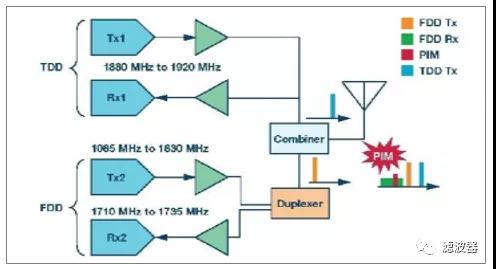
Base station filters mainly include metal coaxial cavity, ceramic dielectric resonance and ceramic dielectric filters.
Comparison of three filters
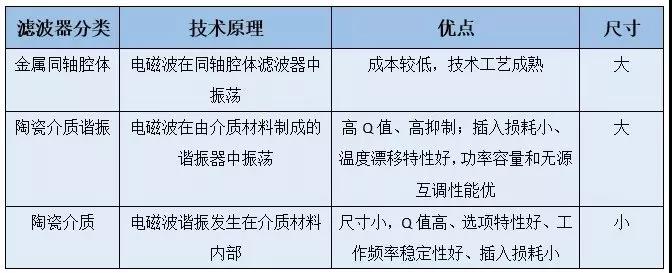
With the advent of the 5G era, a new wave of base station construction will be inevitable, and filters will also usher in a new wave of demand peaks. The previous cavity filters will gradually transform into ceramic dielectric filters.
1. Ceramic dielectric filter production process flow
The production process of ceramic dielectric filters mainly includes powder manufacturing, pressing, sintering, grinding, metallization, assembly and debugging, etc., as shown in the figure:
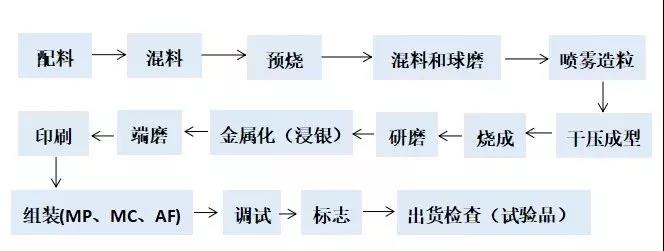
Ceramic dielectric filter production process flow chart
2. Characteristics of ceramic dielectric filters:
2.1 Dielectric filters have high dielectric constant, low loss, small size, and high power for large-scale integration;Small size and easy to install。
2.2 Coverable frequency band bandwidth is wider and can withstand higher power。
2.3 Good reliability: The properties of ceramics are not sensitive to changes in temperature. This is more important outdoors. Unlike cavity filters, the performance changes greatly at high and low temperatures. At the same time, ceramics have good corrosion resistance;
2.4 Dielectric ceramic filters are low cost。
2.5 Dielectric filter performanceDepends on microwave ceramic powder: The electromagnetic wave resonance in the 5G ceramic dielectric filter occurs inside the ceramic dielectric material, and the key material for the production of ceramic dielectric filters is microwave dielectric ceramic powder. Ceramic powder determines the performance of dielectric filters, and the formula and preparation of the powder are very difficult.Main performance indicators of microwave dielectric ceramic powderMust have dielectric constantnumber (εr), quality factor Q and low dielectric loss, resonant frequency temperature coefficient, etc., specifically reflected in:
2.5.1 介电常number: High dielectric constant can realize the design of miniaturized filter size, but the higher the dielectric constant is not, the better. Too high dielectric constant will affect the filter size.affects the transmission loss, so the design requirements of the filter need to be considered to select the appropriate dielectric constant. The dielectric constant of microwave dielectric ceramics mainly depends on the crystal phase in the material structure and the preparation process.
2.5.2 品质因Several Q, low dielectric loss: The higher the quality factor Q, the narrower the passband, the better the circuit selectivity, and the better filtering function can be achieved. The Q value is inversely proportional to the dielectric loss tanδ. The larger the Q value, the lower the filter insertion loss. The material structure is uniform, highly dense, and the grain growth is uniform. Reducing impurities and defects can improve the Q value.
2.5.3 谐振frequency temperature coefficient: The temperature coefficient of the resonant frequency is close to zero, which can achieve high stability and reliability of the filter. The frequency temperature coefficient is mainly determined by the linear expansion coefficient and dielectric constant of the material.
Additional notes:The powder materials currently used to prepare ceramic dielectric filters mainly includeMagnesium hydroxide, magnesium titanate, calcium carbonate, magnesium oxide, barium carbonate, samarium oxide, zinc oxide, strontium carbonate, aluminum oxide, lanthanum trioxidewait.
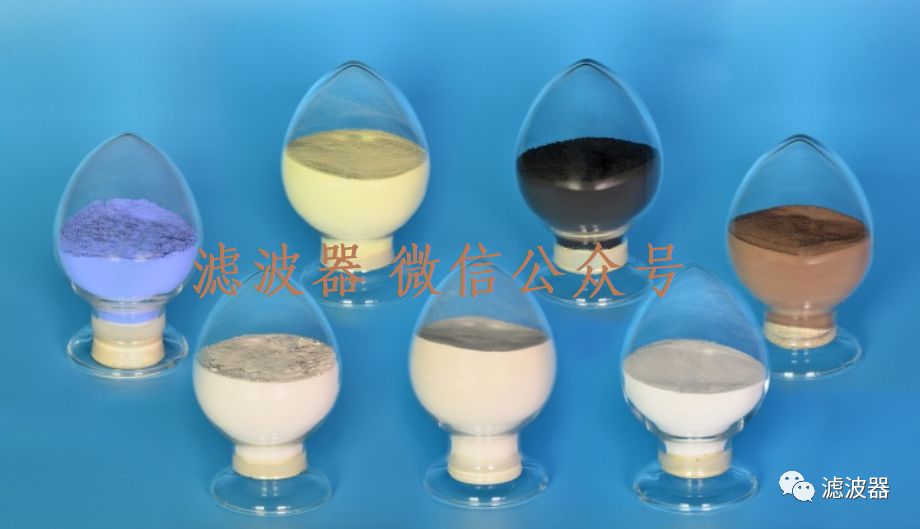
Microwave ceramic powder
3. Advantages of ceramic dielectric filters
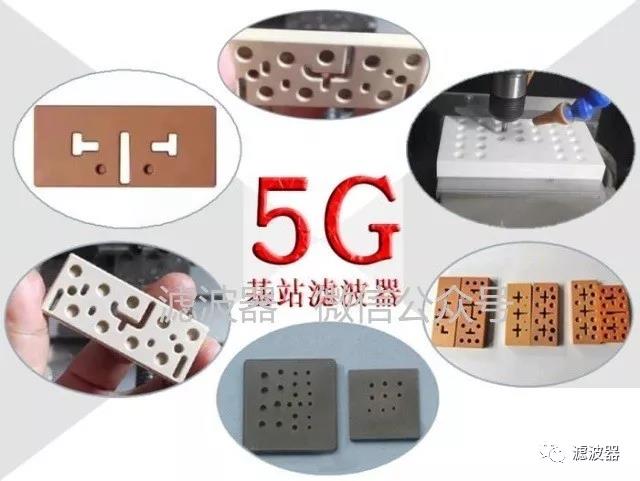
Ceramic dielectric filters are made by dry-pressing and sintering powder, then covered with silver on both sides for electrode metallization, and then polarized by DC high voltage to produce a piezoelectric effect.After deformation on both sides of the ceramic piece, an electric field is generated and has series resonance characteristics.Since the above electromagnetic wave resonance occurs inside the pressure ceramic medium, there is no need to fix the resonator, so the volume of the dielectric filter is small.
On the other hand, because microwave ceramic powder has higher Q-value material properties than metal cavities, it greatly reduces insertion loss. It has the characteristics of high out-of-band suppression, good temperature drift characteristics, wide temperature range, various forms of packaging structures and output interface forms. It meets the development trend of miniaturization of base station filters and becomes suitable for the increase in the number of equipment filters due to the increase in frequency bands and higher requirements for the Q value and power capacity of high-frequency resonators under the 5G technology framework.
4. Disadvantages of ceramic dielectric filters:
4.1 Problems with the consistency of microwave ceramic powder formula and preparation for mass production: During the production process of dielectric filters, efforts must be made to control the process to produce ceramics with fewer impurities, fewer defects, and evenly distributed grains.4.2 The production process of ceramic filters is complex and metallization automation is also difficult.: The specific process includesPowder manufacturing, press molding, sintering, grinding, metallization, assembly and debugging, etc., due to the irreversibility of ceramic grinding, product debugging is the key to improving production capacity. In addition, metallization automation is also a technical difficulty.
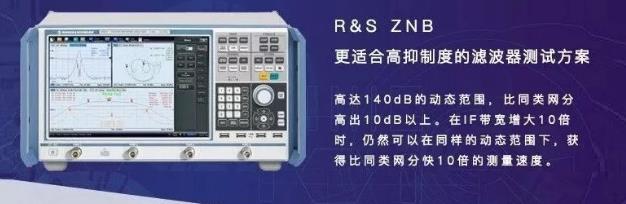
Filter debugging instruments>>>>Network analyzer
5. Development of base station ceramic dielectric filters in the 5G eraWillGradually becoming the mainstream of the filter industry
5.1 Compared with metal cavity filters, ceramic dielectric filters have the advantages of small size, light weight, low loss, and large Q value, and have absolute advantages in applications in the 5G field. At the same time, with the continuous research and development of scientific research and technology, the problems of dielectric filters are gradually being solved, and their practicality continues to increase. With the development of 5G technology, ceramic dielectric filters are expected to keep up with the trend of the times, use their own advantages to better meet the needs of base stations in the 5G era, and gradually surpass cavity filters, thus becoming the mainstream of the industry.
5.2 With the advent of the 5G era, 5G base stations are developing towards miniaturization, lightweight and high integration. The number of antennas used in MIMO technology will increase exponentially, and it is expected that 64 or even 128 antennas will be required. Since each antenna needs to be equipped with a corresponding duplexer, and a corresponding filter is used to select and process the signal frequency, the demand for filters will increase significantly, which places higher requirements on the device size and heating performance of the filter. Due to its large size and high heat generation, cavity filters are difficult to be widely used in high-density antennas and face greater development pressure.Therefore, 5G ceramic dielectric filters will take advantage of their small size and light weight to take the lead in the vast 5G market in the future and willGradually becoming the main player in the filter industryflow.
6. Future prospects of ceramic dielectric filters
At present, Huawei and Ericsson, the world's four largest mobile communication base station equipment manufacturers, tend to use ceramic dielectric filters. ZTE and Nokia currently still focus on miniaturized metal cavity filters. They will transition to ceramic dielectric filters in the future, and the market share of ceramic filters will continue to increase. According to predictions by research institutions, there will be nearly 8.5 million base stations in the world in the 5G era. Based on an estimate of three antennas per base station and 64 filters per antenna, the demand for dielectric filters is about 1.6 billion, and the global market capacity of ceramic dielectric filters is about 56.6 billion yuan.
This article comes from "Filter". If there is any infringement or other issues, please contact us to delete it.Support the protection of intellectual property rights, please indicate the original source and author when reprinting.
Related Recommendations