






















Service Hotline
News

News
5G millimeter wave, what is the transmission power?
2021-12-28
619
What mobile communications have to solve is nothing more than coverage and capacity. In order to solve these two problems, 5G is open to all rivers and uses various frequency bands to learn from each other's strengths. As shown in the figure below, the green ball means that the point source antenna transmits the signal evenly in all directions, and the column in the middle means that the directional antenna transmits the signal concentrated in one direction.
What Mayfly wants to discuss with you in this issue is the basis for achieving both coverage and capacity: the expression of the transmit power of equipment in different frequency bands.
EIRP is used for millimeter wave transmit power?
Isn’t the transmission power expressed in watts? Now let’s invite several contestants to speak at Macro Station (taking Macro Station as an example).700M: My frequency is low and I am good at solving coverage problems. I use a 4T4R RRU with a transmit power of 4x40=160 watts!2100M: My frequency is neither high nor low, and I am good at both coverage and capacity. I also use a 4T4R RRU with a transmit power of 4x60=240 watts!
3500M: My frequency is slightly higher, and the coverage is poor, but the bandwidth and capacity are high! I use a 64T64R AAU with a transmit power of 320 watts!millimeter wave: My name is High Frequency. Although the coverage is weak, the bandwidth is huge and the capacity is super high! I use a 4T4R AAU, which contains a 768 antenna, and the EIRP is 65dBm!Um? This new classmate, you are very trendy. Transmitting power is transmitting power. What the hell is EIRP? We still understand the value of 65dBm, let me convert it into watts for you.65dBm = 3162瓦!
No wonder everyone says that 5G base stations consume electricity. It turns out that the transmission power of millimeter wave AAU is so high!
为什么用EIRP?
millimeter wave: Don’t be surprised, everyone. The full name of EIRP is Effective Isotropic Radiated Power, also called equivalent isotropic radiated power. You all have this indicator too, but it’s just not commonly used.
Antennas must be used to transmit signals. Generally, antennas do not transmit evenly around, but focus the energy in the direction of the main lobe.EIRP represents the signal strength in the direction of the main lobe of the antenna, which is equivalent to how powerful a point source antenna is.
A point source antenna is an imaginary point-shaped antenna that continuously and evenly spreads signals around. It is also called an isotropic antenna.
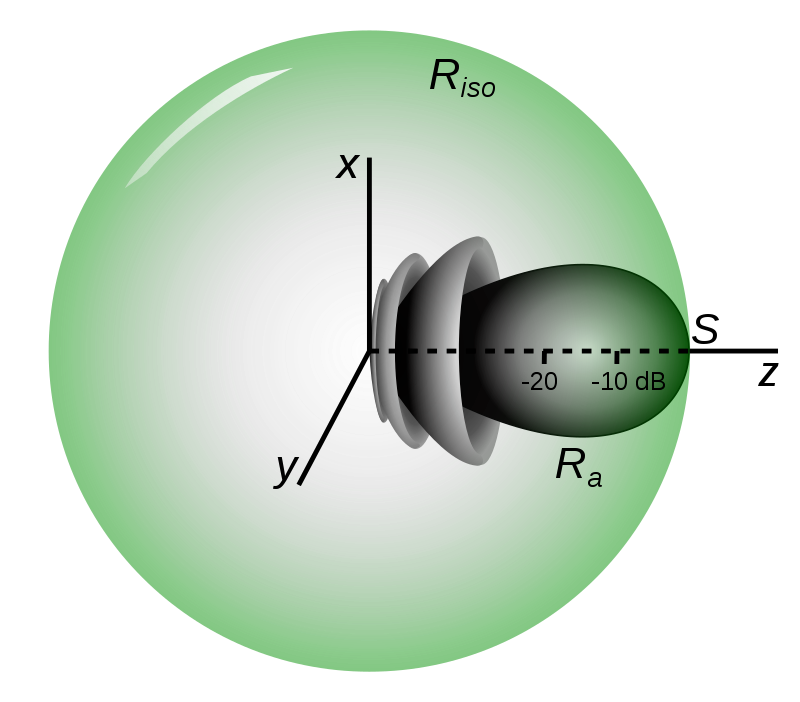
It can be seen that with less power, directional antennas can transmit signals as far away as point source antennas. Therefore, although the value of EIRP looks large, the actual emitted power is not large.
700M/2100M/3500M: Wait a minute, we are talking about the transmit power of RRU or AAU. You seem to be talking about the gain of the antenna. We understand this. The unit is dBi. What does it have to do with EIRP?millimeter wave: Take a look at the picture below and you will understand!
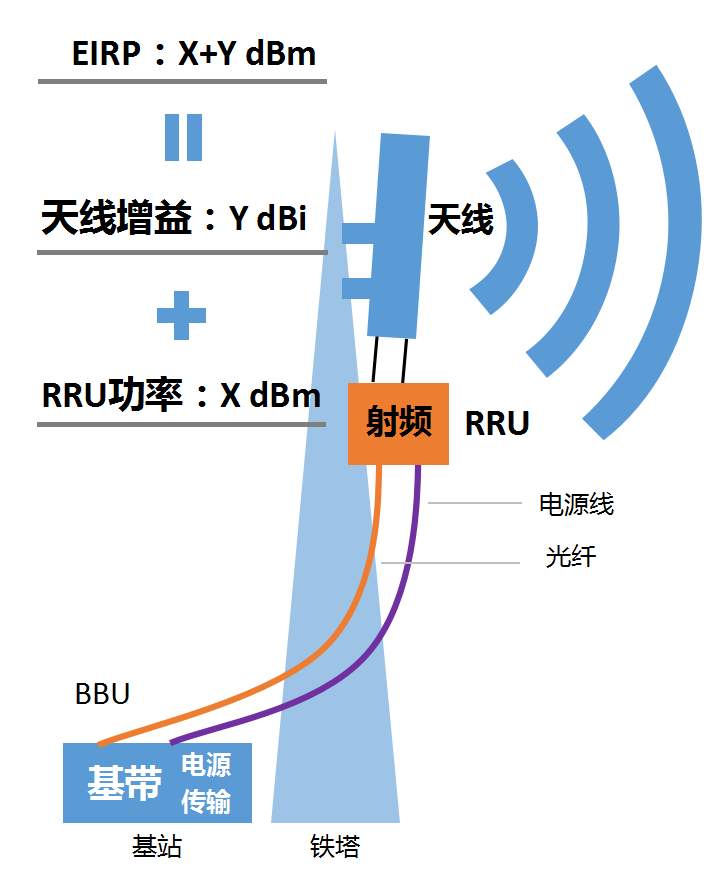
The unit of antenna gain dBi refers to how many times the signal of the antenna's main lobe is stronger than a point source antenna of the same power. But this is a relative value, and if the antenna is not connected to the RRU, it will not be able to transmit signals, and it is impossible to talk about how much power it will have.
To see how much power is transmitted, you have to take the RRU into consideration. The result is roughly like this: the RRU transmit power is x dBm, and the concentration of the antenna in the main lobe direction is y dBi. Taken together, it is equivalent to a point source antenna of x + y dBm!That is to say,EIRP = RRU transmit power + antenna gain。
Now the problem is very clear. For traditional RRU, it does not have an antenna itself, so it can only be measured by transmit power, which is customarily expressed in watts.
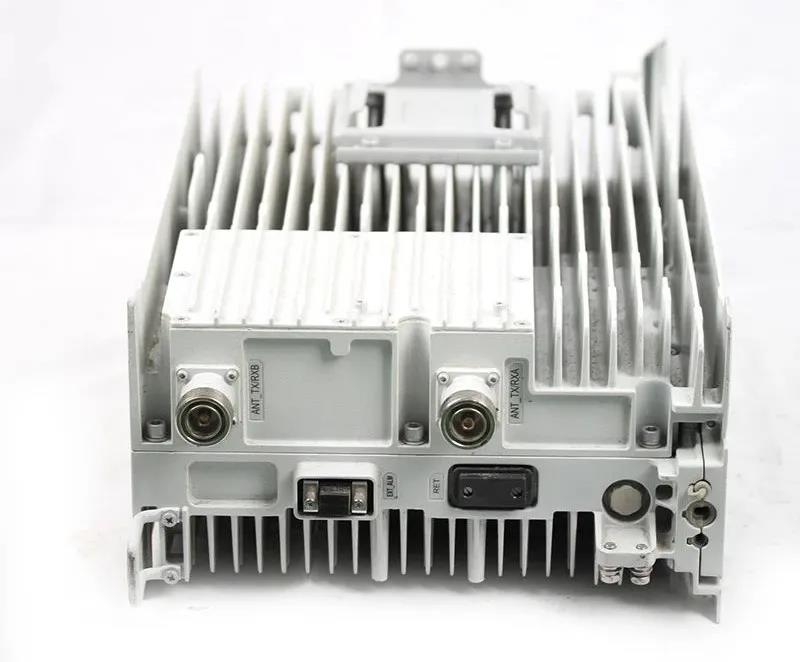
For mid-frequency (2600M or 3500M) AAUs, although the equipment is a combination of RRU and antenna, the antenna can be removed, and the transmit power of the rear radio frequency interface can also be measured. Therefore, there is nothing wrong with expressing the transmit power in watts. It is also okay to separate the gain of the antenna.
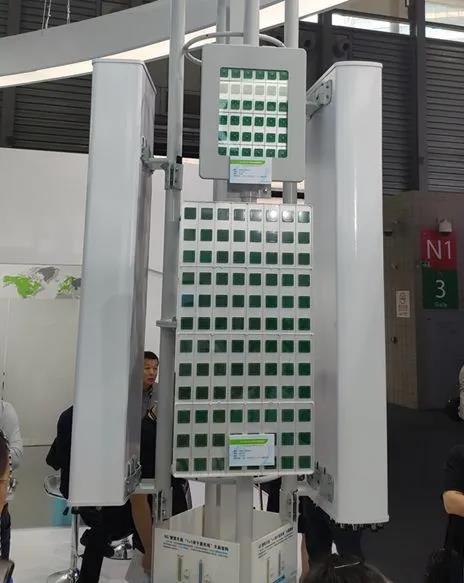
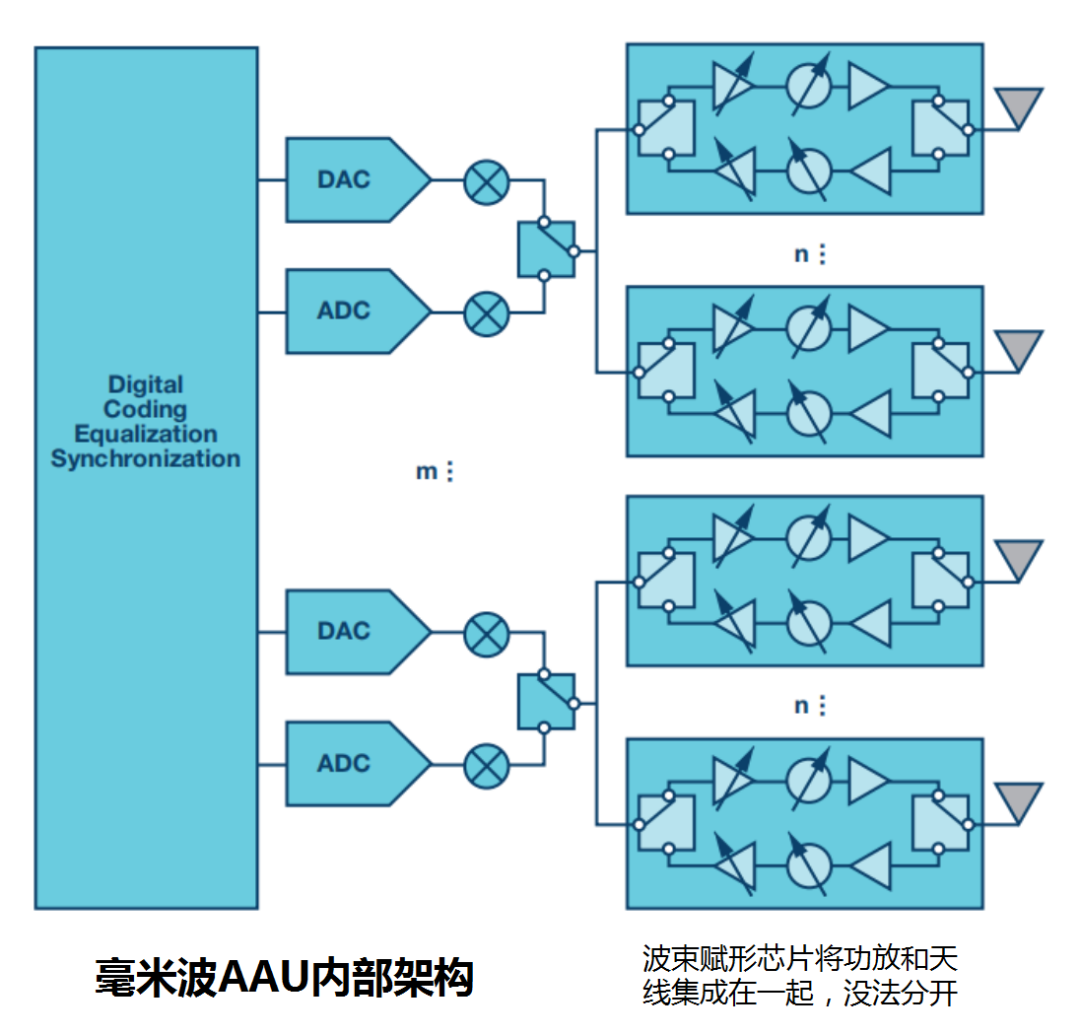
Therefore, millimeter wave AAU can only test the signal strength emitted from the antenna through air propagation, and of course it can only be expressed by EIRP. This testing method is also logically called OTA (Over The Air) testing.
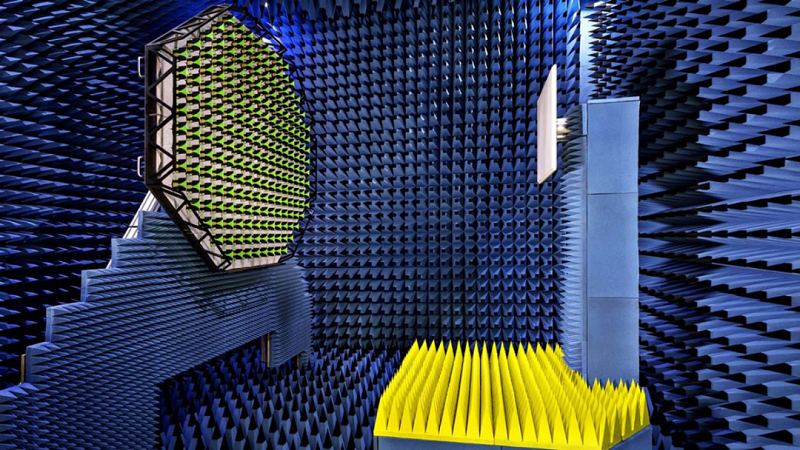
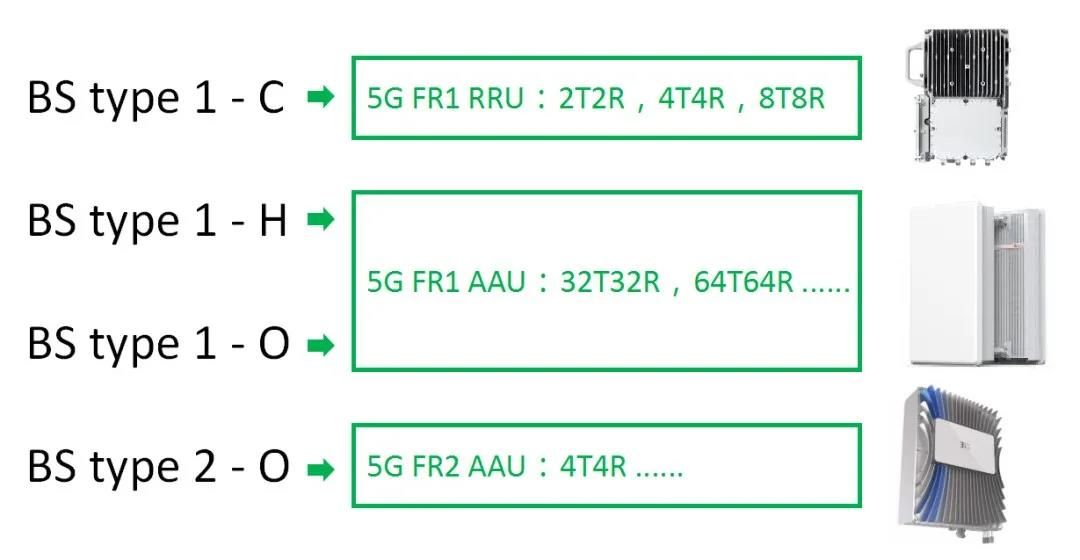
Due to the differences between millimeter waves and other frequency bands, 3GPP has long defined a series of codes to distinguish the expression and testing methods of different types of base station power.
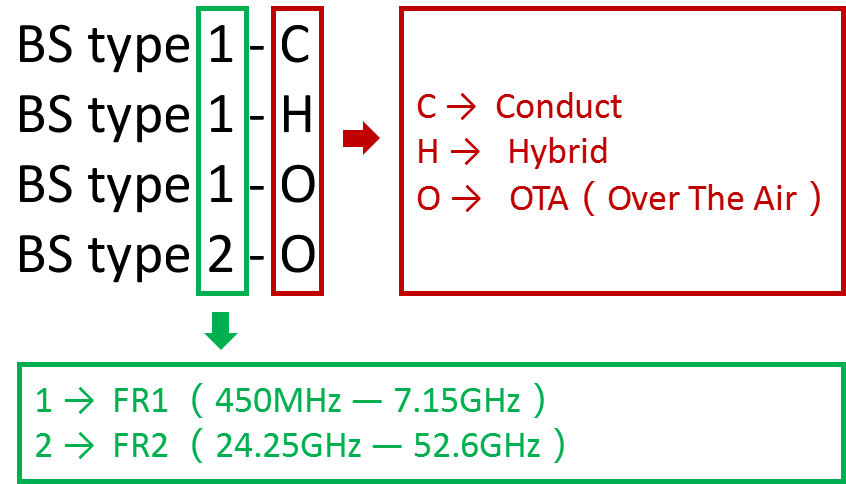
The following 1 and 2 represent different frequency bands. 1 represents FR1, which is the Sub6G frequency band, and 2 represents FR2, which is the millimeter wave frequency band.What remains is the last bit of the core code, where C stands for Conduct, which means that traditional RRU testing can test the transmit power through cable connections.H stands for Hybrid, which means mixed, that is, for mid-frequency (2600M or 3500M) AAU, the antenna can be removed and the power is tested like an ordinary RRU, and the antenna must be installed to test other indicators.O stands for Over the air or OTA, which is the millimeter wave AAU method. RF and antenna are inseparable, and all indicators (the most important one is EIRP) can only be tested through air propagation.
However, this 2 watt cannot be tested, cannot be reflected externally, and has no display significance, so the millimeter wave transmit power only reflects EIRP.
Okay, that’s it for this issue, I hope it’s helpful to everyone.
Related Recommendations