






















Service Hotline
News

News
Understand 5G radio frequency black technology in one article: the complexity is terrifying, on par with baseband
2021-12-28
742
Mobile phones, as a standard feature in the mobile Internet era, have entered every one of our lives. With it, we can chat, shop, watch TV shows as we like, and enjoy a wonderful life.
Because mobile phones are so important, people pay great attention to the development of related technologies. Whenever a new product is released, the media will carry out lengthy reports, and there will also be heated discussions on social networks.
However, people's attention to mobile phones often focuses on the CPU, GPU, baseband, screen, and camera. There is such a special component that is extremely important for mobile phones, but few people pay attention to it.
Which part is it? Yes, it is the protagonist of our article today - radio frequency.

▉what is radio frequency
Radio frequency, the English name is Radio Frequency, which is the familiar RF. Literally speaking, Radio Frequency means radio frequency. Radio frequency signals specifically refer to radio electromagnetic waves with a frequency range of 300KHz~300GHz.
As we all know, the reason why mobile phones can communicate with base stations relies on sending and receiving radio electromagnetic waves to each other.
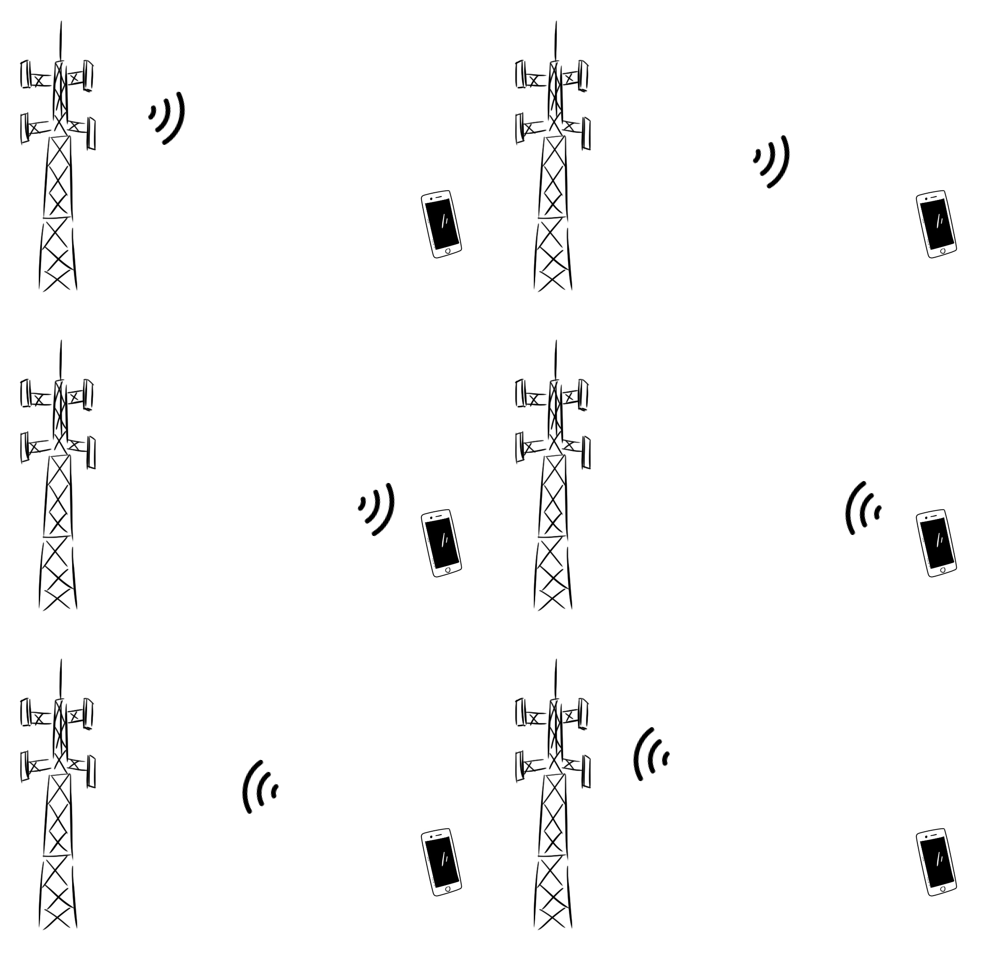
A series of circuits, chips, components, etc. in a mobile phone that are specifically responsible for sending and receiving radio electromagnetic waves are collectively called a radio frequency system, or "radio frequency" for short (the same below).
Radio frequency and baseband are the cornerstones of mobile phone communication functions. If we regard the communication between the mobile phone and the outside world as an "express service", then the baseband's responsibility is to "package/unpack" the data. The responsibility of radio frequency is to transmit/receive "packages" through the designated radio frequency band.
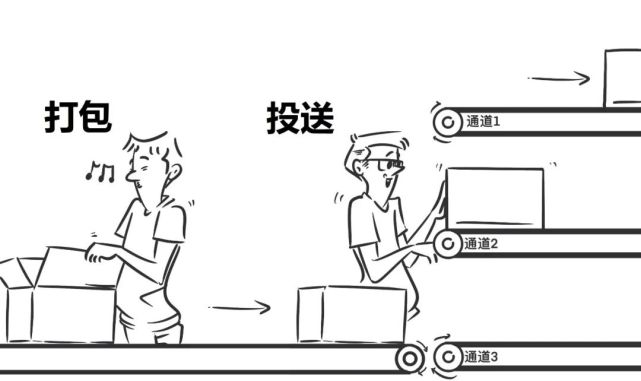
Schematic diagram: Baseband on the left and RF on the right
What does radio frequency look like? The picture below is the front and back layout of the main circuit board of a certain brand of mobile phone.
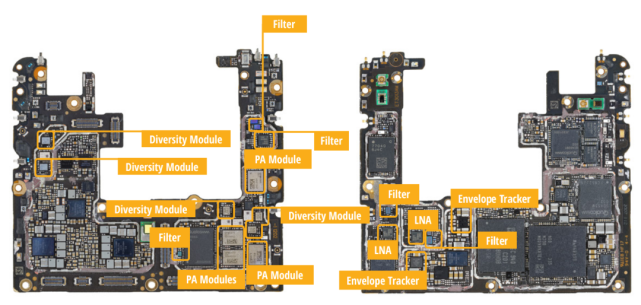
(图片来自ABI Research)
In the picture, the parts circled in yellow all belong to radio frequency. It can be seen that radio frequency components occupy a large proportion in the structure of mobile phones.
From an architectural point of view, a complete radio frequency system includes three parts: radio frequency transceiver, radio frequency front-end, and antenna. The RF front-end also includes multiple components such as power amplifiers, envelope trackers, low-noise amplifiers, filters, antenna switches, and antenna tuners.
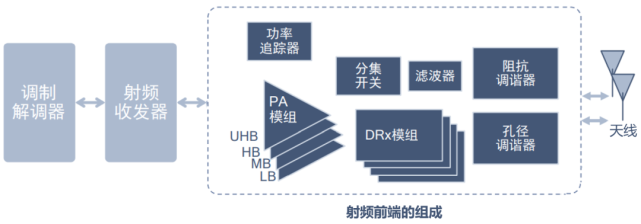
RF architecture
The functions of each component of the RF front-end are not complicated. For example, the amplifier is to amplify the signal so that the signal can be transmitted farther; the filter is to remove the clutter and make the signal more "pure"; the antenna switch is used to control the opening and closing of the antenna; the main function of the antenna tuner is to "play with" the antenna to obtain the best transceiver effect...
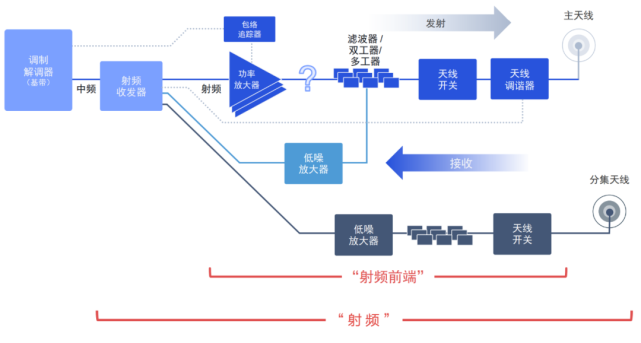
A large number of radio frequency components cooperate with each other and work together to complete the "final step" and transmit the data packaged by the baseband "biu~biu~biu~".
If the radio frequency design is unreasonable and the component performance falls behind, it will directly affect the mobile phone's wireless signal sending and receiving capabilities, thereby affecting the mobile phone's communication capabilities. The specific manifestations are poor wireless signal, short communication distance, slow network speed, etc.
In other words, if the radio frequency capability of a mobile phone is not good, it is like a car with insufficient power. No matter how fancy other functions are, it will not be accepted by users.
Therefore, when mobile phone manufacturers develop and design mobile phones, they usually put a lot of effort into radio frequency, repeatedly deliberate and conduct testing and verification before they dare to launch the final product.
▉5G radio frequency challenges
Today, we are entering the 5G era with our heads high. Compared with traditional 4G, are there any changes in the radio frequency system of 5G?
The answer is yes. Not only is there a change, it is a sea change.
Compared with 4G, 5G has greatly improved its performance indicators. The eMBB (enhanced mobile broadband) scenario of 5G increases mobile phone speeds to Gigabit or even 10 Gigabit levels, which are respectively 10 times/100 times the early LTE rate (100Mbps).
2G/3G/4G, plus 5G, plus MIMO (multi-antenna technology), plus dual-SIM dual-standby, double the number of antennas and supported frequency bands of mobile phones. In the early days of 4G, there were less than 20 frequency band combinations. In contrast,5G has more than 10,000 frequency band combinations, the complexity is terrifying.
At the same time, in order to ensure that users are willing to upgrade (tāo) (qián), the thickness and weight of 5G mobile phones cannot be increased, power consumption cannot be increased, and the standby time cannot be reduced.
If you were a mobile phone manufacturer, would you go crazy?
Therefore, the radio frequency of 5G mobile phones must reinvent itself and vigorously create miracles and innovation.
How to solve the design problems of radio frequency system? Qualcomm proposed a macro idea and directly provided "complete modem and radio frequency system." Popular understanding means that the baseband, RF transceiver, RF front-end, antenna module, software framework, etc. are all completed and a complete solution is provided to the manufacturer.
In other words, the concept of designing terminal components such as 5G mobile phones must abandon the previous idea of "buying a horse in the east market, a saddle in the west market, a bridle in the south market, and a whip in the north market" and focusing on individual components, and instead adopt an integrated system-level solution of "package design".
For example, in the past, Factory A made the baseband, Factory B made the RF, Factory C made the antenna, and then the mobile phone Factory D figured out how to integrate and connect them. Nowadays, powerful manufacturers directly package and design the baseband, radio frequency and antenna, etc., and then hand them over to the mobile phone manufacturers, so that they can be used quickly.
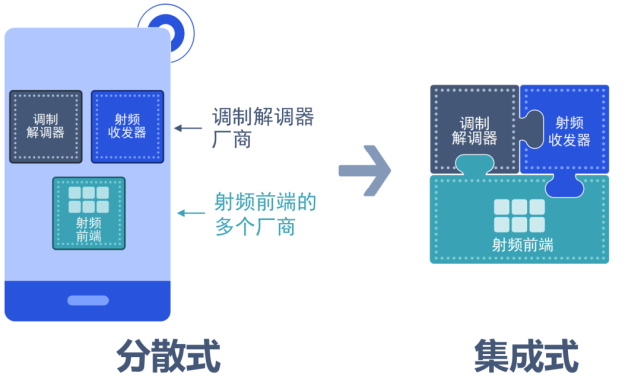
System-level integration is the inevitable result of the substantial increase in the complexity of 5G baseband and radio frequency.
It's like a train. In the past, the speed of green leather cars was slow, and the carriage and front of the car could be designed and manufactured separately, and then run together. However, in the era of high-speed rail, the speed indicators have doubled. If they continue to be designed and manufactured separately, the carriages and the locomotive cannot be deeply coordinated. Not only will the speed indicators be difficult to achieve, but safety issues may also arise.
Therefore, high-speed rail EMUs are usually designed and manufactured in a unified manner.
In other words, in the face of the harsh 5G indicators mentioned above, it is necessary to conduct an overall design of baseband and radio frequency from the perspective of system-level integration. In this way, the two can achieve perfect software and hardware synergy and achieve optimal performance (throughput rate, coverage, etc.).
In addition to achieving the indicators, the integrated design also helps reduce the final size of the system and reduces the space occupied by the mobile phone. For system power consumption and heat dissipation control, integrated design also has obvious advantages.
Last but not least, providing system-level integration solutions can reduce the design difficulty of mobile phone manufacturers, allowing them to launch products faster and seize the market.

▉5G radio frequency black technology
Let’s take a closer look at the interesting black technologies of system-level integrated 5G radio.
First of all, the first black technology is broadband envelope tracking.
When I introduced the radio frequency architecture earlier, there was a power tracker in it. Power trackers are used with power amplifiers.
The power amplifier is the core component of radio frequency. It is like a speaker, turning small sounds (signals) into loud sounds (signals).

If you want to blow the trumpet, you definitely need to work hard (power supply). The function of the power tracker is to control the intensity (power) of blowing the horn.
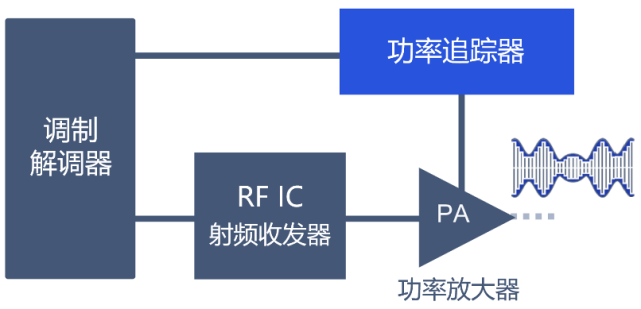
The traditional blowing method is the APT method, which is average power tracking. Within a certain period of time, the blowing force remains constant.
And wideband envelope tracking (ET) technology allows precise control of power. In other words, the baseband (modem) can control the envelope tracker in the radio frequency according to changes in the signal, thereby accurately controlling the transmission power of the wireless signal.
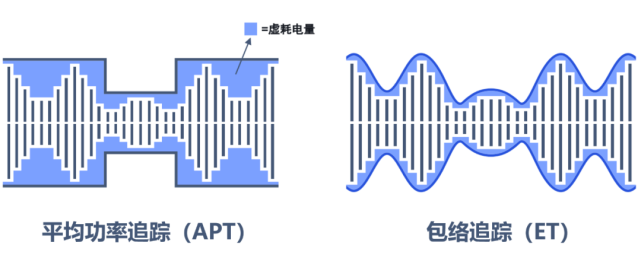
The wasted power consumption of envelope tracking is significantly less than that of traditional average power tracking.
(Image from Qualcomm)
In this way, physical strength (energy) is greatly saved, radio frequency power consumption is reduced, and the standby time of the mobile phone is increased.
Precise transmission power control helps mobile phones obtain the best signal transmission efficiency, thereby obtaining better channel quality. During the "two-way communication" process between the mobile phone and the base station, when the mobile phone obtains better channel quality, the base station can support the mobile phone to achieve better uplink and downlink services, such as supporting 2×2 MIMO, and the network speed is smoother. In addition, better channel quality also creates conditions for the base station side to allocate higher-order modulation methods (such as 256QAM) to mobile phones, which can improve mobile phone throughput and support faster and better data transmission services.
Several generations of Snapdragon 5G modems and RF system-integrated broadband envelope trackers previously released by Qualcomm have already adopted the above technology. Its latest broadband envelope tracker, QET7100, has a 30% improvement in energy efficiency compared with the most advanced products currently provided by other manufacturers on the market.
The second black technology we introduced is AI-assisted signal enhancement technology.
This technology is the latest new technology released in the Snapdragon X65 5G modem and radio frequency system that was just launched in February. It is also the first time in the industry that hot AI technology has been introduced into the mobile phone radio frequency system to enhance the signal.
The core of AI-assisted signal enhancement technology is to introduce AI technology into the antenna tuning system. There are two methods of antenna tuning, one is impedance matching and the other is aperture tuning.
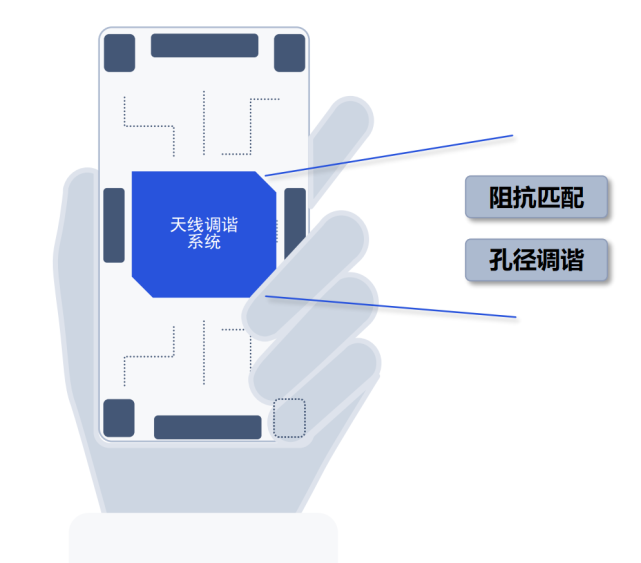
Let's look at impedance matching first.
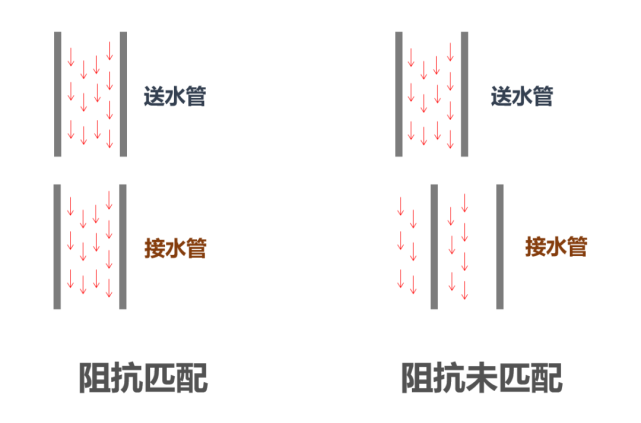
The so-called impedance matching can be understood as a kind of "water pipe" work.
The connection between RF system components and the antenna is like the connection between two water pipes. When the impedances are consistent, the positions correspond perfectly. At this time, the water flow is largest and the signal efficiency is the highest. If the impedance of the component shifts, the water pipe will be crooked, the water flow will be small, and part of the water flow will be wasted.
There are many reasons for impedance changes, such as hand touch, plugging in data lines, installing mobile phone cases, etc. Even different holding gestures (left hand, right hand, one hand, two hands) will bring different impedances.
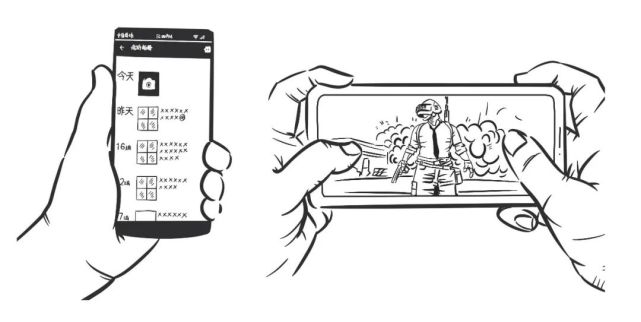
The traditional impedance matching method is to test various causes of impedance changes in the laboratory to find the antenna characteristic values, and then control the radio frequency components through the modem to adjust the impedance so that the water receiving pipe is aligned with the water supply pipe as much as possible.
The AI-assisted signal enhancement technology introduces AI algorithms to conduct big data analysis and machine learning on the antenna characteristic values due to various impedance changes to achieve intelligent adjustment of impedance and achieve the most perfect matching effect.
To put it bluntly, it is a bit like installing a butt hose between the water supply pipe and the water receiving pipe to prevent the water flow from being wasted as much as possible.
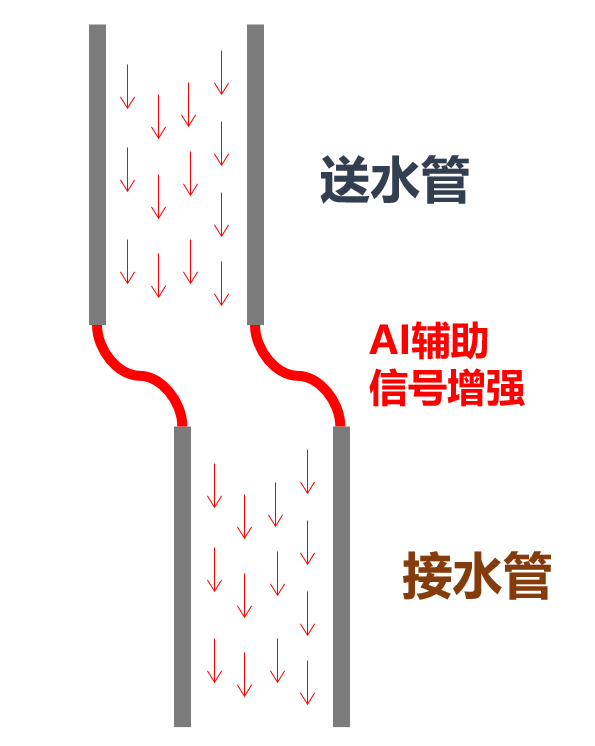
AI-assisted signal enhancement is equivalent to the docking hose between the radio frequency and the antenna
Aperture tuning is relatively simple, just adjust the electrical length of the antenna.
From a radiological perspective, the perfect length of an antenna would be one quarter of the wavelength. Today's mobile phones, due to full Netcom, dual-SIM dual-standby and other reasons, the working frequency of the mobile communication system changes dynamically. For example, sometimes it works at 2.6GHz and sometimes it works at 3.5GHz.
If the operating frequency changes, it means that the optimal wavelength also changes. Therefore, it is necessary to tune the aperture of the antenna, adjust the length of the antenna, and lengthen the wave peak to achieve the best effect.
All in all, the main function of antenna tuning technology based on impedance matching and aperture tuning is to overcome the impact of the external environment on the antenna signal, dynamically adjust the signal, and improve the user experience.
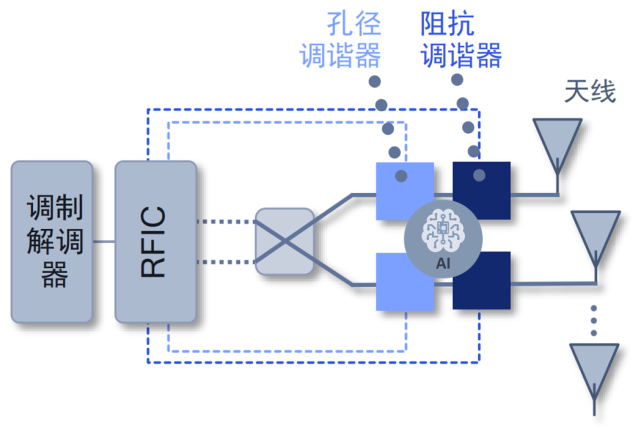
According to actual verification, with AI-assisted signal enhancement technology, the system's situational awareness accuracy can be improved by 30%, which can significantly reduce the call drop rate and improve speed, coverage and battery life.
▉Conclusion
There are many innovative black technologies for 5G radio frequency systems, such as multi-carrier optimization, decoupling tuning, multi-SIM card enhanced concurrency, etc. These black technologies are all the results of technological innovation. They condensed the wisdom of engineers and laid the foundation for the smooth launch of 5G terminals.
Today's 5G radio frequency is no longer an auxiliary to the baseband, but an important mobile phone component that can be on an equal footing with the baseband and complement each other.
With the continuous deepening of 5G network construction, in addition to mobile phone communications, more and more 5G vertical industry application scenarios have begun to come into being. The forms of 5G terminals will become diverse, and a greater test will be placed in front of the 5G radio frequency front-end.
What new tricks will 5G radio frequency play by then? Let’s wait and see!
This article comes from "Electronic Engineering World”, if there is any infringement or other issues, please contact us to delete it.Support the protection of intellectual property rights, please indicate the original source and author when reprinting.
Related Recommendations