






















Service Hotline
News

News
The evolution of Wi-Fi technology
2021-12-28
664
The standard has continued to evolve over the past 20 years by introducing new protocols such as 802.11n, 802.11ac and 802.11ax (Wi-Fi 6). The new standard supports higher order modulation schemes such as 64 QAM, 256 QAM, and 1024 QAM. These new standards support the simultaneous transmission of multiple data streams to a single client or multiple clients; in addition to increasing peak data rates, efforts are also made to enhance spectral efficiency, which characterizes how well a system utilizes the available spectrum. To improve network efficiency and network capacity, multi-user technologies such as multi-user multiple input multiple output (MU-MIMO) and orthogonal frequency division multiple access (OFDMA) have been introduced. Once the Wi-Fi (802.11) standard was released and implemented, the world began to change as the market opened up and new technologies emerged. Each new standard builds on the previous one with improvements in speed and reliability.
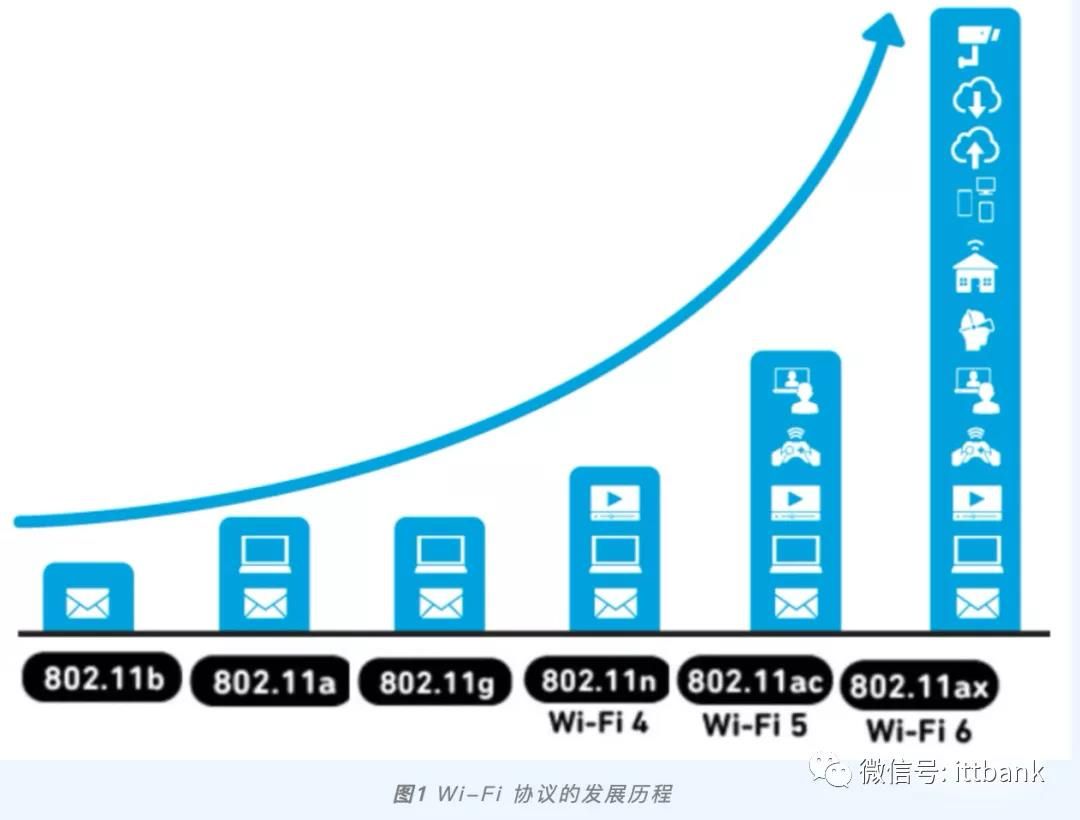
Wi-Fi standards
If you’re looking to purchase a new wireless network device or mobile device, you can be overwhelmed by the many choices and abbreviations. Since Wi-Fi was first released to consumers in 1997, its standards have continued to evolve, often resulting in faster speeds and greater network/spectrum efficiency. As more features were added to the original 802.11 standard, its corresponding supplementary standards (802.11b, 802.11g, etc.) also became known. Table 1 lists the different standards and the maximum theoretical data rates that can be achieved based on these standards. Typical rates will be lower than theoretical values due to a variety of factors, including signal attenuation over distance, modulation rate and forward error correction coding, bandwidth, MIMO multipliers, guard intervals, and typical error rates. The 802.11 family consists of a family of half-duplex over-the-air modulation technologies that use the same basic protocol. In this article, we’ll discuss the basics of each Wi-Fi standard.
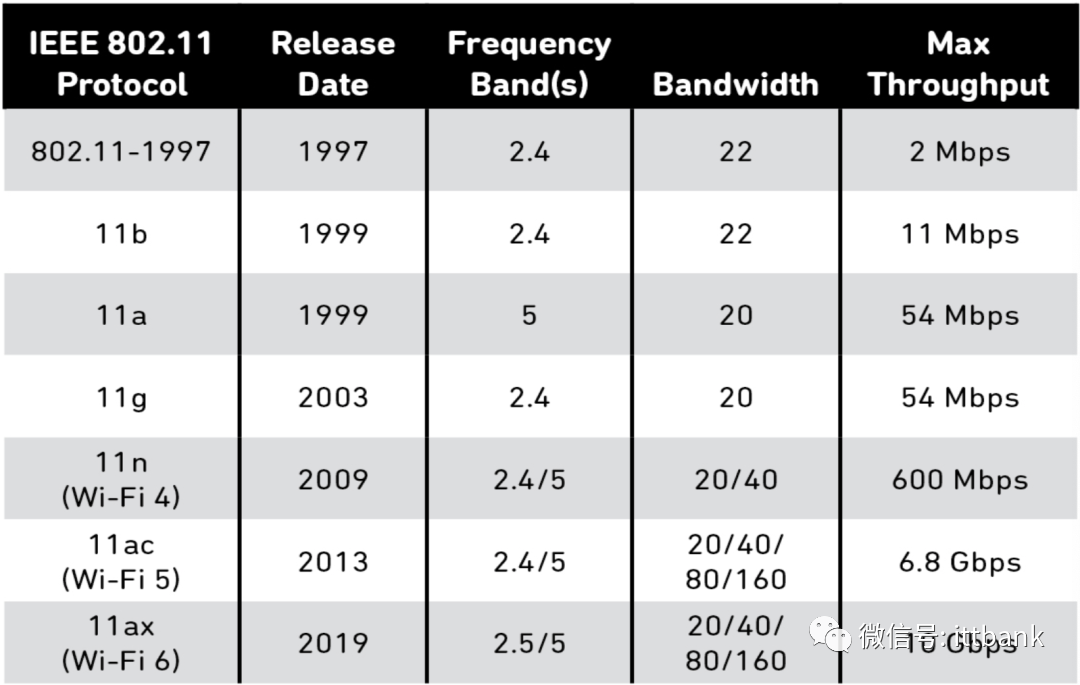
Table 1Wi-Fi History
>> 802.11-1997 standard
802.11-1997, the first wireless standard in the family, was released in 1997 but is now obsolete. This standard defines protocols and compatible interconnections for over-the-air data communications equipment in Carrier Sense Multiple Access Protocol (CSMA/CA) local area networks (LANs) with collision avoidance. The protocol supports three physical layer technologies, including infrared operating at 1 Mbps, frequency-hopping spread spectrum (FHSS) that supports 1 Mbps and optional 2 Mbps data rates, and direct sequence spread spectrum (DSSS) that also supports 1/2 Mbps data rates. The protocol was not widely accepted due to interoperability issues, cost, and lack of sufficient throughput.
>> 802.11b standard
802.11b products hit the market in mid-1999. It has a maximum theoretical data rate of 11 Mbps and uses the same CSMA/CA media access as defined in the original standard. The dramatic improvements in 802.11b throughput coupled with significant price reductions have led to widespread acceptance of 802.11b as a wireless technology. 802.11b uses the ISM unlicensed frequency band of 2.4~2.5 GHz, is a direct extension of DSSS, and uses complementary code keying (CCK) as its modulation technology. 802.11b is used in point-to-multipoint configurations where an access point communicates with mobile clients within range of the access point.
This range depends on the RF environment, output power, and receiver sensitivity. 802.11b has a 22 MHz channel bandwidth and can operate at 11 Mbps, but scales down to 5.5 Mbps, to 2 Mbps, and to 1 Mbps (adaptive rate selection) to reduce replay rates due to errors [1]. The 802.11b standard shares the same frequency bandwidth as other wireless standards. Therefore, wireless devices in the home such as microwave ovens, Bluetooth devices, and cordless phones can cause interference to Wi-Fi.
>> 802.11a standard
802.11a uses the same core protocol as the original standard, operates at 5 GHz, uses 52 subcarriers Orthogonal Frequency Division Multiplexing (OFDM), and has a maximum theoretical data rate of 54 Mbps, resulting in a practical throughput of 20 Mbps. Other data rates it supports include 6, 9, 12, 18, 24, 36 and 48 Mbps. 802.11a and 802.11b do not interoperate because they operate in different unlicensed ISM bands. As the 2.4 GHz band becomes increasingly crowded, the 5 GHz band adds significant advantages to 802.11a, but the overall effective range is smaller than 802.11b/g due to the high carrier frequency.
802.11a products were initially not widely accepted due to cost factors, poor coverage, and incompatibility with 802.11b. Of the 52 OFDM subcarriers, 48 are used for data and 4 are pilot subcarriers, with carrier spacing of 312.5 kHz. Each of these subcarriers can be BPSK, QPSK, 16 QAM, or 64 QAM. Channel bandwidth 20 MHz, occupied bandwidth 16.6 MHz; symbol duration 4 microseconds, including 0.8 microsecond guard interval. The advantages of OFDM include reducing multipath effects in reception and improving spectral efficiency [2]. Table 2 lists the different modulations supported by 11a and their respective theoretical data rates.
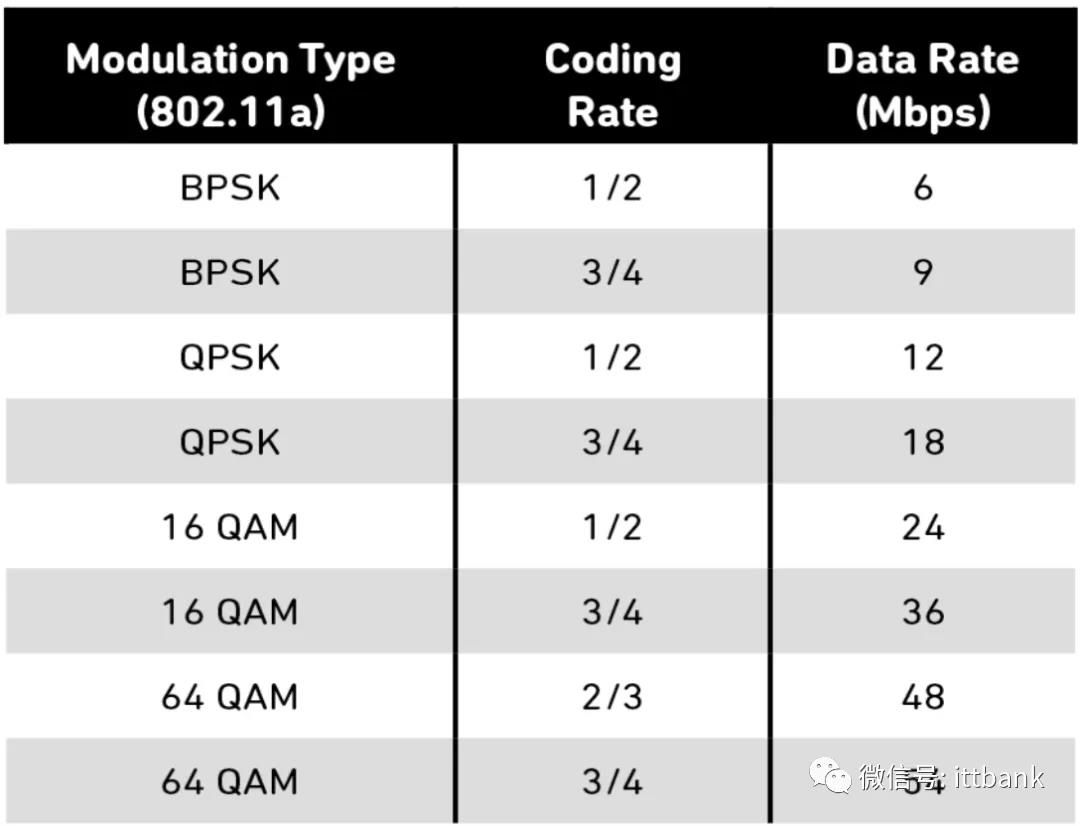
Table 2802.11a modulation rate and data rate with 20 MHz channel spacing
>> 802.11g standard
802.11g became available in the summer of 2003. It uses the same OFDM technology as 802.11a, and like 802.11a supports a maximum theoretical rate of 54Mbps; but like 802.11b, it operates at the crowded 2.4 GHz and is therefore susceptible to interference and other factors. 802.11g is backward compatible with 802.11b (i.e., 802.11b devices can connect to 802.11g access points). 802.11g is compatible with dual-band or dual-mode access points that use 802.11a and 802.11b/g.
>> 802.11n standard
The introduction of 802.11n made Wi-Fi faster and more reliable; this advancement was achieved by adding MIMO and 40 MHz channels to the physical layer (PHY) and frame aggregation to the MAC layer. MIMO is a method of doubling the capacity of a wireless link by using multiple transmit and receive antennas to take advantage of multipath propagation. These antennas need to be spatially separated so that the signals from each transmit antenna to each receive antenna have different spatial characteristics so that these streams can be separated into parallel independent channels at the receiver.
Channels operating at 40 MHz bandwidth can be doubled in width and achieve twice the PHY data rate on a single 20 MHz channel. The 802.11n draft allows up to 4 spatial streams with a maximum theoretical throughput of 600 Mbps.
The 20 MHz channel has 56 OFDM subcarriers, 52 for data and 4 for pilot, with carrier spacing of 312.5 kHz. Each of these subcarriers can be BPSK, QPSK, 16 QAM, or 64 QAM. The total symbol duration is 3.6 or 4 microseconds, including a guard interval of 0.4 or 0.8 microseconds respectively. Table 3 lists the different modulation and coding schemes for a single data stream (for multiple data streams, the data rate is a multiple of the number of streams). 802.11n supports frame aggregation, where multiple MAC Service Data Units (MSDU) or MAC Protocol Data Units (MPDU) are packed together to reduce overhead and average it over multiple frames to increase user-level data rates. Additionally, 802.11n is backwards compatible with 802.11g, 11b, and 11a[3]. Qorvo has been a leading supplier of 802.11n components, including power amplifiers, low-noise amplifiers, switches and integrated front-end modules (FEMs).
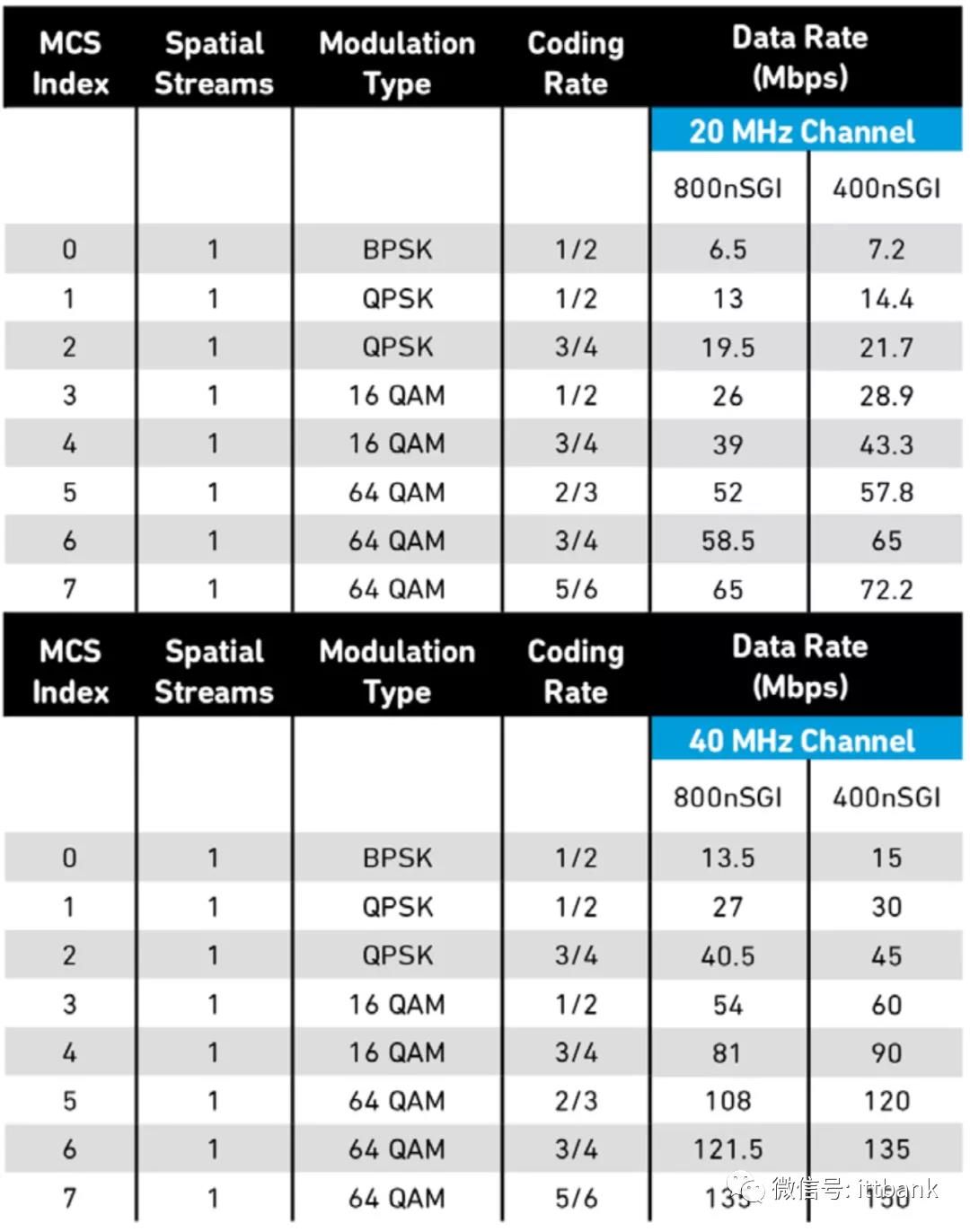
Table 3802.11n Modulation and Data Rate for a Single Data Stream
>> 802.11ac standard
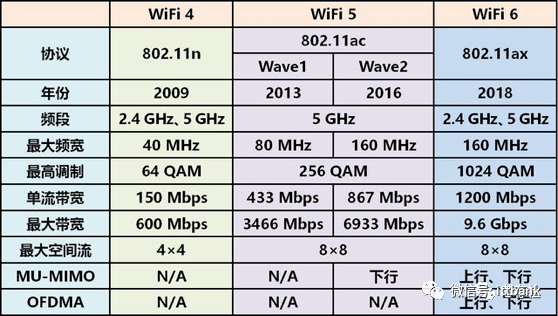
802.11ac speeds up Wi-Fi by delivering gigabits per second by extending the 802.11n concept to include wider bandwidth (up to 160 MHz), more MIMO spatial streams (up to 8), downlink multi-user MIMO (up to 4 clients), and high-density modulation (up to 256 QAM). 802.11ac supports 256 QAM at 3/4, 5/6 code rates (MCS8/9), which requires a more stringent 6 dB system-level EVM (-34 dB) requirement. Qorvo's 11ac components easily meet these EVM requirements. 802.11ac only operates in the 5 GHz band, so dual-band access points and clients will continue to use 802.11n at 2.4 GHz. The first 802.11ac releases in 2013 supported only 80 MHz channels and up to 3 spatial streams, delivering speeds of up to 1300 Mbps at the physical layer. The second wave of products (802.11ac Wave 2) was released in 2015 and supports more channel bonding, more spatial streams and MU-MIMO. MUMIMO is a major advancement over 802.11ac—while MIMO directs multiple streams to a single user, MU-MIMO can direct spatial streams to multiple clients simultaneously, improving network efficiency. Additionally, 802.11ac uses a technology called beamforming; with beamforming, an antenna basically beams a radio signal to a specific device. 802.11ac routers are backward compatible with 802.11b, 11g, 11a, and 11n, which means that all legacy clients will work correctly with 802.11ac routers[4].
>>Wi-Fi 6 或 802.11ax standard
802.11ax is the sixth generation of Wi-Fi that builds on the strengths of 802.11ac to deliver greater wireless capacity and reliability. 802.11ax achieves these advantages by applying denser modulation (1024 QAM, OFDMA), reducing subcarrier spacing (78.125 kHz), and based on scheduled resource allocation. Unlike 802.11ac, 802.11ax is a 2.4 and 5 GHz dual-band technology and is designed for maximum compatibility to efficiently coexist with 802.11a/g/n/ac clients. 802.11ax uses OFDMA, which allows resource units (RUs) to divide bandwidth based on client needs and deliver the same experience to multiple users at faster speeds. At any given point on the carrier in each PLCP protocol data unit (PPDU) in 802.11ac, the Wi-Fi channel is broken down into a smaller set of OFDM sub-channels. However, due to OFDMA (802.11ax), each subcarrier group is allocated to the client as a resource unit on a per PPDU basis (Figure 2).
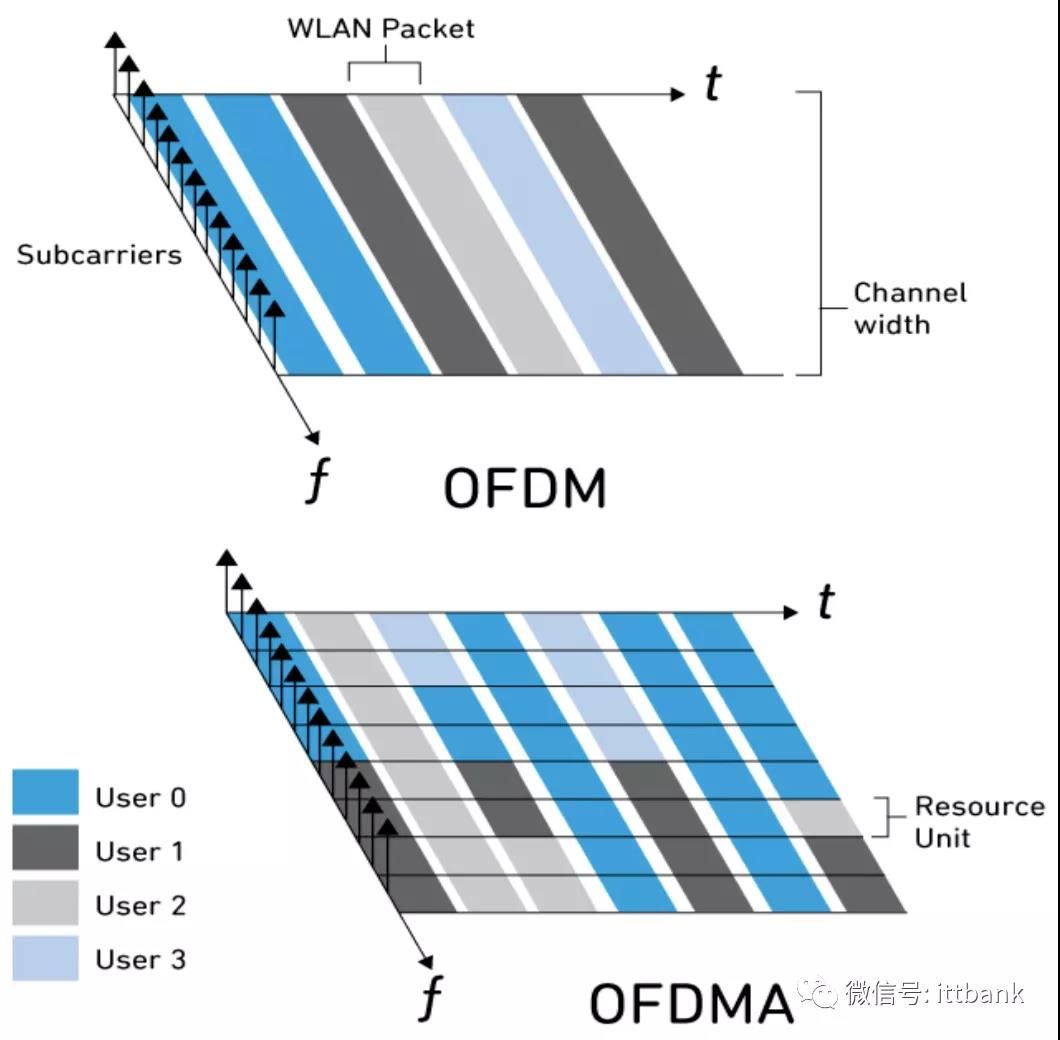
图2 OFDM and OFDMA resource allocation comparison
In the CSMA/CA approach of the early 802.11 standard, the wireless client first sensed the channel and transmitted only when it sensed the channel was idle, thereby trying to avoid collisions. While this clear method of evaluating and avoiding conflicts is useful, it becomes inefficient when the number of clients grows very large. The 802.11ax protocol solves this problem through OFDMA and scheduling-based resource allocation [5]. 802.11ax access points dictate when the device operates, so it handles clients more efficiently. Resource scheduling can also significantly reduce power consumption during sleep times, thereby improving client battery life. Table 4 lists the differences between the 802.11ac and 802.11ax protocols. Qorvo's broad 802.11ax product portfolio includes 2.4 GHz and 5 GHz (FEM) and bulk acoustic wave (BAW) filters. The portfolio's energy-efficient FEM relieves the thermal burden associated with MIMO support in Wi-Fi devices, allowing manufacturers to reduce product size and cost. Qorvo's edgeBoostTM (band edge) and coexBoostTM (coexistence) BAW filters improve Wi-Fi service quality and prevent interference to adjacent LTE frequencies.
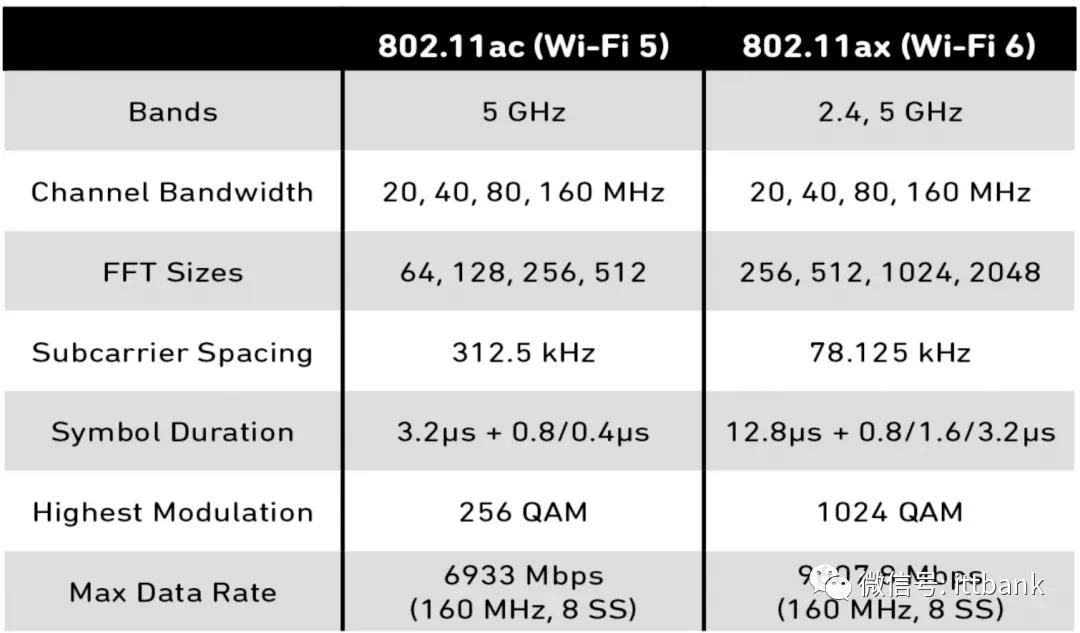
Table 4802.11ac vs. 802.11ax
This article comes from "Qorvo”, if there is any infringement or other issues, please contact us to delete it.Support the protection of intellectual property rights, please indicate the original source and author when reprinting.
Related Recommendations