






















Service Hotline
News

News
Overview of 5G progress and 6G prospects
2021-12-28
540
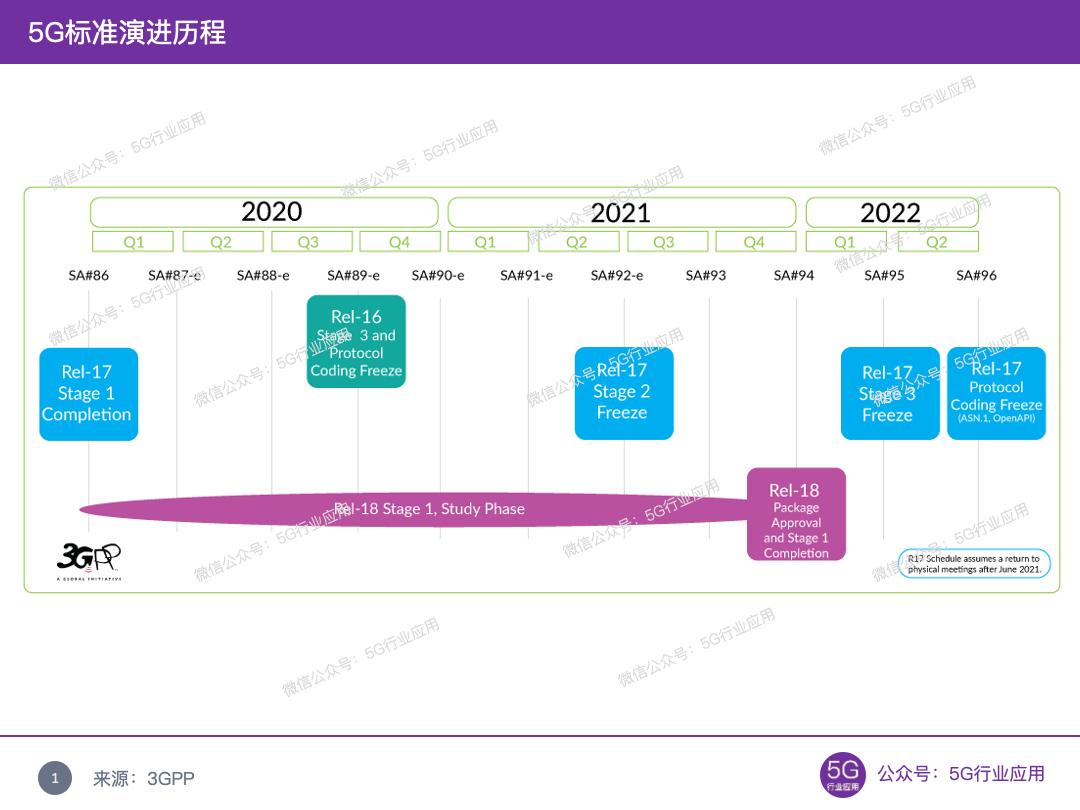
Looking back at the entire history of mobile communications standards, the ITU named 3G IMT-2000, 4G named IMT Advanced, and 5G’s IMT-2020, which is basically a standard for 10 years. Just as in February 2013, the Ministry of Industry and Information Technology, the National Development and Reform Commission, and the Ministry of Science and Technology jointly promoted the establishment of the IMT-2020 (5G) Promotion Group, in 2019, the Ministry of Industry and Information Technology also promoted the establishment of an IMT-2020 (5G) promotion group based on 6G. The research IMT-2030 (6G) promotion group officially released the "6G Overall Vision and Potential Key Technologies" white paper in June this year, which elaborated on the overall vision of 6G, eight business application scenarios and the outlook for 10 potential key technologies. Since then, from the standard level, it can be said that 5G has completed the first phase of providing a basically complete standard version, and the industry has turned its attention to the evolution of 5G and the research of new 6G technologies. Before R17 is about to be frozen in the second phase, we will outline the progress of 5G and make a brief summary.
01Network commercial progress
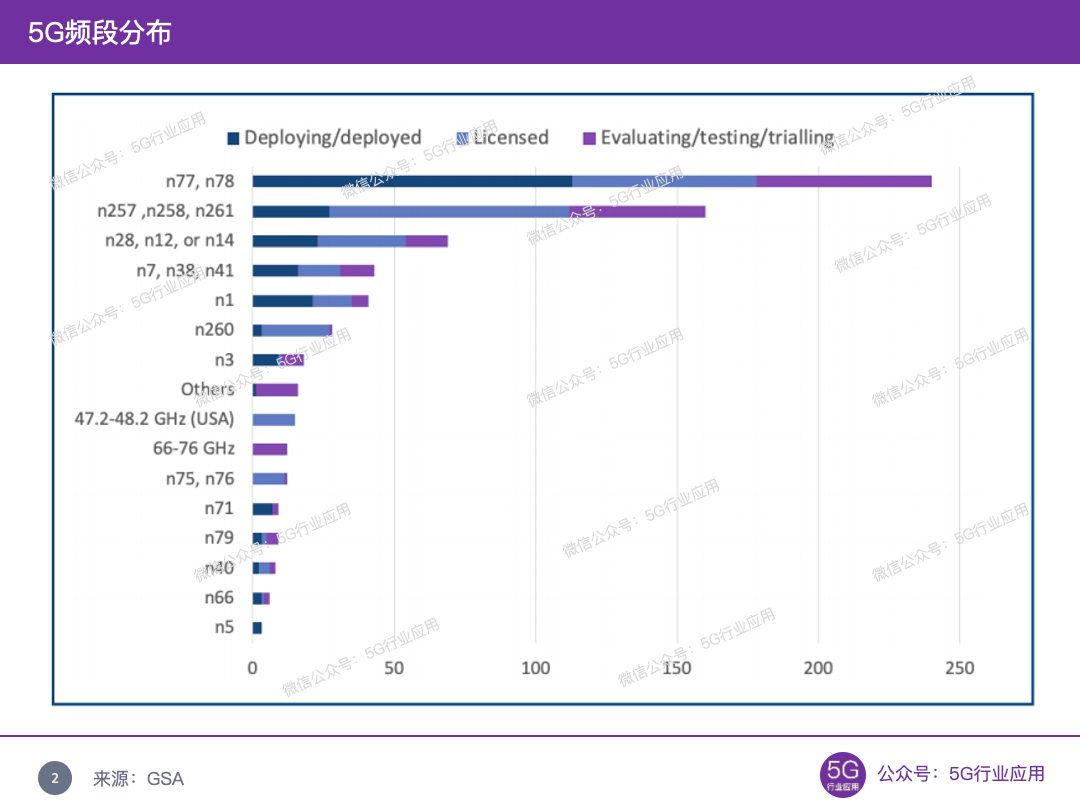
According to GSA data, as of May this year, a total of 166 operators have released 3GPP standard 5G commercial networks (including mobile networks and FWA) in 69 countries and regions, and 77 operators are piloting, planning and deploying commercial 5G SA networks. At the same time, 436 operators in 133 countries/regions are investing in 5G networks in the form of tests, trials, pilots, plans and actual deployments. From the frequency band point of view, it is mainly n77 (3.3GHz, 4.2GHz) and n78 (3.3GHz~3.8GHz).
China's 5G construction speed leads the world. According to data from the Academy of Information and Communications Technology, as of the end of May this year, China has built 819,000 5G base stations. Although it is still small compared with the total number of 4G base stations of 5.44 million, it has accounted for more than 70% of the total number of base stations built in the world. At the same time, a total of 337 5G mobile phone models have been launched in the domestic market, with cumulative shipments approaching 300 million. Including overseas models, 5G mobile phone access terminals have reached 310 million.
025G terminal progress
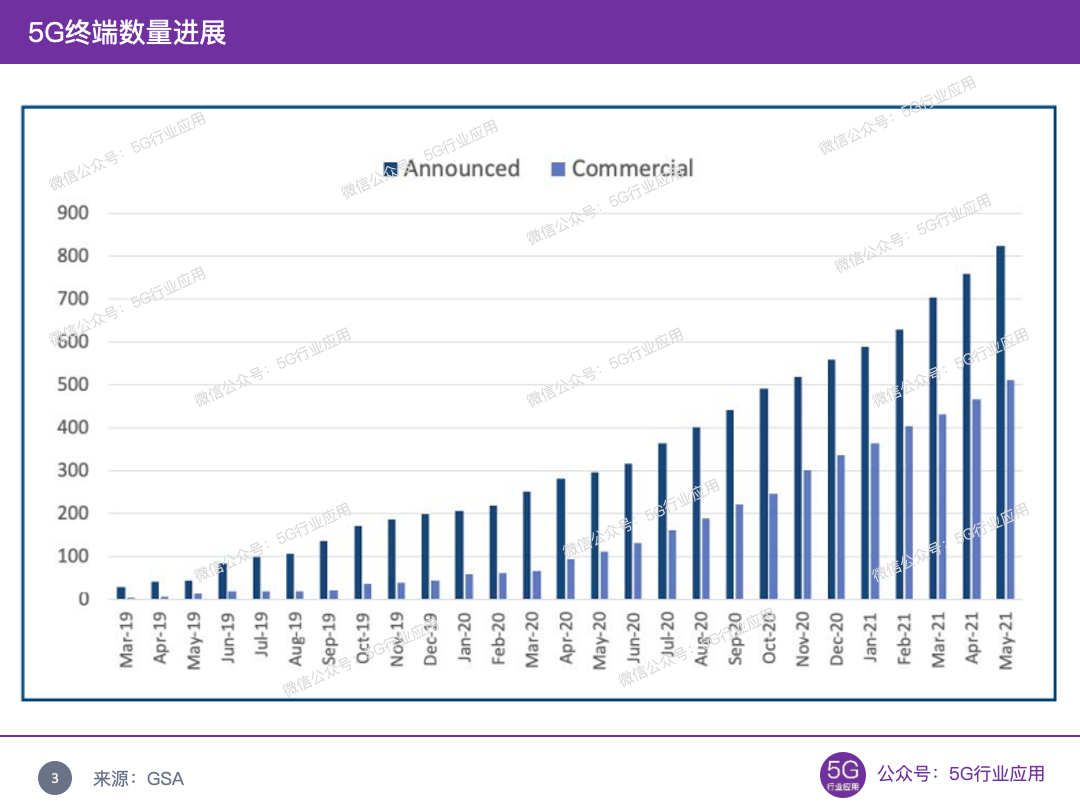
The number of 5G terminal releases is growing rapidly. According to GSA data, as of the end of May 2021, a total of 128 equipment manufacturers have announced commercial or upcoming commercial 5G terminal equipment. The number of 5G terminal equipment released globally has reached 822, an increase of 8.7% compared to April, of which 62% have been commercialized, reaching 511 models, a significant increase of 26.5% compared to the previous quarter. The figure below counts the number of released and commercial terminals from March 2019 to May 2021.
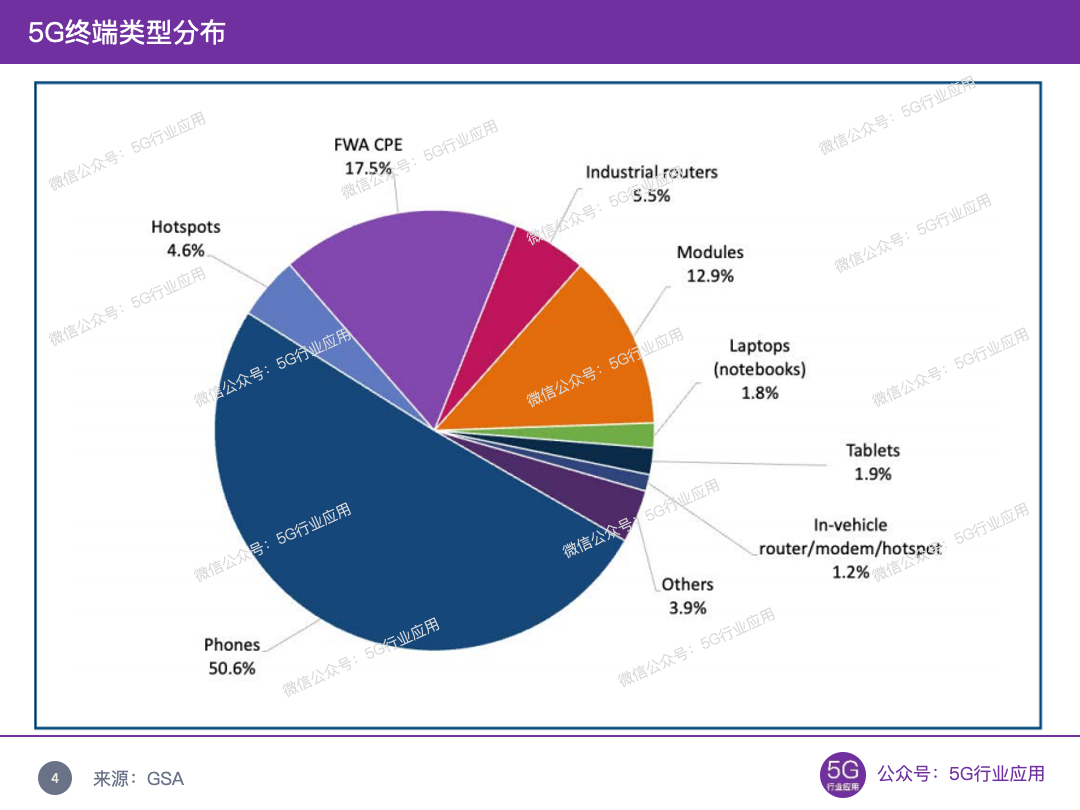
The terminal categories are also very rich, including 416 mobile phones (at least 350 models have been commercialized), 144 FWA CPE models (56 models have been commercialized), 106 modules, 45 industrial/enterprise-level routers/gateways, etc. The proportion is shown in the figure below:
035G chipset progress
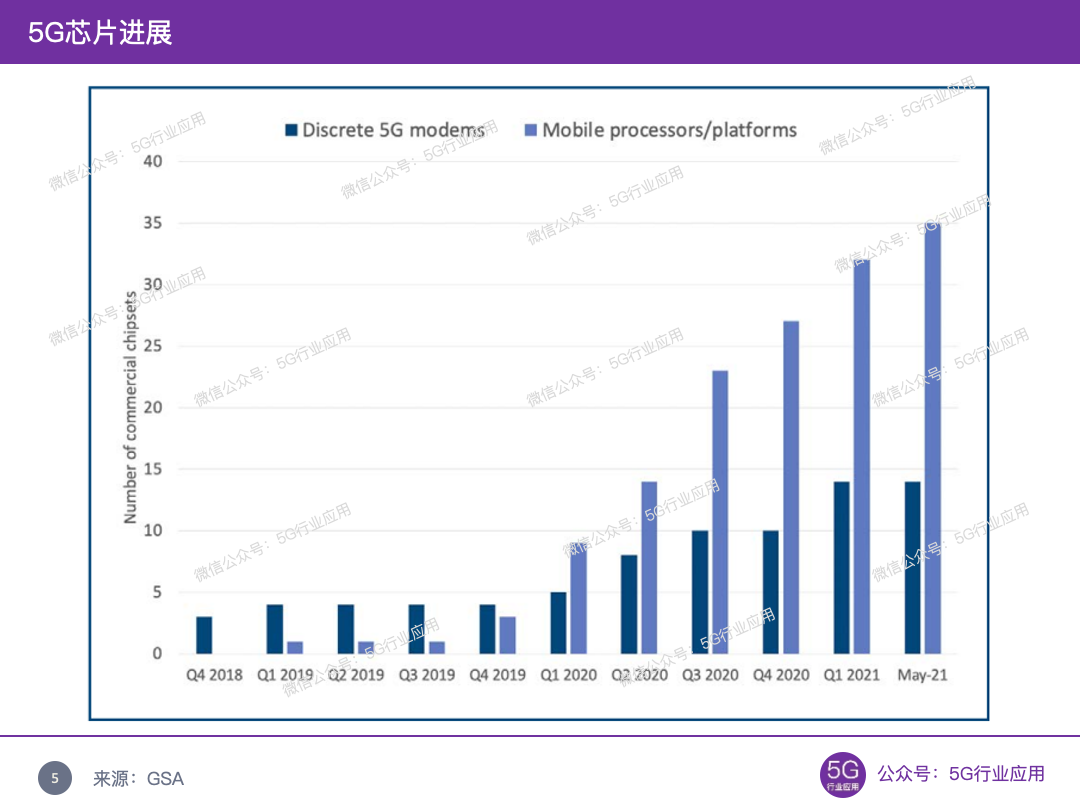
As the foundation of 5G terminal equipment, the chipset restricts the development of the industry chain to a great extent. There are five manufacturers in the world, including Qualcomm, MediaTek, Huawei HiSilicon, Samsung and Unisoc, that design and produce 5G chipsets. According to GSA statistics, as of May 2021, 5 chipset manufacturers have released a total of 35 commercial mobile platforms and 14 commercial 5G modem modules. At the same time, 4 mobile platforms and 5 5G modem modules are about to be commercialized. While chip manufacturers strive to expand their product range, terminal manufacturers have more and more chipset choices.
The figure below counts the number of 5G chipset (mobile platform and modem set) releases from the fourth quarter of 2018 to May this year, and we can clearly see the acceleration trend.
045G application progress
The large-scale construction and commercialization of 5G networks has accelerated the development of the industrial chain (terminals, chips). However, on the application side, although the number of users is growing rapidly, taking China as an example, the penetration rate of 5G users exceeds 20% of the application "explosion point". However, there is no "killer" application that can trigger a substantial increase in network traffic. The traffic proportion of 5G is far lower than the user penetration rate, and operators have focused on vertical industry fields.
Industry private networks are an important application area of 5G. According to a report by Grand View Research, a well-known American survey agency, the global private 5G network market size is expected to grow at a compound annual growth rate (CAGR) of 37.8% from 2020 to 2027, reaching US$7.1 billion by 2027. As national and local policies encourage the integration of 5G and industry, industry private networks have naturally become an important expansion direction for operators. In 2020, all three major domestic operators have released 5G private network products and are working with the industry to promote the construction of private networks. According to the Ministry of Industry and Information Technology, there are currently more than 1,500 "5G + Industrial Internet" projects under construction, covering more than 20 important industries in the national economy.
At the industry application level, with the release of the "5G + Industrial Internet" 512 Project Promotion Plan in November 2019 and the subsequent policies and industrial levels, a large number of 5G industry applications have emerged. On May 31 this year, the Ministry of Industry and Information Technology released the "Ten Typical Application Scenarios of "5G + Industrial Internet" and the Practice of Five Key Industries", which provides guidance on electronic equipment manufacturing, Cases from five industries including equipment manufacturing, steel industry, mining industry and electric power industry, as well as 10 scenarios including collaborative R&D and design, remote equipment control, equipment collaborative operation, flexible manufacturing, on-site auxiliary assembly, machine vision quality inspection, equipment fault diagnosis, factory intelligent logistics, unmanned intelligent inspection, and production site inspection, were released to guide the development of industry applications.
05Overview of the main projects of the 3GPP R17 standard
Overview of the main projects of the 3GPP R17 standard
Our analysis article on R16 last year"Understand 3GPP R16 with one picture"The main projects of R17 are summarized, mainly as follows:
NR Multicast Broadcast Service (NR_MBS)
Multicast and broadcast services already exist in 4G, namely eMBMS defined by 3GPP in the R9 version, which can support commercial use cases including mobile TV live broadcast, video on demand, advertising push, in-vehicle entertainment, public safety, and venue sports live broadcast. In the R14 version, the eMBMS function is further enhanced and enTV is launched, which systematically defines how to broadcast digital TV content through mobile communication networks.
NR_MBS provides multicast broadcast services in 5G and is regarded as a differentiated application by China Mobile's fourth operator, China Radio and Television. In fact, this project was proposed by China Radio and Television. This service can intelligently and dynamically switch between conventional unicast services and broadcast/multicast services according to real-time network requirements. While ensuring network utilization efficiency, it integrates unicast, multicast, and broadcast methods to form a "new broadcast" and expand the support capabilities of personal services and industry services.
IIoT和URLLC增强(IIoT_URLLC_enh)
The main goal is to address needs in a wider range of use cases.
Satellite/Non-Terrestrial Network (NTN)
In order to solve communication problems in remote mountainous areas, sea and other scenarios, non-terrestrial networks such as satellite networks are integrated with 5G to achieve three-dimensional network coverage. R16 has already studied the integration of 5G NR and non-terrestrial networks, and R17 has further studied the integration of NB-IoT and non-terrestrial networks.
NR Sidelink增强(D2D)
It mainly includes V2X, business and critical communications, etc. For example, the Sidelink interface (also known as PC5) is used in V2X to transmit V2X messages between UEs. It also includes implementing common functions in some key use cases and achieving maximum versatility between Sidelink’s business applications, V2X and critical communications application scenarios while meeting specific requirements.
IAB增强(NR_IAB_enh)
IAB is 5G NR integrated wireless access and backhaul. By extending NR to support wireless backhaul instead of fiber optic backhaul, including in-band (the access link and the backhaul link use the same frequency band) and out-of-band (the access link and the backhaul link use different frequency bands), IAB can significantly reduce the difficulty and cost of network deployment, especially millimeter wave band networks. R17's IAB enhancements focus on improving efficiency and supporting a wider range of use cases. Includes duplex enhancements, increased potential for network coding, mobile IAB, and more.
MIMO进一步增强(NR_feMIMO)
Further enhance MIMO capabilities, support more use cases, support high-speed mobility, better support FDD, improve beamforming and beam management, and reduce related overhead.
Dynamic Spectrum Sharing Enhancement (NR_DSS)
Based on R16, R17 further explores better cross-carrier scheduling methods.
Extended support for 71GHz
The 5G NR spectrum range is divided into FR1 (410MHz ~ 7.125GHz) and FR2 (24.25GHz ~ 52.6GHz). R17 expands the 5G NR frequency band range from 52.6GHz to 71GHz.
5G location service enhancement phase 2 (5G_LCS_ph2)
LCS has been enhanced in R16. Specifically, it uses the multi-beam characteristics of MIMO to define indoor positioning technologies such as signal round-trip time (RTT), signal time difference of arrival (TDOA), angle of arrival measurement (AoA), and angle of departure measurement (AoD). The positioning accuracy can reach 3-10 meters. R17 is designed to provide support for extremely low latency and extremely high-precision positioning, including horizontal and vertical positioning service levels and 5G positioning service areas. The work item will also enable MCX UEs to determine their location using 5G location services.
终端节能增强(NR_UE_pow_sav_enh)
Explore technologies to further reduce power consumption of 5G devices.
Multiple USIM support (FS_MUSIM)
Enhanced functionality to support mobile terminal services using Multi-USIM devices.
Other R17 standard research projects include: SON/MDT data collection enhancement (NR_ENDT_SON_MDT_enh), enhanced relay to improve energy efficiency and coverage (REFEC),Network Controlled Interactive Services (NCIS), Multi-Device and Multi-Identity Enhancement (MuDE), Multimedia Priority Service Phase 2 (MBS2), Connected Drone Enhancement (CAV), Multi-Access Dual Connection Further Enhancement (LTE_NR-DC_enh2), etc., we will conduct detailed analysis in separate articles.
06Overview of the main projects of the 3GPP R18 standard
R18, as the first version of 5G Advanced, is in the first phase of proposal stage. It is planned to end at SA#94 at the end of 2021. Please refer to the article "What is 5G R18 Talking About" by "Network Optimizer Mercenary" to collect and organize:
Network slicing access and support enhancements
Network slicing is a key function of 5G. R18 will continue to enhance network slicing access and support related functions, including: supporting UE access to network slicing when there are different types of restrictions (such as wireless resources, frequency bands, etc.), and minimizing the impact of service interruption when network slicing or allocated resources change; supporting the disclosure of network slicing control/configuration and other services to third parties.
5G flexible timing system
Vertical industries such as power, transportation, and finance have increasingly higher requirements for clock synchronization. R16 provides a means of timing service through 5G. The 5G Timing Resiliency System mainly targets the vulnerability of GNSS satellite timing services and studies other clock synchronization technologies consistent with the 5G system as a flexible clock source for end users to supplement, back up, or replace GNSS satellite timing services.
Ranging-based services
Ranging is a type of algorithm that implements positioning and has a wide range of applications. R18 will study relevant specifications for ranging service requirements, covering ranging operations between UEs, operators' control of ranging functions under licensed spectrum, ranging KPIs (distance accuracy and azimuth accuracy, etc.) and security aspects.
Low power consumption and high precision positioning in industrial IoT scenarios
High-precision positioning is a key application of the Industrial Internet. The project reduces positioning power consumption and improves positioning accuracy to meet the needs of more industrial Internet scenarios, such as chemical plants, underground mines and other dangerous scenarios.
Off-network railway communications
Refers to direct communication between UEs that is independent of network-based communication. It is called Off-Network technology. This technology has been introduced in the 3GPP MCX standard. When the network fails or there is no network coverage in remote mountainous areas, railway communications can use Off-Network for communication. The 3GPP MCX specification defines that railway communications can use Off-Network even when the network is available. R18 will study new use cases for future railway mobile communication systems based on Off-Network, as well as QoS, priority, UE ID and location identification, multicast/broadcast/unicast, communication range, potential spectrum and other related technologies.
Supports haptic and multimodal communication services
Tactile and multi-modal communication refers to responding to input through multiple communication channels that affect user experience such as video, audio, environmental perception, tactile sensation, etc., combined with network capabilities such as ultra-low latency, ultra-high reliability and security, to achieve a truly immersive user experience. In order to support tactile and multi-modal communication services, 5G systems need to meet different network speed, latency and reliability requirements for different data streams, and also need to achieve synchronization of parallel multiple data streams. R18 will study new use cases involving tactile and multi-modal communication technologies, as well as technical indicators such as network reliability, availability, security, privacy, data rate, latency, transmission interval and other related to these use cases.
Others include 5G smart grid communication infrastructure, vehicle-mounted 5G relay, residential 5G enhanced functions, personal Internet of Things and other projects. In the future, we will continue to track and analyze the proposals and their research content in relatively detail.
07 6G vision, applications and potential key technologies
As a promotion organization for 6G research, the IMT-2030 (6G) Promotion Group released the "6G Overall Vision and Potential Key Technologies" white paper a year and a half after its establishment. It has just been seven years since the IMT-2020 (5G) Promotion Group released the "5G Vision and Requirements White Paper". The main contents of the white paper include:
overall vision
From mobile Internet (4G) to Internet of Everything (5G), the 6G era will realize the overall vision of intelligent connectivity and digital twins of everything. By extension, towards 2030 and beyond:
social level:
Human society will enter the era of intelligence, reflecting the balanced and high-end social services, scientific and precise social governance, and green and energy-saving social development will become the development trend of the future society.
technical level:
6G will build a new network with intelligent interconnection of humans, machines and objects, and efficient interoperability of intelligent entities. On the basis of greatly improving network capabilities, it will have new functions such as endogenous intelligence, multi-dimensional perception, digital twins, and endogenous security. Make full use of low, medium and high spectrum resources to achieve seamless global coverage integrating air, space and ground to meet the safe and reliable unlimited connection needs of "humans, machines and things" anytime and anywhere.
business level:
6G will provide fully immersive interactive scenarios, multi-dimensional perception and inclusive intelligence integration and symbiosis, and deep integration of virtuality and reality.
Macro driving forces for 6G development
Driving force of social structural change:
The imbalance of income structure requires digital technology to improve inclusiveness;
Demographic imbalance calls for digital technology to improve human capital and allocation efficiency;
Changes in the social governance structure have forced the modernization of social governance capabilities.
Driving force for high-quality economic development:
Sustainable economic development requires new technologies to inject new momentum;
The globalization trend of services requires further reduction of all-round information communication costs.
Environmentally sustainable development drivers:
Reducing carbon emissions and promoting "carbon neutrality" require improving energy efficiency and achieving green development; major events such as extreme weather and epidemics drive the establishment of broader perception capabilities and closer intelligent collaboration capabilities.
6G potential application scenarios
Immersive business
1)Immersive cloud XR services require end-to-end delay <10ms and user experience rate of Gbps level;
2) The holographic communication service requires a user experience rate of Tbps;
3) Sensory interconnection services require millisecond-level latency, high-precision positioning and high security (privacy protection);
4) Smart interactive services require latency <1ms, experience rate >10Gbps, and reliability reaching 99.99999%.
Smart business
5) Communication sensing business requirements: 6G networks can use communication signals to realize sensing functions such as target detection, positioning, identification, and imaging. Wireless communication systems will be able to use sensing functions to obtain surrounding environment information, intelligently and accurately allocate communication resources, tap potential communication capabilities, and enhance user experience;
6) Pratt & Whitney smart business turns personal and household devices, various urban sensors, driverless vehicles, smart robots and other new smart terminals into intelligent entities. Through continuous learning, communication, cooperation and competition, it can achieve ultra-high efficiency simulation and prediction of the operation and development of the physical world, and give optimal decisions;
7) The digital twin business digitally mirrors entities or processes in the physical world in the digital world. Intelligent interactions between people, people and things, and things and things can be realized through mapping in the digital world. By simulating, verifying, predicting, and controlling physical entities or processes in the digital world, the optimal state of the physical world can be obtained. Digital twins require networks with trillion-level connection capabilities, sub-millisecond latency, Tbps-level transmission speeds, and security requirements.
Global business
8) Full-area coverage integrates terrestrial cellular networks with space networks including high-orbit satellite networks, mid- and low-orbit satellite networks, high-altitude platforms, and drones to build a global wide-area coverage space-space-ground integrated three-dimensional network to provide users with broadband mobile communication services without blind spots.
Potential key technologies
Enhanced wireless air interface technology:
Wireless air interface physical layer basic technology, ultra-large-scale MIMO technology, and full-duplex technology.
New physical dimension wireless transmission technology:
Smart metasurface technology, orbital angular momentum, smart holographic radio technology.
Terahertz and visible light communication technology:
Terahertz communication technology, visible light technology.
Cross-domain integration key technologies:
Communication perception integration.
A new type of network with endogenous intelligence:
A new air interface with endogenous intelligence and a new network architecture with endogenous intelligence.
Key network technologies:
Distributed autonomous network architecture, satellite-ground integrated network, deterministic network, computing power-aware network, and network endogenous security that supports multi-mode trust.
The research on 6G has just begun. Before that, 5G will be more deployed and applied, and the successful commercial use of 5G will lay a solid foundation for the evolution of 6G.
References
GSA,《5G Devices List executive Summary 》,June 2021
GSA,《LTE, 5G & 3GPP IoT CHIPSET REPORT: executive Summary 》,May 2021
GSA,《Networks, Technologies & Spectrum Snapshot》,June 2021
Internet mercenary, "What is 5G R18 talking about?" 》,May 2021
IMT-2030 (6G) Promotion Group, "6G Overall Vision and Potential Key Technologies White Paper", June 2021
This content comes from the Internet/ 5G industry applications, this website only provides reprinting. The views, stance, technology, etc. of this article have nothing to do with this website. If there is any infringement, please contact us to delete it!
Related Recommendations