






















Service Hotline
News

News
Why ultra-wideband could be the future star of indoor positioning?
2021-12-28
778
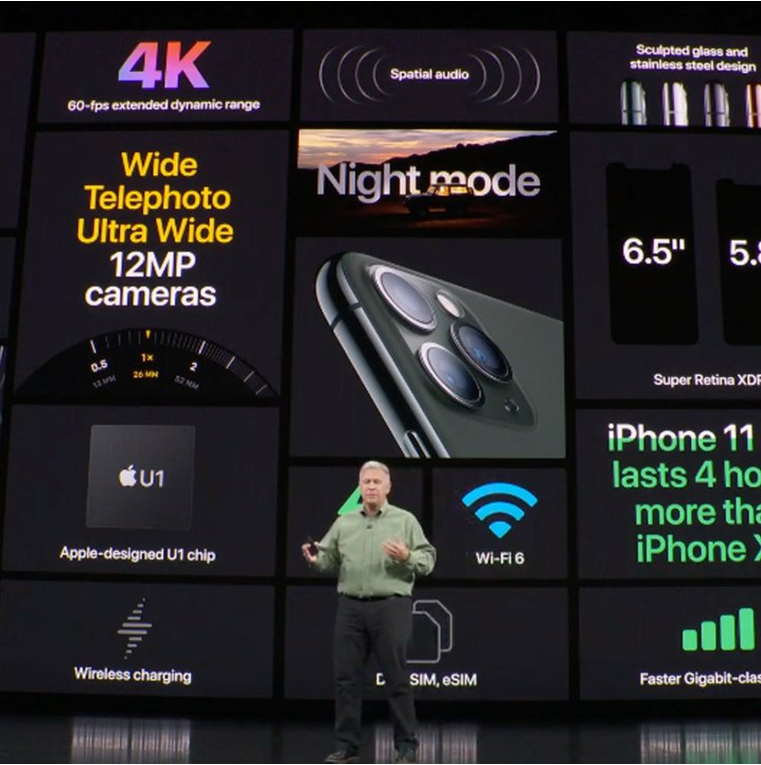
Ultra-wideband (UWB), a technology proposed in the 1960s, has regained people's favor in recent years. Originally, UWB was launched in the direction of communication application technology, but now it is also launched with high-precision positioning technology, especially indoor positioning, that is, non-exposure space positioning technology. It integrates positioning and communication functions into one, making it look particularly fashionable, pleasing and attractive. Especially in September 2019, Apple’s iPhone 11 conference announced that it was equipped with a U1 chip. UWB quietly entered the consumer market. Why quietly? Because Apple did not make any introduction to this mysterious chip at the press conference. However, this may be an epoch-making event for indoor positioning. It is estimated that UWB will show its talents in the next five to ten years.
What is ultra-wideband positioning? Here is a brief introduction. UWB (Ultra Wide Band) is ultra-wideband technology. It is a carrier-less communication technology that uses nanosecond-level non-sinusoidal narrow pulses to transmit data, so it occupies a wide spectrum range. UWB positioning uses broadband pulse communication technology, which has strong anti-interference ability and reduces positioning errors. The emergence of UWB indoor positioning technology has filled the gap in the field of high-precision positioning. It has the advantages of being insensitive to channel fading, low power spectral density of transmitted signals, low interception capability, low system complexity, and can provide 0.1-meter positioning accuracy.
Unlike traditional wireless communications, UWB does not use carrier waves, but transmits data by sending and receiving low-energy pulse signals. The ranging method is implemented by measuring the transmission time of the signal, which is to determine the distance by calculating the transmission time difference of the signal between two devices. Therefore, in a small area, UWB can provide more accurate positioning results than Wi-Fi and Bluetooth. Apple also calls it a "GPS system for use in the living room" on its English product introduction page.
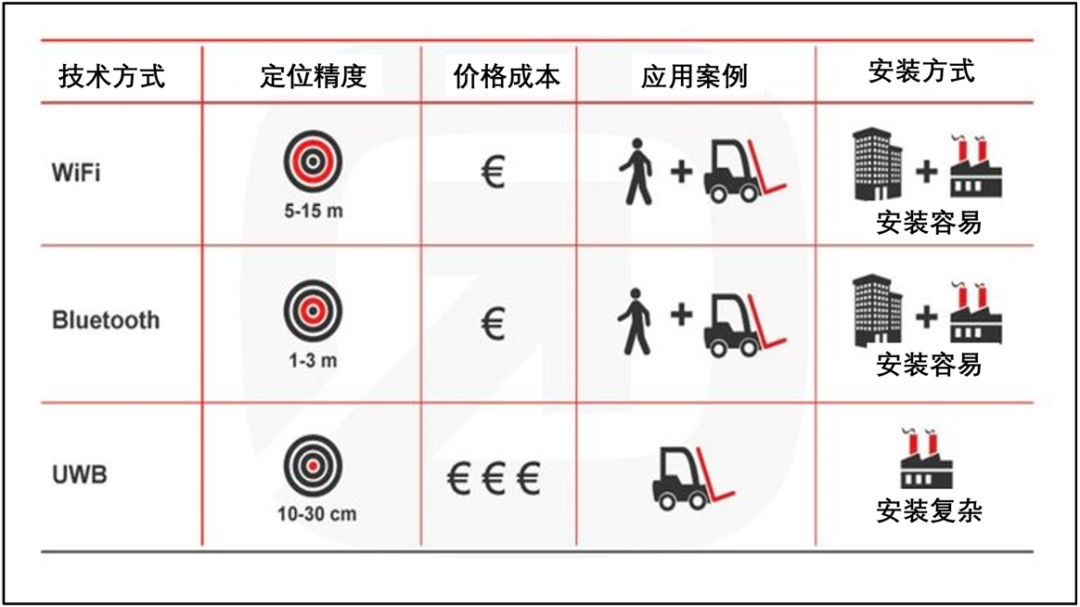
UWB indoor positioning system usually consists of three components: First, UWB positioning tag. Positioning tags are active tags that can be made into different shapes and fixed on objects, vehicles or worn on people. They are versatile in different application environments. Its positioning accuracy can reach up to 5-10cm. The UWB pulse signal emitted by the tag is received and transmitted through the positioning base station (positioning sensor). Each tag has a unique ID number, and the positioned objects can be linked through this ID number, so that the positioning base station (positioning sensor) can find the actual position through the tag. The duration of the tag transmission signal is very short, allowing hundreds or even thousands of tags to be positioned simultaneously; the second is the UWB positioning base station. The positioning base station (positioning sensor) can determine the location of the tag through time difference of arrival (TDOA) measurement technology, and transmit the data to the network controller and positioning engine software. The positioning measurement accuracy reaches centimeter level; the third is the application software. Application software is mainly reflected in system functions. The basic functions of the UWB indoor positioning system can include: personnel distribution, showing the distribution of people wearing positioning tags; personnel movement trajectories, real-time display of one or more personnel movement trajectories through an electronic map; tracking of designated personnel, the map automatically switches with the movement of the tag, and the current status of the tag can be seen by moving the mouse over the tag; electronic fence, showing the alarm location status of the person through different colors and shapes on the flat electronic map.
UWB indoor positioning process: First, each positioning tag sends data frames repeatedly and uninterruptedly with UWB pulses; second, the UWB pulse train sent by the positioning tag is received by the positioning base station; third, each positioning base station uses a high-sensitivity short pulse detector to measure the arrival of the data frame of each positioning tag The time of the receiver antenna; fourth, the positioning engine refers to the calibration data sent by the tag, determines the time difference between the tag reaching different positioning base stations, and uses three-point positioning technology and optimization algorithms to calculate the tag position; fifth, the use of single base station positioning generally uses AOA ((Angle of Arrival) algorithm. When using multi-base station positioning, the TDOA (Time difference of Arrival) algorithm is often used.
The main applicable areas of UWB indoor positioning are: First, tunnels/pipe corridors/subways. Carry out real-time automatic tracking of construction workers, and keep track of each employee's location and activity trajectory in the tunnel, as well as the location distribution of all tunnel personnel. When encountering an emergency, reliable location information of trapped persons can be quickly found to improve the efficiency of rescue and safety rescue; the second is vehicle warehousing. Track assets and inventory in real time, improve processes, increase search efficiency, and reduce resource waste; the third is petrochemical industry. Accurately locate the real-time locations of people, vehicles and objects with zero delay, intuitively and timely reflect the on-site conditions and personnel status of the chemical industry, and improve the safety and efficiency of the petrochemical industry; fourth, hospitals/nursing homes. 24-hour intelligent management and control, all-weather security guarding, real-time analysis of the behavior of caregivers, visitors, patients/elderly people, improving the efficiency of refined management of hospitals/nursing homes; the fifth is prisons/public security/judicial. The UWB indoor positioning system can carry out personnel entry and exit management, real-time location query, restricted area supervision, isolation distance control, personnel scheduling, and can monitor and collect statistics on the location, travel route, distance, and speed of personnel. In fact, UWB precise positioning applications and services go far beyond the above aspects. Because of its precise positioning and tracking of all people, animals, assets, objects, and event processes, it has great development prospects in the industrial Internet, mass consumer goods, and data IoT industries. UWB can essentially become a spatio-temporal sensor and an indispensable partner for the Internet of Things and big data. It has the aura of a rising star in multiple fields of high-precision indoor positioning, indoor and outdoor integrated positioning, and navigation and communication integration innovation.
This content comes from the Internet/Think tank, this website only provides reprinting. The views, stance, technology, etc. of this article have nothing to do with this website. If there is any infringement, please contact us to delete it!
Related Recommendations